- Home
- Diabetes Information for Patients Types Symptoms Tests and Treatment
- Type 1 Diabetes Symptoms Causes Treatment and Daily Care
Type 1 Diabetes: Symptoms, Causes, Treatment, and Daily Care
A new type 1 diabetes diagnosis can feel frightening, but it is manageable with the right insulin, glucose monitoring, education, and support. Type 1 diabetes requires daily attention, yet people with it study, work, travel, exercise, build families, and live full lives.
Written by: Dr. Albana Greca Sejdini, MD, MMedSc
Medically reviewed by: Dr. Ruden Cakoni, MD, Endocrinologist
Last medically reviewed: July 2026
Type 1 diabetes is an autoimmune condition in which the pancreas produces little or no insulin. It can develop at any age and may cause increased thirst, frequent urination, unexplained weight loss, fatigue, and other symptoms. On this page, I explain its causes, treatment with insulin, blood sugar monitoring, and the daily care needed to live safely and confidently with type 1 diabetes.
Type 1 diabetes requires ongoing insulin treatment and glucose monitoring. Symptoms may develop quickly and can become severe without prompt treatment.
- What type 1 diabetes is
- Causes and stages
- Symptoms and DKA warning signs
- How type 1 diabetes is diagnosed
- Insulin treatment
- CGM, pumps, and automated insulin delivery
- Food and carbohydrate planning
- Exercise with type 1 diabetes
- Hypoglycemia and sick-day safety
- Long-term health protection
- Life expectancy and outlook
- Cure research and 2026 updates
What Is Type 1 Diabetes?
Insulin is a hormone made by beta cells in the pancreas. It allows glucose to move from the bloodstream into cells for energy and helps regulate how the liver stores and releases glucose.
In type 1 diabetes, autoimmune destruction progressively reduces the body’s insulin production. Without enough insulin:
- glucose builds up in the bloodstream;
- muscle and fat cannot use glucose normally;
- the body begins breaking down fat and producing ketones;
- untreated insulin deficiency may progress to diabetic ketoacidosis, or DKA.
Some people still produce a small amount of insulin soon after diagnosis. This temporary “honeymoon phase” can reduce insulin requirements, but it does not mean that type 1 diabetes has disappeared. Insulin should never be stopped without specialist direction.
What Causes Type 1 Diabetes?
Type 1 diabetes develops when a genetically susceptible immune system mistakenly attacks pancreatic beta cells. Researchers continue to study why the autoimmune process starts. Genes and environmental exposures may contribute, but there is usually no single identifiable trigger.
Type 1 diabetes is not caused by:
- eating too much sugar;
- being lazy or inactive;
- being overweight;
- poor parenting;
- one stressful event;
- a personal failure.
Children, teenagers, and adults of any age can develop type 1 diabetes. Adult-onset type 1 diabetes may initially be mistaken for type 2 diabetes, particularly when symptoms develop more gradually.
Read more about the autoimmune causes and risk factors for type 1 diabetes.
The stages of type 1 diabetes
Type 1 diabetes can begin before symptoms appear:
- Stage 1: two or more persistent islet autoantibodies are present, but glucose remains normal.
- Stage 2: multiple islet autoantibodies remain present and glucose regulation becomes abnormal, but classic symptoms are absent.
- Stage 3: glucose reaches the clinical diabetes range, usually with symptoms or clear insulin deficiency.
Specialized autoantibody screening may be offered to relatives of people with type 1 diabetes or others at increased risk. A positive screening result should be confirmed and managed through an experienced diabetes team.
Type 1 Diabetes Symptoms
Symptoms may develop over days or weeks, although adults can sometimes have a slower presentation.
- frequent urination, including new bed-wetting in a child;
- intense thirst and dry mouth;
- increased hunger;
- unexplained weight loss;
- fatigue, weakness, or irritability;
- blurred vision;
- recurrent infections;
- nausea, vomiting, or abdominal pain when ketones develop.
See the full guide to type 1 diabetes symptoms and warning signs.
How Is Type 1 Diabetes Diagnosed?
Diabetes is diagnosed using laboratory glucose or HbA1c criteria. Tests may include fasting plasma glucose, HbA1c, a two-hour oral glucose tolerance test, or random plasma glucose when classic symptoms or a hyperglycemic crisis are present.
After diabetes is identified, clinicians may use additional tests to determine its type:
- islet autoantibodies, such as GAD, IA-2, ZnT8, or insulin autoantibodies;
- C-peptide, interpreted carefully according to glucose level, timing, disease duration, kidney function, and recent insulin treatment;
- medical history, age, symptoms, weight changes, ketones, and insulin requirements;
- genetic testing in selected cases where monogenic diabetes is suspected.
A urine “insulin test” is not the standard method used to confirm or exclude type 1 diabetes. Learn how diagnostic tests differ in our blood tests for diabetes guide.
Insulin Is Essential Treatment
Everyone with stage 3 type 1 diabetes requires insulin. Food, exercise, herbs, enzymes, vitamins, or supplements cannot replace it.
Most insulin plans provide:
- basal insulin to cover glucose released between meals and overnight;
- mealtime insulin matched to carbohydrate, current glucose, and other factors;
- correction insulin when glucose is above the individualized target.
Insulin may be delivered through multiple daily injections, an insulin pump, or an automated insulin-delivery system. Doses change with food, activity, illness, growth, hormones, stress, pregnancy, and remaining beta-cell function.
Our insulin treatment guide explains basal, mealtime, and correction insulin. The insulin bolus and correction calculator is educational and should be used only with ratios and correction factors prescribed by your diabetes team.
CGM, Insulin Pumps, and Automated Insulin Delivery
Continuous glucose monitoring, or CGM, shows glucose trends and can provide alerts for high or low readings. Finger-stick testing remains important when symptoms do not match the CGM, readings may be inaccurate, or the device instructs you to confirm.
Insulin pumps deliver rapid-acting insulin continuously and provide mealtime and correction doses. Automated insulin-delivery systems connect a CGM with a compatible pump and algorithm to adjust insulin delivery. These systems can improve time in range and reduce some of the daily decision burden, but users still need training in carbohydrate entry, infusion-set problems, ketones, backup injections, and device failure.
ADA 2026 recommends offering CGM at diabetes onset or later to adults using insulin and offering automated insulin-delivery systems to adults with type 1 diabetes when they can use the device safely. CGM is also recommended whenever possible for children and adolescents with type 1 diabetes.

What Is the Best Diet for Type 1 Diabetes?
There is no single mandatory “type 1 diabetes diet.” The goal is a nutritious eating pattern that works with insulin, supports growth or weight goals, protects cardiovascular health, and remains practical.
Useful skills include:
- counting or estimating carbohydrate accurately;
- matching mealtime insulin to carbohydrate according to the prescribed ratio;
- understanding how fat, protein, fiber, and meal size may delay or prolong glucose changes;
- choosing vegetables, whole fruit, legumes, whole grains, lean protein, nuts, seeds, and unsaturated fats regularly;
- limiting sugar-sweetened drinks except when treating hypoglycemia;
- reviewing alcohol safety with the diabetes team.
Very-low-carbohydrate diets may make insulin dosing, growth, nutrition, exercise, and ketone interpretation more complicated and should not be started without specialist guidance. Children and teenagers need enough energy and nutrients for normal growth.
Use the diabetes plate-method and meal-planning guide as a general starting point, then adapt it with a diabetes dietitian who understands insulin dosing.
Exercise With Type 1 Diabetes
Regular activity supports cardiovascular health, fitness, emotional well-being, and insulin sensitivity. However, glucose may fall, remain stable, or rise depending on exercise intensity, duration, insulin on board, food, stress hormones, and starting glucose.
A safe exercise plan may include:
- checking glucose before, during, and after activity when appropriate;
- carrying fast-acting carbohydrate;
- adjusting carbohydrate or insulin according to an individualized plan;
- watching for delayed hypoglycemia, including overnight after prolonged activity;
- checking ketones and avoiding exercise when glucose is high because of insulin deficiency;
- wearing medical identification and ensuring companions know how to use glucagon.
Do not use intense exercise to correct unexplained severe hyperglycemia or positive ketones.
Daily Safety: Low Blood Sugar, Ketones, and Sick Days
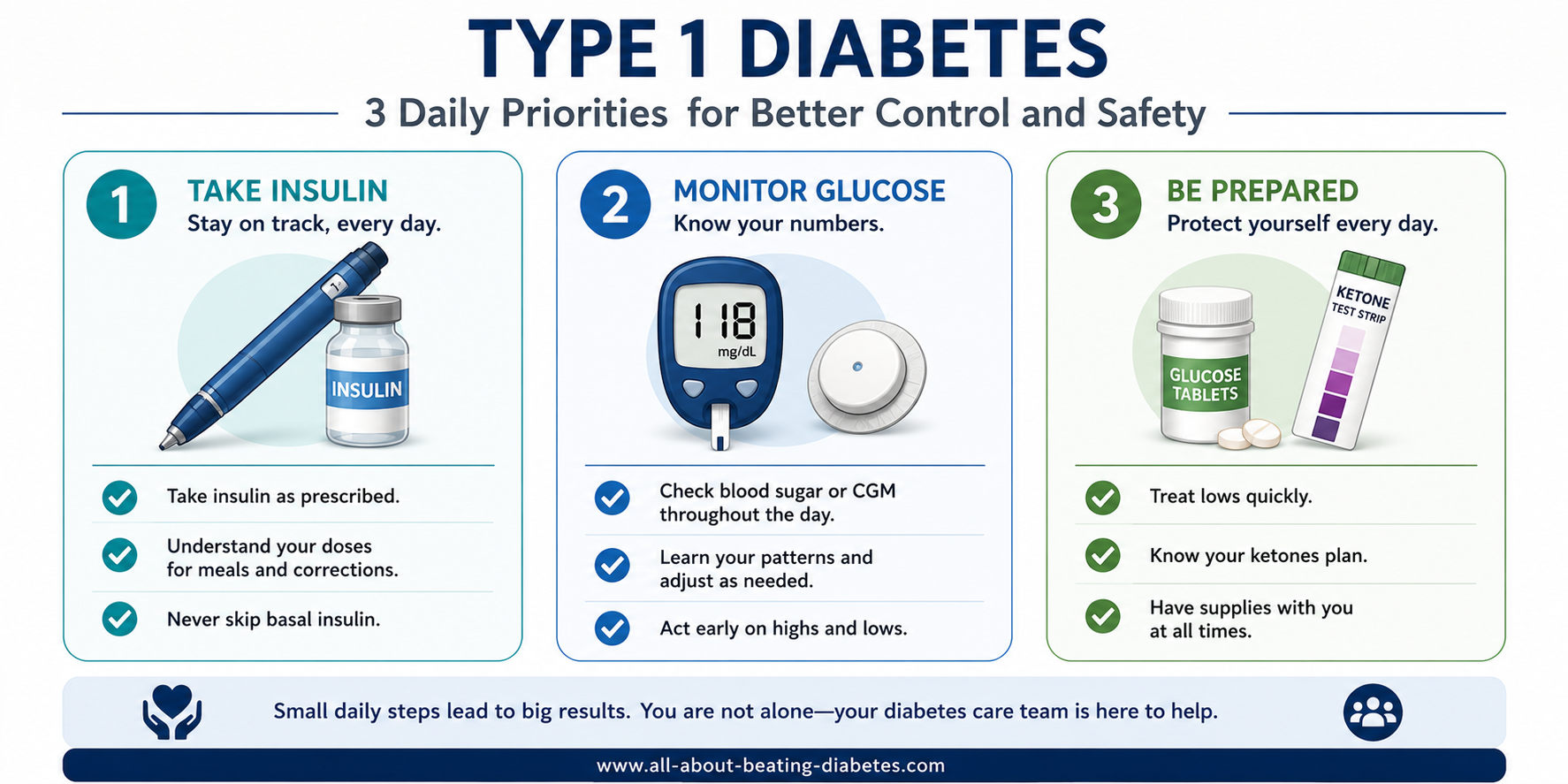
Daily safety with type 1 diabetes means knowing how to treat low blood sugar quickly, when to check for ketones, and how to follow your sick-day plan. Being prepared with glucose, ketone-testing supplies, insulin, and clear instructions from your diabetes care team can help you respond early and reduce the risk of a medical emergency.
:contentReference[oaicite:0]{index=0}Hypoglycemia
Low glucose may cause shaking, sweating, hunger, palpitations, dizziness, irritability, confusion, weakness, or unusual behavior. Follow your personal treatment plan, recheck as instructed, and identify why the low occurred.
Severe hypoglycemia means the person needs help from someone else. Family, friends, teachers, coworkers, and caregivers should know where glucagon is stored and how to use it. Do not give food or drink to someone who cannot swallow safely.
Read how to recognize high and low blood sugar.
Ketones and DKA prevention
Check ketones according to your sick-day instructions, especially during vomiting, fever, pump failure, missed insulin, persistent high glucose, or symptoms of DKA. Blood ketones often reflect current risk more quickly than urine ketones, but follow the method available to you.
Pump users need a backup insulin plan because interruption of rapid-acting insulin can lead to ketones quickly. Keep unexpired insulin, injection supplies, meter strips, ketone tests, glucose treatment, and glucagon available.
Sick-day plan
A written plan should explain:
- how often to check glucose and ketones;
- which insulin must continue;
- how to maintain fluids and carbohydrate when appetite is reduced;
- when to call the diabetes team;
- when to go to emergency care.
Reducing Long-Term Complication Risk
Type 1 diabetes can affect the eyes, kidneys, nerves, feet, heart, and blood vessels, but complications are not inevitable. Risk can be reduced through safer glucose management and comprehensive preventive care.
Long-term follow-up may include:
- HbA1c and CGM time-in-range review;
- blood pressure and cholesterol assessment;
- kidney testing with urine albumin and eGFR;
- dilated eye examinations at the recommended intervals;
- foot and nerve assessment;
- screening for autoimmune thyroid and celiac disease when appropriate;
- dental care, vaccinations, and tobacco avoidance;
- mental-health and diabetes-distress screening.
Our diabetes complications guide explains warning signs and preventive screening.
Type 1 Diabetes Life Expectancy and Quality of Life
There is no single life-expectancy number that applies to every person with type 1 diabetes. Outcomes have improved greatly with modern insulin, glucose monitoring, blood-pressure and cholesterol treatment, kidney protection, and earlier complication screening.
Individual outlook is influenced by glucose exposure, severe hypoglycemia and DKA, kidney and cardiovascular health, smoking, access to technology and care, mental health, and social support. A person diagnosed today should not assume that old statistics describe their future.
Good diabetes care does not require perfect glucose every minute. The practical goal is to spend more time in a safe range, reduce severe highs and lows, and steadily protect long-term health.
Is There a Cure? Type 1 Diabetes Research and 2026 Updates
There is currently no routine cure that allows most people with established type 1 diabetes to stop insulin safely. Herbal products, enzymes, hydrogen peroxide, restrictive diets, and unapproved stem-cell treatments must not replace insulin.
Research areas include immune therapies, preservation of beta-cell function, stem-cell-derived islet cells, encapsulation technologies, transplantation, and improved automated insulin delivery.
Teplizumab
Teplizumab is an immune therapy—not a cure or an insulin substitute. In 2026, the U.S. FDA expanded its approved uses:
- to delay progression from stage 2 to stage 3 type 1 diabetes in adults and children aged one year and older who meet specific criteria; and
- to delay loss of the body’s remaining insulin production in certain children and teenagers aged 8–17 years who were recently diagnosed with stage 3 type 1 diabetes.
Teplizumab requires specialist selection and monitoring and has important risks and precautions. Availability and approval vary by country.
Pancreas and islet transplantation
Pancreas or donor-islet transplantation may restore insulin production in carefully selected people, often those with severe complications or kidney transplantation needs. These procedures require immunosuppressive medicines and are not routine cures for most people.
Unapproved stem-cell clinics
Legitimate clinical research should not be confused with commercial clinics promising a cure. Unapproved products may cause infection, immune reactions, tumors, financial harm, or interruption of essential insulin.
Related Questions
- Can Type 1 Diabetes Be Controlled Without Insulin?
- Can Enzymes Reduce Insulin Needs in Type 1 Diabetes?
- Can Pancreatic Beta Cells Regenerate in Type 1 Diabetes?
- Can Stem Cells Cure Type 1 Diabetes?
Related Resources
- Causes of Type 1 Diabetes
- Type 1 Diabetes Symptoms
- Insulin Treatment
- Dangerous Blood Sugar Levels
- Traveling With Diabetes
- Diabetes Complications and Prevention
Medical disclaimer: This page provides general education and does not replace diagnosis, insulin training, emergency assessment, or an individualized diabetes plan. Never stop or reduce insulin because of an online article, supplement, alternative therapy, or temporary improvement in glucose.
References
- American Diabetes Association: Diagnosis and Classification of Diabetes—Standards of Care in Diabetes 2026
- American Diabetes Association: Diabetes Technology—Standards of Care in Diabetes 2026
- American Diabetes Association: Pharmacologic Approaches to Glycemic Treatment—2026
- American Diabetes Association: Nutrition, Activity, Education, and Well-being—2026
- National Institute of Diabetes and Digestive and Kidney Diseases: Type 1 Diabetes
- Centers for Disease Control and Prevention: Diabetic Ketoacidosis
- U.S. Food and Drug Administration: Tzield Prescribing Information, Revised June 2026