- Home
- Diabetes Information for Patients Types Symptoms Tests and Treatment
- How to Exercise Safely With Diabetes
Diabetes and Exercise: Benefits, Safety and a Beginner Plan
You do not need a gym, expensive equipment or one uninterrupted hour to become more active. Walking, chair exercises, resistance bands, gardening, housework and short movement breaks can all be part of a safe diabetes exercise plan.
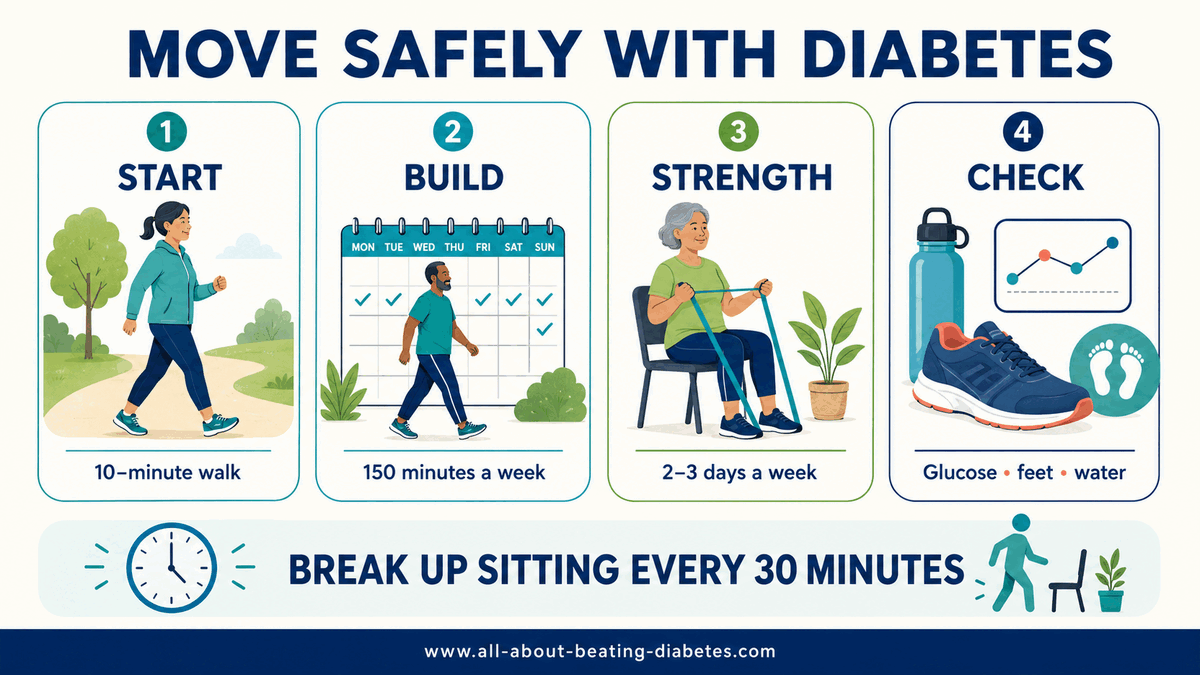
For most adults with diabetes, the long-term goal is at least 150 minutes of moderate-to-vigorous aerobic activity each week, spread over at least three days, plus resistance exercise two or three times on nonconsecutive days. Start with a 10-minute walk if you are inactive and build gradually. If you use insulin or medication that can cause hypoglycemia, follow a personal glucose, carbohydrate and medication plan before, during and after exercise. Do not exercise through a low blood sugar, illness with ketones, chest pain or an open foot wound.
On This Page
- Benefits of exercise
- How much activity to aim for
- Best types of exercise
- How hard should you exercise?
- Before starting
- Blood sugar safety
- Food and hydration
- During and after exercise
- Exercise with complications
- Four-week walking plan
- Simple home strength plan
- When to stop
- Common exercise myths
- Frequently asked questions

Why Exercise Matters When You Have Diabetes
Physical activity helps working muscles take up glucose and improves the way the body responds to insulin. Depending on the activity, medication and starting glucose, this may lower blood sugar during exercise or for several hours afterward.
The benefit is much broader than one glucose reading. Regular activity can improve:
- Insulin sensitivity and glucose management
- Heart and lung fitness
- Blood pressure and blood lipid patterns
- Strength, balance, mobility and independence
- Sleep, mood and emotional well-being
- Weight maintenance and body composition
- Long-term cardiovascular and overall health
Exercise is worthwhile even when the scale does not change. In research summarized by the American Diabetes Association, structured exercise lasting at least eight weeks lowered HbA1c by an average of about 0.66 percentage points in people with type 2 diabetes, even without a significant change in body mass index. Your personal response may be smaller or larger.
Exercise does not cure diabetes and should not replace prescribed medication, insulin, nutrition or glucose monitoring. It is one part of the complete plan described in my guide on how to control diabetes.
How Much Exercise Should You Aim For?
Current recommendations for most adults with type 1 or type 2 diabetes use the following goals. They are destinations, not requirements for your first week.
Aerobic activity
At least 150 minutes of moderate-to-vigorous activity each week for most adults.
Weekly spacing
Spread activity over at least three days and avoid more than two consecutive inactive days.
Resistance
Two or three sessions each week on nonconsecutive days.
Sitting breaks
Interrupt prolonged sitting at least every 30 minutes with standing or light movement.
Older adults should also include flexibility and balance work two or three times weekly when safe. Children and adolescents with diabetes generally need at least 60 minutes of moderate-to-vigorous activity daily, including muscle- and bone-strengthening activities at least three days per week.
If you are currently inactive, any safe increase above your baseline is useful. Begin with five or ten minutes and add time gradually. You can divide the day into shorter sessions—for example, a 10-minute walk after breakfast, lunch and dinner—rather than finding one 30-minute block.
What Are the Best Exercises for Diabetes?
The best exercise is safe, enjoyable and realistic enough to repeat. A complete plan combines several types of movement.
| Type | Examples | Main benefits | Practical starting point |
|---|---|---|---|
| Aerobic | Brisk walking, cycling, swimming, dancing, rowing or water exercise | Heart fitness, endurance, insulin sensitivity and glucose management | Walk for 5–10 minutes at a comfortable pace. |
| Resistance | Resistance bands, light weights, wall push-ups, chair stands or body-weight exercises | Muscle, strength, bone support, balance and daily function | One set of 8–12 controlled repetitions of several exercises. |
| Balance | Supported single-leg stance, heel-to-toe walk, tai chi or selected yoga movements | Stability and fall prevention, especially in older adults | Practice beside a sturdy chair or counter. |
| Flexibility | Gentle calf, thigh, chest and shoulder stretches | Comfortable range of motion | Stretch warm muscles gently without bouncing or pain. |
| Everyday movement | Housework, gardening, errands, walking the dog and movement breaks | Less sitting and more total daily activity | Stand or walk for a few minutes every half hour. |
Walking is often the easiest starting point, but it is not the only useful activity. If walking is painful or you have a foot problem, ask about non-weight-bearing choices such as swimming, stationary cycling, rowing, arm exercises or a chair routine.
How Hard Should You Exercise?
Moderate intensity means your breathing and heart rate increase, but you can still speak in sentences. You may be able to talk but not sing. Vigorous activity makes speaking more difficult, often limiting you to a few words at a time.
Begin at a light or moderate level when you are new to exercise. Increase only one element at a time—frequency, duration or intensity. Increasing everything together raises fatigue and injury risk.
A simple session can include:
- Warm-up: five minutes of easy walking or gentle movement.
- Main activity: exercise at your planned pace.
- Cool-down: slow the pace for five minutes rather than stopping suddenly.
- Stretching: gently stretch warm muscles if comfortable; never force a painful position.
High-intensity exercise is not necessary for good results. It can also raise glucose temporarily in some people because stress hormones signal the liver to release glucose. This does not mean the exercise “failed.” Compare patterns and discuss repeated large rises with your diabetes team.
Do You Need Your Doctor’s Permission Before Exercising?
Many people can begin with light activity, such as a short comfortable walk, without extensive testing. However, your healthcare professional should help you plan a new or more vigorous program if you have symptoms, have been inactive for a long time, or live with complications that affect exercise safety.
Ask for medical guidance before increasing intensity if you have:
- Chest pain, pressure, unexplained breathlessness, fainting or palpitations
- Known heart or circulation disease
- Frequent or severe hypoglycemia, or difficulty feeling low glucose
- Autonomic neuropathy, dizziness on standing or impaired temperature regulation
- Proliferative or severe nonproliferative diabetic retinopathy
- An open foot ulcer, Charcot foot, severe neuropathy or significant balance problems
- Pregnancy, advanced frailty or another illness limiting activity
- A plan to start vigorous exercise after a long inactive period
Your doctor may not need to “clear” every gentle walk. The purpose of a review is to identify the safest activity, not to prevent you from moving.
Blood Sugar and Exercise: A Practical Safety Check
There is no single pre-exercise glucose number that applies to every person and every activity. The direction of change depends on diabetes type, insulin on board, medication, meal timing, activity type, duration, intensity and your previous response.
| Glucose situation | General safety approach | Why individual advice matters |
|---|---|---|
| Below 70 mg/dL (3.9 mmol/L) | Do not begin or continue exercise. Treat the low promptly with fast-acting carbohydrate and recheck according to your hypoglycemia plan. | Exercise can lower glucose further, and thinking or coordination may already be affected. |
| 70–89 mg/dL (3.9–4.9 mmol/L) | If you use insulin or an insulin secretagogue, you may need carbohydrate before activity. Follow your personal plan and consider the activity’s duration and intensity. | Current ADA guidance notes that some people on these treatments need carbohydrate when pre-exercise glucose is below 90 mg/dL. |
| Within your planned exercise range | Proceed with the monitoring, carbohydrate and medication strategy taught by your healthcare team. | Your safe starting range may differ by age, pregnancy, exercise and hypoglycemia risk. |
| High and unexplained | If you have type 1 diabetes, use insulin or are at risk of ketoacidosis, follow your plan for checking ketones. Avoid intense activity when insulin is insufficient. | Gentle activity can lower glucose in some situations, but intense exercise may raise it, and exercise with significant ketones can be dangerous. |
| Moderate or large ketones, vomiting or illness | Postpone exercise and follow your sick-day or urgent-care plan. | The priority is correcting insulin deficiency, dehydration and illness—not trying to “exercise the sugar down.” |
If you use insulin, a pump or an automated insulin-delivery system, learn how to use the device’s exercise or activity setting. The timing often matters, so do not wait until exercise is nearly finished to ask how it works. Insulin adjustments should be personalized; do not copy another person’s percentage reduction.
People taking metformin, a DPP-4 inhibitor, GLP-1 medicine or SGLT2 inhibitor without insulin or an insulin secretagogue usually have a lower exercise-related hypoglycemia risk. Combination therapy changes that risk. SGLT2 medicines also require awareness of ketoacidosis symptoms, which can sometimes occur without extremely high glucose.
Should You Eat Before Exercise?
You do not need to exercise with an empty stomach. The old advice to avoid eating before activity is not appropriate for everyone and may be dangerous for a person using insulin or a medicine that can cause low blood sugar.
Whether you need food depends on:
- Your pre-exercise glucose and trend
- Insulin or medication taken recently
- Time since the last meal
- Activity intensity and expected duration
- Previous low-glucose patterns
- Whether exercise is planned or unexpected
Some people can comfortably perform a short walk without a snack. Others need measured carbohydrate before or during activity. A large fatty meal immediately before vigorous exercise may cause digestive discomfort, but that is different from saying the stomach should always be empty.
Water is appropriate for most short or moderate sessions. Drink before, during and after activity according to thirst and conditions. If you have heart failure, advanced kidney disease or a prescribed fluid restriction, follow your clinician’s hydration advice.
Sports drinks are usually unnecessary for routine short activity because they can add sugar and calories. However, fast-acting carbohydrate may be medically useful for preventing or treating hypoglycemia, and a sports drink may sometimes be part of a plan for prolonged activity. The goal is to use it intentionally—not to reject or drink it automatically.
What to Do During and After Exercise
During activity
- Carry fast-acting carbohydrate if you use insulin or a medicine that can cause lows.
- Keep identification, a phone and emergency information with you.
- Check glucose or your continuous glucose monitor as your plan recommends.
- Remember that CGM readings can lag behind blood glucose during rapid change; confirm unexpected readings when possible.
- Use a partner when trying an unfamiliar or prolonged activity.
- Stop for symptoms rather than trying to “push through.”
After activity
Exercise may continue to increase insulin sensitivity for hours. Delayed hypoglycemia can occur later in the day or overnight, especially after prolonged, unfamiliar or afternoon/evening activity and in people using insulin.
Check glucose after activity when your plan calls for it and continue monitoring when delayed lows are possible. Your care team may recommend a snack, insulin adjustment or temporary device setting. Recurrent post-exercise lows mean the plan needs review; they are not a reason to abandon exercise.
Also record situations where glucose rises. Intense intervals, sprinting, competitive activity and heavy resistance work may temporarily increase glucose. My related answer explains why blood sugar can rise after exercise.
How Diabetes Complications Change Exercise Choices
Peripheral neuropathy and foot problems
Wear well-fitting shoes suitable for the activity, clean socks and inspect both feet before and after exercise. Look for redness, blisters, cuts, swelling, warmth or drainage. Moderate walking may be safe for many people with neuropathy when footwear is appropriate, but an open sore or active foot injury requires non-weight-bearing activity and medical assessment.
Do not assume that lack of pain means the foot is safe; neuropathy can reduce warning sensation. See the detailed diabetic foot-care guide.
Diabetic retinopathy
Vigorous aerobic activity, heavy lifting, breath-holding and high-strain resistance exercise may be unsafe with proliferative or severe nonproliferative retinopathy because of bleeding or retinal-detachment risk. Ask your eye specialist which activities are appropriate.
Autonomic neuropathy
Autonomic nerve damage can alter heart-rate response, blood pressure, sweating, heat tolerance and awareness of hypoglycemia. Cardiac evaluation may be needed before exercise that is more intense than your usual activity.
Chronic kidney disease
Kidney disease does not automatically prohibit exercise. Activity type and intensity may need adjustment for anemia, blood pressure, bone disease, dialysis schedule, fatigue or fluid restrictions. Ask the renal and diabetes teams to coordinate the plan.
Pregnancy
Moderate activity is often encouraged before and during pregnancy when tolerated, but pregnancy-specific glucose targets and obstetric restrictions apply. Ask your obstetric team about safe exercise, insulin changes, hydration and warning symptoms.
A Four-Week Beginner Walking Plan
This plan is an educational example for an adult who has been medically advised that light-to-moderate walking is safe. Slow down the progression if you experience significant soreness, fatigue or glucose instability.
Week 1: Create the habit
- Walk 10 minutes on five days at a comfortable pace.
- Stand or move briefly every 30 minutes during long periods of sitting.
- Record glucose before and after selected walks if this is useful in your treatment plan.
- Inspect your feet after each walk.
Week 2: Add time
- Walk 15 minutes on five days.
- On one day, add a short home strength session.
- Practice a five-minute warm-up and cool-down.
- Notice which time of day feels easiest and how glucose responds.
Week 3: Build consistency
- Walk 20–25 minutes on five days.
- Add two nonconsecutive strength sessions.
- Use a slightly quicker pace for a few minutes if you can still pass the talk test.
- Continue movement breaks on sitting-heavy days.
Week 4: Approach the weekly goal
- Walk about 30 minutes on five days, or divide each day into shorter walks.
- Continue two strength sessions and add simple balance work if safe.
- Review glucose patterns, foot comfort, sleep, energy and enjoyment.
- Choose a realistic schedule to repeat next month.
If 30 minutes remains too difficult, continue with shorter sessions. Progress is not lost because your timetable differs from the example. For many people, a short walk after a meal is convenient and may reduce the after-meal glucose rise. Compare results with your personal targets in the blood sugar levels by time of day guide.
A Simple No-Gym Strength Routine
Perform this routine two nonconsecutive days per week if these movements are safe for you. Begin with one set of 8–12 slow repetitions. Rest as needed and breathe continuously—do not hold your breath.
- Chair stands: rise from a stable chair and sit down with control. Use the armrests if needed.
- Wall push-ups: place your hands against a wall and bend and straighten the elbows.
- Resistance-band row: pull the band toward the body while keeping shoulders relaxed.
- Seated knee extension: straighten one knee, pause and lower slowly.
- Supported calf raises: hold a sturdy counter and lift the heels if foot health and balance permit.
Stop if a movement causes sharp pain, chest symptoms, dizziness or unusual shortness of breath. People with significant retinopathy, uncontrolled blood pressure, hernia, recent surgery, severe neuropathy or joint disease may need different exercises.
When Should You Stop Exercising?
- Symptoms of low blood sugar, including shaking, sweating, sudden hunger, confusion, weakness or poor coordination
- Chest pain, pressure or pain spreading to the arm, jaw, back or shoulder
- Severe or unusual shortness of breath
- Fainting, near-fainting, severe dizziness or a new irregular heartbeat
- Sudden vision change, severe headache or new neurological symptoms
- Foot pain, bleeding, a blister or a new skin injury
- Vomiting, abdominal pain, deep breathing or signs of ketoacidosis
Call emergency services for chest pain, fainting, severe breathing difficulty, stroke-like symptoms, unconsciousness, seizure or severe hypoglycemia requiring help. Do not drive yourself during an emergency.
If glucose is below 70 mg/dL and you are awake and able to swallow safely, use fast-acting carbohydrate and your hypoglycemia plan. Learn the full steps in my guide to low blood sugar from 45–69 mg/dL.
Common Diabetes and Exercise Myths
- “I must exercise on an empty stomach.” False. Some people can exercise without food; others need carbohydrate for safety. Medication, glucose and activity determine the answer.
- “Exercise always lowers blood sugar.” False. Aerobic activity often lowers it, while intense or competitive activity can temporarily raise it.
- “A gym is necessary.” False. Walking, bands, chair exercises, dancing, housework and gardening can all contribute.
- “Only a 30- or 40-minute session counts.” False. Short sessions and frequent movement breaks are useful, especially while building the habit.
- “No pain, no gain.” False. Sharp pain, chest symptoms, dizziness and foot injury are warning signs—not proof of an effective workout.
- “Exercise lets me stop diabetes medicine.” False. Improved glucose is a reason to review treatment with your doctor, not to stop it independently.
- “If glucose is high, I should exercise it down.” Not always. Exercise can be unsafe with insulin deficiency, significant ketones or illness.
I do not ask an inactive patient to become an athlete in one week. I ask for one safe action that can be repeated: a 10-minute walk, standing during television breaks or a few chair exercises. Consistency builds confidence, and confidence makes the next step easier.
If you use insulin, the glucose plan is part of the exercise—not an inconvenience around it. Record what happened, learn from the pattern and let your diabetes team help you adjust safely.
Frequently Asked Questions
What is the best exercise for type 2 diabetes?
A combination of aerobic and resistance activity is usually most helpful. Brisk walking is an accessible aerobic choice, while chair stands, bands or light weights build strength. The best plan is one that is safe, fits your abilities and can be repeated consistently.
Is walking 30 minutes a day enough for diabetes?
Walking for 30 minutes on five days can meet the common 150-minute weekly aerobic goal when the pace is at least moderate. Add resistance exercise two or three times weekly and reduce prolonged sitting for a more complete plan. If 30 minutes is difficult, divide it into shorter walks.
What blood sugar is too low for exercise?
Do not start or continue exercise when glucose is below 70 mg/dL (3.9 mmol/L). Treat the low and recheck according to your plan. If you use insulin or an insulin secretagogue, you may need carbohydrate when starting below 90 mg/dL, depending on insulin, duration and intensity.
Can I exercise when my blood sugar is high?
It depends on the level, symptoms, diabetes type, insulin availability and ketones. If you are at risk of ketoacidosis and glucose is high without explanation, follow your ketone plan. Do not exercise with moderate or large ketones, vomiting or signs of insulin deficiency. Intense activity can raise glucose further.
Should I eat before exercising with diabetes?
Not everyone needs a snack, but exercising on an empty stomach is not a universal rule. People using insulin or medicines that cause hypoglycemia may need measured carbohydrate. Base the decision on your glucose trend, medication, time since eating, exercise duration and personal plan.
Why does my blood sugar rise after exercise?
High-intensity exercise, sprinting, heavy resistance work and competition can increase stress hormones and liver glucose release. Insufficient active insulin, illness, dehydration or starting with high glucose can contribute. Record the activity and glucose pattern and discuss repeated large rises with your clinician.
How long can exercise affect blood sugar?
The effect can continue for several hours, and delayed hypoglycemia may occur later or overnight in people using insulin or insulin secretagogues. Duration depends on activity intensity, length, fitness, insulin and food. Continue monitoring when your plan recommends it.
Can I exercise with diabetic neuropathy?
Often yes, but the activity must match foot sensation, balance and any existing injury. Wear appropriate footwear, inspect your feet and choose non-weight-bearing activity if you have an open sore or active foot injury. Severe neuropathy or Charcot changes need professional guidance.
Related Questions
Related Resources
References
- American Diabetes Association Professional Practice Committee. Facilitating Positive Health Behaviors and Well-being to Improve Health Outcomes: Standards of Care in Diabetes—2026.
- American Diabetes Association Professional Practice Committee. Retinopathy, Neuropathy, and Foot Care: Standards of Care in Diabetes—2026.
- American Diabetes Association Professional Practice Committee. Children and Adolescents: Standards of Care in Diabetes—2026.
- Centers for Disease Control and Prevention. Get Active.
- National Institute of Diabetes and Digestive and Kidney Diseases. Managing Diabetes.
- Centers for Disease Control and Prevention. Treatment of Low Blood Sugar (Hypoglycemia).
Medical disclaimer: This page provides general education and cannot determine whether a specific exercise, glucose level, carbohydrate amount or medication adjustment is safe for you. Follow the exercise and hypoglycemia plan provided by your healthcare professional. Do not change insulin or diabetes medication independently. Seek urgent medical care for chest pain, severe breathing difficulty, fainting, stroke-like symptoms, seizure, unconsciousness, severe hypoglycemia, or possible diabetic ketoacidosis.