Quick answer
If you have type 2 diabetes and overweight or obesity, planned and sustained weight loss can improve blood glucose and other cardiovascular risk factors. A loss of about 5–7% of starting weight may provide meaningful benefits, while greater sustained loss may provide additional benefits for some people. Unintentional weight loss is different: it can be a sign of uncontrolled diabetes, insufficient insulin, medication effects, or another illness and should be medically assessed.
When patients ask me about diabetes and weight loss, I first separate two very different situations. Are you intentionally working toward a healthier weight with an agreed plan, or are you losing weight without trying? The first may be part of diabetes treatment. The second deserves medical attention.
Weight is influenced by biology, medicines, sleep, stress, food access, health conditions, and many other factors. It is not a measure of willpower or personal worth. I encourage realistic goals and steady support rather than blame, crash diets, or unsafe shortcuts.
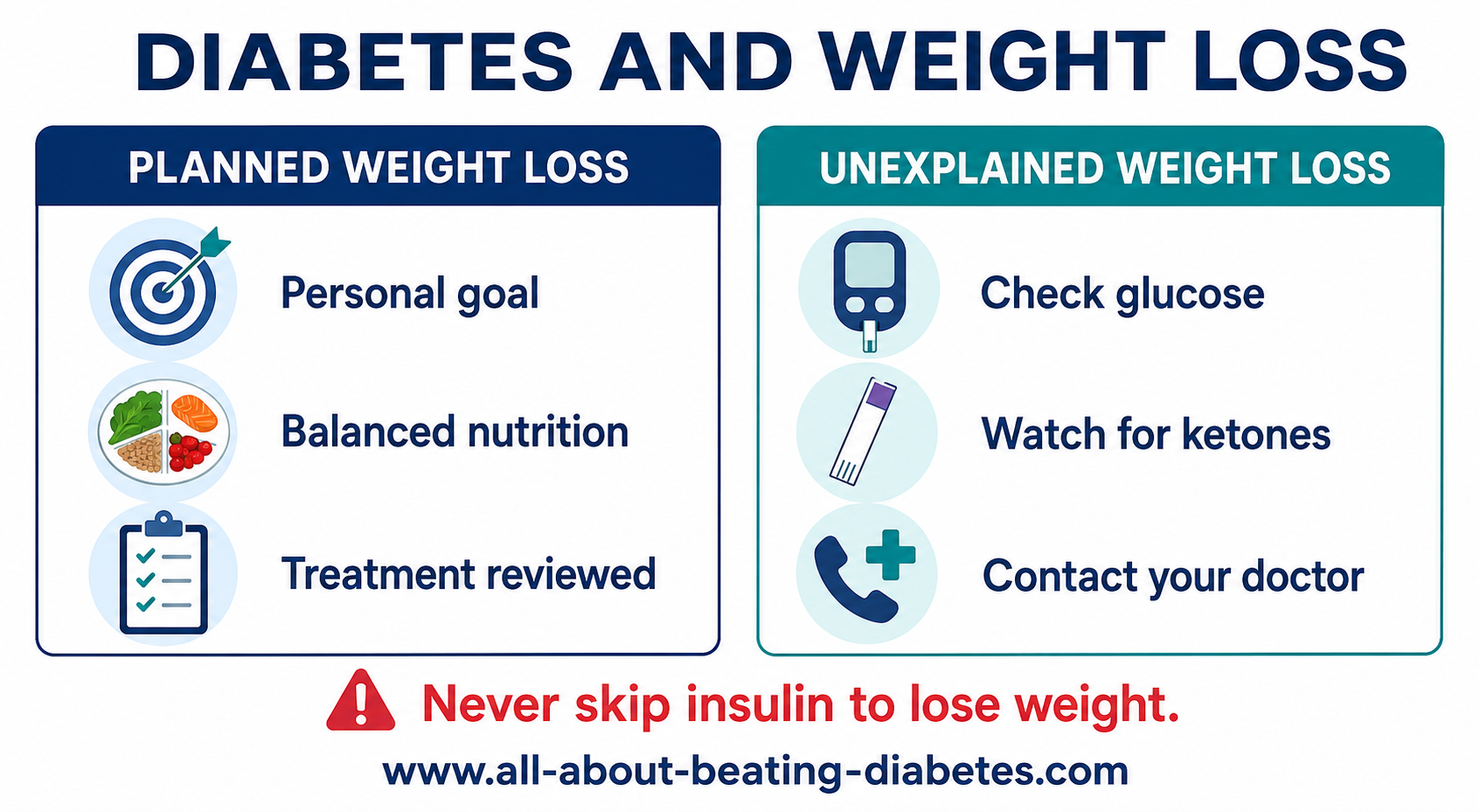
Planned versus unexplained weight loss
| Planned weight loss | Unexplained weight loss |
|---|---|
| Occurs through an individualized nutrition, activity, behavioral, medication, or surgical plan. | Occurs without intentionally changing food intake or activity. |
| Glucose treatment is reviewed as weight and eating patterns change. | May occur with very high glucose, insufficient insulin, dehydration, infection, thyroid disease, digestive illness, cancer, depression, or other causes. |
| Aims to preserve nutrition, muscle, function, and long-term health. | May be accompanied by thirst, frequent urination, fatigue, blurred vision, nausea, abdominal pain, or ketones. |
| Progress and side effects are monitored. | Requires medical assessment, especially when rapid, continuing, or accompanied by symptoms. |

Why can planned weight loss help type 2 diabetes?
In type 2 diabetes, insulin resistance makes it harder for muscle, liver, and fat cells to respond to insulin. Weight loss can improve insulin sensitivity and glucose management. It may also improve blood pressure, triglycerides, mobility, sleep apnea, fatty liver disease, and quality of life, depending on the individual.
The ADA’s 2026 Standards recommend treating weight management as a primary goal alongside glucose management for people with type 2 diabetes and overweight or obesity. Losing 5–7% of starting weight can improve glucose and other intermediate cardiovascular risk factors. Sustained loss above 10% usually brings greater metabolic benefits and may make type 2 diabetes remission possible for some people.
Not everyone with diabetes needs to lose weight. If your weight is already in a healthy range, you are pregnant, you are frail, you have lost muscle, or you have an eating disorder or another medical condition, the priority may be weight maintenance, adequate nutrition, strength, or recovery. Your plan should be individualized.
Weight management with type 1 diabetes
People with type 1 diabetes can also have overweight or obesity, but weight management must be coordinated carefully with insulin, carbohydrate intake, activity, and hypoglycemia prevention. Starting a reduced-calorie eating plan or exercising more may change insulin requirements. Make those changes with your diabetes team.
Parents and caregivers should avoid restrictive diets for a child or teenager without guidance from the pediatric diabetes team. Children need adequate energy and nutrients for growth and development. Sudden weight loss, insulin omission, repeated ketones, or concern about body image requires prompt professional evaluation.
How to build a safer diabetes weight-loss plan
- Start with a health review. Discuss your glucose pattern, A1C, medicines, kidney and liver health, blood pressure, lipids, sleep, eating behavior, pregnancy plans, mobility, and previous attempts.
- Choose a personal goal. A 5–7% reduction is a clinically meaningful initial target for many adults with type 2 diabetes and excess weight. Any safe progress may still be valuable.
- Use an individualized eating pattern. There is no single best diabetes diet. Emphasize nonstarchy vegetables, whole fruit, legumes, lean protein, whole grains, nuts, seeds, and minimally processed foods while adjusting portions and total energy to your needs.
- Protect muscle. Include adequate protein and resistance activity when safe. This is particularly important for older adults and anyone losing weight rapidly.
- Build activity gradually. Aim toward a combination of aerobic activity, resistance exercise, and less sitting, adapted for heart, foot, joint, balance, and eye conditions.
- Monitor glucose during change. Reduced food intake and increased activity can cause hypoglycemia when combined with insulin or some diabetes tablets. Agree in advance on monitoring and medication adjustments.
- Plan for maintenance. Obesity is a chronic, relapsing condition. Continued nutrition, activity, behavioral, and medical support may be needed after weight loss.
Lifestyle, medication, and metabolic surgery
Nutrition, activity, and behavioral support
Structured programs may combine individualized nutrition, physical activity, goal setting, self-monitoring, problem solving, sleep support, and regular follow-up. Referral to a registered dietitian nutritionist or diabetes care and education specialist can make the plan safer and more practical.
Weight-management medication
Prescription obesity medicines may be considered when lifestyle support alone is insufficient and eligibility criteria are met. Some diabetes medicines promote weight loss, some are weight neutral, and others may promote weight gain. The choice should consider cardiovascular and kidney disease, glucose goals, side effects, cost, access, pregnancy potential, and personal preferences. Do not buy injectable or compounded weight-loss products from unverified sources.
Metabolic surgery
Metabolic surgery can produce substantial, durable weight loss and may improve glucose control or lead to type 2 diabetes remission in appropriately selected people. It requires multidisciplinary assessment, lifelong nutritional monitoring, vitamin and mineral supplementation, and continued diabetes follow-up.
As weight falls, your blood pressure, glucose, and medication needs may change. Keep a blood sugar log and contact your care team promptly about repeated readings outside your personal range.
When is unexplained weight loss concerning?
High glucose can cause glucose and water to leave the body through urine. When cells cannot use enough glucose because effective insulin is lacking, the body begins breaking down fat and muscle for energy. This can produce rapid weight loss, dehydration, weakness, and ketones. It may be the first sign of type 1 diabetes or a sign that established diabetes is seriously uncontrolled.
Arrange prompt medical assessment if you are losing weight without trying—particularly if you have increased thirst, frequent urination, blurred vision, fatigue, recurrent infections, or glucose readings outside your range. A clinician may review glucose and ketones, medicines, food intake, thyroid function, infection, digestive symptoms, mood, and other possible causes.
How fast should you lose weight?
There is no safe universal rate. Your starting weight, age, treatment, muscle mass, health conditions, and method of weight loss all matter. Rapid loss increases the importance of monitoring nutrition, hydration, muscle, gallbladder symptoms, glucose, and medication needs. Ask your clinician what pace and monitoring schedule are appropriate for you.
Weight can fluctuate with hydration, bowel contents, menstrual cycle, and time of day. If you monitor it, use the same scale under similar conditions and focus on the trend. Waist measurement, strength, mobility, glucose, blood pressure, laboratory results, and quality of life may add information beyond the scale.
Frequently asked questions
Can losing weight reverse type 2 diabetes?
Substantial sustained weight loss can help some people reach type 2 diabetes remission, especially earlier in the disease, but it is not guaranteed and is not considered a permanent cure. Continued monitoring remains necessary.
Why did I gain weight after starting insulin?
Improved glucose control reduces calorie loss in urine, and insulin supports energy storage. Treating lows with excess calories can also contribute. Do not stop insulin. Ask your clinician to review doses, glucose patterns, nutrition, activity, and other treatment options.
Can I follow a very-low-carbohydrate diet while using insulin?
Major carbohydrate reduction can change insulin requirements and increase hypoglycemia risk. Some approaches can also raise ketone concerns. Discuss the plan before starting and arrange medication, glucose, and ketone monitoring.
Do I need to lose weight if my glucose is high?
Not necessarily. High glucose requires assessment and treatment regardless of weight. Weight loss is appropriate when excess weight is present and the plan is safe; it is not the treatment goal for every person with diabetes.
When should I call my doctor about weight loss?
Call when loss is unintentional, rapid, persistent, associated with weakness or symptoms, or causing repeated low glucose. Seek emergency care for DKA symptoms, severe hypoglycemia, confusion, or inability to drink.
Related questions from readers
Related Beating Diabetes resources
- Insulin resistance treatment and management
- Building a practical diabetic meal plan
- Low-carbohydrate and Atkins-style diets with diabetes
- Diabetes home glucose and ketone testing
- Improving insulin resistance safely
References
- American Diabetes Association. Obesity and Weight Management for the Prevention and Treatment of Diabetes: Standards of Care in Diabetes—2026.
- American Diabetes Association. Facilitating Positive Health Behaviors and Well-being: Standards of Care in Diabetes—2026.
- American Diabetes Association. Prevention or Delay of Diabetes and Associated Comorbidities: Standards of Care in Diabetes—2026.
- Centers for Disease Control and Prevention. Diabetic Ketoacidosis.