- Home
- Diabetes Foods Blood Sugar
- Diabetic eating
Diabetic Eating: How to Plan Balanced Meals for Better Blood Sugar Control
- Build a balanced plate: Fill half with non-starchy vegetables, one-quarter with lean protein, and one-quarter with carbohydrate foods, preferably rich in fiber.
- Carbohydrates are not forbidden: Focus on portions, food quality, and how your blood sugar responds after meals.
- Personalize your eating plan: Meal timing and carbohydrate amounts should match your diabetes medicines, activity, and individual health needs.
Planning meals with diabetes does not mean following a rigid “diabetic diet” or giving up every food you enjoy. I prefer to help my patients build meals they can repeat in real life—using sensible portions, higher-fiber carbohydrate foods, vegetables, protein, healthy fats, and drinks without added sugar.
A practical diabetes meal starts with a 9-inch plate: fill half with nonstarchy vegetables, one-quarter with lean protein, and one-quarter with a carbohydrate food—preferably a higher-fiber, minimally processed choice. Add water or an unsweetened drink. The best portions and carbohydrate amount depend on your medicines, activity, glucose pattern, health conditions, and goals.
What Does Healthy Diabetic Eating Mean?
There is no single eating pattern that is best for everyone with diabetes. A useful plan considers your diabetes type, insulin or medicines, culture, budget, cooking habits, weight goals, kidney and heart health, and risk of low blood sugar.
The goal is not to eat “perfectly.” It is to make the usual pattern healthier: more nonstarchy vegetables, legumes, whole fruit, suitable whole grains, nuts, seeds, fish and other lean proteins; less sugary drink, refined grain, processed meat, and heavily processed snack food.
Food works together with physical activity, medication, sleep, and glucose monitoring. Nutrition can improve glucose control, weight, blood pressure, and cholesterol, but it does not mean that prescribed diabetes treatment is no longer needed.
Healthy eating is an important part of managing diabetes. To explore how different foods, carbohydrates, and meal choices affect glucose, visit our Diabetes Foods and Blood Sugar guide.
Use the Diabetes Plate Method
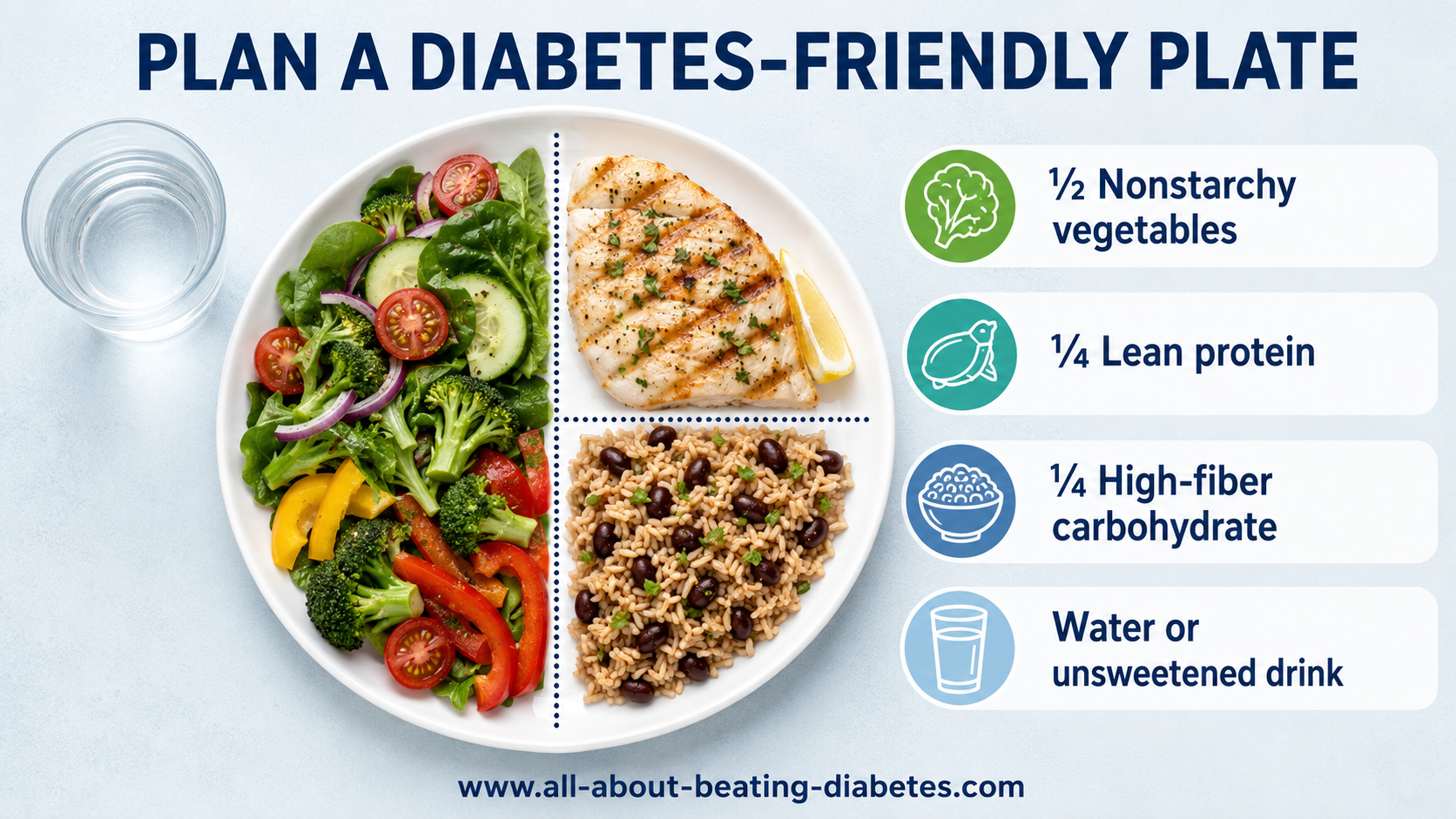
Start with a plate about 9 inches across:
- Half the plate: nonstarchy vegetables such as leafy greens, broccoli, cauliflower, peppers, tomatoes, cucumber, mushrooms, green beans, zucchini, or eggplant.
- One-quarter: lean protein such as fish, skinless chicken or turkey, eggs, tofu, or a suitable portion of lean meat.
- One-quarter: a carbohydrate food such as beans, lentils, brown rice, oats, whole-grain bread, whole-wheat pasta, corn, peas, or potato.
- Drink: water, sparkling water, or an unsweetened beverage.
Beans and lentils provide both carbohydrate and protein, so they can overlap two sections of the plate. Fruit, yogurt, milk, and healthy fats may also fit, but their portions must be counted as part of the complete meal.
For more meal examples, see my diabetic meal plan and plate-method guide.
Plan Carbohydrates—Do Not Automatically Eliminate Them
Carbohydrates have the most immediate effect on glucose after eating. They include bread, cereal, rice, pasta, potatoes, corn, beans, fruit, milk, yogurt, sweets, and sugary drinks. The amount you eat is often more important than whether a food simply contains “sugar.”
Many people do well with reasonably consistent carbohydrate portions from meal to meal. People using rapid-acting mealtime insulin may instead match insulin to carbohydrate using a prescribed insulin-to-carbohydrate ratio. There is no universal number of carbohydrate grams that is correct for every person.
Our guide to carbohydrates, glycemic index, and glycemic load explains why portion, processing, fiber, and the complete meal all influence the glucose response. If you count carbohydrates, the carbohydrate counter calculator can help you estimate a meal.
Foods to Choose More Often—and Foods to Limit
| Choose more often | Limit or use smaller portions | Practical reason |
|---|---|---|
| Nonstarchy vegetables | Vegetables fried or covered in creamy sauces | Vegetables add fiber and nutrients without concentrating carbohydrate. |
| Beans, lentils, oats, and suitable whole grains | Large portions of white bread, refined cereal, white rice, and pastries | Less processing and more fiber may improve fullness and slow digestion. |
| Whole fruit in a measured portion | Juice, sweetened fruit drinks, and large dried-fruit portions | Whole fruit retains fiber and is less concentrated than juice or dried fruit. |
| Fish, skinless poultry, tofu, eggs, and lean meat | Processed meat, fatty cuts, and breaded fried meat | Protein can support fullness while limiting excess saturated fat and sodium. |
| Olive oil, nuts, seeds, and avocado in modest amounts | Butter, shortening, and foods high in saturated or trans fat | Fat quality matters for heart health, but all fats remain calorie-dense. |
| Water and unsweetened drinks | Soda, sweet tea, energy drinks, and frequent juice | Liquid sugar can raise glucose quickly and is easy to overconsume. |
What About Fruit, Juice, Dairy, and Cooking Fat?
Whole fruit
Fruit can be part of a diabetes meal plan. Choose a measured portion of whole fruit more often than juice. Canned fruit can be suitable when packed in water or its own juice without added sugar, but check the label and portion.
Fruit juice
Juice is absorbed more quickly and provides less fiber than whole fruit. It is useful for treating hypoglycemia when appropriate, but it should not be considered a routine free drink. Water is the best everyday choice for most people.
Milk and yogurt
Milk and yogurt contain carbohydrate as well as protein. Choose plain or unsweetened products and count them within your meal plan. Low-fat choices may be useful when saturated fat or calories are a concern, but the best choice depends on your complete diet.
Oils and spreads
You do not need to remove every source of fat. Use modest amounts of olive oil, nuts, seeds, or avocado in place of butter, shortening, and heavy sauces. Baking, grilling, roasting, steaming, boiling, and stir-frying with a small amount of oil are practical cooking methods.
A Simple Day of Diabetes-Friendly Eating
| Meal | Example | What to adjust |
|---|---|---|
| Breakfast | Plain oatmeal with berries and a small portion of nuts, or eggs with vegetables and one slice of whole-grain bread | Measure oats, fruit, milk, and bread because all contribute carbohydrate. |
| Lunch | Large mixed salad, grilled chicken or beans, a measured portion of whole-grain bread, and water | Watch dressings, bread size, and sweetened drinks. |
| Dinner | Half-plate vegetables, baked fish, and a quarter-plate of lentils, brown rice, or potato | Avoid combining large servings of bread, rice, and potato in the same meal. |
| Snack, if needed | Whole fruit with a few nuts, plain yogurt, raw vegetables with hummus, or a small portion of cheese | Not everyone needs snacks; consider hunger, medicines, activity, and glucose. |
This is a flexible example, not a prescription. Portions should be personalized. A Mediterranean-style pattern can also be adapted to familiar family foods; see my guide to the Mediterranean diet and diabetes.
Shop and Read Food Labels More Wisely
- Check the serving size and how many servings you actually eat.
- Use total carbohydrate, not only the “sugars” line.
- Compare fiber, added sugar, saturated fat, and sodium.
- Do not assume “sugar-free,” “natural,” “whole grain,” or “low GI” means unlimited.
- Choose minimally processed foods more often and keep convenient healthy options available.
The glycemic index chart can help compare carbohydrate foods, but GI does not measure portion size or overall nutritional quality.
Use Your Glucose Pattern to Personalize Meals
- Record the meal, approximate portions, and carbohydrate foods.
- Check glucose before eating when your care plan recommends it.
- Check again at the time advised for you—often one to two hours after the first bite.
- Record insulin or medicine timing, activity, sleep, stress, and illness.
- Repeat the comparison before deciding that one food is always “good” or “bad.”
A single reading may be affected by timing, meter variation, activity, stress, or medication. Look for repeatable patterns and use a blood sugar log sheet to discuss them with your healthcare team.
When Your Meal Plan Needs Professional Personalization
Ask for help from a registered dietitian nutritionist or diabetes educator if you use insulin, have frequent high or low readings, are pregnant, have kidney disease, gastroparesis, an eating disorder, food insecurity, unintended weight loss, or difficulty matching meals to treatment.
A major reduction in carbohydrate may cause hypoglycemia when you use insulin or a sulfonylurea. Do not change insulin or diabetes medicine on your own. If you take an SGLT2 inhibitor, discuss very-low-carbohydrate or ketogenic eating with your clinician because it may increase ketoacidosis risk.
I do not want my patients to fear food or follow a plan they cannot maintain. Begin with one repeatable change: improve the plate proportions, replace sugary drinks, or measure the carbohydrate food you eat most often. Then use your glucose pattern to decide the next step.
Related Questions
Related Resources
References
- American Diabetes Association: Facilitating Positive Health Behaviors and Well-being—Standards of Care in Diabetes 2026.
- National Institute of Diabetes and Digestive and Kidney Diseases: Healthy Living With Diabetes.
- Centers for Disease Control and Prevention: Diabetes Meal Planning.
- Centers for Disease Control and Prevention: Carbohydrate Counting.