- Home
- Best Diabetes Diet for Stable Blood Sugar
- Borderline Diabetic Diet Food List and Diet Plan
Borderline Diabetic Diet: What to Eat for Prediabetes
Written by Dr. Albana Greca Sejdini, MD, MMedSc, Family Physician
Medically reviewed by Dr. Ruden Cakoni, MD, Endocrinologist
Last reviewed: July 2026
Quick Answer
A borderline diabetic diet is better called a prediabetes eating plan. There is no single required menu. A useful starting point is to fill half of a 9-inch plate with nonstarchy vegetables, one quarter with lean or plant-based protein, and one quarter with a higher-fiber carbohydrate. Choose water instead of sugary drinks, limit refined grains and oversized portions, and select an eating pattern you can maintain. If you have overweight or obesity, losing approximately 5–7% of your starting weight and completing at least 150 minutes of moderate activity weekly can substantially reduce the risk of developing type 2 diabetes.
“Borderline diabetes” is an informal and outdated expression. The medical term is prediabetes: blood glucose is higher than normal but does not yet meet the diagnostic criteria for diabetes. Prediabetes is not harmless, but it is also not a guarantee that you will develop type 2 diabetes.
Food choices can help improve glucose, weight, blood pressure, cholesterol, and overall health. However, the goal is not to find a miracle food or follow a punishment diet. The goal is to build an eating pattern that reduces excess calories when needed, improves carbohydrate quality and portions, and fits your health, culture, budget, and routine.
On This Page
What Does Borderline Diabetes Mean?
Prediabetes describes an intermediate glucose range associated with a higher risk of future type 2 diabetes and cardiovascular disease. It often occurs with insulin resistance, abdominal weight gain, high triglycerides, low HDL cholesterol, high blood pressure, fatty liver disease, polycystic ovary syndrome, or a history of gestational diabetes.
Many people have no obvious symptoms. Thirst, frequent urination, blurred vision, fatigue, infections, or unexplained weight loss may indicate glucose has risen further and should be assessed promptly.
Prediabetes Test Ranges
| Laboratory test | Normal range | Prediabetes range | Diabetes range |
|---|---|---|---|
| A1C | Below 5.7% | 5.7–6.4% | 6.5% or higher |
| Fasting plasma glucose | Below 100 mg/dL | 100–125 mg/dL | 126 mg/dL or higher |
| 2-hour 75-g oral glucose tolerance test | Below 140 mg/dL | 140–199 mg/dL | 200 mg/dL or higher |
These values apply to nonpregnant individuals. Diagnosis should be made with appropriate laboratory testing and clinical interpretation. A home glucose meter or continuous glucose monitor is useful for observing patterns but is not used alone to diagnose prediabetes. Learn more in our A1C guide and blood sugar level chart.
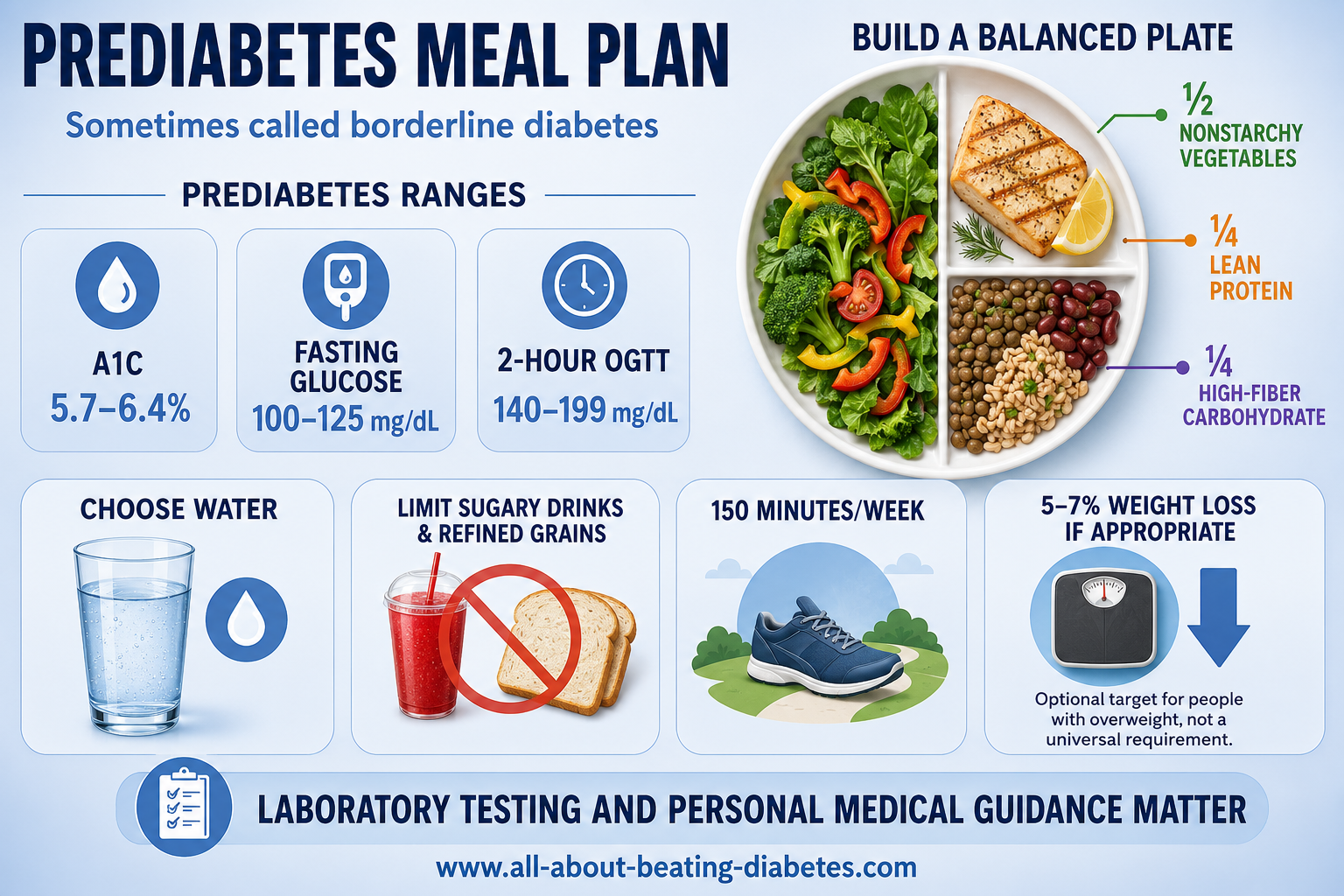

Build Your Borderline Diabetic Diet with the Plate Method
The plate method is an easy starting point that does not require counting every calorie:
- Half the plate: nonstarchy vegetables. Examples include leafy greens, broccoli, cauliflower, peppers, tomatoes, mushrooms, zucchini, green beans, cabbage, cucumber, and eggplant.
- One quarter: lean or plant-based protein. Choose fish, skinless poultry, eggs, tofu, tempeh, beans, lentils, or an appropriate portion of lean unprocessed meat.
- One quarter: carbohydrate food. Prefer beans, lentils, intact grains, oats, barley, quinoa, whole-grain products, or a controlled portion of starchy vegetables.
- Drink: water, sparkling water, unsweetened tea, or another drink without added sugar.
Whole fruit or plain dairy can be added when it fits your energy and carbohydrate plan. The updated diabetes food guide explains why this plate approach is more practical than the older grain-based food pyramid.
You Do Not Need to Eliminate Carbohydrates
Carbohydrates include grains, bread, rice, pasta, potatoes, corn, beans, lentils, fruit, milk, yogurt, sweets, and sugary drinks. They raise glucose to different degrees, but carbohydrate is not automatically “bad.”
Four factors matter:
- Amount: a large portion usually has a greater glucose and calorie impact.
- Quality: fiber-rich, minimally processed foods are preferable to sugary drinks and refined grains.
- Distribution: spreading carbohydrate across meals may be easier to manage than eating most of it at one sitting.
- Complete meal: vegetables, protein, fiber, and healthy fats affect fullness and the overall glucose response.
Glycemic index and glycemic load may help compare carbohydrate foods, but they should not override nutrition quality or portion size. Our guide to low glycemic load foods explains how serving size changes the result.
Foods to Eat More Often
Vegetables
Fresh, frozen, or lower-sodium canned nonstarchy vegetables. Use different colors and preparation methods.
Beans and Whole Grains
Lentils, chickpeas, beans, oats, barley, bulgur, quinoa, brown rice, and dense whole-grain breads in planned portions.
Whole Fruit
Berries, apples, pears, oranges, peaches, plums, melon, bananas, and other fruit. Choose whole fruit more often than juice.
Protein Foods
Fish, seafood, poultry, eggs, tofu, tempeh, beans, lentils, plain yogurt, and modest portions of lean meat.
Unsaturated Fats
Olive or canola oil, nuts, seeds, avocado, and fish. Use modest portions because these foods are calorie-dense.
Plain Dairy or Alternatives
Plain yogurt, milk, or unsweetened fortified alternatives. Compare carbohydrate, added sugar, protein, calcium, and vitamin D.
Foods and Drinks to Limit More Often
- Regular soda, sweetened tea, energy drinks, and frequent juice
- Candy, pastries, cakes, cookies, sweetened cereals, and frequent desserts
- Large portions of white bread, refined pasta, white rice, or fried potatoes
- Processed meats such as bacon, sausage, hot dogs, and many deli meats
- Large amounts of butter, lard, cream, fatty meat, and coconut or palm fat
- Highly processed snacks that are easy to overeat
- Excess alcohol
“Limit” does not necessarily mean “never.” Frequency, portion, and the complete eating pattern matter. Products labeled “sugar-free,” “diabetic,” “natural,” or “keto” are not automatically healthy.
Several Eating Patterns Can Help Prediabetes
There is no single best borderline diabetic diet for everyone. Current guidance supports evidence-based patterns that can be maintained, including:
- Mediterranean-style: vegetables, legumes, fruit, whole grains, fish, olive oil, nuts, and fewer refined or processed foods.
- Moderately lower-carbohydrate: smaller portions of refined starch and sugar while retaining vegetables, protein, healthy fats, and nutritious carbohydrate foods.
- Plant-forward: more legumes, vegetables, whole grains, nuts, and seeds, with attention to protein and micronutrients.
- Calorie-reduced: appropriate for weight loss when energy intake is greater than the body needs.
The most effective pattern is usually the one that is nutritionally adequate, affordable, culturally acceptable, and sustainable. Extreme restriction is not required.
Sample One-Day Prediabetes Menu
This example is educational rather than a prescription. Adjust portions to your calorie needs, glucose pattern, allergies, culture, and medical conditions.
Breakfast
Plain Greek yogurt with berries, a measured portion of oats, and walnuts—or eggs with vegetables and one slice of whole-grain toast.
Lunch
Large salad or cooked vegetables, grilled chicken or tofu, chickpeas, olive oil, lemon, and a small whole-grain portion if desired.
Dinner
Half a plate of nonstarchy vegetables, one quarter baked fish or lentils, and one quarter barley, brown rice, potato, or another carbohydrate food.
Optional Snack
Whole fruit with a small handful of nuts, vegetables with hummus, or plain yogurt. Snacks are optional rather than mandatory.
Weight Loss and Physical Activity
For adults with overweight or obesity who are at high risk, the American Diabetes Association recommends aiming for at least 5–7% weight reduction through a healthy reduced-calorie eating pattern and at least 150 minutes of moderate-intensity activity per week. This is approximately 30 minutes on five days, although activity can be divided into shorter sessions.
The Diabetes Prevention Program found that intensive lifestyle change reduced progression to type 2 diabetes by 58% over about three years compared with placebo. The program combined weight loss, lower calorie and fat intake, behavioral support, and physical activity.
Weight loss is not required for every person. Someone who is already at a healthy weight may focus more on food quality, activity, strength, sleep, and cardiometabolic risk factors. Our diabetes and exercise guide can help you begin safely.
Monitoring and Medical Follow-Up
People with prediabetes should generally be monitored for progression to diabetes at least annually, with frequency adjusted to individual risk. Your clinician may also assess blood pressure, cholesterol, triglycerides, waist or weight trends, liver health, sleep apnea, and cardiovascular risk.
Home glucose checks are not necessary for everyone with prediabetes. They may be useful in selected situations, but repeated finger-sticks can create anxiety without changing treatment. Ask what result, timing, and action would make monitoring useful for you.
Metformin may be considered for selected adults at particularly high risk, including some people aged 25–59 years with BMI of at least 35 kg/m², higher fasting glucose or A1C, or previous gestational diabetes. It should be prescribed after an individualized medical discussion.
When the Diet Needs Personalization
Seek personalized nutrition guidance if you are pregnant, planning pregnancy, younger than 18, older and frail, underweight, have kidney or liver disease, heart failure, an eating disorder, celiac disease, food allergies, gastrointestinal disease, or take medicines that affect glucose or weight.
Prediabetes during pregnancy is not interpreted using these nonpregnant ranges. A history of gestational diabetes increases future risk and requires ongoing screening.
Doctor’s Note
Prediabetes is a signal to act, not a reason to panic or remove every carbohydrate. Start with one or two changes you can repeat: replace sugary drinks, balance the plate, walk regularly, improve sleep, and follow your laboratory results. Consistency matters more than a short extreme diet.
Most Asked Questions
Can prediabetes go back to the normal range?
Yes, some people return to normal glucose ranges, especially after sustained improvements in weight, diet, and activity. Others remain stable or progress. Continue follow-up even when results improve.
Can someone with prediabetes eat fruit?
Yes. Whole fruit can fit planned portions. Choose whole fruit more often than juice and consider the complete meal or snack.
Should I stop eating bread, rice, pasta, and potatoes?
Not necessarily. Choose higher-fiber or less-processed versions when practical, control portions, and combine them with vegetables and protein. Your glucose response and calorie needs also matter.
Do I need special “diabetic” foods?
No. Ordinary minimally processed foods are usually sufficient. Specialty products may be expensive and can still contain substantial carbohydrate, saturated fat, sodium, or calories.
How often should prediabetes be tested?
Current ADA guidance recommends testing at least annually, with more frequent testing when individual risk is higher or results are close to the diabetes range.
Related Questions
- Should someone with prediabetes check glucose after every meal?
- What does a blood sugar of 196 mg/dL two hours after food mean?
- What should fasting and after-meal glucose levels be?
Related Resources
- Best Diabetes Diet: Plate Method and Meal Plan
- Updated Diabetes Food Guide
- Low Glycemic Load Foods
- Online Carbohydrate Counter
- Diabetes and Exercise
References
- American Diabetes Association. Diagnosis and Classification of Diabetes: Standards of Care in Diabetes—2026.
- American Diabetes Association. Prevention or Delay of Diabetes and Associated Comorbidities: Standards of Care in Diabetes—2026.
- American Diabetes Association. Facilitating Positive Health Behaviors and Well-being: Standards of Care in Diabetes—2026.
- National Institute of Diabetes and Digestive and Kidney Diseases. Diabetes Prevention Program.
- Centers for Disease Control and Prevention. Diabetes Meal Planning.