If you have been diagnosed with gestational diabetes, treatment begins now—but this does not mean you did something wrong. I want you to know that most women can reach safe glucose levels with a clear plan, regular support, and medicine when it is needed.
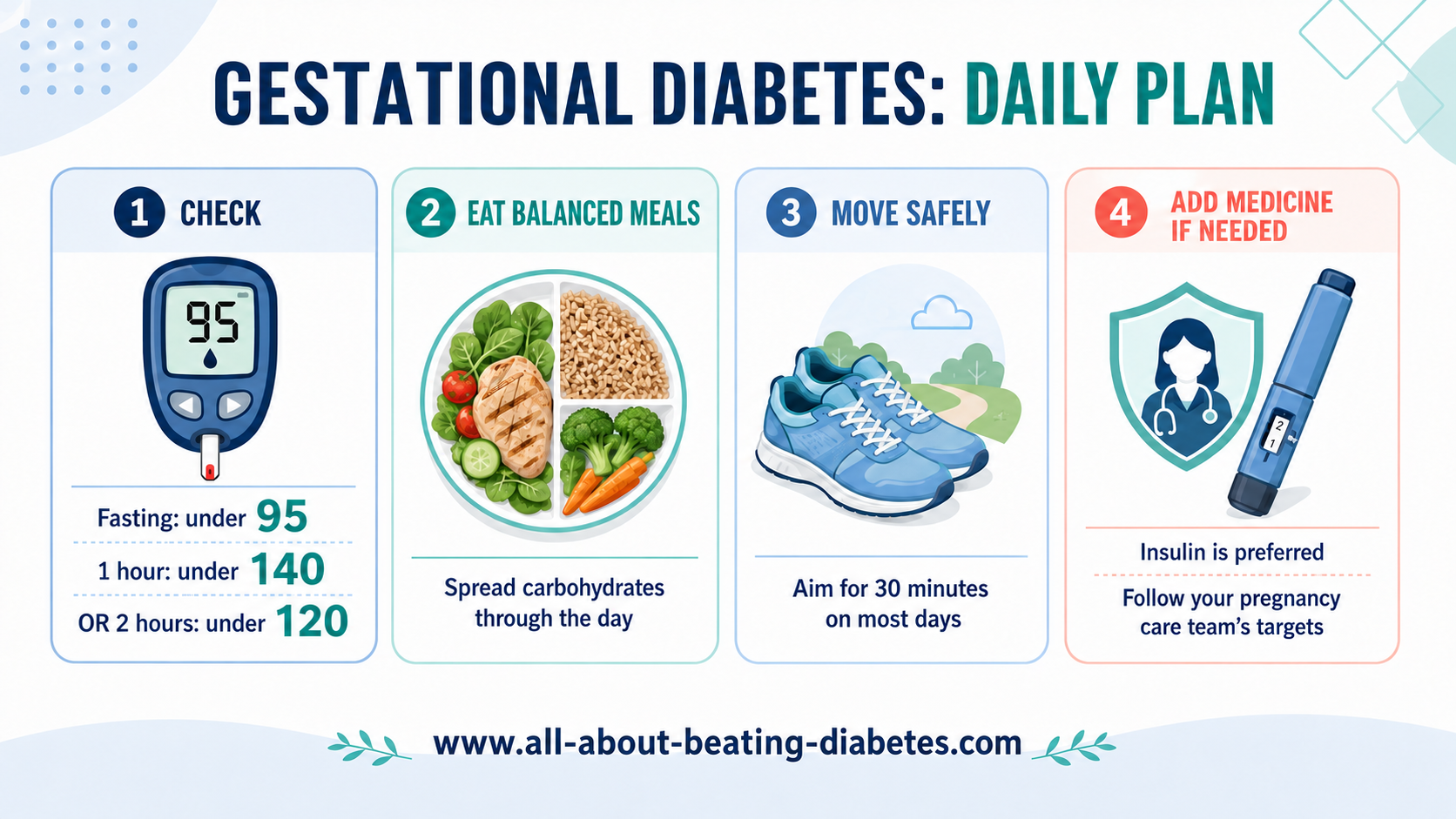

What Does Gestational Diabetes Treatment Include?
Gestational diabetes develops when pregnancy-related insulin resistance becomes greater than the pancreas can manage. The aim of treatment is not to make every reading perfect. It is to keep fasting and after-meal glucose within a safe range often enough to lower the risk of excessive fetal growth, difficult delivery, preeclampsia, preterm birth, and low glucose in the newborn.
1. Check glucose
Record fasting and after-meal readings at the times recommended by your pregnancy care team.
2. Build balanced meals
Spread nutritious carbohydrate through the day and combine it with protein, fiber, and healthy fats.
3. Move safely
Regular moderate activity, including a short walk after meals, can improve insulin sensitivity when your obstetrician approves it.
4. Add medicine when needed
If glucose remains above target, medicine should not be delayed. Insulin is preferred in U.S. guidance.
Your plan should involve your obstetric clinician, diabetes clinician or educator, and ideally a registered dietitian nutritionist familiar with pregnancy. Depending on your glucose pattern and other pregnancy risks, you may also receive additional fetal monitoring.
Gestational Diabetes Blood Sugar Targets
Pregnancy uses tighter glucose goals than those used for most nonpregnant adults. The following are common upper targets recommended by the American Diabetes Association for gestational diabetes:
| When you test | Common goal in mg/dL | Common goal in mmol/L |
|---|---|---|
| Fasting, before breakfast | Below 95 mg/dL | Below 5.3 mmol/L |
| 1 hour after the start of a meal | Below 140 mg/dL | Below 7.8 mmol/L |
| 2 hours after the start of a meal | Below 120 mg/dL | Below 6.7 mmol/L |
Use one consistent after-meal time
Do not compare a one-hour result on one day with a two-hour result on another and assume the pattern is improving or worsening. Ask your care team whether they want one-hour or two-hour readings, and count from the start of the meal unless they instruct you differently.
Your targets may be adjusted if you have recurrent low glucose, poor fetal growth, another medical condition, or a different local protocol. A1C can provide supporting information, but it does not replace fasting and post-meal monitoring during gestational diabetes.
How Often Should You Check Your Blood Sugar?
A common starting schedule is four checks each day:
- once in the morning before eating or drinking calories;
- one or two hours after breakfast;
- one or two hours after lunch;
- one or two hours after dinner.
Your team may ask for additional checks before meals, at bedtime, during symptoms of low glucose, after starting insulin, or when you are ill. If your readings remain stable, the schedule may later be reduced. Do not reduce testing without agreement from your pregnancy care team.
How to get more reliable readings
- Wash and dry your hands before each finger-stick test.
- Use strips made for your meter and check their expiration date.
- Record the time, result, meal, activity, and medicine dose.
- Bring your meter and glucose log to prenatal appointments.
- Repeat an unexpected reading after washing your hands and using a new strip.
- Contact your team if symptoms do not match the meter or sensor result.
Continuous glucose monitoring may help selected women, particularly those using insulin, but it does not automatically replace the monitoring instructions from your team.
Food Treatment for Gestational Diabetes
I do not recommend a crash diet, a ketogenic diet, or eliminating all carbohydrate during pregnancy. Your baby needs adequate energy and nutrients. The nutrition goal is to choose higher-quality carbohydrate, use suitable portions, and distribute carbohydrate across the day.
Build meals around these foods
- Nonstarchy vegetables: salad greens, broccoli, peppers, tomatoes, cucumber, cauliflower, green beans, and similar vegetables.
- Protein: eggs, poultry, fish that is safe in pregnancy, lean meat, beans, lentils, tofu, yogurt, or cheese.
- Higher-fiber carbohydrate: oats, whole grains, beans, lentils, fruit, milk, yogurt, and suitable portions of rice, pasta, bread, corn, or potatoes.
- Healthy fats: olive oil, nuts, seeds, avocado, and oily fish that is low in mercury.
Habits that may reduce glucose spikes
- Spread carbohydrate between meals and planned snacks instead of eating a large amount at once.
- Pair carbohydrate with protein, fiber, or healthy fat.
- Choose whole fruit rather than juice.
- Avoid sugar-sweetened drinks and limit sweets and highly refined snacks.
- Eat breakfast; some women tolerate a smaller carbohydrate portion in the morning because insulin resistance may be stronger then.
- Drink water regularly unless your obstetric team has given you a fluid restriction.
Do not cut carbohydrates too far
The dietary reference intake for pregnancy is at least 175 grams of carbohydrate per day, but your exact amount and distribution should be individualized. Severely restricting food or replacing most carbohydrate with saturated fat can reduce nutrient quality and may promote ketosis. Ask for a registered dietitian referral if your readings remain high or you are unsure what to eat.
Safe Exercise for Gestational Diabetes
Physical activity helps muscles use glucose and can improve insulin sensitivity. If your obstetrician says exercise is safe for you, a common goal is at least 150 minutes of moderate aerobic activity each week—for example, about 30 minutes on five days.
You may divide activity into shorter sessions. A 10- to 15-minute walk after a meal can be especially practical for reducing the after-meal glucose rise. Prenatal swimming, stationary cycling, and pregnancy-appropriate strength or mobility exercises may also be suitable.
Stop and contact your maternity team if you develop:
- vaginal bleeding or leaking fluid;
- painful, regular contractions;
- chest pain, faintness, severe dizziness, or unusual shortness of breath;
- severe headache, calf pain, or swelling;
- reduced fetal movement when you would normally expect movement;
- any symptom your obstetric team has told you to treat as urgent.
Some pregnancy complications require exercise restriction. Always follow the advice of the clinician who knows your pregnancy.
Healthy Pregnancy Weight Gain
The goal is healthy pregnancy weight gain—not weight loss. The recommended range depends on your body mass index before pregnancy, whether you are carrying one baby or more, fetal growth, and your general health.
Gaining too quickly can make glucose harder to control, but strict calorie restriction may deprive you and your baby of needed nutrients. Review your weight trend with your obstetrician and dietitian rather than aiming for a fixed number by yourself.
When Is Medicine Needed for Gestational Diabetes?
Medicine may be recommended when fasting or after-meal glucose repeatedly remains above the pregnancy target despite an appropriate nutrition and activity plan. It may also be started sooner when glucose is substantially high, pregnancy is already advanced, fetal growth is concerning, or lifestyle changes cannot safely achieve the goal.
Needing medicine does not mean you failed. Insulin resistance commonly rises during the second and third trimesters as placental hormone levels increase. A meal plan that worked last week may not be enough later in pregnancy.
Your team will look at the pattern:
- High fasting readings may require treatment that works overnight.
- High after-breakfast, lunch, or dinner readings may require treatment aimed at that meal.
- High readings throughout the day may require both basal and mealtime treatment.
Do not wait for the next routine appointment if several results are above the limit your team gave you. Ask what number or pattern should trigger a same-day call.
Insulin Treatment for Gestational Diabetes
Insulin is the preferred first-line medicine for gestational diabetes in U.S. guidance. Available human insulin preparations have not been shown to cross the placenta, and insulin can be adjusted precisely to match fasting and meal-related needs.
Your insulin plan is individualized
There is no universal rule that every woman should begin with regular or intermediate-acting insulin once or twice daily. The regimen depends on which readings are high, your gestational week, meals, activity, and response to treatment. Your clinician may prescribe:
- a basal insulin to control fasting or between-meal glucose;
- a rapid-acting insulin before one or more meals;
- both basal and mealtime insulin;
- dose adjustments as insulin resistance changes through pregnancy.
Before you begin, your team should teach you:
- how to prepare and inject the correct dose;
- where and how to store insulin;
- how to match timing with food;
- how to recognize and treat glucose below 70 mg/dL;
- what to do during illness, vomiting, reduced food intake, or missed doses;
- when to check ketones;
- who to call for dose changes.
Never change an insulin dose solely from a general website chart. Pregnancy insulin needs can change quickly and must be reviewed using your own glucose record.
Are Metformin or Glyburide Safe for Gestational Diabetes?
The older statement that all oral diabetes medicines are dangerous and insulin is the only possible treatment is too absolute. The more accurate explanation is:
- Insulin is preferred in U.S. guidelines because it does not cross the placenta to a measurable extent and can be adjusted to the glucose pattern.
- Metformin crosses the placenta. It is not recommended as first-line treatment by the ADA because long-term offspring safety remains uncertain and some women still need insulin. However, other guidelines and health systems may use metformin, and it may be considered when insulin is not feasible or is declined after informed discussion.
- Glyburide also crosses the placenta and is not recommended as first-line treatment. It may be less effective than insulin for some women and has concerns including maternal or neonatal hypoglycemia.
- Other diabetes medicines, including GLP-1 medicines, SGLT2 inhibitors, and most other noninsulin drugs, lack adequate pregnancy safety data and are not recommended for routine gestational diabetes treatment.
Do not start, stop, or change metformin, insulin, glyburide, supplements, or any other medicine during pregnancy without your obstetric and diabetes clinicians. The correct choice depends on benefit, placental exposure, available evidence, access, personal preference, and how urgently glucose must be lowered.
How Will Your Health and Baby Be Monitored?
Glucose is only one part of gestational diabetes care. Keep every prenatal appointment so your team can monitor:
- your blood pressure and signs of preeclampsia;
- your glucose log and medicine doses;
- pregnancy weight gain and nutrition;
- fetal growth and amniotic fluid when additional ultrasound is indicated;
- fetal movement and, when appropriate, antenatal testing;
- the timing and safest method of delivery.
Well-controlled gestational diabetes often leads to a healthy pregnancy and birth, but treatment cannot guarantee a vaginal delivery. Gestational diabetes also does not automatically mean that a cesarean birth is required. Delivery planning depends on glucose control, estimated fetal size, blood pressure, gestational age, prior births, and other obstetric factors.
What Happens During Labor and After the Baby Is Born?
Your maternity team will make a labor and delivery plan. Glucose may be checked during labor, and insulin or intravenous treatment may be adjusted if needed. Do not take your usual insulin automatically on the day of an induction or planned cesarean; follow the specific instructions provided by your hospital.
After the placenta is delivered, pregnancy-related insulin resistance falls quickly. Most women with gestational diabetes no longer need insulin or another glucose-lowering medicine after birth, but the hospital team should decide when to stop it.
Your baby’s glucose may be checked after birth because newborn hypoglycemia can occur, particularly when maternal glucose was high near delivery. Early feeding and skin-to-skin contact are often encouraged when medically appropriate. Some babies need additional feeding support or intravenous glucose.
Postpartum Testing After Gestational Diabetes
Gestational diabetes often resolves after birth, but it is also an early warning of future diabetes risk. Current ADA guidance recommends:
- A 75-gram oral glucose tolerance test 4–12 weeks after delivery. This is preferred over A1C at this early stage because pregnancy-related red blood cell changes and blood loss can affect A1C.
- Lifelong screening every 1–3 years even if the postpartum test is normal.
- Earlier review before another pregnancy so undiagnosed prediabetes or diabetes can be found and treated.
Breastfeeding is encouraged when possible and may help reduce the mother’s later type 2 diabetes risk. Ask for nutrition, physical activity, sleep, and weight support that is realistic for the postpartum period.
Doctor’s Note
Please do not be afraid if food and walking are not enough. Placental hormones become stronger as pregnancy advances, so insulin may be needed even when you have followed your plan carefully.
The most useful step is to send your glucose pattern to your care team early. Safe treatment protects both you and your baby, and it can be adjusted as your pregnancy changes.
Frequently Asked Questions
Can gestational diabetes be controlled without insulin?
Yes. Many women reach their targets with individualized nutrition, safe activity, glucose monitoring, and healthy pregnancy weight gain. If readings remain high, insulin or another clinician-selected treatment should be added rather than delaying care.
At what blood sugar level is insulin started?
There is no single universal starting number. Your team considers repeated fasting or after-meal readings above target, how high they are, gestational age, fetal growth, and your response to food and activity changes.
Does insulin harm the baby?
Available human insulin preparations have not been shown to cross the placenta. Insulin is preferred because it can lower maternal glucose without directly exposing the baby to the medicine. Uncontrolled high glucose presents greater pregnancy risks.
Is metformin forbidden during pregnancy?
No, but it is not the ADA’s first-line treatment for gestational diabetes because it crosses the placenta and long-term offspring safety remains uncertain. It may be used in some settings after a careful discussion of benefits, limitations, and alternatives.
How many carbohydrates should I eat?
Pregnancy nutrition guidance generally recommends at least 175 grams of carbohydrate daily, but your amount and meal distribution should be individualized by a dietitian or pregnancy care team. Do not begin a ketogenic or very-low-carbohydrate diet during pregnancy.
Can I have fruit with gestational diabetes?
Yes. Whole fruit provides carbohydrate, vitamins, minerals, and fiber. Portion size and timing matter. Pairing fruit with yogurt, nuts, cheese, or another protein may reduce a rapid glucose rise. Fruit juice usually raises glucose faster.
Will I need a cesarean birth?
Not automatically. Delivery planning depends on glucose control, fetal size, blood pressure, gestational age, your obstetric history, and other pregnancy factors. Many women with gestational diabetes have a vaginal birth.
Does gestational diabetes disappear after delivery?
It usually improves quickly after the placenta is delivered, and most women can stop diabetes medicine. However, a 75-gram oral glucose tolerance test is still needed 4–12 weeks postpartum, followed by screening every 1–3 years.
References
- American Diabetes Association Professional Practice Committee. Management of Diabetes in Pregnancy: Standards of Care in Diabetes—2026. Diabetes Care. 2026;49(Suppl 1).
- American Diabetes Association Professional Practice Committee. Diagnosis and Classification of Diabetes: Standards of Care in Diabetes—2026. Diabetes Care. 2026;49(Suppl 1).
- American College of Obstetricians and Gynecologists. Gestational Diabetes.
- National Institute of Diabetes and Digestive and Kidney Diseases. Managing & Treating Gestational Diabetes.
- Centers for Disease Control and Prevention. Diabetes During Pregnancy.
- Centers for Disease Control and Prevention. Gestational Diabetes.
Medical disclaimer: This article is for general education and does not replace prenatal medical advice, diagnosis, or treatment. Glucose goals, testing schedules, nutrition, exercise, medicine, fetal monitoring, and delivery plans must be individualized by your obstetric and diabetes care team.