- Home
- Best Foods for Diabetes and What to Avoid
- What Foods Help Lower Blood Sugar Naturally Without Causing Spikes
What Foods Help Lower Blood Sugar? Evidence-Based Guide
When people ask me which foods lower blood sugar, they often hope for a food that will quickly bring a high reading down. I understand that wish, but food does not work like a correction dose of insulin or a prescribed glucose-lowering medicine.
A more accurate and useful question is: Which foods and meal combinations are less likely to cause a large glucose rise and may support better control over time? The answer includes non-starchy vegetables, beans and lentils, measured portions of intact whole grains and whole fruit, lean protein, nuts and seeds, plain yogurt, healthy unsaturated fats, and water instead of sugary drinks.
Quick Answer
No single food reliably lowers high blood sugar immediately. Foods that may support steadier glucose include non-starchy vegetables, beans, lentils, oats, barley, minimally processed whole grains, whole fruit, nuts, seeds, fish, tofu, eggs, lean poultry, plain yogurt, and modest portions of olive oil or avocado.
The portion and complete meal matter more than a “superfood.” A practical starting point is half a plate of non-starchy vegetables, one quarter lean protein, and one quarter high-fiber carbohydrate, with water or an unsweetened drink. Do not stop insulin or diabetes medicine because you have changed your diet.
Can Food Actually Lower Blood Sugar?
Most foods do not lower the glucose already circulating in your blood. Foods containing carbohydrate are digested into glucose and generally raise blood sugar to some degree. Protein and fat usually have a smaller immediate effect, but large meals and high-fat meals can sometimes produce a delayed glucose rise.
Food choices can still make an important difference. A meal with an appropriate carbohydrate portion, more intact fiber, protein, and healthy fat is often absorbed more slowly than the same amount of carbohydrate eaten as juice, sugary cereal, white bread, sweets, or a sweetened drink. Over weeks and months, a sustainable eating pattern can improve HbA1c, weight when weight loss is needed, blood pressure, cholesterol, and cardiovascular risk.
Current guidance does not identify one perfect diabetes diet. Mediterranean, DASH, lower-carbohydrate, low-fat, vegetarian, vegan, and other evidence-based patterns can work when they emphasize minimally processed foods, appropriate portions, and the patient’s medical and cultural needs.
Important distinction: a food can be healthy and still raise glucose. Beans, oats, fruit, yogurt, brown rice, and sweet potatoes contain carbohydrate. Their nutritional value does not make the carbohydrate disappear.
Foods That May Support Steadier Blood Sugar
The following foods are useful building blocks, not treatments to take in unlimited amounts. Their effect depends on the portion, preparation, meal combination, starting glucose, activity, medication, sleep, stress, and individual response.
| Food group | Examples | Why it may help | What still matters |
|---|---|---|---|
| Non-starchy vegetables | Leafy greens, broccoli, cauliflower, cabbage, peppers, cucumber, tomato, mushrooms, zucchini, eggplant, green beans | Generally low in carbohydrate and calories while providing fiber, vitamins, minerals, volume, and variety | Sauces, breading, frying, and large amounts of cheese or oil can change the meal substantially |
| Beans, lentils, and chickpeas | Lentils, kidney beans, black beans, white beans, chickpeas, split peas | Provide fiber, plant protein, and more slowly digested carbohydrate; can replace refined grains or processed meat | They still contain carbohydrate. Measure the portion and include it in insulin or carbohydrate planning |
| Intact or minimally processed whole grains | Oats, barley, quinoa, bulgur, brown or basmati rice, whole-grain bread with meaningful fiber | Often provide more fiber and nutrients than refined grains and may produce a slower response | Large portions can raise glucose considerably. “Brown” or “multigrain” does not automatically mean high fiber |
| Whole fruit | Berries, apples, pears, oranges, peaches, plums, kiwi | Provides fiber, water, vitamins, minerals, and plant compounds; usually more filling than juice | Fruit contains carbohydrate. Juice and dried fruit are more concentrated and easier to overconsume |
| Nuts and seeds | Walnuts, almonds, pistachios, peanuts, chia, flaxseed, pumpkin seeds | Provide unsaturated fat, fiber, protein, minerals, and fullness; useful instead of chips or sweets | Calorie-dense. Choose a small portion and avoid heavily sugared or honey-coated products |
| Lean protein foods | Fish, tofu, tempeh, eggs, skinless poultry, lean meat, plain Greek yogurt, cottage cheese | Usually have little immediate glucose effect and can improve fullness when included with carbohydrate | Protein does not cancel carbohydrate. Preparation and saturated-fat content matter |
| Unsweetened dairy or suitable alternatives | Plain yogurt, kefir without added sugar, milk, unsweetened fortified soy drink | Can provide protein, calcium, and other nutrients; plain yogurt may replace sweet desserts | Milk and yogurt contain carbohydrate. Flavored products may contain substantial added sugar |
| Unsaturated fats | Olive oil, avocado, nuts, seeds, oily fish | Useful replacements for butter, fatty processed meat, and trans-fat-containing foods; support heart-healthy patterns | They do not directly lower glucose and are calorie-dense, so a modest portion is enough |
| Water and unsweetened drinks | Water, sparkling water, unsweetened tea, unsweetened coffee if tolerated | Replacing soda, sweet tea, energy drinks, and large amounts of juice removes rapidly absorbed sugar | Caffeine can affect sleep, palpitations, anxiety, or glucose in sensitive people |
Non-starchy vegetables: the most useful place to begin
Vegetables such as broccoli, cabbage, salad greens, peppers, mushrooms, cauliflower, cucumber, and zucchini add volume with relatively little carbohydrate. Fresh, frozen, and low-sodium canned vegetables can all fit. They do not need to be raw; roasting, steaming, grilling, or adding them to soups can make them easier to include.
Potatoes, corn, peas, winter squash, and plantain are nutritious but are classified as starchy vegetables because they contribute more carbohydrate. They can still fit in the measured carbohydrate quarter of the plate.
Beans and lentils: both carbohydrate and protein
Legumes are among the most practical foods for a diabetes-friendly meal. They provide fiber and protein and can replace part of the rice, bread, or meat in a meal. However, they are not “free foods.” If a large bowl of beans repeatedly raises your glucose, reduce the portion, check what else is in the meal, and review the total carbohydrate rather than assuming fiber must prevent every rise.
Whole fruit instead of juice
Whole fruit can be included in a diabetes eating plan. Berries are popular because a practical serving may provide fiber and less carbohydrate than some larger fruit portions, but apples, pears, oranges, peaches, kiwi, and many other fruits can also fit.
Fruit juice is absorbed more quickly and is easy to drink in a large amount. It is usually more useful as a measured treatment for hypoglycemia than as an everyday “healthy” drink. Smoothies can also contain several fruit portions, milk, yogurt, sweeteners, or juice in one glass.
Nuts, fish, and olive oil: heart-healthy, not glucose medicine
Nuts, seeds, fish, and olive oil are valuable parts of Mediterranean-style eating. Their unsaturated fats can help replace saturated fat, and nuts provide fiber and protein. Fish provides protein, and oily fish provides omega-3 fats. These foods support overall nutrition and cardiovascular health; they do not directly remove glucose from the bloodstream.
Olive oil contains no carbohydrate, but it is concentrated in calories. One or two measured teaspoons may be very different from freely pouring it over every meal. Olive oil is also not a source of all essential amino acids because oils contain fat rather than meaningful protein.
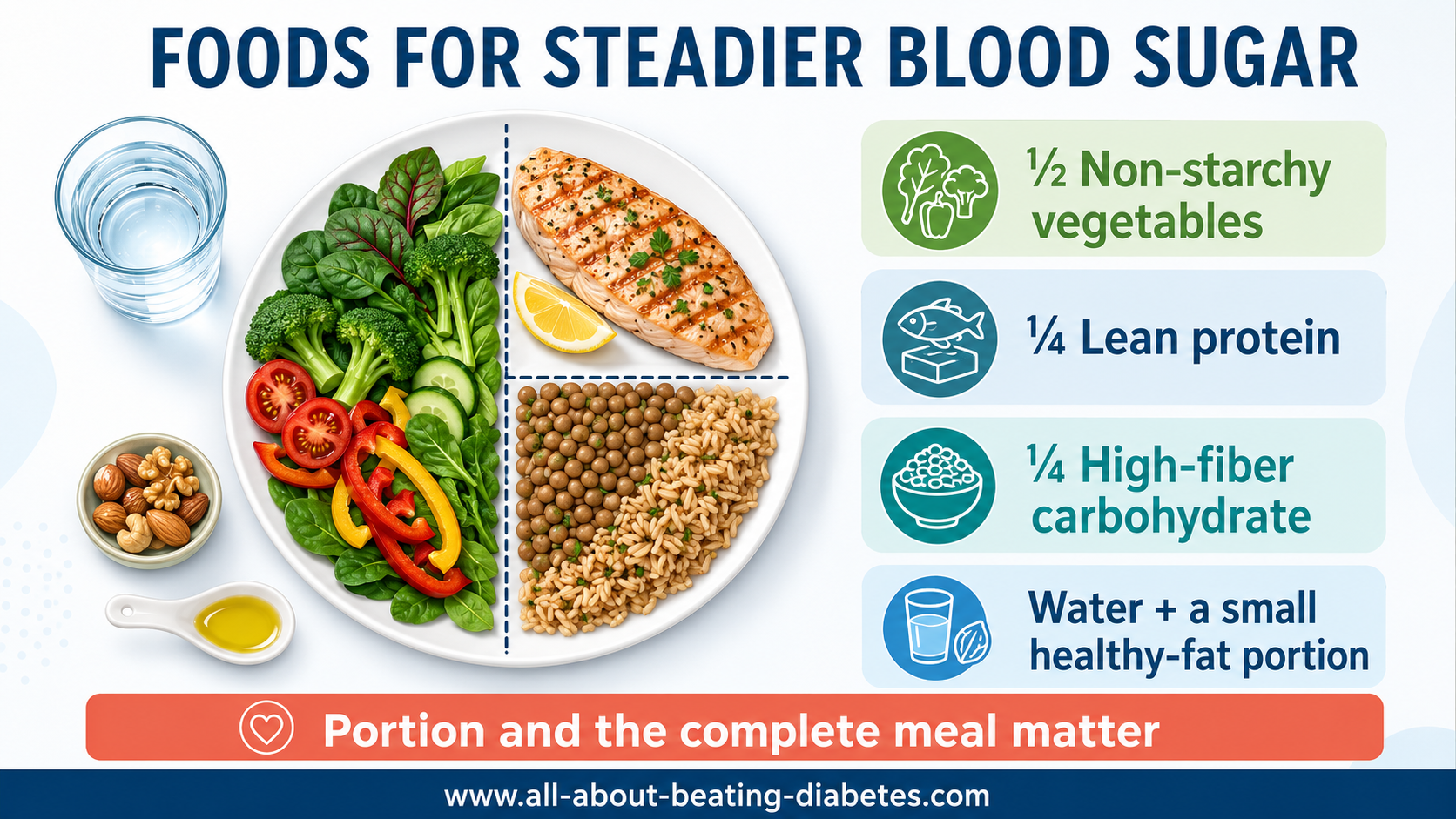

How to Build a Meal for Steadier Glucose
The plate method is a simple visual starting point. Use a plate about 9 inches, or 23 centimeters, across:
Beans and lentils count as both carbohydrate and protein. Milk and yogurt also contribute carbohydrate. The plate is therefore a useful guide, not a precise calculation. People using mealtime insulin may need carbohydrate counting and an insulin-to-carbohydrate ratio prescribed by their diabetes team.
For a detailed practical plan, see my diabetes plate method and sample menu.
Low-Glycemic Foods, Glycemic Load, and Portion Size
The glycemic index, or GI, compares how quickly carbohydrate foods raise glucose under standardized testing conditions. Low-GI or low-glycemic-load eating patterns may provide a modest improvement in glycemic control for some people with diabetes. They are tools—not guarantees.
GI can vary with the variety, ripeness, processing, grinding, cooking method, cooling, recipe, and what the food is eaten with. It also does not show how much carbohydrate is in the portion. Glycemic load combines GI with the available carbohydrate in a serving, which is why a large amount of a lower-GI food may still produce a substantial rise.
Total carbohydrate usually predicts the size of the rise better than the word “sugar” alone. A cereal may contain no refined sugar yet still provide a large amount of rapidly digested starch. Oatmeal, beans, whole-grain bread, and brown rice can all raise glucose if the portion is too large for the person’s needs.
Our guide to carbohydrates, glycemic index, and glycemic load explains how these measures work together.
What About Cinnamon, Olive Leaves, and Other “Natural” Foods?
Cinnamon
Cinnamon can add flavor to oats, plain yogurt, fruit, coffee, or tea without adding sugar. That may be useful when it replaces syrup or another sweetener. However, current evidence does not establish cinnamon as a dependable diabetes treatment, and it should not be added “to everything” in medicinal quantities.
Cassia cinnamon can contain coumarin, which may be a concern in large or prolonged amounts, particularly for people with liver disease. Cinnamon supplements can vary in strength and quality and may interact with medicines. Culinary amounts are different from concentrated extracts. Read the full evidence review on cinnamon and diabetes.
Olive leaves and olive-leaf extract
Olive oil is a recognized part of Mediterranean-style eating, but olive leaves are not nutritionally equivalent to olive oil. Olive-leaf extracts are supplements with limited and inconsistent human evidence for glucose control. A pilot randomized trial published in 2025 did not establish a meaningful improvement in HbA1c.
Do not use olive-leaf tea or extract to replace diabetes medicine. Concentrated products may affect blood pressure or glucose and can interact with treatment. Discuss the exact product with a doctor or pharmacist.
Vinegar, bitter melon, herbs, and supplements
Some small studies report changes in post-meal glucose with vinegar or certain supplements, but results are not strong or consistent enough to use them as a replacement for proven care. Vinegar can irritate the esophagus or stomach, damage teeth, worsen gastroparesis symptoms, and interact with some medicines when used excessively.
“Natural” does not mean automatically safe. Multi-ingredient glucose supplements may duplicate effects, cause diarrhea, affect the liver or kidneys, or increase hypoglycemia risk when combined with insulin or tablets.
A One-Day Example Using These Foods
This example is not a personal calorie or carbohydrate prescription. Portions must be adjusted for body size, activity, treatment, weight goals, kidney health, pregnancy, appetite, and glucose response.
| Meal | Example | Why it may support steadier glucose |
|---|---|---|
| Breakfast | Plain Greek yogurt with berries, chia seeds, and a small measured portion of oats | Combines carbohydrate with protein, fiber, and healthy fat without added sugar |
| Lunch | Large salad with tomatoes, cucumber, peppers, grilled fish or tofu, one-half cup lentils, and measured olive oil with lemon | Vegetables fill most of the meal; lentils provide high-fiber carbohydrate and protein |
| Optional snack | One small apple with a small handful of unsalted nuts, or vegetables with hummus | Pairs a measured carbohydrate with fat, protein, and fiber; snacks are not compulsory |
| Dinner | Roasted broccoli, cauliflower, and peppers; chicken, fish, or tofu; and a measured serving of barley, beans, or brown rice | Uses the plate method and avoids making starch the largest part of the meal |
| Drinks | Water, sparkling water, or unsweetened tea | Avoids rapidly absorbed liquid sugar |
Breakfast cereal deserves special attention. Choose based on total carbohydrate, fiber, added sugar, ingredients, and the portion actually eaten—not health claims on the front of the box. Plain oats may work well for some people, while others need a smaller portion or a different breakfast because their glucose rises sharply.
How to Learn Which Meals Work for You
- Record the complete meal: Include portions, drinks, sauces, dessert, and snacks—not only the food you suspect.
- Check at consistent times: Use the glucose-testing times recommended by your clinician. After-meal targets are generally timed from the beginning of the meal.
- Compare repeated patterns: One reading may be affected by stress, sleep, illness, exercise, starting glucose, medication timing, or meter variation.
- Change one factor: Try a smaller carbohydrate portion, more non-starchy vegetables, or replacing juice with water while keeping the rest of the meal similar.
- Review treatment safely: Repeated highs or lows deserve review with your diabetes team. Do not change insulin or medicine based on one meal test.
Our guide to blood sugar levels after eating can help you understand when a reading was taken and what repeated patterns may mean.
Food Safety When Blood Sugar Is High or Low
Food Is Not Emergency Treatment for High Blood Sugar
If glucose is very high, follow your prescribed correction, hydration, ketone-testing, and sick-day plan. Do not rely on cinnamon, vinegar, olive leaves, nuts, or vegetables to bring an urgent reading down.
Seek urgent medical care for vomiting, abdominal pain, rapid or deep breathing, fruity-smelling breath, confusion, severe dehydration, marked drowsiness, or moderate/high ketones. Never stop insulin in type 1 diabetes.
Low blood sugar also requires a different approach. If glucose is below 70 mg/dL (3.9 mmol/L) and you are awake and able to swallow, follow your prescribed hypoglycemia plan—commonly 15 grams of fast-acting carbohydrate followed by a recheck after 15 minutes. Nuts, vegetables, chocolate, and high-fiber foods act too slowly for initial treatment.
Changing to a lower-carbohydrate eating pattern can increase hypoglycemia risk when insulin, sulfonylureas, or meglitinides are not adjusted appropriately. Discuss major changes before starting them.
When standard food advice needs modification
- Kidney disease: potassium, phosphorus, protein, sodium, and fluids may need individual limits.
- Gastroparesis: large high-fiber and high-fat meals may worsen delayed stomach emptying.
- Pregnancy: carbohydrate amount and timing must support pregnancy nutrition and pregnancy-specific glucose targets.
- Children and adolescents: energy and carbohydrate restriction must not interfere with growth.
- Eating disorders or underweight: restrictive food rules can be harmful and require specialist support.
Doctor’s Note
I do not want you to fear fruit, beans, oats, rice, or potatoes, and I do not want you to depend on one “blood-sugar-lowering” food. I want you to look at the portion, the complete plate, your medication, and the repeated glucose response.
Begin with one measurable change: replace a sugary drink with water, make vegetables half of lunch or dinner, or reduce an oversized starch portion. A realistic eating pattern that you can continue is more valuable than a perfect-looking plan that lasts only a few days.
Frequently Asked Questions
1. What food lowers blood sugar the fastest?
No ordinary food reliably lowers high glucose quickly. Follow your prescribed correction and sick-day plan. Physical activity is not always safe when glucose is very high or ketones are present, so follow your clinician’s instructions.
2. Which vegetables are best for blood sugar?
Non-starchy vegetables such as leafy greens, broccoli, cauliflower, cabbage, peppers, mushrooms, cucumber, tomato, zucchini, and green beans are useful choices. Variety and preparation matter more than finding one perfect vegetable.
3. Can fruit lower blood sugar?
Fruit does not directly lower glucose and contains carbohydrate. Whole fruit in a measured portion can still fit because it provides fiber and nutrients. Juice generally raises glucose faster than whole fruit.
4. Are beans good for diabetes even though they contain carbohydrates?
Yes. Beans and lentils provide carbohydrate, fiber, and protein and often produce a slower response than refined starch. Portion size still matters, especially for carbohydrate counting and mealtime insulin.
5. Do nuts lower blood sugar?
Nuts are low in carbohydrate and may help when they replace a sugary or refined snack, but they do not directly lower an existing high reading. Use a small portion because they are calorie-dense.
6. Is oatmeal a good breakfast for diabetes?
Plain oats can provide soluble fiber, but oatmeal still contains carbohydrate. Choose an appropriate portion, avoid added sugar, add protein or nuts if suitable, and check your repeated glucose response.
7. Should I take cinnamon every day to lower glucose?
Cinnamon may be used in culinary amounts for flavor, but it is not a dependable diabetes treatment. High-dose Cassia cinnamon or supplements may expose you to coumarin and interactions, particularly if you have liver disease or take glucose-lowering medicine.
8. Can I stop medication after changing my diet?
No medication or insulin should be stopped independently. Improved glucose patterns may allow treatment adjustment for some people, but the decision should be based on repeated readings, HbA1c, hypoglycemia risk, and medical review.
Related Questions from Readers
Related Resources
Medical References
- American Diabetes Association: Facilitating Positive Health Behaviors and Well-being—Standards of Care in Diabetes 2026
- American Diabetes Association: Cardiovascular Disease and Risk Management—Standards of Care in Diabetes 2026
- National Institute of Diabetes and Digestive and Kidney Diseases: Healthy Living with Diabetes
- Centers for Disease Control and Prevention: Diabetes Meal Planning
- BMJ: Effect of Low-Glycemic Index or Load Dietary Patterns on Glycemic Control in Diabetes
- National Center for Complementary and Integrative Health: Cinnamon—Usefulness and Safety
- National Center for Complementary and Integrative Health: Diabetes and Dietary Supplements
- ESOLED Trial: Efficacy and Safety of Olive Leaf Extract for Diabetes
Medical disclaimer: Educational only — not personal medical advice. Food choices cannot replace prescribed insulin, diabetes medicine, individualized nutrition care, or urgent treatment for dangerous high or low blood sugar.