- Home
- blood sugar levels
- How Alcohol Affects Blood Sugar and Causes Delayed Hypoglycemia in Diabetes
Alcohol and Blood Sugar: Highs, Delayed Lows, and Diabetes Safety
Written by: Dr. Albana Greca Sejdini, MD, MMedSc
Medically reviewed by: Dr. Ruden Cakoni, MD, Endocrinologist
Last medically reviewed: July 2026
Alcohol can make blood sugar rise, fall, or change in two stages. Beer, sweet wine, liqueurs, and sugary mixers may raise glucose first because they contain carbohydrate. The alcohol itself can then reduce the liver’s ability to release glucose, creating a delayed low—especially when alcohol is consumed without food, after exercise, or with insulin or medicines that increase insulin release.
Does Alcohol Raise or Lower Blood Sugar?
It can do either. The direction and timing depend on the drink, food, medicine, activity, liver function, and diabetes type.
| Possible glucose effect | Why it may happen |
|---|---|
| Early rise | Beer, cider, sweet wine, dessert wine, liqueurs, regular soda, juice, tonic, syrups, and sweet cocktails contain carbohydrate. |
| Delayed fall | The liver prioritizes alcohol metabolism and may release less glucose when the body needs it, particularly during fasting or insulin activity. |
| High glucose later | Alcohol may increase appetite, lead to larger carbohydrate portions, cause missed insulin or medication, disrupt sleep, and contribute to dehydration. |
| Unpredictable pattern | Exercise, dancing, vomiting, altered judgment, different drink strength, and inaccurate carbohydrate estimates may occur together. |
This is why the statement “alcohol lowers blood sugar” is incomplete. A sweet cocktail can cause a large rise before alcohol-related suppression of liver glucose becomes important. A plain spirit may contain little carbohydrate but can still increase delayed hypoglycemia risk.
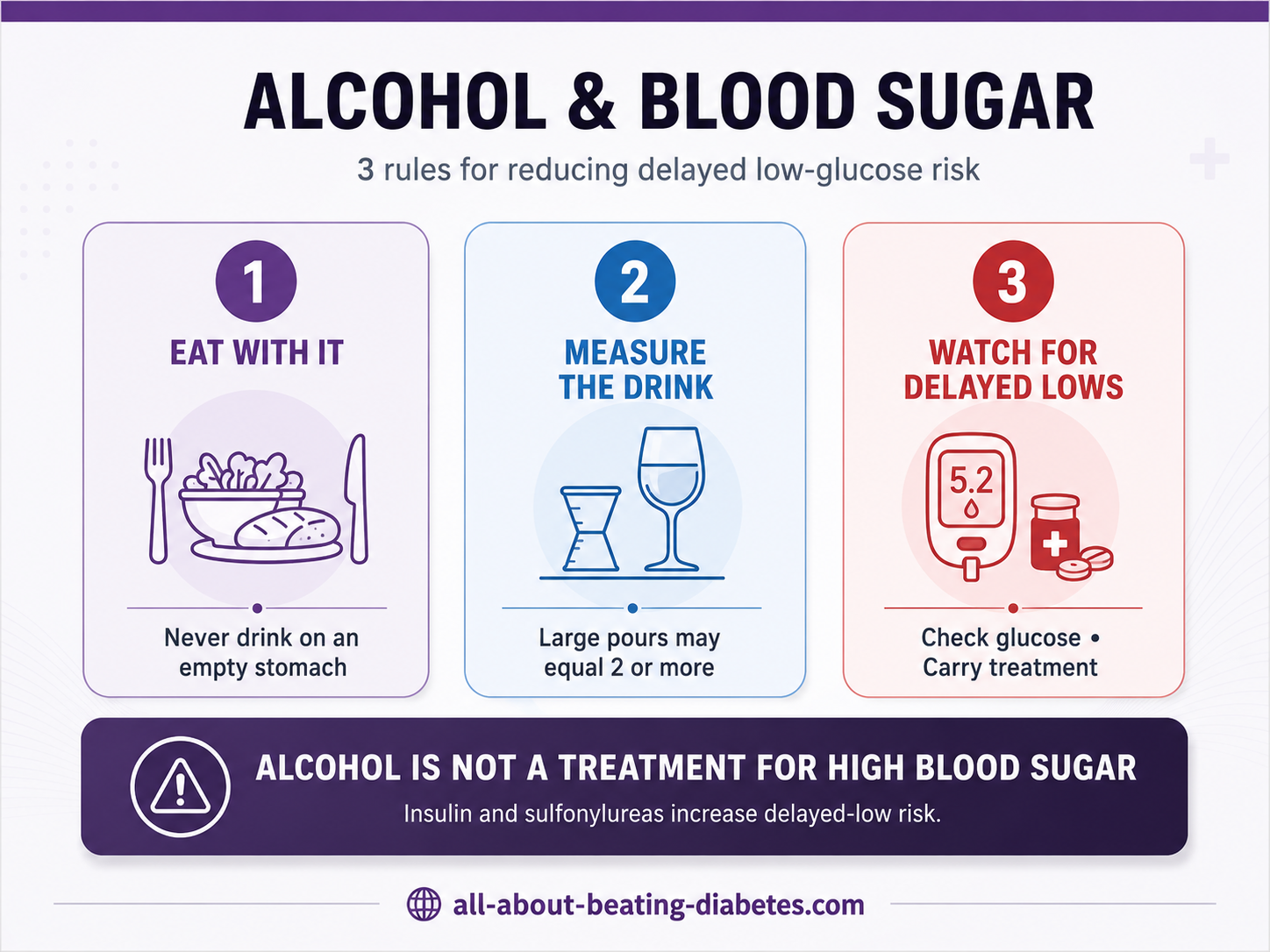

Why Alcohol Can Cause Delayed Hypoglycemia
Between meals and overnight, the liver helps maintain glucose by releasing stored glucose and making new glucose. When alcohol is present, the liver gives priority to breaking down ethanol. This can reduce its ability to respond when glucose begins to fall.
Risk is greatest when:
- you use insulin, a sulfonylurea, or a meglitinide;
- you drink without a meal;
- you have eaten less carbohydrate than usual;
- you exercised, worked physically, or danced before or while drinking;
- you drink in the evening and go to sleep before the risk has passed;
- you have kidney or liver disease;
- you have repeated lows or hypoglycemia unawareness;
- you drink more than planned;
- you vomit or cannot keep food down.
A delayed low may occur several hours after the last drink and can happen overnight. The glucose effect may outlast the feeling of intoxication.
Alcohol intoxication can resemble low blood sugar
Both alcohol intoxication and hypoglycemia may cause:
- slurred speech;
- poor coordination;
- confusion or unusual behavior;
- drowsiness;
- dizziness;
- difficulty concentrating;
- loss of consciousness.
Never assume that a confused person with diabetes is “just drunk.” Check glucose when possible and treat severe symptoms as an emergency.
How Different Alcoholic Drinks Affect Blood Sugar
| Drink type | Typical glucose concern | Practical note |
|---|---|---|
| Beer and lager | Contains carbohydrate; stronger or larger cans may contain more than one standard drink. | Check volume, alcohol percentage, and carbohydrate label when available. |
| Dry wine | Usually less carbohydrate than sweet wine, but alcohol can still cause delayed lows. | A large restaurant glass may be more than one standard drink. |
| Sweet, dessert, or fortified wine | More residual sugar and often higher alcohol. | Small serving sizes still may contain substantial carbohydrate or alcohol. |
| Plain spirits: whiskey, vodka, gin, rum, tequila, raki | Little or no carbohydrate before mixers, but delayed hypoglycemia remains possible. | Measure the pour. Homemade raki may have uncertain alcohol strength. |
| Liqueurs | Often contain both alcohol and substantial sugar. | Do not count them like plain spirits. |
| Cocktails | Juice, regular soda, syrup, tonic, sweet-and-sour mix, condensed milk, or multiple shots may cause a large glucose rise. | Ask what is in the drink; one glass may contain several standard drinks. |
| Low-alcohol or alcohol-free beer and wine | May still contain carbohydrate and small amounts of alcohol. | Read both the carbohydrate and alcohol-by-volume labels. |
Using sugar-free mixer reduces carbohydrate but does not remove the alcohol-related risk. Plain sparkling water is often easier to count than juice, syrup, or regular soda.
What Counts as One Standard Drink?
Standard-drink definitions differ among countries. In the United States, one standard drink contains approximately 14 grams of pure alcohol.
| Beverage | Approximate U.S. standard drink |
|---|---|
| Regular beer | 12 fl oz / 355 mL at 5% alcohol |
| Wine | 5 fl oz / 148 mL at 12% alcohol |
| Distilled spirit | 1.5 fl oz / 44 mL at 40% alcohol |
A 500-mL beer, strong craft beer, large wine glass, double whiskey, or generous raki pour may contain more than one standard drink. Count the alcohol content, not only the number of glasses.
Homemade spirits create additional uncertainty because the alcohol concentration may not be measured accurately.
How Much Alcohol Is Considered Moderate?
Current U.S. guidance describes moderation as:
- women: one standard drink or less on a day alcohol is consumed;
- men: two standard drinks or less on a day alcohol is consumed.
These are upper limits, not goals, and they are not intended to be saved for one night. Diabetes, medicines, body size, age, liver or kidney function, cancer risk, and hypoglycemia history may make a smaller amount—or no alcohol—the safer choice.
If you do not drink now, do not start for diabetes, cholesterol, heart health, relaxation, or social pressure. Updated public-health guidance no longer supports beginning alcohol for health benefits, and even low consumption increases the risk of some cancers.
Binge drinking is particularly dangerous. NIAAA commonly defines it as approximately four or more drinks for women or five or more drinks for men within about two hours.
Alcohol and Diabetes Medicines
| Medicine group | Main alcohol concern |
|---|---|
| Insulin | Delayed or severe hypoglycemia, especially without food or after exercise. Never omit basal insulin in type 1 diabetes. |
| Sulfonylureas and meglitinides | These medicines increase insulin release and may add to delayed hypoglycemia risk. |
| Metformin | Excessive acute or chronic alcohol intake can increase the risk of metformin-associated lactic acidosis, particularly with dehydration, kidney impairment, or liver disease. |
| SGLT2 inhibitors | Alcohol misuse, reduced food intake, dehydration, illness, and missed insulin can contribute to ketoacidosis, sometimes without extremely high glucose. |
| GLP-1 medicines and tirzepatide | Alcohol may worsen nausea, vomiting, reduced food intake, or dehydration. Pancreatitis or gallbladder history requires individualized advice. |
| Blood-pressure medicines, sedatives, sleep medicines, opioids, or anxiety medicines | Alcohol may increase dizziness, sedation, falls, breathing problems, or impaired judgment. |
This table cannot cover every interaction. Review your exact medicine labels and ask a clinician or pharmacist whether alcohol is compatible with your treatment.
Alcohol and Type 1 Diabetes
Type 1 diabetes requires insulin every day. Alcohol creates several specific risks:
- delayed hypoglycemia after rapid-acting or basal insulin;
- missed insulin or incorrect dosing because judgment is impaired;
- confusing intoxication with a low;
- vomiting and dehydration;
- ketones and DKA if insulin is omitted;
- difficulty estimating carbohydrate in beer, wine, and cocktails;
- overnight lows after dancing or exercise.
Do not stop basal insulin because you are drinking or eating less. If you use a pump, do not disconnect for prolonged periods. Carry diabetes identification, meter or CGM supplies, fast carbohydrate, ketone supplies when advised, and glucagon.
A trusted companion should know:
- you have diabetes;
- where your glucose treatment and glucagon are;
- how to check glucose if you cannot;
- not to assume confusion is intoxication;
- when to call emergency services.
Read the type 1 diabetes safety guide.
Alcohol and Type 2 Diabetes
The effect depends greatly on treatment. Someone managing type 2 diabetes without medicines that cause lows generally has less hypoglycemia risk than someone taking insulin or a sulfonylurea. Alcohol still can:
- add calories and interfere with weight goals;
- raise triglycerides;
- worsen blood pressure and sleep;
- increase liver and pancreatic injury risk;
- interact with medicines;
- cause high glucose through sweet drinks or extra food;
- cause low glucose when food intake is inadequate.
Alcohol is not a treatment for insulin resistance or high glucose. Any temporary reduction does not improve the underlying condition safely.
Exercise, Dancing, and Alcohol
Physical activity can lower glucose during the activity and for hours afterward. Combining activity with alcohol adds another factor that may reduce liver glucose release.
Risk may be higher after:
- a long walk, run, cycling session, gym workout, or sports event;
- heavy physical work;
- dancing for several hours;
- exercise performed with insulin still active;
- activity followed by a delayed or skipped meal.
This does not mean that exercise must always be avoided on the day of an occasional drink. It means the plan may require more monitoring, food, and individualized insulin guidance.
Alcohol and Overnight Blood Sugar
Evening drinking deserves extra caution because a delayed low may occur during sleep.
Before bed, consider the plan provided by your diabetes team, which may include:
- checking glucose and the CGM trend arrow;
- confirming that a meal containing carbohydrate was eaten;
- checking whether exercise or dancing increased risk;
- setting a CGM low alert;
- arranging an overnight check when risk is high;
- keeping glucose treatment nearby;
- ensuring another person can recognize and treat a severe low.
Do not rely on waking up naturally when glucose falls. Alcohol can reduce awareness of early warning symptoms.
When Is It Safer to Avoid Alcohol Completely?
Do not drink when:
- you are pregnant, might be pregnant, or are trying to conceive;
- you are below the legal drinking age;
- you are driving, operating equipment, swimming, or responsible for another person’s safety;
- glucose is currently low or falling;
- you have moderate or large ketones;
- you are sick, vomiting, dehydrated, or unable to eat;
- you have recurrent severe lows or hypoglycemia unawareness;
- you have alcohol use disorder or cannot reliably limit the amount;
- you have active liver disease, pancreatitis, very high triglycerides, or another condition for which your clinician recommends abstinence;
- you take a medicine that must not be combined with alcohol;
- you are preparing for surgery or a procedure and have been instructed not to drink.
People with kidney disease, neuropathy, gastroparesis, heart failure, arrhythmia, gout, depression, sleep problems, or a history of falls may need stricter limits or abstinence.
What to Do If Blood Sugar Goes Low After Alcohol
Blood glucose below 70 mg/dL is considered low for most people with diabetes.
- Stop drinking alcohol.
- Take 15–20 grams of fast-acting carbohydrate, such as glucose tablets, glucose gel, regular soda, or juice.
- Recheck in 15 minutes.
- Repeat treatment if glucose remains below 70 mg/dL.
- Eat a meal or longer-acting snack if your plan recommends it, particularly when another low is possible.
- Continue monitoring because alcohol-related lows can recur.
Chocolate, alcohol-containing sweets, or high-fat desserts may act too slowly for initial low treatment.
Read Diabetic Hypoglycemia Symptoms and Dangerous Blood Sugar Levels.
Can Alcohol Cause High Blood Sugar or Ketoacidosis?
Yes. Alcohol can contribute to high glucose through sweet drinks, overeating, dehydration, poor sleep, missed medicine, or missed insulin.
Ketoacidosis risk becomes more concerning with:
- type 1 diabetes and missed insulin;
- vomiting or prolonged inability to eat;
- dehydration;
- heavy alcohol use;
- SGLT2 inhibitor treatment;
- illness or infection.
With SGLT2 inhibitors, ketoacidosis may occur even when glucose is below the level many people expect for DKA.
Can Drinking Alcohol Cause Type 2 Diabetes?
Type 2 diabetes has multiple genetic, metabolic, environmental, and social causes. Heavy alcohol use can contribute indirectly through excess energy intake, weight gain, high triglycerides, poor sleep, liver disease, inflammation, and reduced self-care.
Alcohol can also damage the pancreas. Recurrent or chronic pancreatitis may reduce insulin production and cause pancreatogenic diabetes, sometimes called type 3c diabetes.
Observational studies that associate light drinking with lower diabetes risk do not prove protection. People who drink moderately may differ from nondrinkers in income, diet, activity, smoking, health, and medical care. Alcohol should not be recommended to prevent diabetes.
Does Stopping Alcohol Cause Diabetes?
No. Stopping alcohol does not directly cause diabetes. Glucose and weight may change after stopping because appetite, food choices, sleep, liver function, activity, and medicines change, but abstinence itself is not a diabetes cause.
Stopping or reducing alcohol often improves safety, sleep, blood pressure, triglycerides, calorie intake, and liver health.
However, someone who drinks heavily or has alcohol dependence should not assume that abrupt withdrawal is risk-free. Alcohol withdrawal can cause tremor, sweating, agitation, vomiting, hallucinations, seizures, or delirium and may require medical detoxification.
A Practical Alcohol and Glucose Safety Plan
When an occasional drink has been approved for you:
- Check that glucose is not low or falling before drinking.
- Eat a meal containing carbohydrate. Do not use alcohol instead of food.
- Measure the serving. Count the alcohol percentage and container size.
- Choose a drink with predictable ingredients. Avoid hidden sugar and multiple shots.
- Drink slowly and alternate with water.
- Do not “correct” the alcohol itself with extra insulin unless your diabetes team has given a specific plan.
- Monitor during and after drinking. CGM users should watch trend arrows rather than one number alone.
- Check before bed and during the night when advised.
- Carry fast carbohydrate and identification.
- Tell a trusted companion what to do for a low.
- Do not drive.
Record the drink type, amount, food, insulin, activity, bedtime glucose, overnight pattern, and morning glucose. Repeated personal data are more useful than assuming every beer, wine, or raki affects you the same way.
Use the blood sugar log sheet and review Blood Sugar Levels by Time of Day.
Safer Nonalcoholic Choices
Possible alternatives include:
- sparkling water with lemon, lime, mint, or cucumber;
- unsweetened iced tea;
- coffee or decaffeinated coffee without added sugar;
- sugar-free soda in moderation;
- alcohol-free beer or wine after checking carbohydrate and residual alcohol;
- a measured low-sugar mocktail without juice, syrup, honey, or sweetened tonic.
A fruit cocktail is not automatically a low-glucose choice. Juice, syrups, honey, sweetened yogurt, and several fruit portions can raise glucose quickly.
Most Asked Questions
Can one beer lower blood sugar?
Beer may raise glucose first because it contains carbohydrate, then contribute to a delayed low because of the alcohol. The response depends on serving size, food, medicine, and activity.
Is wine safer than beer for diabetes?
Not automatically. Dry wine may contain less carbohydrate, but alcohol-related hypoglycemia, cancer risk, medication interactions, and impaired judgment still apply.
Does whiskey or raki contain sugar?
Plain distilled spirits generally contain little or no carbohydrate before mixers. They still contain alcohol and can cause delayed hypoglycemia. Sweetened or homemade products may differ.
Can I drink when taking metformin?
Many people taking metformin may be allowed an occasional limited drink, but excessive acute or chronic alcohol increases lactic-acidosis risk. Kidney disease, liver disease, dehydration, and poor food intake increase concern.
Can I drink alcohol when using insulin?
Alcohol can increase delayed and overnight hypoglycemia risk. Do not drink without an individualized plan covering food, monitoring, insulin, and emergency treatment.
Should I eat before drinking?
Yes, when drinking has been approved. Food—especially a meal containing carbohydrate—reduces fasting-related hypoglycemia risk, although it does not eliminate it.
Can I use alcohol to lower a high reading?
No. It is unpredictable, may cause a later severe low, and can delay appropriate treatment for hyperglycemia or DKA.
Why was my glucose high in the morning after drinking?
Possible causes include a sweet drink, late eating, dehydration, poor sleep, missed medicine, stress hormones, or a rebound after an overnight low. Meter or CGM data through the night may clarify the pattern.
Does quitting alcohol increase diabetes risk?
No. Stopping alcohol does not cause diabetes. People with alcohol dependence may require medically supervised withdrawal.
Related Questions
- Are Nausea, Sweating, Shaking, and Dizziness Signs of Hypoglycemia?
- Why Did Blood Sugar Rise Overnight?
- High and Low Blood Sugar With High Blood Pressure
Related Resources
- Is My Blood Sugar Too High or Too Low?
- Dangerous Blood Sugar Levels
- Blood Sugar Levels by Time of Day
- How Foods and Drinks Affect Blood Sugar
- Diabetes Medications: Benefits and Side Effects
- How Lifestyle Factors Affect Blood Sugar
Medical disclaimer: This page provides general education and does not approve alcohol for you, calculate carbohydrate or insulin, or replace treatment for hypoglycemia, ketoacidosis, alcohol withdrawal, or alcohol use disorder. Discuss alcohol with your healthcare professional before drinking when you use insulin or glucose-lowering medicine or have liver, kidney, pancreatic, cardiovascular, pregnancy, or addiction-related concerns.
References
- American Diabetes Association: Facilitating Positive Health Behaviors and Well-being—Standards of Care in Diabetes 2026
- American Diabetes Association: Glycemic Goals, Hypoglycemia, and Hyperglycemic Crises—2026
- National Institute of Diabetes and Digestive and Kidney Diseases: Low Blood Glucose
- National Institute of Diabetes and Digestive and Kidney Diseases: Healthy Living With Diabetes
- Centers for Disease Control and Prevention: Standard Drink Sizes
- Centers for Disease Control and Prevention: Moderate Alcohol Use
- National Institute on Alcohol Abuse and Alcoholism: Drinking Patterns
- National Institute on Alcohol Abuse and Alcoholism: Alcohol Use Disorder and Recovery
- World Health Organization Europe: Alcohol and Cancer
- DailyMed: Metformin Prescribing Information—Alcohol Warning
- DailyMed: Empagliflozin Prescribing Information—Ketoacidosis Risk