Feeling weak, shaky, tired, or “not right” does not always mean your blood glucose is low. I explain below how to interpret the number, how doctors confirm true hypoglycemia, and which causes deserve investigation.
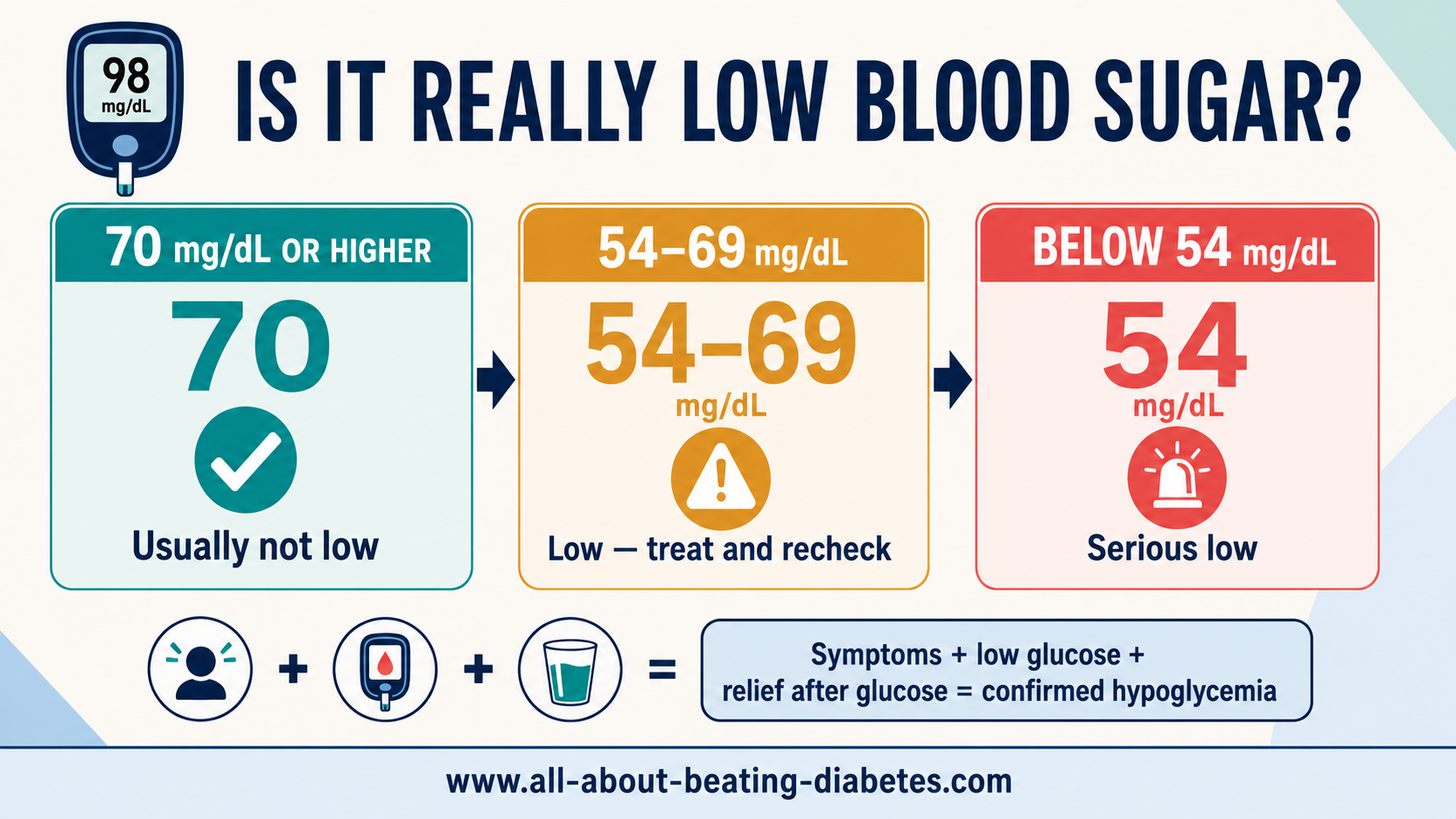

What Blood Glucose Level Is Actually Low?
The word “low” can be confusing. A result may be lower than your earlier reading without being medically low. Blood glucose normally rises and falls across the day in response to meals, activity, stress, sleep, illness, and medicines.
70 mg/dL or higher
Usually not hypoglycemia. A value in the 70s, 80s, or 90s can be normal, depending on timing and circumstances.
54–69 mg/dL
Level 1 hypoglycemia in diabetes care. Treat promptly according to your personal plan and recheck.
Below 54 mg/dL
Level 2, clinically significant hypoglycemia. Immediate action is needed.
Level 3 hypoglycemia is not defined by one number. It means a person has altered mental or physical function and needs another person’s help to recover. It is a medical emergency.
These diabetes thresholds are designed for safety. In a person without diabetes who does not take glucose-lowering treatment, a doctor confirms a hypoglycemic disorder with symptoms, a low laboratory plasma glucose during the episode, and relief when glucose rises.
What Do the Example Readings of 104, 115, and Below 100 Mean?
My interpretation of this example
- Morning readings of 104 and 115 mg/dL are not low.
- A reading below 100 mg/dL before lunch or after lunch is not necessarily low. If it remains at least 70 mg/dL, it does not meet the usual diabetes definition of hypoglycemia.
- A lower after-meal value is not dangerous just because it is lower than the morning value. The exact number, timing, symptoms, and medicine use matter.
- If the morning measurements were truly fasting, they are worth discussing with a clinician. A fasting laboratory glucose of 100–125 mg/dL is in the prediabetes range, but home meter values cannot make that diagnosis.
Therefore, the readings described do not establish low blood glucose as the cause of lethargy. The fatigue still deserves attention if it persists, worsens, or interferes with daily life—but the evaluation should not focus only on hypoglycemia.
Why Can I Feel Hypoglycemic When My Blood Sugar Is Normal?
Shaking, sweating, palpitations, hunger, weakness, dizziness, headache, anxiety, tiredness, and difficulty concentrating can occur during hypoglycemia. However, they are not specific to hypoglycemia.
If a reliable glucose result is above 70 mg/dL while symptoms are occurring, true hypoglycemia is less likely. Possible explanations include:
- a rapid fall from a higher glucose level, even though the current value remains above 70 mg/dL;
- dehydration, overheating, or low blood pressure;
- anxiety, panic, pain, or a strong adrenaline response;
- poor sleep or sleep apnea;
- anemia, thyroid disease, infection, or another medical condition;
- medication effects, caffeine, alcohol, or other substances;
- irregular meals or a meal high in rapidly absorbed carbohydrate, without true biochemical hypoglycemia.
A person can feel genuinely unwell even when glucose is normal. A normal glucose result does not dismiss the symptoms; it redirects the search toward other causes.
How Do Doctors Confirm Hypoglycemia Without Diabetes?
For people who do not use insulin or a medicine that can cause hypoglycemia, the Endocrine Society recommends confirming Whipple’s triad before launching an extensive hypoglycemia workup:
- Symptoms or signs consistent with hypoglycemia are present.
- A reliable laboratory test shows a low plasma glucose at the same time.
- The symptoms improve when the glucose is raised.
This approach matters because symptoms are nonspecific, home meters have an error range, and an isolated low result can sometimes be an artifact. In a person without diabetes, a clearly normal plasma glucose during symptoms indicates that those symptoms are not caused by hypoglycemia.
Do not attempt a prolonged fast at home
If fasting hypoglycemia is suspected, a clinician may arrange a supervised diagnostic fast. If symptoms mainly follow meals, a supervised mixed-meal test may be more appropriate. These tests must be selected and monitored medically; deliberately skipping food at home can be dangerous and may not produce useful diagnostic information.
Common Causes of Low Blood Glucose in People With Diabetes
Most hypoglycemia occurs in people using insulin or medicines that stimulate insulin release, such as sulfonylureas or meglitinides. Common triggers include:
- too much insulin or glucose-lowering medicine;
- taking mealtime insulin too early or miscalculating a dose;
- missing or delaying a meal;
- eating less carbohydrate than expected;
- more exercise or physical work than usual;
- alcohol, especially without enough food;
- vomiting, diarrhea, poor appetite, or another illness;
- weight loss or improved insulin sensitivity without a medicine adjustment;
- kidney or liver impairment that changes how medicine is cleared;
- an unexpected change in schedule, sleep, temperature, or activity.
If lows repeat, do not simply add extra snacks indefinitely. Ask your diabetes clinician to review medicine doses, timing, meals, activity, alcohol, kidney function, glucose patterns, and whether continuous glucose monitoring could help.
Possible Causes of Hypoglycemia Without Diabetes
True hypoglycemia is uncommon in otherwise healthy adults who do not take glucose-lowering medicine. When Whipple’s triad is documented, the cause may fall into one of the following groups.
| Possible cause | Examples and clues | How it is assessed |
|---|---|---|
| Medicine or substance exposure | Insulin, sulfonylureas, meglitinides, accidental medication mix-ups, alcohol, and less commonly certain non-diabetes medicines. | Detailed review of prescriptions, over-the-counter products, supplements, household medicines, alcohol, and possible exposure. |
| Critical illness | Severe liver, kidney, or heart disease; sepsis; severe malnutrition. | Medical history, examination, routine laboratory testing, and treatment of the underlying illness. |
| Hormone deficiency | Adrenal insufficiency is a possible but uncommon cause in adults, usually with other clinical clues. | Targeted hormone testing chosen by the clinician; a random cortisol result alone may not settle the diagnosis. |
| Endogenous excess insulin | Rare conditions such as an insulinoma, insulin autoimmune hypoglycemia, or other pancreatic beta-cell disorders. | During a confirmed low, laboratory measurement of glucose, insulin, C-peptide, proinsulin, beta-hydroxybutyrate, and a screen for glucose-lowering drugs. |
| After upper gastrointestinal surgery | Post-bariatric hypoglycemia can cause symptomatic lows, often one to three hours after eating. | Meal and symptom history, documented low glucose, specialist evaluation, and sometimes a supervised mixed-meal test. |
| Rare tumors or inherited disorders | Non-islet-cell tumors and inherited metabolic conditions are uncommon and usually have additional clues. | Targeted specialist testing after more common explanations have been considered. |
The first step is not a tumor scan. Doctors first confirm that the symptoms are truly caused by low glucose, then use the history and laboratory pattern to decide which testing is justified.
What Is Reactive Hypoglycemia After Eating?
Reactive, or postprandial, hypoglycemia means a true low glucose that occurs after eating—usually within several hours. It may occur after bariatric or other upper gastrointestinal surgery and, less commonly, with other disorders.
Many people have post-meal shakiness, hunger, fatigue, or anxiety without a documented low glucose. Older descriptions often called all of these symptoms “reactive hypoglycemia,” but symptoms alone do not prove it. An oral glucose tolerance test is generally not the preferred test for postprandial hypoglycemia; when investigation is needed, a clinician may use a supervised mixed-meal test that resembles the meal that triggers symptoms.
Food habits that may reduce post-meal symptoms
- Choose balanced meals with fiber, protein, and unsaturated fat.
- Avoid large amounts of sugar or refined carbohydrate on an empty stomach.
- Pair carbohydrate foods with protein or another source of fiber.
- Eat at regular times if long gaps reliably trigger symptoms.
- Drink alcohol only if your clinician says it is safe, and avoid drinking on an empty stomach.
These are general strategies, not a substitute for documenting the glucose level during symptoms. Restrictive diets and constant snacking are not automatically necessary.
Can a Home Glucose Meter Be Wrong?
Home meters are useful, but they are less accurate than a properly processed laboratory plasma glucose test. Technique and testing conditions can also affect a result.
- Wash and dry your hands before testing; sugar or food residue can distort a reading.
- Use unexpired strips made for that exact meter and store them as directed.
- Use a fingertip sample when you think glucose is low or when levels may be changing quickly.
- Repeat an unexpected result with clean, dry hands and a fresh strip.
- Use control solution as directed if the meter has been dropped or gives unusual results.
- Take the meter to a medical appointment and compare it with a laboratory measurement if results repeatedly do not match how you feel.
A meter or continuous glucose monitor can help reveal a pattern, but in a person without diabetes it should not be the only evidence used to diagnose a hypoglycemic disorder.
What Should I Record and Discuss With My Doctor?
If symptoms continue, keep a short log rather than testing randomly all day. Record:
- the exact symptom and when it began;
- the glucose value during the symptom, not only before or afterward;
- the time and content of the previous meal;
- exercise, alcohol, illness, stress, and sleep;
- all prescription medicines, nonprescription medicines, and supplements;
- what you did and whether the symptom improved;
- whether anyone observed confusion, unusual behavior, fainting, or a seizure.
Your clinician may review fasting plasma glucose and A1C if morning readings are repeatedly 100–125 mg/dL. Depending on the wider history, evaluation for fatigue may also include a blood count, thyroid testing, kidney and liver function, medication review, sleep assessment, or other targeted tests.
If true low plasma glucose is documented, blood collected during the episode may be tested for insulin, C-peptide, proinsulin, beta-hydroxybutyrate, and glucose-lowering drugs. The correct tests depend on whether the episode occurs during fasting, after food, during illness, or after surgery.
What Should You Do If Blood Glucose Is Below 70 mg/dL?
If you are awake, alert, and able to swallow safely, many adult diabetes plans use the 15–15 rule:
- Take 15 grams of fast-acting carbohydrate.
- Wait 15 minutes.
- Recheck your glucose.
- If it is still below 70 mg/dL, repeat.
- Once glucose has recovered, eat your planned meal or a balanced carbohydrate-and-protein snack if the next meal is not soon.
Examples of approximately 15 grams of fast carbohydrate include 4 ounces (120 mL) of juice or regular soda, 3–4 glucose tablets depending on the label, one glucose gel dose, or 1 tablespoon of sugar or honey.
Children may need less carbohydrate. People with kidney disease, swallowing problems, post-bariatric hypoglycemia, or an individualized diabetes plan should follow instructions from their own clinical team.
My Bottom Line for the Original Question
The readings described—104 or 115 mg/dL in the morning and values below 100 mg/dL around lunch—do not show hypoglycemia unless “below 100” actually means below 70 mg/dL. I would not attribute lethargy to low glucose on these numbers alone.
I would arrange a routine medical visit if the symptoms persist. Bring a symptom-and-glucose log and the meter. Ask whether fasting laboratory glucose and A1C should be checked, especially if morning values repeatedly remain above 100 mg/dL. Seek urgent help sooner if severe symptoms occur.
Frequently Asked Questions
Is a blood sugar below 100 mg/dL too low?
No. A result between 70 and 99 mg/dL is often normal, depending on the timing and the person’s health. In diabetes care, below 70 mg/dL is the usual hypoglycemia alert threshold.
Can I have hypoglycemia with normal routine blood work?
Routine blood work may miss an intermittent episode because glucose must be measured while symptoms are occurring. However, symptoms with a clearly normal glucose at that same time are not caused by hypoglycemia.
Can a fasting glucose of 104 or 115 mg/dL cause low-sugar symptoms?
Those values are not low. If confirmed by a fasting laboratory test, 104–115 mg/dL falls within the prediabetes range. A home meter cannot diagnose prediabetes, and fatigue at that glucose level should not automatically be blamed on sugar.
Why is my glucose lower after lunch than before lunch?
Glucose changes across the day. A lower later value can reflect meal size, timing, activity, meter variation, or normal insulin action. The result is not hypoglycemia unless it reaches a genuinely low level, usually below 70 mg/dL in diabetes care.
Can eating sweets cause reactive hypoglycemia?
A large amount of rapidly absorbed carbohydrate can be followed by post-meal symptoms in some people, but symptoms alone do not prove hypoglycemia. True reactive hypoglycemia requires a documented low glucose during the episode and improvement when glucose rises.
What tests diagnose hypoglycemia without diabetes?
Doctors first document Whipple’s triad. If a true low is confirmed, blood obtained during the episode may be tested for glucose, insulin, C-peptide, proinsulin, beta-hydroxybutyrate, and glucose-lowering medicines. A supervised fast or mixed-meal test is used only when clinically appropriate.
Should I buy a continuous glucose monitor for these symptoms?
A CGM may help selected patients identify patterns, but it measures glucose in interstitial fluid and can lag behind blood glucose. It is not a stand-alone diagnostic test for unexplained hypoglycemia. Discuss whether it would add useful information before purchasing one.
When should I call emergency services for low blood sugar?
Call immediately if the person is unconscious, seizing, severely confused, unable to swallow, or not improving after treatment. Do not put food or liquid into the mouth of someone who cannot swallow safely.
References
- American Diabetes Association Professional Practice Committee. Glycemic Goals, Hypoglycemia, and Hyperglycemic Crises: Standards of Care in Diabetes—2026. Diabetes Care. 2026;49(Suppl 1).
- Cryer PE, Axelrod L, Grossman AB, et al. Evaluation and Management of Adult Hypoglycemic Disorders: An Endocrine Society Clinical Practice Guideline. Journal of Clinical Endocrinology & Metabolism. 2009;94(3):709–728.
- National Institute of Diabetes and Digestive and Kidney Diseases. Diabetes Tests & Diagnosis.
- U.S. Food and Drug Administration. Blood Glucose Monitoring Devices.
- U.S. Food and Drug Administration. How to Safely Use Glucose Meters and Test Strips for Diabetes.
- Centers for Disease Control and Prevention. Treatment of Low Blood Sugar (Hypoglycemia).
- American Diabetes Association. Signs, Symptoms, and Treatment for Hypoglycemia.
- Endocrine Society. Severe Hypoglycemia.
Medical disclaimer: This article is for general education and does not replace personal medical advice, diagnosis, or treatment. Glucose targets and treatment may differ for children, pregnancy, older adults, and people with complex medical conditions. If you may be experiencing a medical emergency, contact your local emergency service.