- Home
- New Diabetes Medications and Side Effects
- Should I Keep Taking Metformin for Type 2 Diabetes
Benefits of Metformin: Is It a Good Reason to Keep Taking It?
Metformin has been used for decades, but a familiar medicine can still raise an important question: if my blood sugar improves, do I really need to keep taking it?
On This Page

How Does Metformin Work?
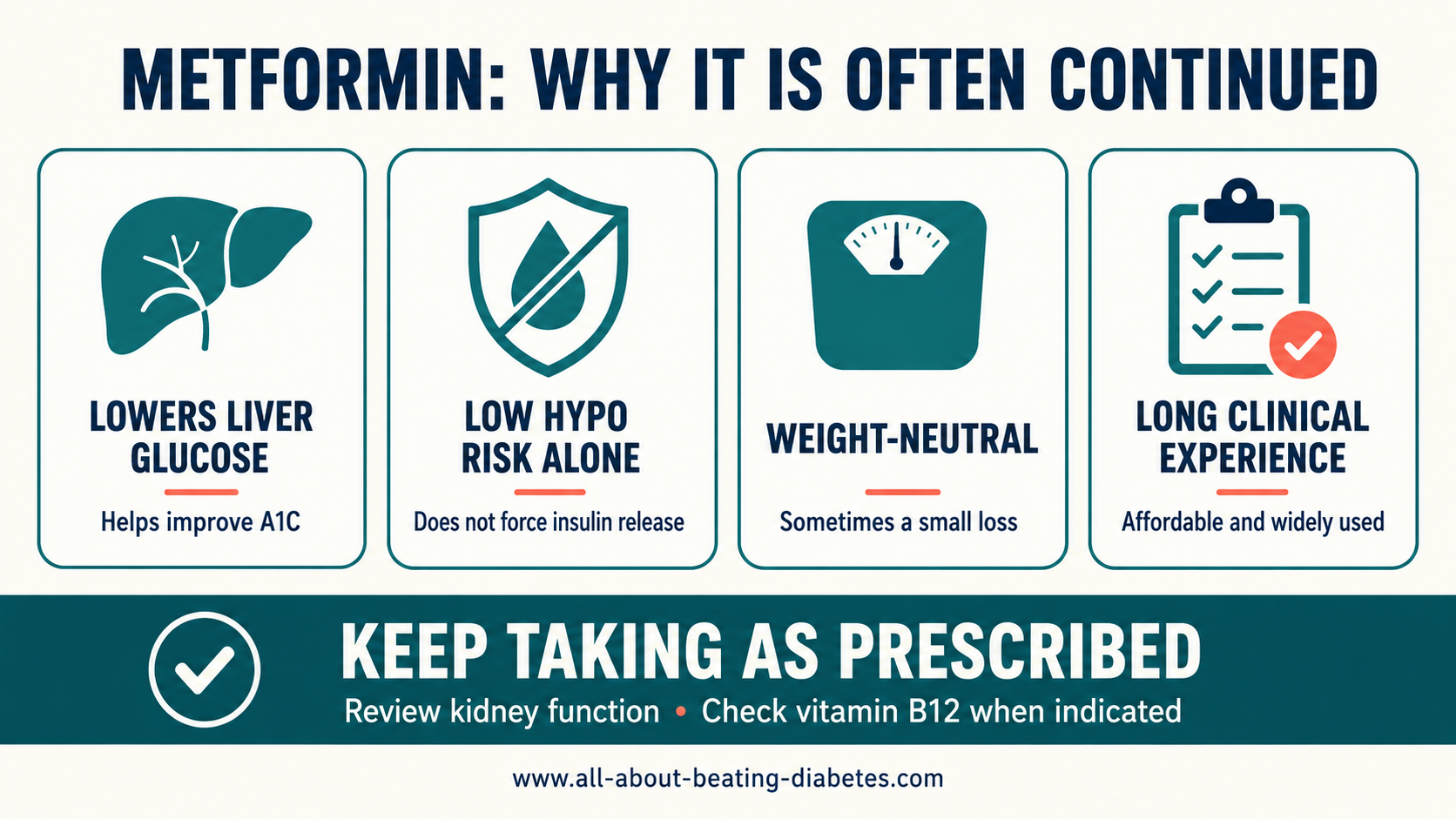
Metformin is a biguanide medicine. Its main action is to reduce the amount of glucose released by the liver. It also helps the body respond better to insulin. The result is less glucose circulating in the blood, especially between meals and overnight.
Unlike sulfonylureas, metformin does not make the pancreas release extra insulin. This is why metformin taken by itself has a low risk of causing hypoglycemia. Low blood sugar can still occur when it is combined with insulin or medicines that increase insulin release, or when food intake, alcohol, activity or illness changes.
You can read more about the metformin and insulin resistance connection and how this medicine fits into modern type 2 diabetes treatment.
What Are the Main Benefits of Metformin?
| Potential benefit | What it means in practice | Important limit |
|---|---|---|
| Effective glucose lowering | Metformin has high glucose-lowering efficacy and can help reduce fasting glucose and HbA1c. | Your personal HbA1c goal should be set with your clinician; below 7% is not the right target for every person. |
| Low hypoglycemia risk | Metformin alone usually does not cause low blood sugar because it does not force insulin release. | The risk changes if it is combined with insulin or insulin-releasing tablets. |
| Usually weight-neutral | It generally does not cause weight gain and some people lose a modest amount of weight. | Metformin is not primarily a weight-loss medicine, and results vary. |
| Long clinical experience | It is widely available, inexpensive in many countries and familiar to healthcare teams. | Long experience does not remove the need for kidney and vitamin B12 monitoring. |
| Long-term health evidence | Current diabetes standards describe benefits for microvascular outcomes and possible cardiovascular benefit. | No medicine can promise a fixed reduction in heart attack, stroke or death for every patient. |
Another practical benefit is flexibility. Metformin is available in immediate-release and extended-release forms. If nausea, diarrhea or bloating is a problem, a gradual dose increase, taking it with food or changing to extended-release metformin may improve tolerance. These changes should be made with the prescriber.
Are These Benefits a Good Reason to Keep Taking Metformin?
Often, yes. If metformin helps you meet your glucose goal without troublesome side effects and your kidney function remains suitable, continuing it can be a sound part of your treatment plan. It is not simply a temporary bridge until lifestyle changes start working.
I encourage healthy food choices, regular movement, adequate sleep and weight management when appropriate. These habits work with prescribed treatment. If lifestyle changes lead to major and lasting improvement, your healthcare professional may decide that a lower dose or a supervised trial without metformin is reasonable. That decision should be based on repeated HbA1c or glucose results, not one good reading.
A clinician may reconsider metformin because of persistent side effects, reduced kidney function, a change in treatment goals, frailty, pregnancy planning, acute illness, surgery or a contrast-imaging procedure. If your readings remain above target despite metformin, the answer may be to add or change treatment rather than simply keep increasing the dose.
What About Heart, Kidney and Weight Benefits?
Heart health
Metformin has favorable historical cardiovascular evidence and does not usually cause weight gain or low blood sugar. However, the claim that it reduces mortality or diabetes complications by exactly 30% for everyone is too broad. Benefits depend on the person, comparison treatment and outcome studied.
For people with established heart disease, heart failure or chronic kidney disease, current guidelines may prioritize an SGLT2 inhibitor or a GLP-1 receptor agonist with proven organ-protection benefits—sometimes in addition to metformin and sometimes regardless of whether metformin is used. See this patient guide to the modern ADA/EASD treatment approach.
Kidney health
Metformin does not directly protect the kidneys in the same way as certain SGLT2 inhibitors. It is cleared through the kidneys, so kidney function determines whether it can be used safely. The estimated glomerular filtration rate, or eGFR, is more useful than simply asking whether creatinine is “normal.”
- Metformin should not be started when eGFR is below 45 mL/min/1.73 m².
- If eGFR later falls below 45, the clinician should reassess the dose and benefits versus risks.
- Metformin should be stopped when eGFR is below 30 mL/min/1.73 m².
These are general thresholds. Your prescriber should interpret them in the context of age, changing kidney function, other medicines and acute illness. Learn more about diabetes and kidney health.
Weight
Metformin is usually weight-neutral and may produce a small loss for some people, particularly when it improves insulin resistance or reduces appetite. It should not be presented as a guaranteed or rapid weight-loss treatment. If weight management is a major treatment goal, discuss the full range of evidence-based options rather than relying on metformin alone.
Benefits Beyond Type 2 Diabetes: What Does the Evidence Say?
Prediabetes
Metformin has the strongest long-term evidence among medicines studied for diabetes prevention. In the original Diabetes Prevention Program, metformin reduced the development of type 2 diabetes by 31% relative to placebo over about 2.8 years, while intensive lifestyle intervention reduced it by 58%. This does not mean everyone with prediabetes needs metformin.
Current guidance says it should be considered especially for adults at high risk, including many people aged 25–59 with BMI at least 35 kg/m², fasting glucose around 110 mg/dL (6.0 mmol/L) or higher, HbA1c at least 6.0%, or a history of gestational diabetes. Lifestyle support remains central.
Polycystic ovary syndrome (PCOS)
Metformin can be considered for metabolic outcomes in adults with PCOS, particularly when BMI is 25 kg/m² or higher. It may help insulin resistance, glucose and lipid measures, and sometimes menstrual regularity. It is not the first-line ovulation-induction medicine for every person trying to conceive; current PCOS guidance generally places letrozole first for anovulatory infertility when there are no other infertility factors.
Metformin in pregnancy has not been shown to prevent gestational diabetes, late miscarriage, high blood pressure, pre-eclampsia or a large baby in women with PCOS. A specialist may use it in selected circumstances, but pregnancy planning should trigger a medication review.
Gestational diabetes and type 2 diabetes in pregnancy
Insulin is the preferred medicine for gestational diabetes and type 2 diabetes during pregnancy in current American Diabetes Association guidance. Metformin crosses the placenta and is not recommended as the first-line medicine in pregnancy. It may be considered when insulin cannot be used safely or effectively, after a careful discussion of benefits, limitations and the still-incomplete long-term offspring data. Never start or stop it during pregnancy on your own.
Fatty liver disease
Metformin may still be used for type 2 diabetes in someone who also has metabolic dysfunction-associated steatotic liver disease. However, liver guidance does not recommend metformin as a treatment for steatohepatitis because it has not shown meaningful improvement in liver histology. Nutrition, activity, weight management and treatment of cardiovascular risk remain important.
Anti-aging, cancer prevention and other claims
Metformin is being studied beyond diabetes, but it is not an approved anti-aging medicine and should not be taken by a person without a valid medical indication. Observational associations are not the same as proof that it prevents cancer or extends life. Research is interesting; it is not a reason to self-prescribe.
Metformin Side Effects and Long-Term Safety
The most common side effects are nausea, diarrhea, abdominal discomfort, gas and reduced appetite. They are often strongest at the beginning or after a dose increase. Taking metformin with food, increasing it gradually or using an extended-release formulation may help. Persistent or severe symptoms deserve a review rather than silent suffering. See Glucophage and metformin side effects.
Vitamin B12 deficiency
Long-term metformin use can reduce vitamin B12 levels. Current standards advise periodic B12 assessment, especially in people with anemia or peripheral neuropathy. Ask about testing if you develop new numbness, tingling, unusual fatigue, weakness, a sore tongue, balance problems or unexplained anemia. Do not assume every neuropathy symptom is caused by diabetes.
Lactic acidosis
Metformin-associated lactic acidosis is very rare but serious. Risk rises when metformin accumulates because of severe kidney impairment or acute kidney injury. Severe dehydration, sepsis, low oxygen states, excessive alcohol use and certain acute illnesses can also increase concern.
Illness, surgery and contrast scans
Ask your diabetes team for written sick-day instructions. Metformin may need to be held temporarily during significant vomiting, diarrhea, dehydration, severe infection, reduced food or fluid intake, surgery, or another condition that can cause acute kidney injury. Never guess when to stop and restart it.
Metformin may also need to be paused for some tests using iodinated contrast dye. The decision depends on eGFR, how the contrast is given and other risk factors. The prescribing label advises rechecking kidney function after certain contrast procedures and restarting only when it is stable.
A Practical Metformin Monitoring Checklist
- HbA1c or glucose pattern: Is metformin helping you reach your individualized target?
- Kidney function: Has your eGFR been checked at the interval your clinician recommends?
- Vitamin B12: Do you need periodic testing, particularly with long-term use, anemia or neuropathy?
- Side effects: Are diarrhea, nausea or appetite changes persistent enough to affect nutrition, hydration or quality of life?
- Other health priorities: Do heart disease, heart failure, kidney disease or weight goals mean another medicine should be added or prioritized?
- Sick-day plan: Do you know whom to call and when to pause or restart medicine during acute illness?
- Pregnancy plans: Has the whole medication plan been reviewed before conception or as soon as pregnancy is known?
Bring your medication list and recent glucose readings to your appointment. A simple question can start the right conversation: “What benefit am I getting from metformin, and what monitoring do I need to keep taking it safely?”
As I explain to my patients, metformin does not replace healthy habits, and healthy habits do not automatically replace metformin. The goal is not to take the fewest medicines at any cost. The goal is safe glucose control while protecting your heart, kidneys, nerves, eyes and quality of life. If metformin is working and remains appropriate, continuing it may be the sensible choice. If your health changes, review it—do not stop it alone.
Frequently Asked Questions About the Benefits of Metformin
1. If my blood sugar is normal, can I stop metformin?
Not without medical advice. Your glucose may be normal because metformin, lifestyle changes or both are working. Your clinician can review repeated HbA1c results, weight, kidney function and relapse risk before reducing or stopping treatment.
2. Is metformin safe to take for many years?
It is used long term by many people and has extensive safety experience. Continued use still requires periodic kidney review and attention to vitamin B12, gastrointestinal symptoms and changes in health.
3. Does metformin damage the kidneys?
Metformin is not generally considered a medicine that damages healthy kidneys. The concern is that reduced kidney function can allow metformin to accumulate, so eGFR must be monitored and the medicine adjusted or stopped at defined thresholds.
4. Does metformin cause low blood sugar?
Metformin alone usually does not. The risk can rise when it is combined with insulin or insulin-releasing medicines, or when meals, alcohol, exercise or illness change.
5. Does metformin help with weight loss?
It is usually weight-neutral and may cause a modest loss in some people, but it is not a guaranteed weight-loss medicine. Weight treatment should be individualized.
6. Should everyone with prediabetes take metformin?
No. It is considered mainly for people at higher risk of progressing to type 2 diabetes. Intensive lifestyle support remains highly effective, and the decision should reflect age, BMI, glucose levels, previous gestational diabetes and personal circumstances.
7. Can I take metformin while pregnant?
This requires an individual medical decision. Insulin is the preferred medicine for diabetes in pregnancy in current ADA guidance, and metformin is not first-line because it crosses the placenta. Do not start or stop it without your obstetric and diabetes teams.
8. Can diet and exercise replace metformin?
They may improve glucose enough for some people to reduce medication under supervision, but not for everyone. They should be part of every appropriate diabetes plan and used alongside prescribed treatment until your clinician changes the plan.
Related Questions
Related Resources
- Metformin and insulin resistance
- Glucophage side effects and how to manage them
- Metformin and weight loss
- Diabetes medications: benefits and side effects
- Natural diabetes approaches: what helps and what does not
References
- American Diabetes Association. Pharmacologic Approaches to Glycemic Treatment: Standards of Care in Diabetes—2026.
- American Diabetes Association. Prevention or Delay of Diabetes and Associated Comorbidities: Standards of Care in Diabetes—2026.
- American Diabetes Association. Management of Diabetes in Pregnancy: Standards of Care in Diabetes—2026.
- U.S. National Library of Medicine. Metformin hydrochloride prescribing information.
- 2023 International Evidence-based Guideline for the Assessment and Management of Polycystic Ovary Syndrome.
- American Association for the Study of Liver Diseases. Practice Guidance on the clinical assessment and management of nonalcoholic fatty liver disease.
- Diabetes Prevention Program Research Group. Reduction in the incidence of type 2 diabetes with lifestyle intervention or metformin.