- Home
- Vitamins and Supplements for Diabetes
- Best Vitamins and Minerals for People With Diabetes
Vitamins and Minerals for Diabetes: Deficiencies, Benefits, Supplements, and Safety
This article offers evidence-based guidance on vitamin and mineral deficiencies, potential benefits, supplement use, and important safety considerations for people living with diabetes.
Written by Dr. Albana Greca, MD, MMedSc, Family Physician
Medically reviewed by Dr. Ruden Cakoni, MD, Endocrinologist
Last reviewed: July 2026
Quick Answer
Vitamins and minerals are essential for health, but no vitamin, mineral, or multivitamin has been proven to cure diabetes or replace insulin, medication, healthy eating, physical activity, or glucose monitoring.
Supplements are most useful when a deficiency or specific nutritional need is identified. Vitamin B12 deserves particular attention in people taking metformin for several years, especially with anemia, numbness, tingling, weakness, kidney disease, or other deficiency risks. Vitamin D, iron, folate, magnesium, and other nutrients should be tested or supplemented according to symptoms, diet, life stage, medicines, and laboratory results—not simply because a person has diabetes.
People with diabetes often ask, “Which vitamins should I take to lower my blood sugar?” The safest answer is that vitamins should correct a nutritional problem, not serve as an unproven diabetes treatment.
A nutrient-dense eating pattern usually provides vitamins, minerals, fiber, protein, and protective plant compounds together. Supplements can be appropriate, but more is not always better. High doses can cause bleeding, nerve damage, kidney problems, liver injury, abnormal potassium, or misleading laboratory results.
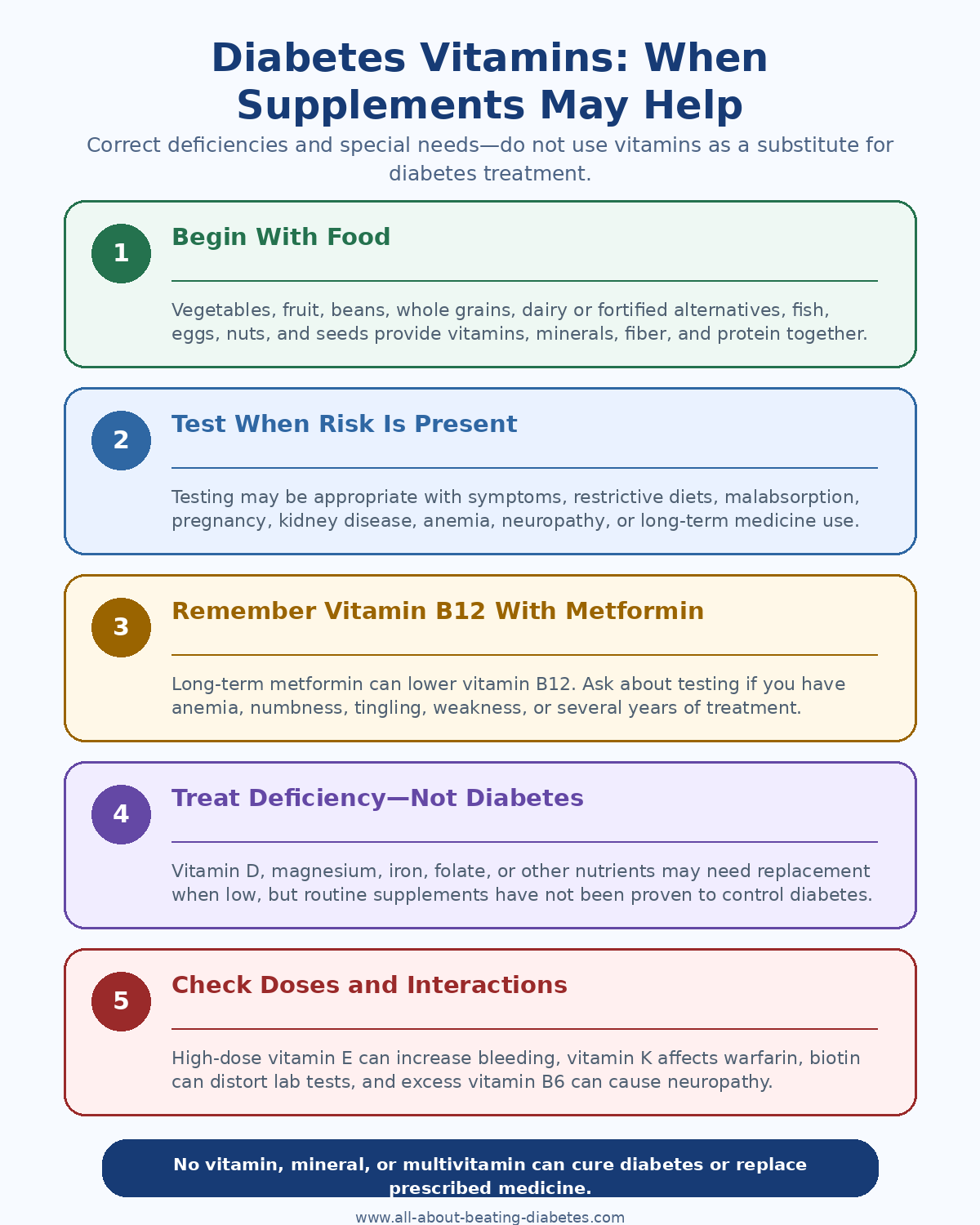
Supplements are most useful when they correct a deficiency or meet a specific medical or life-stage need.

Can Vitamins and Minerals Lower Blood Sugar?
Some small trials and meta-analyses report modest changes in fasting glucose, HbA1c, or insulin resistance with individual nutrients such as magnesium, chromium, zinc, or vitamin D. However, the results are inconsistent, often depend on whether participants were deficient, and do not establish a reliable treatment dose for diabetes.
The National Center for Complementary and Integrative Health concludes that there is not enough evidence to show that any dietary supplement can manage or prevent type 2 diabetes. Current diabetes guidance also does not recommend routine vitamin or mineral supplementation for glucose control when a person has no underlying deficiency.
Important distinction: Treating a vitamin or mineral deficiency can improve health and may improve symptoms. That is different from using the same supplement as a treatment for diabetes in a person whose nutrient level is already adequate.
Do not stop or reduce prescribed treatment because a supplement label claims to “support glucose,” “reverse insulin resistance,” or “replace metformin.” Review our evidence-based guide to diabetes medicines and their benefits and risks.
Who May Need Testing or Supplementation?
Testing or a targeted supplement may be appropriate when there is:
- A documented vitamin or mineral deficiency
- Long-term metformin treatment and vitamin B12 risk
- Pregnancy, preparation for pregnancy, or breastfeeding
- A vegan or highly restrictive diet
- Malabsorption, celiac disease, inflammatory bowel disease, bariatric surgery, or pancreatic disease
- Chronic kidney or liver disease
- Anemia, neuropathy, unexplained fatigue, weakness, bone pain, or fractures
- Long-term use of acid-suppressing medicine, anticonvulsants, diuretics, or other medicines that affect nutrient status
- Limited food access, poor appetite, frailty, or unintentional weight loss
- Alcohol-use disorder
- A laboratory result showing low vitamin D, iron, folate, B12, magnesium, or another nutrient
Symptoms alone do not identify the nutrient. Fatigue, numbness, weakness, hair loss, cramps, and poor concentration have many possible causes. Testing should be selected according to the clinical history rather than ordering every vitamin panel.
Vitamin B12 and Metformin
Vitamin B12 is needed for normal red blood cell formation, DNA synthesis, and nervous-system function. Metformin can reduce B12 absorption, and the risk increases with higher doses, longer treatment duration, older age, limited animal-food intake, acid-suppressing medicines, and gastrointestinal conditions.
Current ADA guidance recommends considering periodic B12 assessment in people taking metformin chronically, especially after several years, at higher doses, or when there are additional risk factors. Symptoms or findings that deserve review include:
- Numbness, tingling, burning, balance problems, or worsening neuropathy
- Unexplained anemia
- Weakness or unusual fatigue
- Memory or concentration changes
- A sore, smooth tongue
- Long-term metformin use combined with chronic kidney disease or malabsorption risk
Vitamin B12 deficiency can resemble or worsen diabetic peripheral neuropathy. This is why new neuropathy symptoms should not automatically be blamed on glucose.
Should everyone taking metformin take B12?
Not necessarily. Some people maintain normal B12 levels, while others need oral or injected replacement. The dose and route depend on the severity, symptoms, absorption, laboratory results, and cause.
Do not stop metformin because of a low B12 level unless the prescriber advises it. In many cases, the deficiency can be treated while metformin continues.
Vitamin D and Diabetes
Vitamin D supports bone health, calcium absorption, muscle function, and other physiological processes. Low vitamin D levels are common in the general population and are also associated with obesity and several chronic conditions.
Observational studies have linked lower vitamin D levels with type 2 diabetes, but association does not prove that deficiency causes diabetes. Clinical trials provide little evidence that vitamin D supplementation meaningfully lowers fasting glucose or HbA1c in people whose vitamin D level is already adequate.
Vitamin D should be used to prevent or treat deficiency and support bone health when indicated—not marketed as a diabetes cure. Testing may be considered with:
- Bone pain, fractures, muscle weakness, or osteoporosis risk
- Limited sunlight exposure
- Malabsorption or bariatric surgery
- Older age or institutional living
- Chronic kidney or liver disease
- Medicines that alter vitamin D metabolism
High-dose vitamin D can cause excessive calcium, kidney stones, kidney injury, abnormal heart rhythm, and soft-tissue calcification. Do not take repeated high-dose courses without an appropriate plan. Read more in our vitamin D and diabetes guide.
Vitamins and Minerals Commonly Discussed in Diabetes
| Nutrient | When It May Matter | Does It Treat Diabetes? | Important Safety Point |
|---|---|---|---|
| Vitamin B12 | Long-term metformin, vegan diet, anemia, neuropathy, malabsorption | Treats deficiency; does not directly replace diabetes treatment | Check the cause and neurological symptoms |
| Vitamin D | Deficiency, bone disease, malabsorption, limited sun exposure | Little evidence of glycemic benefit when vitamin D is adequate | Excess can cause high calcium and kidney injury |
| Magnesium | Documented low magnesium, certain diuretics, gastrointestinal loss | Not recommended routinely for glucose control | Can accumulate in significant kidney disease; may cause diarrhea |
| Chromium | True deficiency is uncommon; sometimes marketed for insulin resistance | Possible small effects in some studies, but clinical value is uncertain | Review kidney, liver, and medicine risks before use |
| Vitamin E | Deficiency is uncommon except with severe fat-malabsorption disorders | High-dose supplements have not prevented cardiovascular events in diabetes | High doses can increase bleeding, especially with anticoagulants |
| Vitamin B6 | Replacement is appropriate for confirmed deficiency | Not proven to prevent diabetic complications | Excess supplemental B6 can itself cause sensory neuropathy |
| Vitamin K | Clotting, bone health, malabsorption, prolonged poor intake | Not established as a treatment for insulin resistance | Keep intake consistent when taking warfarin |
| Biotin | True deficiency is rare | No established role as a diabetes treatment | High doses can distort thyroid, vitamin D, cardiac, and other laboratory tests |
| Zinc | Deficiency, poor intake, malabsorption, certain wounds or illnesses | Evidence is insufficient for routine diabetes supplementation | Long-term high doses can cause copper deficiency |
| Vitamin C | Deficiency, poor fruit and vegetable intake, smoking-related increased need | Not proven to prevent diabetes complications when taken routinely | High doses can cause gastrointestinal effects and may be unsuitable with some kidney conditions |
| Niacin | Prescription doses may be used for selected lipid disorders | Not a glucose-lowering supplement | High-dose nicotinic acid can raise glucose and worsen insulin resistance |
Vitamin E: Antioxidant Does Not Mean Diabetes Protection
Vitamin E is an antioxidant, and animal research has explored possible neuroprotective effects. Animal studies do not prove that supplements prevent neuropathy, stroke, heart disease, kidney disease, or eye disease in people with diabetes.
Large cardiovascular trials did not show that routine high-dose vitamin E prevented major cardiovascular events in people at high risk, including people with diabetes. High-dose vitamin E may increase bleeding risk and has been associated with hemorrhagic stroke in some research.
Food sources such as nuts, seeds, vegetable oils, spinach, and broccoli are generally preferable. Learn more from our vitamin E and diabetes page.
Vitamin B6: More Is Not Better
Vitamin B6 is involved in amino acid metabolism, neurotransmitter synthesis, and other functions. The old page suggested high-dose B6 could protect arteries. That is not a reason to recommend routine supplementation.
Large or prolonged supplemental doses can cause sensory neuropathy, including numbness, burning, tingling, poor balance, and difficulty walking. These symptoms can be confused with diabetic neuropathy.
Always add up the B6 contained in multivitamins, “nerve support” products, magnesium blends, energy products, and separate B-complex tablets.
Vitamin K and Warfarin
Vitamin K is important for blood clotting and bone metabolism. Research into insulin sensitivity has not established vitamin K as a diabetes treatment.
People taking warfarin should not avoid green vegetables. Instead, they should keep vitamin K intake reasonably consistent and discuss major diet or supplement changes with the anticoagulation team. Sudden increases or decreases can alter the medicine’s effect.
Magnesium, Chromium, and Zinc
Magnesium
People with insulin resistance or type 2 diabetes can have lower magnesium levels, and higher dietary magnesium intake is associated with a lower diabetes risk. However, trials of magnesium supplements for glucose control have produced conflicting results.
Magnesium-rich foods include nuts, seeds, beans, lentils, whole grains, and leafy vegetables. Supplements may be appropriate for documented deficiency, but dosing requires caution with significant kidney impairment.
Chromium
Chromium is often marketed for glucose control, sugar cravings, and weight loss. Reviews suggest possible small changes in fasting glucose or HbA1c, but the clinical importance is uncertain and results are not consistent.
Chromium should not replace diabetes treatment or proven prediabetes prevention. Read our detailed chromium for diabetes evidence and safety guide.
Zinc
Zinc is needed for immune function, wound healing, protein synthesis, and many enzymes. Some studies report metabolic improvements, while others do not. Current evidence is insufficient to recommend zinc routinely for diabetes prevention or glucose control.
Long-term high-dose zinc can cause copper deficiency, anemia, and neurological problems.
Should Every Person With Diabetes Take a Multivitamin?
No. Diabetes itself does not create a universal requirement for a daily multivitamin. A basic multivitamin may be reasonable when diet is limited or a clinician identifies nutritional risk, but it should not be promoted as a way to “beat diabetes.”
A multivitamin is more likely to be useful when a person:
- Has poor appetite or a severely limited diet
- Cannot consistently access a variety of nutritious foods
- Has malabsorption or bariatric surgery
- Is pregnant or preparing for pregnancy and needs prenatal supplementation
- Has a medically documented nutrient deficiency
- Is an older adult with frailty or unintentional weight loss
- Follows a vegan diet and needs reliable vitamin B12
Choose a product close to approximately 100% of daily values rather than megadose formulas unless a clinician prescribes otherwise. Avoid stacking a multivitamin, B-complex, “immune support,” hair-and-nail supplement, and individual nutrients without calculating the total dose.
Pregnancy, Diabetes, and Vitamins
Pregnancy requires specific attention to folic acid, iron, iodine, vitamin D, vitamin B12, and other nutrients. The correct prenatal product depends on diet, laboratory results, medicines, previous pregnancy history, and obstetric guidance.
Do not assume that more vitamins produce a healthier pregnancy. High-dose preformed vitamin A, certain herbal blends, and excessive iodine or other nutrients can be harmful.
People with preexisting diabetes should begin pregnancy planning before conception when possible. Glucose, medicines, kidney function, eye health, folic acid needs, and prenatal supplements should be reviewed with the obstetric and diabetes team.
Kidney Disease Changes Supplement Safety
Chronic kidney disease can change the handling of magnesium, potassium, phosphorus, vitamin A, vitamin C, and many herbal ingredients. Some “electrolyte,” “kidney cleanse,” or mineral products can cause dangerous accumulation.
People with diabetes-related kidney disease should not start magnesium, potassium, phosphate, high-dose vitamin C, or herbal mineral blends without reviewing eGFR, potassium, medicines, and dialysis status. See our current diabetic kidney disease guide.
Food-First Sources of Vitamins and Minerals

Whole foods provide nutrients together with fiber, protein, healthy fats, or other beneficial components.
| Nutrient | Food Sources |
|---|---|
| Vitamin B12 | Fish, meat, eggs, dairy foods, and fortified plant foods |
| Vitamin D | Fatty fish, egg yolk, fortified milk or plant drinks, and fortified foods |
| Magnesium | Pumpkin seeds, nuts, beans, lentils, whole grains, and leafy greens |
| Vitamin E | Almonds, sunflower seeds, vegetable oils, spinach, and broccoli |
| Vitamin K | Spinach, kale, broccoli, cabbage, and other green vegetables |
| Vitamin C | Peppers, citrus fruit, berries, kiwi, broccoli, tomatoes, and potatoes |
| Zinc | Meat, shellfish, dairy foods, beans, nuts, seeds, and fortified grains |
| Folate | Leafy vegetables, beans, lentils, asparagus, citrus fruit, and fortified grains |
Food choices still need to fit the carbohydrate and calorie plan. Fruit, milk, yogurt, beans, and grains provide useful nutrients but also contain carbohydrate. Our diabetes foods guide explains how to combine them safely.
Supplement Safety Checklist
- Write down the exact product, dose, and frequency.
- Check the amount in every combined product to avoid duplication.
- Tell your doctor and pharmacist about vitamins, minerals, herbs, powders, gummies, and drinks.
- Ask whether kidney or liver function changes the safe dose.
- Check interactions with anticoagulants, diabetes medicines, thyroid medicine, antibiotics, and blood-pressure medicines.
- Tell the laboratory and clinician about biotin before blood tests.
- Use pregnancy-specific guidance rather than a general supplement blend.
- Avoid products promising a diabetes cure, rapid weight loss, or replacement for medication.
- Prefer products with independent quality testing when supplementation is appropriate.
- Stop and seek advice for rash, swelling, vomiting, severe weakness, confusion, unusual bleeding, or worsening numbness.
Important Safety Note
Supplements can interact with insulin, sulfonylureas, anticoagulants, antiplatelet medicines, thyroid treatment, antibiotics, and many other medicines. Some products can injure the liver or kidneys or contain undeclared ingredients.
Seek urgent care for facial or throat swelling, breathing difficulty, fainting, severe weakness, confusion, uncontrolled bleeding, black stools, repeated vomiting, or symptoms of dangerously high or low blood glucose.
Doctor’s Note
When a patient asks me for the “best diabetes vitamin,” I first ask what problem we are trying to solve. Is there anemia, neuropathy, bone disease, a restrictive diet, pregnancy, kidney disease, or long-term metformin use? A targeted supplement can be very helpful when the indication is clear. Taking several high-dose products without a diagnosis can create new problems while giving false reassurance about diabetes control.
Most Asked Questions
What is the best vitamin for diabetes?
There is no best vitamin for every person with diabetes. The most useful supplement is the one that corrects a documented deficiency or meets a specific medical or life-stage need.
Should I take vitamin B12 with metformin?
Long-term metformin can lower B12. Ask about periodic testing, especially after several years, at higher doses, or with anemia, neuropathy, kidney disease, vegan eating, or malabsorption. Supplementation depends on the result and clinical situation.
Does vitamin D lower HbA1c?
Vitamin D replacement is important when a person is deficient, but trials provide little evidence that routine supplementation lowers HbA1c in people who already have adequate vitamin D.
Can magnesium improve diabetes?
Magnesium should be corrected when low. Current evidence is insufficient to recommend routine magnesium supplements solely to improve glucose control.
Is chromium safe for blood sugar?
Chromium may have small effects in some studies, but results are inconsistent and it should not replace standard treatment. Kidney, liver, medicine, and hypoglycemia risks should be reviewed first.
Can vitamins prevent diabetic neuropathy?
No vitamin supplement has been proven to prevent diabetic neuropathy in everyone. Vitamin B12 deficiency should be identified and treated because it can cause neuropathy. Excess vitamin B6 can also cause nerve damage.
Can a multivitamin replace vegetables and fruit?
No. A multivitamin does not provide fiber, protein, healthy fats, or the complete food matrix found in a varied eating pattern.
Educational safety note: This page does not prescribe a supplement or dose for an individual. Do not stop diabetes medicine or begin high-dose vitamins or minerals without reviewing your medicines, kidney function, pregnancy status, symptoms, and laboratory results.
Related Questions
- Can Herbs and Vitamins Control My Blood Sugar?
- Can I Take Vitamin C Pills Instead of Fruit?
- Are Supplements and Herbs Safe for Prediabetes?
- Can Vitamin B12 Help Diabetic Neuropathy?
Related Resources
- Diabetes and Supplements: Evidence and Safety
- Vitamin D and Diabetes
- Vitamin C and Diabetes
- Vitamin E and Diabetes
- Biotin and Diabetes
- Chromium for Diabetes
- Vanadium and Diabetes Safety
References
- American Diabetes Association. Facilitating Positive Health Behaviors and Well-being: Standards of Care in Diabetes—2026.
- American Diabetes Association. Prevention or Delay of Diabetes and Associated Comorbidities—2026.
- National Center for Complementary and Integrative Health. Type 2 Diabetes and Dietary Supplements: What the Science Says.
- NIH Office of Dietary Supplements. Vitamin B12 Fact Sheet for Health Professionals.
- NIH Office of Dietary Supplements. Vitamin D Fact Sheet for Health Professionals.
- NIH Office of Dietary Supplements. Magnesium Fact Sheet for Health Professionals.
- NIH Office of Dietary Supplements. Vitamin E Fact Sheet for Health Professionals.
- NIH Office of Dietary Supplements. Vitamin B6 Fact Sheet for Health Professionals.
- NIH Office of Dietary Supplements. Vitamin K Fact Sheet for Health Professionals.
- NIH Office of Dietary Supplements. Biotin Fact Sheet for Health Professionals.
- NIH Office of Dietary Supplements. Chromium Fact Sheet for Health Professionals.
- NIH Office of Dietary Supplements. Zinc Fact Sheet for Health Professionals.