Type 2 diabetes symptoms can be easy to miss. They often develop slowly, and some people have no noticeable symptoms at all. I want you to recognize the possible warning signs without assuming that symptoms alone can confirm diabetes.
Quick answer
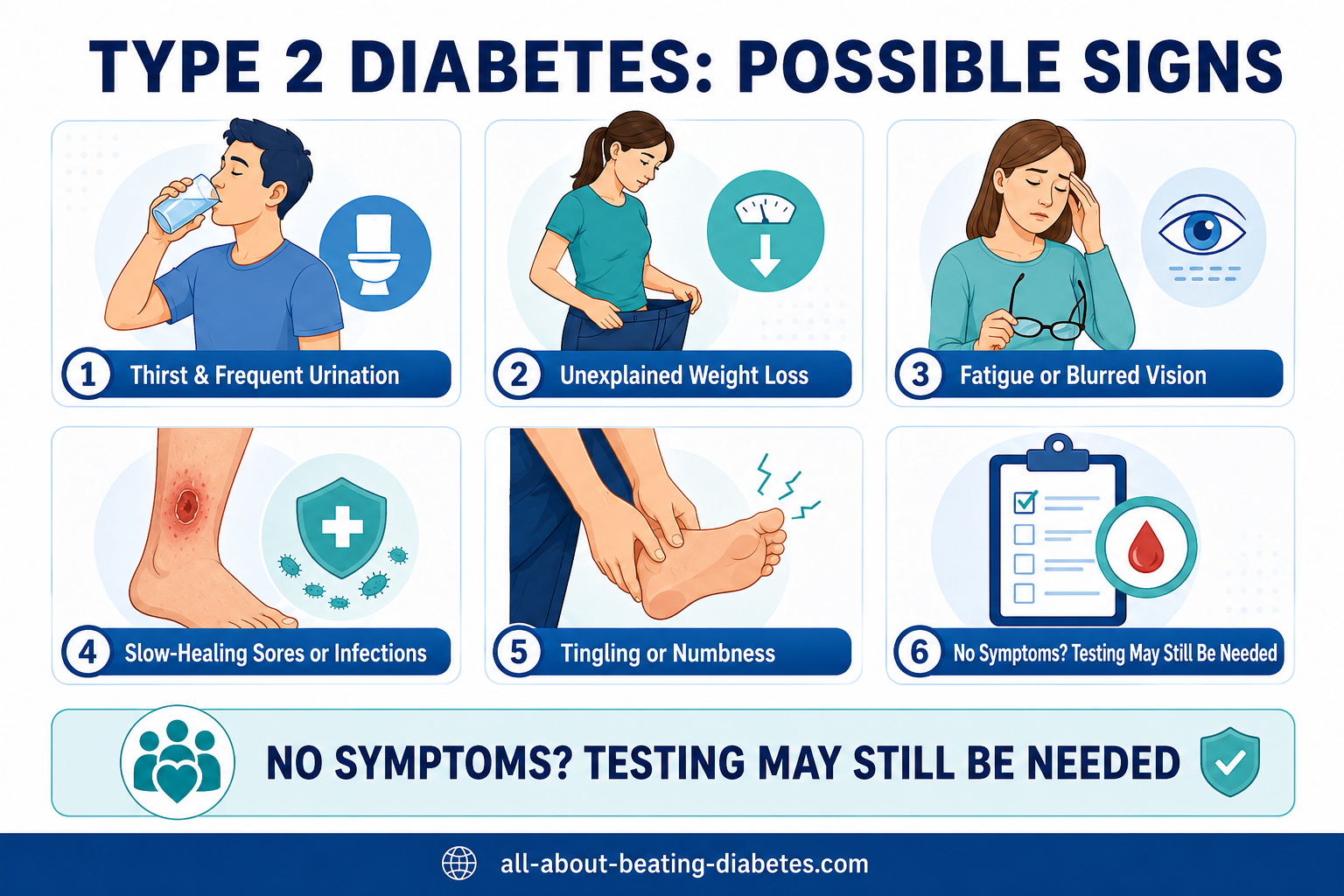
Common type 2 diabetes symptoms include increased thirst, frequent urination, increased hunger, unexplained weight loss, tiredness, blurred vision, slow-healing sores, repeated infections, and tingling or numbness in the hands or feet. Dark, thick, velvety skin around the neck, armpits, or groin may indicate insulin resistance.
However, many people feel completely well. Diabetes is diagnosed with laboratory blood tests—not by symptoms or a home glucose meter alone.
What are the common symptoms of type 2 diabetes?
You may have one symptom, several symptoms, or none. The following signs deserve attention, especially when they are new, persistent, or occur together.
- Urinating more often, including during the night
- Feeling unusually thirsty
- Feeling hungrier than usual
- Losing weight without trying
- Feeling tired or weak
- Blurred or changing vision
- Cuts or sores that heal slowly
- Frequent urinary, genital yeast, or skin infections
- Tingling, burning, pain, or numbness in the hands or feet
- Dark, thick, velvety skin, particularly in body folds

Why can high blood sugar cause these symptoms?
| Possible symptom | What may be happening |
|---|---|
| Thirst and frequent urination | When glucose is high enough, the kidneys remove more glucose and water in the urine. Fluid loss can make you thirsty. |
| Hunger and unexplained weight loss | Glucose may not be used efficiently for energy. Loss of calories in urine and breakdown of stored fat or muscle can contribute to weight loss. |
| Fatigue | High glucose, dehydration, poor sleep from nighttime urination, infection, and many non-diabetes conditions can all cause tiredness. |
| Blurred vision | Changing glucose levels can temporarily alter fluid balance in the lens of the eye. Persistent or sudden visual changes need medical assessment. |
| Slow healing or repeated infections | High glucose can interfere with immune function, circulation, and healing. A wound that is worsening or infected should not be managed at home for long. |
| Tingling or numbness | Long-standing high glucose can damage nerves, although vitamin deficiencies, thyroid problems, compression, and other conditions can cause similar symptoms. |
Early symptoms are not the same as diabetes complications
Numbness, erectile difficulties, kidney problems, eye disease, heart attack, and stroke may be associated with long-term diabetes, but they should not all be listed as early symptoms of type 2 diabetes. Some complications remain silent until screening finds them.
Chest pain, facial drooping, arm weakness, difficulty speaking, or sudden severe vision loss are medical emergencies in anyone. They are not a way to diagnose type 2 diabetes.
For more detail, read about short- and long-term diabetes complications and diabetic nerve pain.
What should I do if I notice possible symptoms?
- Arrange a medical assessment and laboratory blood test. Do not wait for every symptom to appear.
- Tell your clinician when the symptoms started and whether you have weight loss, infection, pregnancy, steroid use, or a family history of diabetes.
- Bring any home readings as useful context, but remember that an over-the-counter glucose meter does not diagnose diabetes.
- Do not start, stop, or change diabetes medicine on your own. Treatment depends on the confirmed diagnosis, glucose level, symptoms, other health conditions, and individual needs.
Laboratory results used to diagnose diabetes in nonpregnant people
| Test | Prediabetes range | Diabetes range |
|---|---|---|
| A1C | 5.7%–6.4% | 6.5% or higher |
| Fasting plasma glucose | 100–125 mg/dL (5.6–6.9 mmol/L) | 126 mg/dL (7.0 mmol/L) or higher |
| 2-hour oral glucose tolerance test | 140–199 mg/dL (7.8–11.0 mmol/L) | 200 mg/dL (11.1 mmol/L) or higher |
| Random plasma glucose | Not used to define prediabetes | 200 mg/dL (11.1 mmol/L) or higher when classic symptoms or a hyperglycemic crisis are present |
Unless high blood sugar is unequivocal or accompanied by classic symptoms or a hyperglycemic crisis, an abnormal result generally needs confirmation with a second abnormal result. Pregnancy uses different testing procedures and thresholds.
You may also find my explanations of fasting blood glucose and A1C levels helpful.
When should I seek urgent medical help?
Seek emergency care now if very high blood sugar or suspected diabetes is accompanied by vomiting, inability to keep fluids down, severe dehydration, deep or difficult breathing, fruity-smelling breath, confusion, marked drowsiness, fainting, or moderate or high ketones.
Type 2 diabetes can occasionally present with diabetic ketoacidosis or hyperosmolar hyperglycemic state. Both require urgent hospital treatment.
Who should be tested even without symptoms?
Symptoms and risk factors are different. You may need screening even when you feel well. Current guidance supports routine adult screening from age 35, with earlier testing for people who have overweight or obesity plus another risk factor. Risk factors include a parent or sibling with type 2 diabetes, previous gestational diabetes, polycystic ovary syndrome, physical inactivity, high blood pressure, abnormal cholesterol, cardiovascular disease, or belonging to a population with higher diabetes prevalence.
Children and teenagers can also develop type 2 diabetes. Testing decisions for young people should be made with their healthcare professional and are based on weight status, age or puberty, and additional risk factors.
Frequently asked questions
Can I have type 2 diabetes without symptoms?
Yes. Type 2 diabetes may develop slowly, and many people do not notice symptoms. Screening is therefore important when age or other risk factors apply.
Does frequent urination always mean diabetes?
No. Urinary infection, medicines, pregnancy, prostate problems, high fluid intake, and other conditions may cause it. Increased urination together with unusual thirst, weight loss, or high glucose deserves prompt testing.
Can a home glucose meter diagnose type 2 diabetes?
No. A meter can provide useful readings, but diagnosis should be based on appropriate laboratory blood testing interpreted by a healthcare professional.
Are dark patches on the neck a diabetes symptom?
Dark, thick, velvety skin may be acanthosis nigricans, a sign associated with insulin resistance. It does not prove diabetes, so ask your healthcare professional whether testing is appropriate.
Related questions from readers
Related resources
References
- National Institute of Diabetes and Digestive and Kidney Diseases. Type 2 Diabetes.
- National Institute of Diabetes and Digestive and Kidney Diseases. Diabetes Tests & Diagnosis.
- Centers for Disease Control and Prevention. Symptoms of Diabetes.
- American Diabetes Association Professional Practice Committee. Standards of Care in Diabetes—2026.
- Centers for Disease Control and Prevention. Diabetic Ketoacidosis.