Quick answer
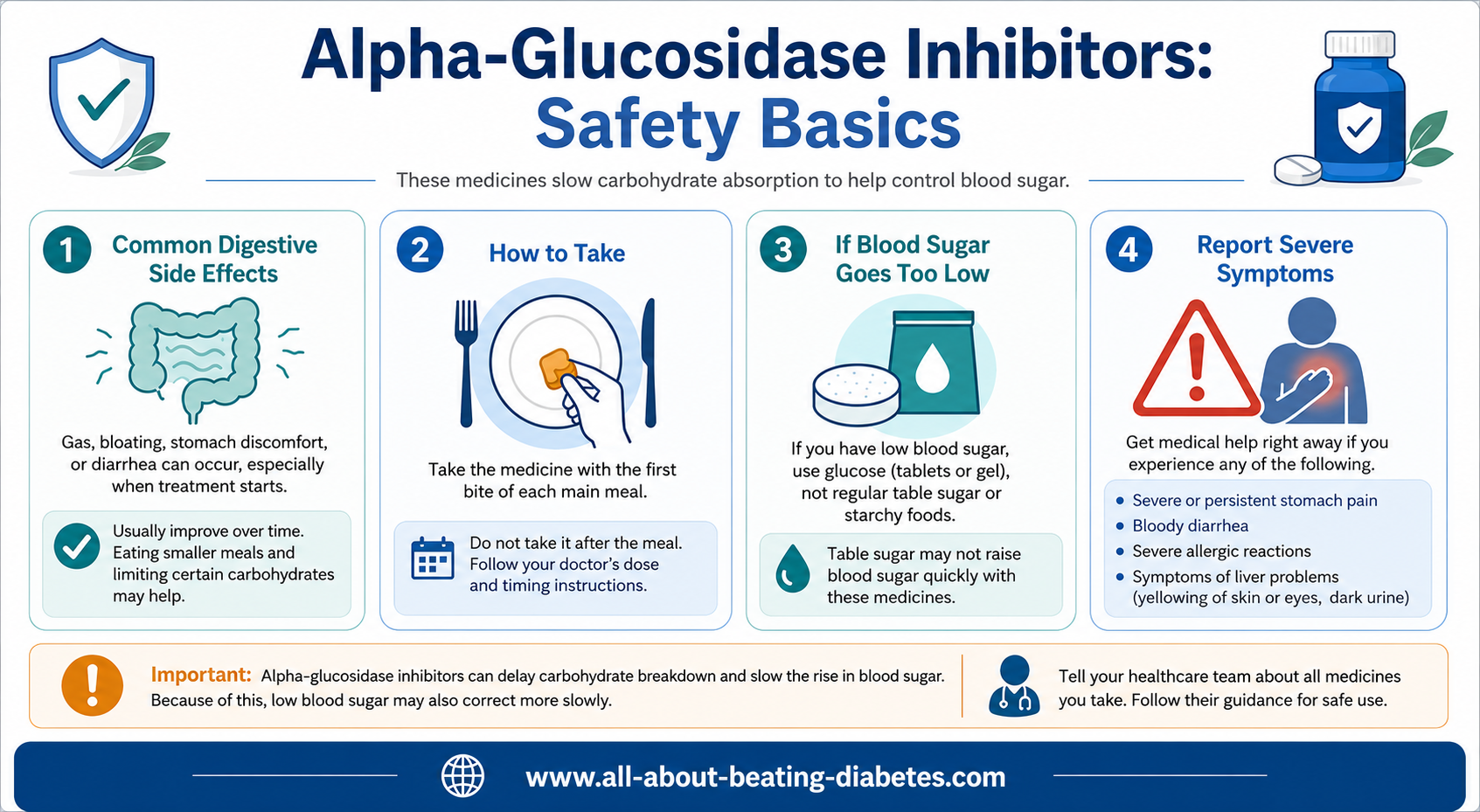
Alpha-glucosidase inhibitors—mainly acarbose and miglitol in the United States—slow the digestion of carbohydrates and reduce the rise in glucose after meals. Their most common side effects are gas, abdominal discomfort, bloating, soft stools, and diarrhea. They rarely cause hypoglycemia when used alone, but low glucose can occur when they are combined with insulin or a sulfonylurea. If that happens, use glucose/dextrose rather than table sugar, because these medicines delay the breakdown of sucrose.
What are alpha-glucosidase inhibitors?
Alpha-glucosidase inhibitors are oral medicines used with diet and physical activity to improve glucose management in adults with type 2 diabetes. Acarbose and miglitol are the two drugs in this class listed in current U.S. guidance. Voglibose is available in some other countries.
These medicines work mainly in the small intestine. They inhibit enzymes that break complex carbohydrates and sucrose into absorbable glucose and other simple sugars. Carbohydrate digestion therefore happens more slowly, which can reduce the glucose rise after a meal. They do not simply “block all glucose absorption.”
Because their effect depends on the meal, they are generally taken with the first bite of each main meal. Follow the exact schedule on your prescription; do not add a missed dose after the meal unless your pharmacist or prescriber has told you what to do.
Common alpha-glucosidase inhibitor side effects
| Side effect | Why it happens | What you should know |
|---|---|---|
| Gas and flatulence | More undigested carbohydrate reaches the lower intestine, where bacteria ferment it. | This is the most characteristic side effect. It is often strongest during the first weeks and may decrease with time. |
| Bloating or abdominal discomfort | Gas formation and delayed carbohydrate digestion can stretch or irritate the bowel. | Report symptoms that are severe, persistent, or accompanied by marked swelling, vomiting, constipation, or inability to pass gas. |
| Soft stools or diarrhea | Unabsorbed carbohydrates draw water into the intestine and undergo fermentation. | Diarrhea often improves, but persistent diarrhea can cause dehydration and may require dose review or stopping the medicine. |
| Nausea or altered bowel pattern | The gastrointestinal tract is adjusting to slower carbohydrate digestion. | Do not treat persistent symptoms by drastically removing carbohydrates without discussing nutrition and medication with your care team. |
Gastrointestinal effects are dose-related. A prescriber may begin with a low dose and increase it gradually according to tolerance and glucose response. Do not change the dose yourself. Eating more carbohydrate than recommended can intensify intestinal symptoms, but a balanced eating plan is still important.

Can acarbose or miglitol cause hypoglycemia?
When used alone, alpha-glucosidase inhibitors should not normally cause hypoglycemia because they do not stimulate the pancreas to release insulin. Risk rises when they are used with insulin or an insulin-releasing medicine such as a sulfonylurea.
If glucose is below 70 mg/dL (3.9 mmol/L), follow your personal hypoglycemia plan and use glucose/dextrose.
Check the ingredient on glucose tablets or gel. It should say glucose, dextrose, or D-glucose. Table sugar is sucrose, and alpha-glucosidase inhibitors delay its breakdown, so it may correct hypoglycemia too slowly. Honey, candy, sugary syrup, or products relying mainly on sucrose are not the preferred emergency treatment while taking these medicines.
Recheck glucose according to your treatment plan. If the person cannot swallow safely, is unconscious, or has a seizure, do not give food or drink by mouth. Use prescribed glucagon if available and call emergency services. Severe hypoglycemia may require intravenous glucose or glucagon.
Less common but serious side effects
Liver-test abnormalities with acarbose
Acarbose can cause dose-related elevations in liver enzymes. Most reported trial elevations were asymptomatic and reversible, but rare serious liver reactions have been reported. This does not mean acarbose inevitably “damages the liver.” It means appropriate selection, monitoring, and attention to symptoms are important.
The current U.S. acarbose label recommends checking serum transaminases every three months during the first year and periodically afterward, particularly because higher doses may increase the risk. Acarbose is contraindicated in cirrhosis. Miglitol is not metabolized in the same way and has different hepatic considerations.
Rare intestinal complications
Rare postmarketing reports include ileus or partial ileus and pneumatosis cystoides intestinalis, a condition involving gas-filled cysts in the intestinal wall. Seek medical care for severe or persistent abdominal pain or swelling, repeated vomiting, inability to pass stool or gas, rectal bleeding, or mucus discharge.
Allergic reactions
Rash and hypersensitivity reactions can occur. Emergency help is needed for facial or throat swelling, difficulty breathing, or a rapidly spreading severe rash.
Contact a clinician promptly for:
- yellow skin or eyes, dark urine, pale stools, severe fatigue, persistent nausea, or right-upper abdominal pain
- severe abdominal pain, marked distention, vomiting, rectal bleeding, or inability to pass stool or gas
- persistent diarrhea, dehydration, or inability to eat and drink normally
- recurrent hypoglycemia when combined with insulin or a sulfonylurea
Who should not take alpha-glucosidase inhibitors?
Acarbose and miglitol are contraindicated in diabetic ketoacidosis and in people with certain significant intestinal conditions, including inflammatory bowel disease, colonic ulceration, partial intestinal obstruction, predisposition to obstruction, marked digestion or absorption disorders, or a condition that may worsen with increased intestinal gas.
Acarbose is also contraindicated in cirrhosis. Kidney function requires careful review:
- The acarbose label does not recommend treatment when significant renal dysfunction is present because long-term study data are lacking and drug exposure rises.
- Miglitol is primarily eliminated through the kidneys and is not recommended when creatinine clearance is below 25 mL/min; the label also notes limited long-term data in significant renal dysfunction.
Do not decide suitability from one creatinine number alone. Kidney assessment today commonly uses estimated glomerular filtration rate or creatinine clearance together with the full clinical picture. Your prescriber should review kidney and liver history, bowel disease, pregnancy or breastfeeding, and all medicines and supplements.
How to use these medicines more safely
- Take the dose with the first bite of a main meal unless your prescription says otherwise.
- Follow gradual titration instructions. Increasing too quickly may worsen gas, bloating, and diarrhea.
- Keep glucose/dextrose available if you use insulin or a sulfonylurea.
- Know your combination medicines. Ask which of your tablets or injections can cause hypoglycemia.
- Complete requested laboratory monitoring, including kidney function and liver tests for acarbose.
- Report persistent gastrointestinal symptoms rather than silently stopping and restarting the medicine.
- Review interactions. Acarbose may affect digoxin exposure, while intestinal adsorbents such as charcoal and digestive-enzyme products may reduce its effect.
- Never replace prescribed treatment with a “natural alternative.” Some supplements can lower glucose, interact with medicines, or cause their own liver, kidney, or gastrointestinal problems.
Related questions
Why does acarbose cause so much gas?
Because carbohydrate digestion is delayed, more carbohydrate reaches bacteria in the lower intestine. Fermentation produces gas. Symptoms may improve with gradual dose titration and continued use, but severe or persistent symptoms need review.
Can I treat a low with fruit juice while taking acarbose?
The safest predictable choice is a product containing glucose or dextrose. Juice composition varies and may rely partly on sucrose, whose breakdown is delayed. Follow the specific hypoglycemia plan from your diabetes team.
Should I stop acarbose if I have diarrhea?
Do not make a permanent change without contacting your prescriber unless you have been given specific sick-day instructions. Mild symptoms may improve, but severe diarrhea, dehydration, bleeding, vomiting, or significant abdominal swelling needs prompt care.
Are alpha-glucosidase inhibitors bad for the liver?
Acarbose can raise liver enzymes and has rare reports of serious liver reactions, so monitoring is important. Liver injury is not inevitable. Acarbose should not be used in cirrhosis.
Are acarbose and miglitol first-, second-, or third-line medicines?
There is no universal position that fits every patient. Modern treatment selection is individualized according to glucose goals, other medical conditions, side effects, hypoglycemia risk, cost, and availability.