- Home
- Best Foods for Diabetes and What to Avoid
- Diabetes Plate Method Vs Food Pyramid
Diabetic Food Guide Pyramid: What Replaced It?
Written by Dr. Albana Greca Sejdini, MD, MMedSc, Family Physician
Medically reviewed by Dr. Ruden Cakoni, MD, Endocrinologist
Last reviewed: July 2026
Quick Answer
The diabetic food guide pyramid is an older meal-planning model. It grouped foods into levels, but its large grain-and-starch base could be misleading because carbohydrate needs are not the same for everyone. A more useful modern starting point is the diabetes plate method: fill half of a 9-inch plate with nonstarchy vegetables, one quarter with lean or plant-based protein, and one quarter with a carbohydrate food—preferably higher in fiber. Add water or an unsweetened drink, then personalize portions for your glucose response, medicines, activity, culture, and health conditions.
Food pyramids were created to turn nutrition advice into a simple picture. That idea was helpful, but diabetes care has moved toward individualized eating patterns and the plate method. The old pyramid should not be treated as a prescription telling every person with diabetes to build most meals around grains, beans, and starchy vegetables.
You do not need to ban carbohydrate, fruit, dairy, bread, rice, pasta, or potatoes. You do need to understand which foods contain carbohydrate, choose nutritious sources more often, keep portions realistic, and match meals to your treatment plan.
On This Page
What Was the Diabetic Food Guide Pyramid?
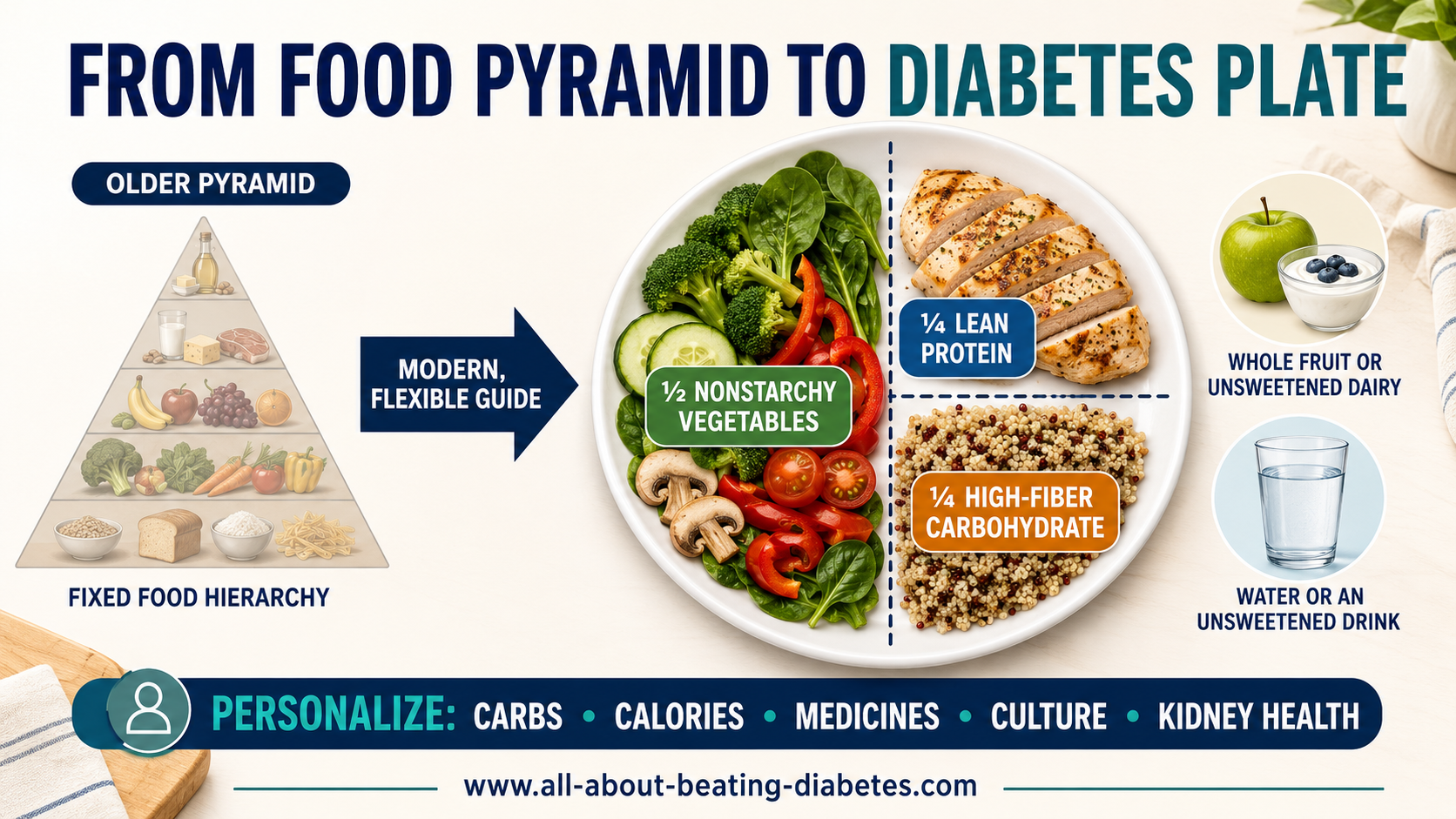
Older diabetes food pyramids usually placed bread, grains, beans, and starchy vegetables in a large bottom section. Nonstarchy vegetables and fruit occupied the next level, followed by milk, meat, and other protein foods. Fats, sweets, and alcohol appeared at the narrow top.
The pyramid communicated two useful ideas: eat a variety of foods and use some foods more often than others. However, it also suggested a fixed hierarchy. Many readers interpreted the wide bottom section as advice to eat large amounts of starch at every meal.
Why the Old Pyramid Needed Updating
Diabetes nutrition is not one-size-fits-all. A fixed pyramid cannot easily show:
- How much carbohydrate is in a real meal
- The difference between nonstarchy and starchy vegetables
- The large nutritional difference between beans, oats, fruit, and refined sweets
- How portion size affects blood glucose
- How meals should change with insulin, glucose-lowering medicines, activity, pregnancy, kidney disease, or weight goals
- How cultural foods can fit without forcing everyone into the same menu
Current guidance focuses on complete eating patterns rather than simply placing nutrients or food groups in a hierarchy. The shared foundation of useful patterns is more nonstarchy vegetables, whole fruit, legumes, whole grains, nuts, seeds, lean protein, and appropriate dairy or nondairy alternatives, with fewer sugar-sweetened drinks, refined grains, processed meat, sweets, and highly processed foods.

The Modern Diabetes Plate Method
Use a plate approximately 9 inches or 23 centimeters across:
- Fill half with nonstarchy vegetables.
- Fill one quarter with lean or plant-based protein.
- Fill one quarter with a carbohydrate food, preferably higher in fiber.
- Choose water or an unsweetened drink.
- Add whole fruit, dairy, or a nondairy alternative when it fits your carbohydrate and nutrition plan.
- Use a modest amount of unsaturated fat.
The plate is a starting framework, not a rigid medical prescription. It helps people build a balanced meal without counting every calorie or gram. People who use mealtime insulin, have highly variable glucose, or need precise nutrition therapy may also need carbohydrate counting.
Half the Plate: Nonstarchy Vegetables
Useful choices include:
- Leafy greens, lettuce, spinach, kale, and cabbage
- Broccoli, cauliflower, Brussels sprouts, and green beans
- Peppers, tomatoes, cucumbers, zucchini, and eggplant
- Mushrooms, asparagus, onions, celery, and okra
Fresh, frozen, and low-sodium canned vegetables can all fit. Choose vegetables without heavy sugary sauces or excessive salt when possible.
Nonstarchy vegetables do not “lower blood sugar” like medicine. They generally provide less carbohydrate and more fiber and volume than many starches, which can make a meal easier to balance.
One Quarter: Lean or Plant-Based Protein
Examples include:
- Fish and seafood
- Skinless chicken or turkey
- Eggs
- Tofu, tempeh, or edamame
- Beans, lentils, chickpeas, and peas
- Lean, unprocessed meat in modest portions
Beans and lentils provide both protein and carbohydrate, so their position on the plate can overlap. Plant proteins, fish, poultry, nuts, and seeds can help reduce frequent reliance on processed meat and fatty red meat.
One Quarter: Higher-Fiber Carbohydrate
Carbohydrate foods include more than sugar. Grains, beans, lentils, potatoes, corn, peas, fruit, milk, and yogurt all contribute carbohydrate. Useful higher-fiber choices include:
- Oats, barley, bulgur, quinoa, and brown or wild rice
- Whole-grain bread, pasta, wraps, or cereal
- Beans, chickpeas, lentils, and peas
- Potatoes, sweet potatoes, corn, and winter squash in planned portions
Whole-grain products are useful when they fit your culture and budget, but “whole grain” does not mean unlimited. A large serving can still provide substantial carbohydrate. If whole-grain versions are unavailable or not culturally appropriate, portion control and meal balance still help.
Our detailed guide to carbohydrates, glycemic index, and blood sugar explains why amount, quality, fiber, and the complete meal matter.
Where Do Fruit and Dairy Fit?
Whole fruit can fit a diabetes eating plan. Berries, apples, pears, oranges, peaches, melon, grapes, bananas, and other fruits all contain carbohydrate in different amounts. Choose whole fruit more often than juice because it generally provides more fiber and is easier to portion.
Plain milk and yogurt also contain carbohydrate. Unsweetened fortified plant-based alternatives may fit, but their protein, carbohydrate, calcium, vitamin D, and added-sugar content varies widely. Compare labels.
Fruit and dairy can be included with the meal, used as a snack when needed, or counted as part of the carbohydrate quarter. There is no requirement to include both at every meal.
Healthy Fats: Useful, but Portion Still Matters
Olive oil, canola oil, avocado, nuts, seeds, and fish provide unsaturated fats. Use them in modest amounts because oils, nuts, seeds, and avocado are calorie-dense.
Butter, coconut oil, lard, cream, fatty meat, and many baked or fried products contain more saturated fat. Reduce frequent large amounts, particularly when LDL cholesterol or cardiovascular risk is high.
“Low-fat butter,” margarine, or plant-sterol products are not automatically the best choices. Compare saturated fat, trans fat, sodium, ingredients, calories, and serving size. Olive or canola oil is often a simpler option for cooking.
Foods and Drinks to Limit More Often
I prefer “limit” rather than “forbid.” Most foods can fit occasionally, but the following are easier to overconsume and can make glucose, weight, heart, or blood-pressure goals harder:
- Regular soda, sweetened tea, energy drinks, and large juice portions
- Candy, pastries, cakes, and frequent desserts
- Sweetened breakfast cereals and refined snack foods
- Large portions of white bread, white rice, or refined pasta
- Processed meats such as bacon, sausage, and many deli meats
- Foods high in saturated fat, trans fat, or sodium
- Highly processed products that displace vegetables, fruit, legumes, and whole foods
A product labeled “diabetic,” “sugar-free,” “keto,” or “natural” is not automatically healthier. Check serving size, total carbohydrate, fiber, added sugar, saturated fat, and sodium.
Food Pyramid vs. Plate Method
| Feature | Older Food Pyramid | Modern Diabetes Plate |
|---|---|---|
| Main visual | Food groups arranged in levels | Foods arranged as one real meal |
| Vegetables | Middle level | Half the plate is nonstarchy vegetables |
| Carbohydrate | Grains and starches often formed the broad base | Visible quarter-plate portion |
| Protein | Upper level | Visible quarter-plate portion |
| Personalization | Limited | Adapted to medicines, glucose, culture, activity, and health |
Sample Day Using the Modern Food Guide
This example is educational, not a prescription. Portions must be adjusted for your needs.
Breakfast
Plain Greek yogurt with berries, a measured portion of oats, and walnuts—or eggs with vegetables and one slice of whole-grain toast.
Lunch
Large salad or cooked vegetables, grilled chicken or tofu, chickpeas or a small whole-grain portion, olive oil, and lemon.
Dinner
Half a plate of roasted nonstarchy vegetables, one quarter fish or lentils, and one quarter potato, barley, brown rice, or another carbohydrate food.
Optional Snack
Whole fruit with a small handful of nuts, vegetables with hummus, or plain yogurt. Snacks are not automatically required.
The updated diabetes recipe guide shows how to adapt favorite dishes using the same plate principles. For shopping, use the diabetic food grocery list.
When the Plate Must Be Personalized
Insulin and Medicines That Cause Low Blood Sugar
Mealtime insulin must be matched to carbohydrate. Fixed insulin doses may work more safely with a consistent carbohydrate pattern. Sulfonylureas and meglitinides can also cause hypoglycemia when meals are skipped or carbohydrate is reduced sharply. Do not make a major diet or medicine change without a safety plan.
SGLT2 Inhibitors
Do not start a ketogenic or very-low-carbohydrate plan without discussing ketoacidosis risk with your prescriber, especially if you use an SGLT2 inhibitor.
Kidney Disease
Protein, sodium, potassium, phosphorus, and fluid may require individualized limits. High-protein diets and potassium-based salt substitutes may be unsafe for some people with chronic kidney disease.
Pregnancy, Children, and Older Adults
Pregnancy and childhood require enough energy, carbohydrate, protein, and micronutrients for growth and development. In frail older adults, preventing malnutrition, muscle loss, and hypoglycemia may be more important than strict carbohydrate or calorie restriction.
Gastroparesis, Celiac Disease, and Food Allergies
Gastroparesis may require smaller, lower-fat, or lower-fiber meals and different insulin timing. Celiac disease requires a strict gluten-free plan, while food allergies require safe substitutions. A diabetes-trained registered dietitian can adapt the plate without creating nutrient gaps.
Doctor’s Note
I would not ask every patient to follow the same food pyramid or serving list. Use the plate method to see the meal clearly, learn which foods contain carbohydrate, and then adjust portions using your glucose pattern, medicines, health goals, culture, and appetite.
Most Asked Questions
Is the diabetic food pyramid still used?
It may still appear in older educational material, but the plate method and individualized medical nutrition therapy are more practical modern approaches.
What replaced the diabetes food pyramid?
The diabetes plate method is a commonly used visual tool. It assigns half the plate to nonstarchy vegetables, one quarter to protein, and one quarter to carbohydrate food.
Should grains be the base of a diabetes diet?
Not automatically. Whole grains can provide fiber and nutrients, but they contain carbohydrate. Their portion should fit the person’s glucose response, energy needs, medicines, and overall eating pattern.
Can people with diabetes eat fruit?
Yes. Whole fruit can fit in planned portions. Fresh, frozen, and fruit canned without added syrup are options. Whole fruit is generally preferable to juice.
Do I need six servings of grains every day?
No universal serving number fits everyone. Your total carbohydrate and calorie needs depend on your body, activity, treatment, and health goals.
Does the plate method replace carbohydrate counting?
Not for everyone. It can simplify meal planning, but people who dose mealtime insulin or need precise carbohydrate management may still need carbohydrate counting. The carbohydrate counter can help estimate mixed meals.
Related Questions
- How should meals be planned for a child using insulin?
- Can people with diabetes eat rambutan fruit?
- Can water therapy cure diabetes?
Related Resources
- Best Diabetes Diet: Foods, Plate Method, and Meal Plan
- Diabetic Food Grocery List
- Diabetes Diet Recipes and Healthy Substitutions
- Diabetes Diet, Carbohydrates, and Glycemic Index
- Online Carbohydrate Counter
References
- American Diabetes Association. Facilitating Positive Health Behaviors and Well-being to Improve Health Outcomes: Standards of Care in Diabetes—2026.
- Centers for Disease Control and Prevention. Diabetes Meal Planning and the Plate Method.
- Centers for Disease Control and Prevention. Carb Counting.
- National Institute of Diabetes and Digestive and Kidney Diseases. Healthy Living with Diabetes.
- American Diabetes Association. Management of Diabetes in Pregnancy: Standards of Care in Diabetes—2026.