Quick Answer
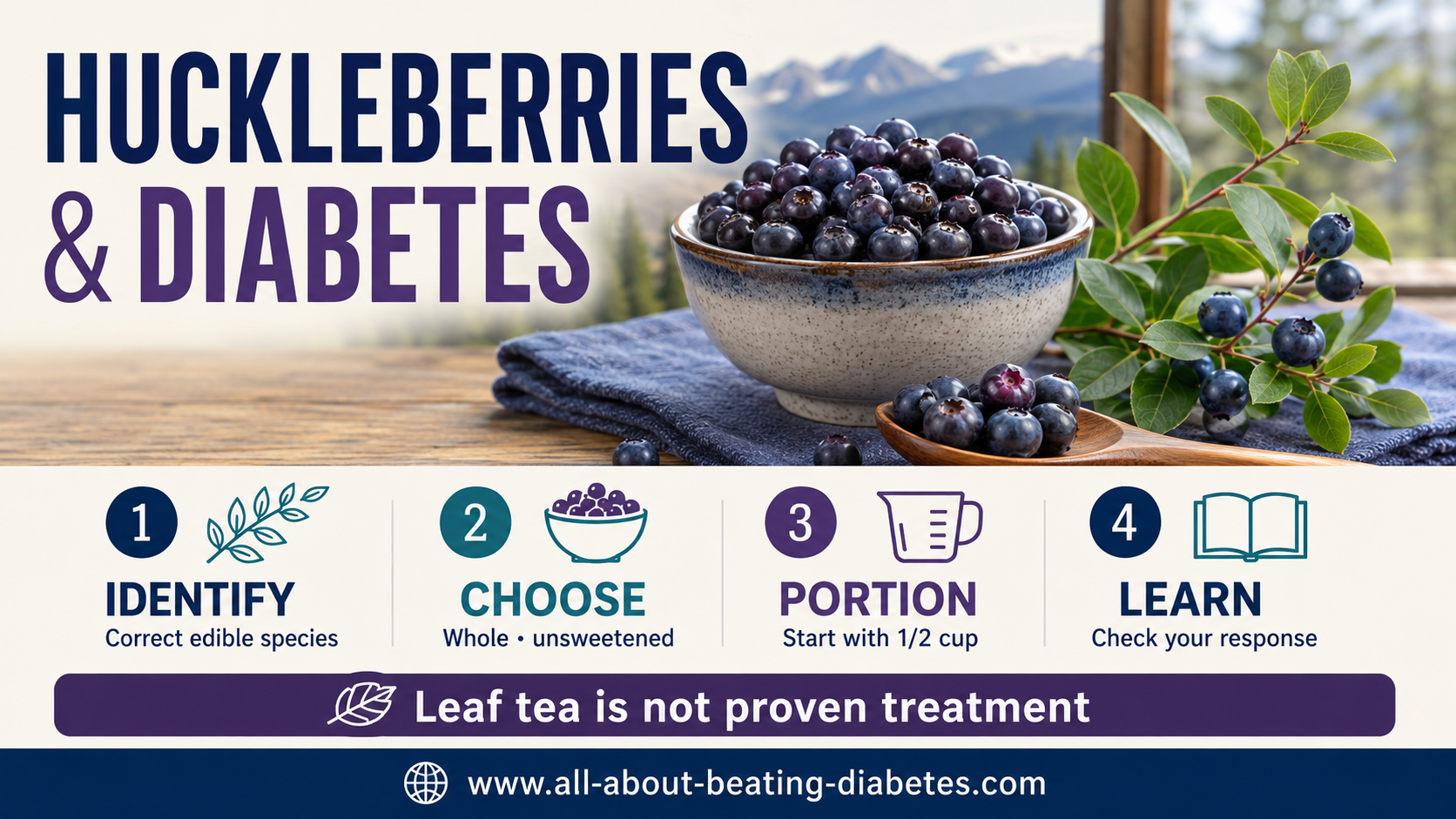
Yes—correctly identified, ripe, unsweetened huckleberries can fit into many diabetes meal plans. They contain carbohydrate, so portion size still matters. A practical starting portion is about 1/2 cup of whole berries, ideally measured or weighed and counted with the rest of the meal.
Huckleberries have not been proven to lower A1C, increase insulin production, treat diabetic complications, or cure diabetes. Research on blueberries, mixed berries, or purified anthocyanins cannot automatically be applied to every fruit called “huckleberry.”
Enjoy an identified edible species as food. Do not use wild leaves, leaf tea, or extracts as diabetes treatment, and never eat an unfamiliar foraged berry.
I like the practical lesson behind berries: a food can be nutritious without being medicine. Whole huckleberries may bring color, flavor, water, carbohydrate, and plant pigments to a meal. Their safest role is as a measured fruit portion—not as a substitute for medication, monitoring, movement, or an individualized eating plan.
What Does “Huckleberry” Mean?
Huckleberry is a common name, not one single standardized fruit. In North America it is often used for several edible species in the heath family, particularly species of Vaccinium and Gaylussacia. Thinleaf huckleberry (Vaccinium membranaceum), red huckleberry (Vaccinium parvifolium), oval-leaf huckleberry (Vaccinium ovalifolium), and evergreen huckleberry (Vaccinium ovatum) are examples.
Do Huckleberries Lower Blood Sugar?
There are no convincing clinical trials showing that huckleberries themselves treat diabetes. Dark berries may contain anthocyanins—the pigments that give many red, blue, and purple fruits their color. Researchers have studied blueberries, cranberries, mixed berries, and purified anthocyanins, but results are inconsistent and the products differ from fresh huckleberries.
| Question | What the evidence shows | What it means for you |
|---|---|---|
| Do huckleberries lower A1C? | No reliable huckleberry-specific human trial demonstrates this. | Do not use them as treatment. |
| Do anthocyanins help? | Some supplement trials report modest metabolic changes, while other berry reviews find no significant overall effect on glucose or A1C. | Interesting research, but not proof for huckleberries. |
| Do huckleberries stimulate insulin? | This has not been demonstrated clinically. | The original claim should not guide treatment. |
| Does huckleberry chromium lower glucose? | Huckleberries are not an established therapeutic chromium source, and available food data do not support using them for this purpose. | Count them as fruit, not a mineral treatment. |
| Can whole berries fit a diabetes diet? | Yes. Current diabetes guidance includes appropriately portioned whole fruit as an acceptable food choice. | Choose whole, unsweetened fruit and count the carbohydrate. |
A higher intake of berries is associated with lower type 2 diabetes risk in observational research, but an association does not prove that eating one berry prevents or treats diabetes. People who eat more berries may also differ in exercise, body weight, overall diet, smoking, or healthcare.

Huckleberry Portions and Carbohydrates
Nutrient values vary because “huckleberry” covers several species. USDA legacy data for raw Alaska huckleberries (Vaccinium alaskaense) list approximately 37 calories and 8.7 grams of carbohydrate per 100 grams. Other databases and species report higher carbohydrate values.
| Portion | Approximate carbohydrate | Practical use |
|---|---|---|
| 1/2 cup whole berries | Often about 7–11 g, depending on species and actual weight | A sensible starting fruit portion for many adults. |
| 100 g raw Alaska huckleberries | About 8.7 g in the USDA legacy entry | Use as a species-specific reference, not a universal value. |
| Sweetened jam, syrup, sauce, pie, or ice cream | Usually much higher because of added sugar and other carbohydrates | Check the label and use a smaller portion. |
| Dried huckleberries | More concentrated by volume | Weigh the serving and check for added sugar. |
For precise carbohydrate counting: Weigh your portion and use the package label or a species-specific database. If you calculate mealtime insulin, do not rely on a generic internet value for an unidentified wild berry.
How to Eat Huckleberries With Diabetes
- Start with 1/2 cup. Measure the first few servings instead of estimating from a large bowl.
- Keep preparation simple. Use fresh or frozen unsweetened berries rather than juice, sweetened dried fruit, jam, or pie.
- Record the context. Note the portion, other carbohydrates, medication timing, and activity.
- Learn your response. If your clinician recommends glucose monitoring, compare readings at consistent times rather than judging the fruit from one random result.
For more practical fruit and meal guidance, see food choices for diabetes and why portion size matters alongside glycemic index.
What About Huckleberry Leaf Tea?
I do not recommend huckleberry leaf tea as a treatment for hyperglycemia or glucose in the urine. There is no established clinical dose, standardized preparation, or reliable human evidence showing that tea from the leaves safely lowers A1C or treats type 2 diabetes.
Species ambiguity makes leaf advice particularly unsafe: leaves from different plants called huckleberry are not interchangeable, and an identification mistake can expose someone to a different plant entirely. “Natural” does not guarantee safety, purity, or compatibility with diabetes medicines.
Wild Huckleberry Identification and Food Safety
- Use fruit only when the plant has been positively identified as an edible species by a qualified local expert.
- Do not confuse true Vaccinium or Gaylussacia huckleberries with “garden huckleberry” or another nightshade. Nightshade leaves and immature berries may be poisonous.
- Do not rely only on an image-search or plant-identification app.
- Avoid berries from roadsides, sprayed areas, polluted soil, or locations where harvesting is prohibited.
- Rinse identified edible berries under running water. Do not wash produce with soap or detergent.
- Refrigerate promptly and discard moldy, fermented, or spoiled berries.
Special Considerations
Insulin or glucose-lowering medicine
Count the fruit carbohydrate according to your care plan. Do not reduce medication because huckleberries are described as antioxidant-rich.
Kidney disease
Your fruit and potassium plan may need individual adjustment. Use measured portions and ask your renal dietitian if you have restrictions.
Pregnancy or children
Correctly identified food is different from leaf tea or extracts. Avoid unverified wild plants and concentrated products, and follow individualized pregnancy or pediatric diabetes advice.
Huckleberries may also cause an allergic reaction in a sensitive person. Seek urgent help for facial or throat swelling, wheezing, breathing difficulty, fainting, or a rapidly spreading severe rash.
Doctor’s Note
Whole berries can be an enjoyable part of a diabetes meal plan. The useful clinical question is not “Are huckleberries good or bad?” It is “Which edible species is this, what is my portion, what else am I eating, and how does that meal fit my treatment?” That approach is safer than treating antioxidants, chromium, or leaf tea as medicine.
Frequently Asked Questions
Can people with diabetes eat huckleberries?
Yes. Correctly identified, ripe, unsweetened huckleberries can fit a diabetes meal plan. Start with a measured portion such as 1/2 cup and count the carbohydrate with the rest of the meal.
Do huckleberries lower blood sugar?
They have not been proven to lower blood sugar or A1C. They are a carbohydrate-containing whole fruit, not diabetes treatment.
How many carbohydrates are in huckleberries?
The number varies by species and serving weight. A 1/2-cup portion may contain roughly 7–11 grams, while USDA legacy data for one Alaska species list about 8.7 grams per 100 grams. Use a product label or species-specific value when precision matters.
Is huckleberry leaf tea safe for diabetes?
There is no established safe and effective diabetes dose, and human evidence is inadequate. Because common names and species can be confused, I do not recommend wild huckleberry leaf tea for glucose control.
Are huckleberries the same as blueberries?
No. Some are close relatives in the genus Vaccinium, but several species are called huckleberry. Findings from blueberry research cannot automatically be assigned to every huckleberry.
What is the best way to serve huckleberries?
Choose fresh or frozen unsweetened whole berries. Measure the portion and consider pairing it with plain yogurt, cottage cheese, nuts, or seeds. Sweetened jam, syrup, pie, juice, and dried fruit generally require more careful carbohydrate counting.
References
- American Diabetes Association Professional Practice Committee. Facilitating Positive Health Behaviors and Well-being to Improve Health Outcomes: Standards of Care in Diabetes—2026.
- Effects of berry consumption on cardiometabolic risk factors in patients with metabolic syndrome: a systematic review and meta-analysis of randomized controlled trials. 2025.
- Anthocyanins increase serum adiponectin in newly diagnosed diabetes but not in prediabetes: a randomized controlled trial. 2020.
- Effects of blueberry and cranberry consumption on type 2 diabetes glycemic control: a systematic review. 2018.
- USDA FoodData Central. Huckleberries, raw (Alaska Native), FDC ID 169808.
- U.S. Forest Service. Vaccinium membranaceum, thinleaf huckleberry.
- Cornell University College of Agriculture and Life Sciences. Nightshades and berry toxicity.
- Oregon State University Extension. Caution Recommended With Unfamiliar Berry Plants.
- National Center for Complementary and Integrative Health. Diabetes and Dietary Supplements: What You Need To Know.
Medical disclaimer: This page provides general education and does not replace diagnosis, individualized nutrition advice, or diabetes treatment. Do not change insulin, diabetes medicines, or a prescribed eating plan because of a fruit, tea, extract, supplement, or home remedy.