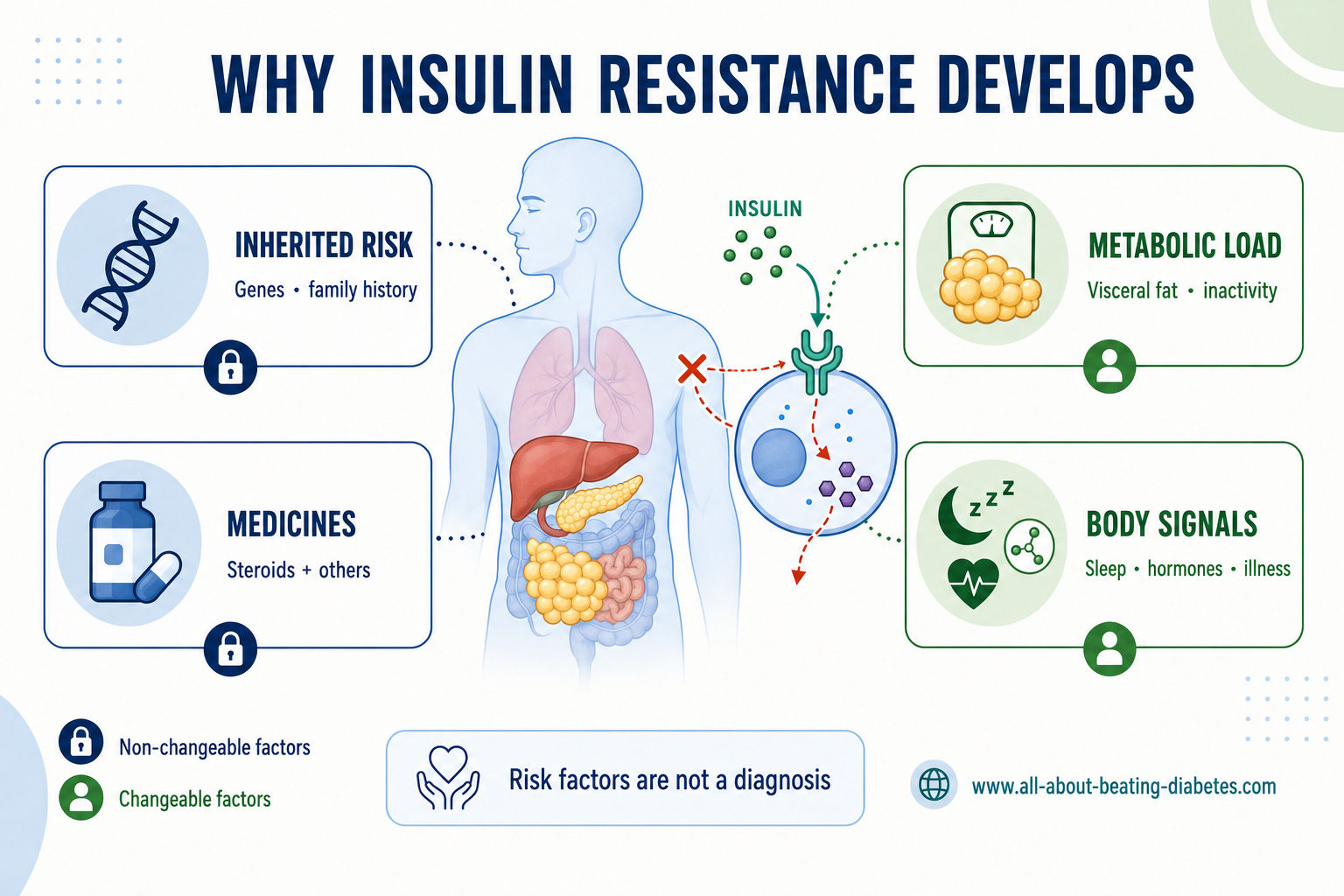
Insulin resistance usually develops from several overlapping influences—not one single cause. Inherited susceptibility, visceral or abdominal fat, low physical activity, aging, poor sleep or sleep apnea, pregnancy, hormonal disorders, illness, smoking, and certain medicines can all contribute. Glucocorticoid steroids are an especially important medication-related cause.
Having one or more risk factors does not prove that you have insulin resistance. The condition often produces no symptoms, and clinicians usually test for prediabetes or diabetes rather than order a direct insulin-resistance test.
Patients often ask me, “Why do I have insulin resistance?” The honest medical answer is that researchers do not fully understand every pathway. What we do know is that insulin resistance is usually multifactorial. Your genes may create susceptibility, while factors involving body-fat distribution, muscle activity, sleep, hormones, health conditions, or medicines can influence how strongly your cells respond to insulin.
What Insulin Resistance Means
Insulin is a hormone that helps glucose move from the bloodstream into muscle and fat cells and helps regulate glucose production by the liver. With insulin resistance, muscle, fat, and liver cells do not respond to insulin as effectively as expected. The pancreas initially compensates by releasing more insulin, so blood glucose can remain normal for a time.
If the pancreas can no longer keep up, glucose begins to rise. This may progress from normal glucose to prediabetes and then type 2 diabetes, although progression is not inevitable. Read the broader explanation of what insulin resistance is and how it affects the body.
Important distinction: insulin resistance, prediabetes, and metabolic syndrome are related but not identical. Metabolic syndrome is a cluster of findings—such as a large waist, high blood pressure, high triglycerides, low HDL cholesterol, and elevated glucose. “Syndrome X” is an older and potentially confusing term.
Main Causes and Risk Factors for Insulin Resistance
1. Genetics, family history, age, and ancestry
Having a parent or sibling with type 2 diabetes increases risk, and many genetic variants influence insulin signaling, fat storage, and pancreatic function. Risk also rises with age. Some populations develop diabetes risk at lower body-mass index levels, reflecting a mixture of biological and social determinants—not ethnicity as destiny.
2. Visceral and ectopic fat
Fat stored deep in the abdomen and around organs is metabolically active. It can release fatty acids and signals that interfere with insulin action in the liver and muscle. Waist size can therefore add useful information beyond BMI. This is not a judgment about appearance, and insulin resistance can also occur in people who are not overweight.
3. Low physical activity and prolonged sitting
Skeletal muscle is a major user of glucose. Regular movement helps muscle take up glucose and improves insulin sensitivity. Physical inactivity and long periods of sitting reduce this benefit, even before weight changes become obvious.
4. Sleep loss, circadian disruption, and sleep apnea
Insufficient or irregular sleep can affect cortisol, appetite, and glucose regulation. Obstructive sleep apnea is a recognized risk factor. Loud snoring, waking while choking or gasping, morning headaches, or marked daytime sleepiness deserve medical discussion.
5. Pregnancy and gestational diabetes
Placental hormones naturally make insulin less effective as pregnancy advances. Most pancreases compensate, but gestational diabetes can develop when insulin production does not meet the increased demand. Pregnancy uses different screening schedules and glucose cutoffs; follow your obstetric team’s plan. See how to reduce gestational diabetes risk in a future pregnancy.
6. Hormonal and metabolic conditions
Polycystic ovary syndrome (PCOS), Cushing syndrome, acromegaly, metabolic dysfunction-associated steatotic liver disease (MASLD), and rare fat-distribution disorders can be associated with insulin resistance. Treating the underlying condition is part of the plan.
7. Acute illness and physical stress
Infection, surgery, trauma, and severe illness raise stress hormones that oppose insulin and can temporarily increase glucose. This effect can be stronger in someone who already has diabetes or underlying insulin resistance. Emotional stress may affect sleep, activity, eating patterns, and hormones, but it should not be presented as the sole explanation without an evaluation.
8. Smoking and tobacco exposure
Smoking—including e-cigarette use—and secondhand smoke are associated with a greater risk of insulin resistance and prediabetes. Stopping tobacco supports both metabolic and cardiovascular health.
Which Medicines Can Worsen Insulin Resistance?
Medication effects depend on dose, duration, your underlying risk, and the reason the medicine is needed. Examples clinicians monitor include:
Glucocorticoids such as prednisone or dexamethasone—the clearest and often strongest example.
Some second-generation antipsychotics, which may affect appetite, weight, lipids, and glucose regulation.
Some HIV medicines.
Thiazide diuretics and statins, which can modestly affect glucose risk in susceptible people.
Do not stop a prescribed medicine by yourself. For example, the cardiovascular benefit of a statin can greatly outweigh its small diabetes risk. Ask the prescriber whether glucose monitoring, a dose review, or an alternative is appropriate. People receiving repeated or long-term steroids may need closer glucose checks, especially after meals.
No single food creates the condition by itself. Overall energy balance, dietary pattern, fat distribution, activity, genetics, sleep, and health conditions interact. Sugary drinks and highly refined foods can make weight and glucose management harder.
“Only people with obesity become insulin resistant.”
Obesity—especially visceral fat—is an important risk factor, but people at any body size can develop insulin resistance.
“I have high blood pressure, so I must have insulin resistance.”
High blood pressure is an associated risk marker, not proof. Proper testing and clinical evaluation are needed.
“Metabolic syndrome is another name for insulin resistance.”
They overlap, but they are not interchangeable diagnoses.
“I would feel it if I had insulin resistance.”
Most people have no specific symptoms. Dark, thickened skin called acanthosis nigricans can be a clue, but it is not present in everyone and is not diagnostic by itself.
How Doctors Check for Insulin Resistance
There is no routinely used, universally standardized direct test for insulin resistance. The most precise clamp test is complex and mainly used in research. Fasting insulin and calculations such as HOMA-IR may be used in selected settings, but cutoffs vary and they should not be interpreted alone.
In everyday practice, clinicians assess family history, waist and weight pattern, blood pressure, medicines, signs such as acanthosis nigricans, lipids, liver health, and blood tests for prediabetes or diabetes. Learn more in the site’s insulin resistance testing guide and diabetes blood-test overview.
Test
Prediabetes range for nonpregnant adults
What it shows
A1C
5.7%–6.4%
Estimated average glucose exposure over about 2–3 months. Some conditions can make A1C less reliable.
Fasting plasma glucose
100–125 mg/dL (5.6–6.9 mmol/L)
Glucose after at least 8 hours without calories.
2-hour 75 g oral glucose tolerance test
140–199 mg/dL (7.8–11.0 mmol/L)
How the body handles a measured glucose load.
A diagnosis usually needs confirmation when there are no clear symptoms. Pregnancy has separate criteria. An at-home glucose meter cannot diagnose diabetes. For more context, see the A1C guide and the blood sugar level chart.
What You Can Do About Your Risk
Ask about A1C or fasting glucose testing if you are age 35 or older, or earlier if you have overweight or obesity plus additional risk factors.
Aim toward at least 150 minutes of moderate activity per week if medically safe, add resistance exercise, and break up long periods of sitting.
If weight loss is appropriate for you, even a sustainable modest reduction can improve insulin sensitivity. Focus on health, not blame.
Choose a repeatable eating pattern with vegetables, legumes, whole grains, fiber, lean proteins, and unsaturated fats; reduce sugary drinks and heavily refined foods.
Protect sleep and discuss possible sleep apnea symptoms.
Stop smoking and avoid secondhand smoke.
Review medicines with the prescriber, especially before or during glucocorticoid treatment.
Manage blood pressure, cholesterol, triglycerides, and liver health alongside glucose.
Doctor’s note: I do not diagnose insulin resistance from body shape, fatigue, cravings, or one insulin result. I look at the whole pattern—history, medicines, examination, glucose tests, blood pressure, lipids, liver risk, sleep, and pregnancy or hormonal factors. This prevents both missed disease and unnecessary worry.
When to Seek Urgent Medical Help
Insulin resistance itself usually develops quietly, but very high glucose can become an emergency. Seek urgent care for high glucose with vomiting, inability to keep fluids down, severe dehydration, deep or rapid breathing, fruity-smelling breath, confusion, marked drowsiness, chest pain, or moderate/large ketones. Follow your sick-day plan if you already have diabetes.
Frequently Asked Questions
What are the main causes of insulin resistance?
The most common contributors are inherited susceptibility, visceral abdominal fat, low activity, aging, sleep problems, pregnancy, hormonal or metabolic conditions, acute illness, smoking, and certain medicines. Several factors often overlap.
Can I have insulin resistance if I am not overweight?
Yes. Body-fat distribution, genetics, ancestry, muscle activity, sleep apnea, PCOS, other hormonal conditions, pregnancy, illness, and medicines can matter even when BMI is not high.
Can stress and lack of sleep cause insulin resistance?
Poor sleep and sleep apnea are recognized contributors. Acute physical stress from infection, trauma, or surgery can temporarily worsen insulin action. Emotional stress may contribute through hormones and behavior, but it is rarely the only explanation.
Can steroids cause insulin resistance and high blood sugar?
Yes. Glucocorticoids such as prednisone can reduce insulin sensitivity and raise glucose, often most noticeably after meals. Do not stop steroids suddenly; ask the prescriber how and when to monitor.
Is metabolic syndrome the same as insulin resistance?
No. Metabolic syndrome is a cluster of cardiovascular and metabolic risk findings. Insulin resistance often contributes to the cluster, but the terms are not identical.
Can insulin resistance be improved without medication?
Often, activity, improved sleep, stopping smoking, an evidence-based eating pattern, and appropriate weight management can improve insulin sensitivity. Some people also need treatment for prediabetes, diabetes, PCOS, sleep apnea, or another underlying condition.
Medical disclaimer: This article is for general education and does not replace individual medical advice, diagnosis, or treatment. Do not start, stop, or change medicines based on this page. Discuss symptoms, test results, pregnancy, or medication concerns with a qualified healthcare professional.