- Home
- New Diabetes Medications and Side Effects
New Diabetes Medications: Types, Benefits, Side Effects, and How Doctors Choose
New diabetes medications can improve blood sugar while also supporting weight management and protecting the heart or kidneys in some people. This guide explains the main medication types, their benefits and side effects, and how doctors choose treatment based on your diabetes type, health conditions, glucose goals, cost, and risk of low blood sugar.
Written by Dr. Albana Greca, MD, MMedSc, Family Physician
Medically reviewed by Dr. Ruden Cakoni, MD, Endocrinologist
Last reviewed: July 2026
Quick Answer
The newest diabetes medicines are not simply “stronger pills.” Modern treatment is selected according to the type of diabetes, HbA1c and glucose pattern, heart and kidney health, heart-failure risk, weight goals, hypoglycemia risk, side effects, cost, access, and patient preferences.
For type 2 diabetes, important newer options include SGLT2 inhibitors, GLP-1 receptor agonists, and the dual GIP/GLP-1 receptor agonist tirzepatide. Established medicines such as metformin and insulin remain valuable. No medicine is automatically best for everyone, and lifestyle support does not replace medication when medication is needed.
Diabetes treatment has changed substantially. In the past, medicines were often added mainly to lower HbA1c. Current care still values glucose control, but it also asks whether a treatment can reduce cardiovascular events, heart-failure hospitalization, kidney-disease progression, hypoglycemia, or excess weight.
This page replaces outdated claims that diabetes medicines are “poisons,” that newer drugs are only combinations of older pills, or that natural remedies can safely replace treatment. Medicines can cause adverse effects, but untreated or undertreated diabetes also causes serious harm. The goal is to choose the treatment whose expected benefits outweigh its risks for the individual patient.
How Doctors Choose a Diabetes MedicineThe first question is which type of diabetes the person has. Everyone with type 1 diabetes needs insulin. Tablets, herbs, GLP-1 medicines, and SGLT2 inhibitors cannot replace insulin in type 1 diabetes. For type 2 diabetes, treatment is individualized. Important considerations include:
|
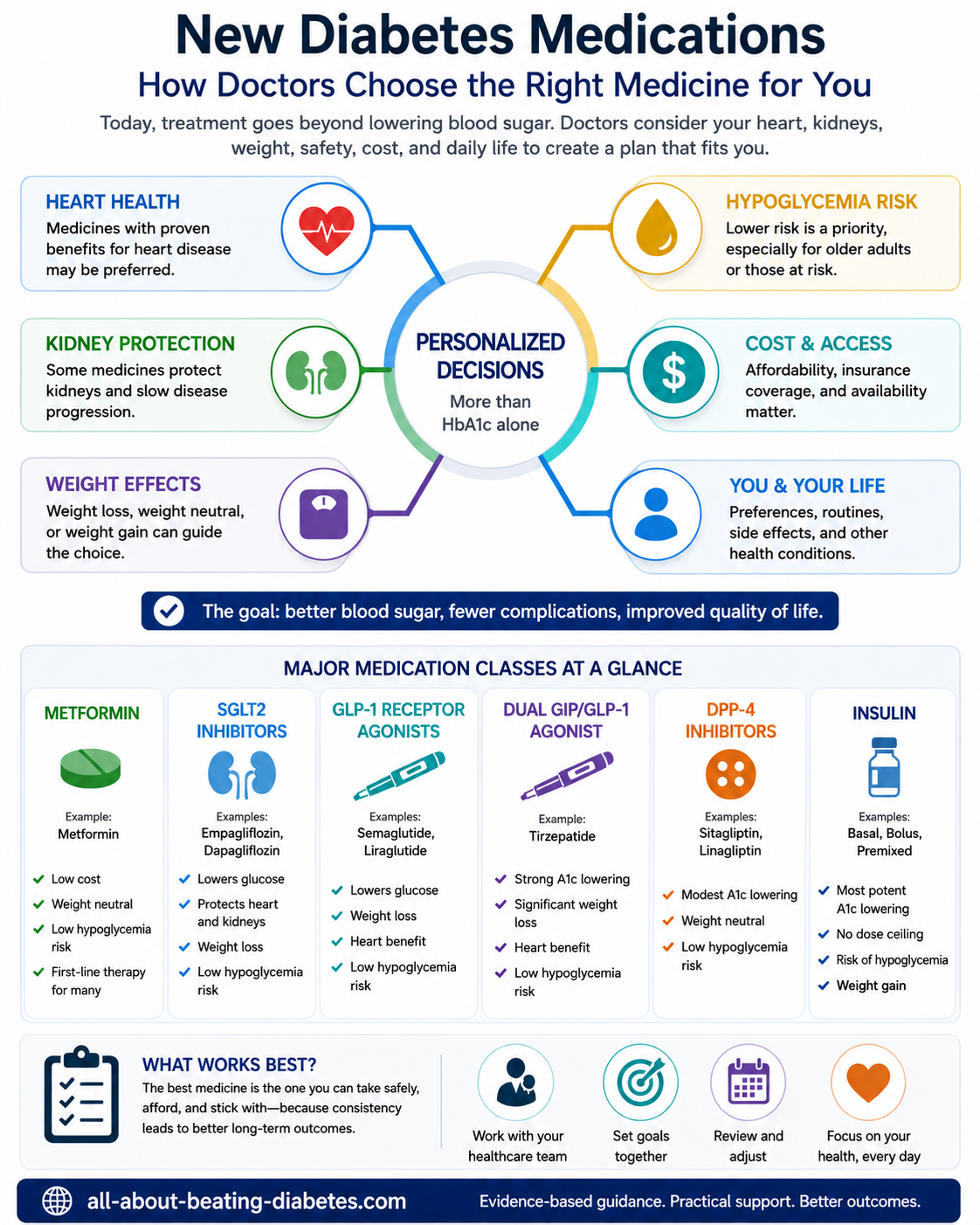

Two people with the same HbA1c may appropriately receive different medicines. Current ADA recommendations support choosing drugs with proven cardiovascular, heart-failure, or kidney benefits when those conditions are present, even when HbA1c is already near the individualized target.
Which Diabetes Medicines Are Considered Newer?
SGLT2 inhibitors
Sodium-glucose cotransporter 2 inhibitors lower glucose by reducing glucose reabsorption in the kidneys, causing some glucose to leave through the urine. Examples include empagliflozin, dapagliflozin, canagliflozin, and ertugliflozin.
These medicines have changed diabetes care because selected products provide benefits beyond glucose lowering. They can reduce heart-failure hospitalization and slow chronic kidney-disease progression in appropriate people. Their glucose-lowering effect becomes weaker as kidney filtration declines, but heart and kidney benefits may remain clinically important at lower estimated GFR levels according to the specific indication and product labeling.
Important risks include genital yeast infections, increased urination, dehydration, low blood pressure, and rare ketoacidosis that can occur without extremely high glucose. Serious urinary infection and Fournier gangrene are rare warnings. A clinician may advise temporarily holding an SGLT2 inhibitor before surgery, prolonged fasting, or during a serious acute illness.
GLP-1 receptor agonists
GLP-1 receptor agonists mimic an incretin hormone. They increase glucose-dependent insulin release, reduce glucagon, slow stomach emptying to varying degrees, and reduce appetite. Examples include semaglutide, dulaglutide, liraglutide, exenatide, and lixisenatide. Most are injections; oral semaglutide is available.
These medicines can produce substantial glucose lowering and weight loss. Certain agents have demonstrated cardiovascular benefit, and current guidance also considers GLP-1–based therapy for selected people with chronic kidney disease or metabolic liver disease.
Common adverse effects include nausea, vomiting, diarrhea, constipation, and abdominal discomfort. Gallbladder disease can occur, and pancreatitis is an important warning. Product labeling for several agents advises against use in people with a personal or family history of medullary thyroid carcinoma or multiple endocrine neoplasia syndrome type 2. They are not insulin substitutes for type 1 diabetes.
Dual GIP and GLP-1 receptor agonist
Tirzepatide activates both GIP and GLP-1 receptors. It can produce very strong HbA1c lowering and substantial weight loss in many adults with type 2 diabetes. Its gastrointestinal effects and major precautions overlap with those of GLP-1 receptor agonists.
Tirzepatide is not insulin and is not approved as a replacement for insulin in type 1 diabetes. When combined with insulin or a sulfonylurea, the dose of the hypoglycemia-causing medicine may need review.
DPP-4 inhibitors
DPP-4 inhibitors—including sitagliptin, linagliptin, saxagliptin, and alogliptin—are no longer considered a brand-new class. They slow the breakdown of incretin hormones, provide modest glucose lowering, are generally weight neutral, and have a low risk of hypoglycemia when used without insulin or a sulfonylurea.
The old page claimed that DPP-4 inhibitors cause broad severe immune problems and should be used only after other treatments fail. That statement was unsupported. Important warnings instead include pancreatitis, severe joint pain, and bullous pemphigoid. Saxagliptin and alogliptin require particular attention to heart-failure risk. Most DPP-4 inhibitors need renal dose adjustment; linagliptin generally does not.
DPP-4 inhibitors are usually not combined with GLP-1 receptor agonists because both work through the incretin system and the combination provides little additional benefit. Read more about saxagliptin, alogliptin, and heart safety.
Diabetes Medication Classes Compared
| Class | Main Effect | Weight | Hypoglycemia Alone | Important Considerations |
|---|---|---|---|---|
| Metformin | Reduces liver glucose production and improves insulin sensitivity | Neutral or modest loss | Low | GI effects, vitamin B12 deficiency, renal dosing; rare lactic acidosis in high-risk settings |
| SGLT2 inhibitors | Increase urinary glucose loss | Modest loss | Low | Heart and kidney benefits with selected agents; genital infections, dehydration, ketoacidosis risk |
| GLP-1 receptor agonists | Increase glucose-dependent insulin, reduce appetite and glucagon | Loss, varying by agent | Low | GI effects, gallbladder disease, pancreatitis warning; cardiovascular benefit with selected agents |
| Dual GIP/GLP-1 agonist | Strong glucose and appetite effects | Substantial loss for many | Low | GI effects and GLP-1–related precautions; injection |
| DPP-4 inhibitors | Prolong incretin activity | Neutral | Low | Modest efficacy; renal dosing for most; class warnings and heart-failure concern with some agents |
| Sulfonylureas | Stimulate insulin release | Gain | Moderate to high | Affordable and effective, but hypoglycemia risk; use particular caution in older adults and kidney disease |
| Meglitinides | Short-acting stimulation of insulin release | Gain | Possible | Meal-related dosing; skip according to instructions when the meal is skipped |
| Thiazolidinediones | Improve insulin sensitivity | Gain and fluid retention | Low | Heart-failure risk, edema, fractures; pioglitazone may help selected people with MASH |
| Alpha-glucosidase inhibitors | Slow carbohydrate digestion | Neutral | Low alone | Gas and diarrhea; treat a low caused by combination therapy with glucose, not ordinary table sugar |
| Insulin | Replaces or supplements insulin directly | Possible gain | High without careful matching | Essential in type 1 diabetes; powerful and flexible; requires education, monitoring, and hypoglycemia planning |
This table summarizes class tendencies, not every product or every patient response. Kidney function, dose, combinations, and individual history can change the risk profile.
Metformin: Old but Still Important
Metformin is an established medicine, not an outdated one. It remains effective, inexpensive, and commonly used. It mainly reduces excess glucose production by the liver and improves insulin sensitivity.
Common adverse effects include diarrhea, nausea, and abdominal discomfort, which may improve with slow dose titration, taking it with food, or using an extended-release formulation. Long-term use can contribute to vitamin B12 deficiency, so periodic assessment may be appropriate, especially with anemia or neuropathy symptoms.
Metformin dosing depends on kidney function. Lactic acidosis is rare but serious and is mainly associated with major risk factors such as severe kidney impairment, hypoxia, severe illness, or substantial liver dysfunction. See our detailed page on metformin and Glucophage side effects.
Are Older Diabetes Medicines No Longer Used?
No. Sulfonylureas, thiazolidinediones, alpha-glucosidase inhibitors, and insulin are still used. Their roles depend on effectiveness, price, availability, side effects, and the patient’s clinical situation.
For example, sulfonylureas can lower glucose effectively and are often affordable, but they can cause hypoglycemia and weight gain. Pioglitazone can improve insulin sensitivity and may benefit selected patients with metabolic liver disease, but it can cause edema and worsen heart failure. Alpha-glucosidase inhibitors can help after-meal glucose but commonly cause gas and diarrhea.
Older does not mean bad, and newer does not automatically mean safer or more appropriate.
Combination Pills and Multiple-Drug Treatment
Type 2 diabetes often requires two or more medicines because different classes target different parts of glucose regulation. A combination tablet may simplify the schedule, reduce the number of pills, and improve adherence.
The old page stated that combining drugs automatically doubles or multiplies the danger. That is not accurate. Each ingredient retains its own benefits, side effects, contraindications, and dose limits. A combination can increase some risks—for example, hypoglycemia when a sulfonylurea is added—but it does not automatically make the treatment twice as dangerous.
Combination products can also create practical concerns. If one ingredient needs adjustment, a fixed-dose pill may be less flexible. The patient and clinician should know every active ingredient to avoid accidental duplication.
Understanding Diabetes Medication Side Effects
An adverse effect is an unwanted effect occurring when a medicine is used appropriately. The possibility of an adverse effect does not mean the medicine is poisonous or that the patient should stop it. The correct response depends on the symptom and its severity.
Contact the prescribing team promptly for:
- Repeated hypoglycemia or glucose below 54 mg/dL
- Persistent vomiting, severe diarrhea, or inability to maintain fluids
- New leg swelling, rapid weight gain, or breathlessness
- Severe or persistent abdominal pain
- Recurrent genital or urinary symptoms while taking an SGLT2 inhibitor
- New blistering rash, widespread joint pain, or allergic symptoms
- Symptoms beginning after a dose increase or a new combination
Emergency Warning
Seek urgent care for vomiting, abdominal pain, deep or rapid breathing, severe dehydration, confusion, significant ketones, or suspected ketoacidosis—even if glucose is not extremely high while using an SGLT2 inhibitor.
Call emergency services for unconsciousness, seizure, severe hypoglycemia when the person cannot swallow, chest pain, stroke symptoms, severe breathing difficulty, or facial and throat swelling.
Can Lifestyle Changes Replace Diabetes Medicine?
Healthy eating, physical activity, weight management, sleep, smoking cessation, and diabetes education are essential. They can improve glucose and sometimes reduce medication needs. Some people with newly diagnosed or mild type 2 diabetes may initially reach their goals without medicine, and some achieve remission after substantial sustained weight loss.
However, lifestyle treatment does not guarantee that medicine will be unnecessary. Type 2 diabetes can progress because insulin-producing capacity declines. Heart or kidney protection may also justify a medicine even when glucose is near target.
Herbs and supplements are not proven substitutes for prescribed diabetes treatment. They may interact with medicines, lower glucose unpredictably, or harm the liver or kidneys. Review our evidence-based guide to diabetes supplements and safety.
Approved Medicines Versus Unapproved or Compounded Products
Use an approved medicine from a licensed pharmacy whenever possible. The FDA reviews approved products for quality, manufacturing, labeling, effectiveness, and safety. Non-FDA-approved compounded versions are not automatically equivalent to approved medicines, and the FDA cannot verify their quality, safety, or effectiveness in the same way.
This is particularly relevant to heavily marketed compounded GLP-1 products. Compounding may have a legitimate role for an individual patient when an FDA-approved medicine cannot meet a specific medical need, but it should not be treated as a casual cheaper copy.
Questions to Ask Before Starting a New Diabetes Medicine
- What is the generic name and medicine class?
- Why is this medicine suitable for my heart, kidneys, weight, and glucose goals?
- How and when should I take it?
- Can it cause hypoglycemia?
- Which side effects require a call, and which require emergency care?
- Does the dose depend on kidney or liver function?
- Should it be held during illness, fasting, surgery, or a medical procedure?
- Could it interact with insulin, other medicines, alcohol, or supplements?
- What should I do if I miss a dose?
- How will we know whether it is working?
- What will it cost, and is a covered alternative available?
Doctor’s Note
I do not choose a diabetes medicine by asking only, “How much will it lower HbA1c?” I also ask whether the person has cardiovascular disease, heart failure, kidney disease, obesity, hypoglycemia, liver disease, treatment-cost problems, or difficulty following the plan. A medicine is useful only when its clinical benefits are meaningful and the patient can use it safely and consistently.
Most Asked Questions
What is the newest medicine for type 2 diabetes?
There is no single newest medicine that is best for everyone. Tirzepatide is a newer dual GIP/GLP-1 treatment, while newer formulations and indications continue to appear. The correct choice depends on the person’s health priorities and approved local options.
Is metformin still the first medicine?
Metformin remains a common and effective initial medicine. However, an SGLT2 inhibitor or GLP-1–based treatment may be prioritized when heart disease, heart failure, kidney disease, obesity, or another compelling indication is present.
Which diabetes medicine causes the most weight loss?
GLP-1 receptor agonists and tirzepatide generally produce more weight loss than older glucose-lowering classes, but results differ by agent, dose, adherence, side effects, and individual response.
Which medicines are least likely to cause hypoglycemia?
Metformin, SGLT2 inhibitors, GLP-1–based medicines, DPP-4 inhibitors, thiazolidinediones, and alpha-glucosidase inhibitors have a low risk when used alone. Risk rises when they are combined with insulin, sulfonylureas, or meglitinides.
Can I stop diabetes medicine after my glucose improves?
Do not stop it on your own. Improvement may mean the treatment is working. Some people can safely reduce treatment after sustained lifestyle or weight changes, but the decision should use HbA1c, glucose patterns, organ-protection needs, and medical supervision.
Are diabetes medicines dangerous?
Every medicine has potential risks, but approved diabetes medicines also have proven benefits. The relevant comparison is not medicine versus no risk—it is the medicine’s benefits and harms compared with the risks of untreated diabetes and other available options.
Educational safety note: This page provides general information and does not select a medicine or dose for an individual. Do not start, stop, share, substitute, or change diabetes treatment without the prescribing clinician.
Related Questions
- Which Diabetes Medicine Is Suitable for Me?
- Is Diabetes Medication Habit-Forming?
- When Should Onglyza Be Taken?
- Can Januvia Cause Joint Pain?
Related Resources
- Diabetes Medicines: Benefits and Side Effects
- Current ADA/EASD Hyperglycemia Management
- Insulin Treatment
- Metformin Side Effects
- Actos and Pioglitazone Safety
- Sulfonylurea Side Effects
- Alpha-Glucosidase Inhibitors
References
- American Diabetes Association. Pharmacologic Approaches to Glycemic Treatment: Standards of Care in Diabetes—2026.
- American Diabetes Association. Obesity and Weight Management: Standards of Care in Diabetes—2026.
- NIDDK. Insulin, Medicines, and Other Diabetes Treatments.
- U.S. Food and Drug Administration. Diabetes Medicines.
- U.S. FDA. Non-FDA-Approved Compounded GLP-1 Products. 2026.
- American Diabetes Association. Glycemic Goals, Hypoglycemia, and Hyperglycemic Crises—2026.