- Home
- Natural Remedies for Diabetes
- cayenne pepper
Cayenne Pepper for Diabetes
Written by: Dr. Albana Greca, MD, MMedSc, Family Physician and Medical Author.
Medically reviewed by: Dr. Ruden Cakoni, MD, Endocrinologist.
Last reviewed: July 2026.
Quick Answer
Cayenne pepper is a spicy food ingredient that contains capsaicin. It may have small metabolic effects in early research, but it is not a proven diabetes treatment and should not replace diabetes medicine, insulin, healthy eating, physical activity, or medical care.
For most people with diabetes, the safest way to use cayenne is as a small amount of spice in food. High-dose capsules, “detox drinks,” or repeated large doses are not recommended without medical advice.
Be careful if you have reflux, stomach ulcers, irritable bowel symptoms, kidney disease, bleeding risk, or if you take diabetes medication, blood thinners, aspirin, or multiple supplements.
Cayenne pepper is often promoted online for diabetes, weight loss, circulation, metabolism, neuropathy, and “detox.” Some of these claims may sound as exaggerated or unsafe. This page explains what cayenne may do, what it cannot do, and how to use it more safely if you have diabetes.
The most important point is simple: cayenne pepper may be used as a food spice, but it should not replace prescribed diabetes treatment. If your blood sugar is high, review your food, medicines, activity, illness, and glucose pattern with your healthcare provider instead of relying on cayenne or other supplements.
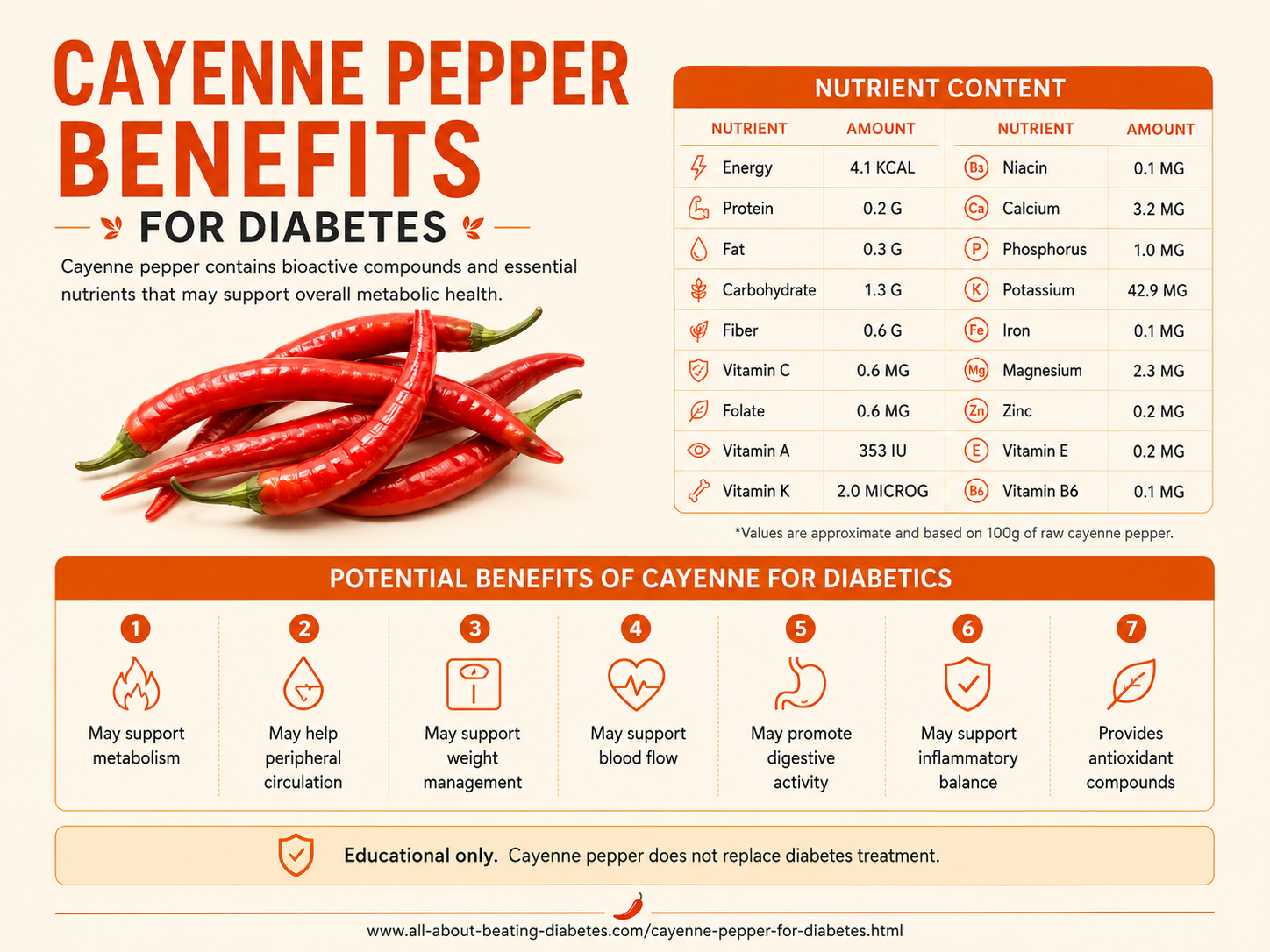

What Is Cayenne Pepper?
Cayenne pepper is a hot red chili pepper used to flavor food. It is made from dried and ground red chili peppers and belongs to the Capsicum family. Other common names include African red pepper, Spanish pepper, bird pepper, Guinea pepper, and American red pepper.
Cayenne is used worldwide in soups, sauces, meats, beans, spice blends, and vegetable dishes. It is available as powder, flakes, whole dried peppers, sauces, extracts, and capsules.
Its main active compound is capsaicin, which gives chili peppers their heat. Capsaicin is also used in some approved topical products for pain relief, but this is different from eating cayenne powder or taking cayenne capsules.
Can Cayenne Pepper Lower Blood Sugar?
Cayenne pepper may have small metabolic effects in some studies, mainly because capsaicin may influence appetite, inflammation, fat oxidation, gut signals, and insulin sensitivity. However, the evidence is not strong enough to use cayenne as a diabetes treatment.
In practical terms, cayenne should be viewed as a food spice, not as medicine. It may be part of a healthy eating pattern, but it will not replace metformin, insulin, GLP-1 medicines, SGLT2 inhibitors, blood sugar monitoring, weight management, or medical follow-up.
If you are considering cayenne capsules or any concentrated supplement, first read our diabetes and supplements safety guide, because supplements can interact with diabetes medicines and may affect blood sugar unpredictably.
Possible Benefits for People With Diabetes
Cayenne may offer possible indirect benefits when used in small food amounts. These benefits should be understood as supportive, not curative.
- Flavor without sugar: cayenne can make food taste stronger without adding sugar or sweet sauces.
- Weight support: some research suggests capsaicin may slightly affect appetite or energy use, but the effect is usually modest.
- Insulin sensitivity: early research suggests possible effects on insulin action, but more human studies are needed before cayenne can be recommended for diabetes control.
- Circulation and inflammation: capsaicin is being studied for effects on blood vessels and inflammation, but this does not mean it treats diabetic circulation problems.
- Nerve pain: medical capsaicin creams or patches may help some types of nerve pain, but do not apply cayenne powder to diabetic feet, wounds, ulcers, or irritated skin.
The real foundation of diabetes control is still healthy eating, regular physical activity, medication when prescribed, and glucose monitoring. CDC guidance emphasizes healthy eating, physical activity, and weight management as key ways to manage blood sugar.

Cayenne Pepper for Diabetes: Benefits, Claims, and Safety Reality
| Claim or Use | What We Can Say Safely | What Not To Do |
|---|---|---|
| Blood sugar control | May have small metabolic effects, but evidence is not strong enough to treat diabetes. | Do not replace metformin, insulin, or prescribed medicines. |
| Weight loss | May slightly affect appetite or energy use in some studies. | Do not expect rapid fat loss or use detox drinks repeatedly. |
| Circulation | Capsaicin is being studied for blood vessel and inflammation effects. | Do not use cayenne for chest pain, stroke symptoms, foot wounds, or poor circulation emergencies. |
| Neuropathy pain | Approved medical capsaicin products may help some nerve pain when used correctly. | Do not rub cayenne powder, chili oil, or homemade pepper paste on diabetic feet. |
| Bleeding or emergencies | Cayenne is not emergency medicine. | Do not use cayenne for bleeding, heart attack, stroke, severe infection, or diabetic foot emergencies. |
Important Correction
Do not use cayenne pepper to treat bleeding, heart attack, stroke, chest pain, severe infection, diabetic foot wounds, or any emergency. These situations need urgent medical care. Cayenne is not emergency medicine.
How to Use Cayenne Pepper Safely
The safest way is to use cayenne as a small amount of spice in food. Start with a tiny amount because your stomach and mouth may not tolerate it well at first.
| Safer Use | Use Caution With |
|---|---|
| A pinch in soups, stews, beans, eggs, vegetables, fish, or chicken. | Large amounts, capsules, extracts, or repeated “detox” drinks. |
| Balanced meals with protein, fiber, and vegetables. | Sugary sauces, sweet drinks, or high-carbohydrate meals labeled as “healthy” because cayenne was added. |
| Stopping cayenne if it causes burning, reflux, stomach pain, diarrhea, or vomiting. | Continuing despite stomach symptoms or possible low blood sugar symptoms. |
For food-based diabetes control, it is more useful to focus on overall meal quality. Our guide to foods and drinks for diabetes blood sugar control can help you build meals that are safer than relying on any single spice.
Should You Drink Lemon Cayenne “Detox” Drinks?
I do not recommend using lemon cayenne detox drinks six times a day for diabetes. “Detox” drinks do not cure diabetes, and frequent acidic or spicy drinks may irritate the stomach, throat, and teeth.
If you enjoy lemon water with a tiny pinch of cayenne, that may be acceptable for some people, but it should not replace balanced meals or diabetes treatment.
Be especially careful if you have reflux, gastritis, ulcers, kidney disease, nausea, vomiting, diarrhea, or if your blood sugar is unstable.
What Is the Right Dosage?
There is no standard medical dose of cayenne pepper for diabetes. Because evidence is limited, I do not recommend a fixed capsule dose for blood sugar control.
For most people, using cayenne in normal food amounts is safer than taking concentrated capsules. If you want to use capsules, discuss it with your doctor or pharmacist first, especially if you take diabetes medicine, blood pressure medicine, blood thinners, aspirin, or other supplements.
Who Should Avoid or Limit Cayenne Pepper?
Cayenne may not be suitable for everyone. Be careful or avoid it if you:
- Have acid reflux, gastritis, stomach ulcers, or frequent heartburn.
- Have irritable bowel symptoms, chronic diarrhea, or severe stomach sensitivity.
- Use insulin, sulfonylureas, or other medicines that can cause low blood sugar.
- Take blood thinners, aspirin, anti-inflammatory medicines, or have a bleeding disorder.
- Are pregnant, breastfeeding, medically fragile, or preparing for surgery.
- Have diabetic foot ulcers, open wounds, or sensitive skin where topical pepper could cause injury.
The NCCIH notes that supplement safety concerns include possible drug interactions, direct toxicities, and contamination. This is why concentrated cayenne capsules should be treated differently from a small amount used as a kitchen spice.
Cayenne Pepper and Diabetic Neuropathy
Capsaicin creams or patches are sometimes used for certain pain conditions, including diabetic neuropathy, but these are medical products with specific instructions. MedlinePlus notes that prescription capsaicin patches may be used to relieve pain from diabetic neuropathy.
Do not rub cayenne powder, chili oil, or homemade pepper paste on diabetic feet. Diabetes can reduce sensation, and a person may not feel burning or skin injury early enough. If you have foot burning, numbness, tingling, or pain, read our guide to diabetic neuropathy treatment and ask your doctor to examine your feet.
Cayenne Pepper and Diabetes
Best use
Small spice amount in food.
Not a cure
Does not replace diabetes medicine.
Avoid
High-dose capsules and detox routines.
Never use for
Bleeding, chest pain, stroke, wounds, emergencies.
Doctor’s Note
Cayenne pepper can be a useful spice, but it should not be promoted as a diabetes cure. The most important diabetes steps remain healthy eating, regular physical activity, weight management when needed, blood sugar monitoring, and taking prescribed medicines correctly.
Educational safety note: This page is for general diabetes education only. It does not replace personal medical advice, diagnosis, or treatment. Do not start, stop, or combine diabetes medicine, insulin, cayenne capsules, herbs, or supplements without speaking with your healthcare provider.
Most Asked Questions About Cayenne Pepper and Diabetes
Is cayenne pepper good for diabetes?
It may be used as a spice in a diabetes-friendly diet, but it is not a proven diabetes treatment. It should not replace medication, insulin, glucose monitoring, or medical care.
Can cayenne pepper lower blood sugar?
Possibly a little in some people, but evidence is not strong or consistent enough to rely on cayenne for blood sugar control. A 2022 review found no clear effect of dietary capsaicin on blood glucose or lipid profiles, while earlier mechanistic reviews suggested possible metabolic effects that still need better clinical confirmation.
Can I take cayenne capsules for diabetes?
Do not take cayenne capsules for diabetes unless your doctor or pharmacist says it is safe for you. Capsules may be more concentrated than food amounts and may interact with medicines.
Can I put cayenne on diabetic foot pain?
No. Do not apply cayenne powder to diabetic feet, wounds, ulcers, or irritated skin. Ask your doctor about approved neuropathy treatments.
Does cayenne pepper replace metformin or insulin?
No. Cayenne pepper does not replace metformin, insulin, or any prescribed diabetes medicine.
Related Questions
- Can I take bitter melon capsules together with cinnamon?
- Can I shift from insulin to Gymnema sylvestre and bitter melon?
- Can Medrol Dosepak raise blood sugar dangerously?
- Why isn’t my blood sugar going down?
Related Resources
- Diabetes and supplements safety guide
- Herbs for diabetes
- Natural remedies for diabetes: what is safe?
- Diabetes drug safety and side effects
- Foods and drinks for diabetes blood sugar control
- Diabetic neuropathy treatment
References
- American Diabetes Association. Standards of Care in Diabetes.
- Centers for Disease Control and Prevention. Manage Blood Sugar.
- Centers for Disease Control and Prevention. Healthy Eating and Diabetes.
- National Center for Complementary and Integrative Health. Diabetes and Dietary Supplements: What You Need To Know.
- MedlinePlus. Capsaicin Transdermal Patch.
- Panchal SK, Bliss E, Brown L. Capsaicin in Metabolic Syndrome. Nutrients. 2018.
- Szallasi A. Dietary Capsaicin: A Spicy Way to Improve Cardio-Metabolic Health? 2022.