- Home
- How Glycemic Index and Glycemic Load Affect Blood Sugar
- High Glycemic Index Foods List for Diabetes
High Glycemic Index Foods: List, Better Swaps, and Diabetes Tips
High-glycemic-index foods can raise blood glucose quickly, but a GI number does not tell the whole story. When my patients ask which high-GI foods they must avoid, I explain that we also need to consider the portion, total carbohydrate, fiber, overall nutritional value, medication, activity, and the person’s own glucose response.
This page will help you recognize foods that are often high GI, understand why published values vary, and make practical substitutions without treating food as simply “good” or “bad.”
Written by: Dr. Albana Greca, MD, MMedSc, Family Physician and Medical Author
Medically reviewed by: Dr. Ruden Cakoni, MD, Endocrinologist
Last medically reviewed: July 2026
Quick Answer
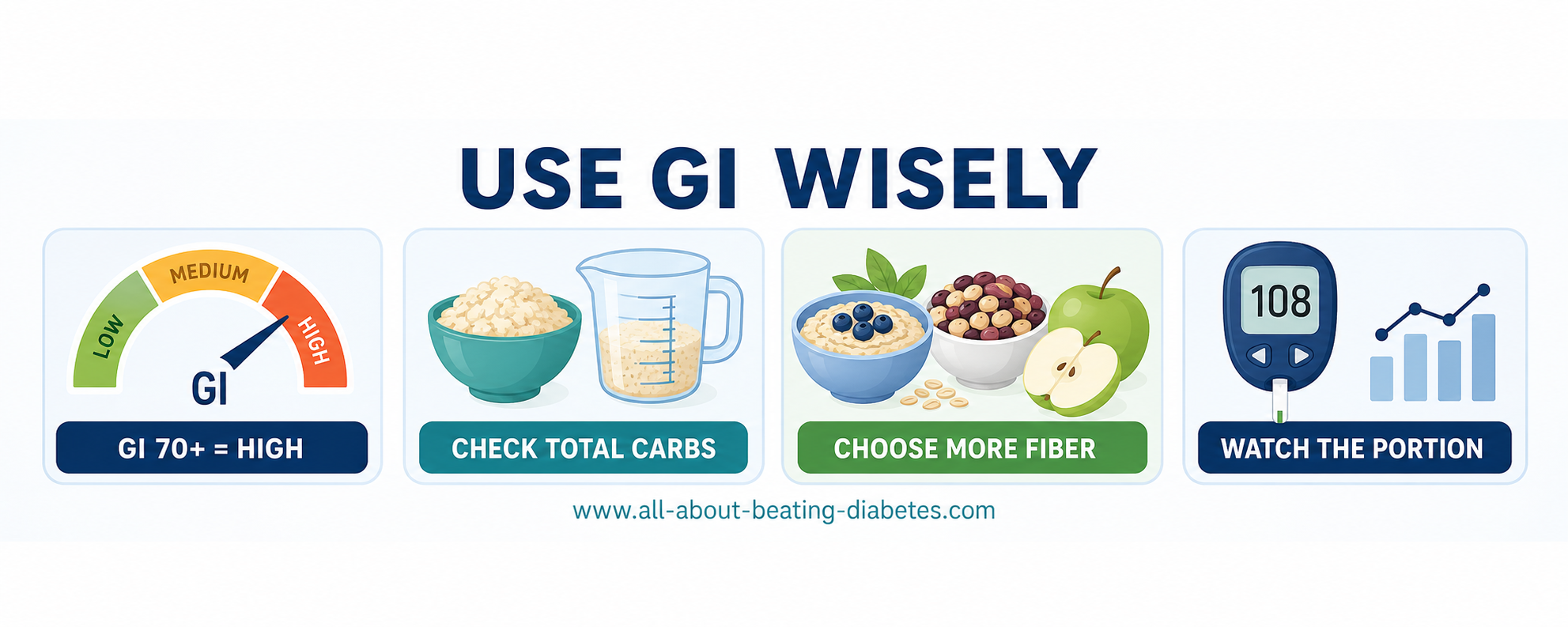
A high glycemic index is generally 70 or above on the glucose-reference scale. Foods that are often high GI include some white breads and bagels, many puffed or flaked breakfast cereals, instant rice, sticky or short-grain rice, rice cakes, and some potato preparations. However, GI does not measure the amount of sugar in a food, and values vary by brand, variety, processing, and cooking. Check total carbohydrate and portion size first, then use GI as a supporting guide.

What Does “High Glycemic Index” Mean?
The glycemic index compares how equal amounts of available carbohydrate from different foods affect blood glucose under standardized testing conditions. Glucose is used as the reference and is assigned a value of 100.
- Low GI: 55 or below
- Medium GI: 56–69
- High GI: 70 or above
GI is not a measurement of how much sugar a food contains. It is a relative measure of the glucose response to a fixed amount of digestible carbohydrate. A food may have a high GI but contain little carbohydrate in a normal serving. Another food may have a lower GI but deliver a large amount of carbohydrate when the portion is large.
Foods with very little carbohydrate—such as plain meat, fish, eggs, oils, and many cheeses—do not have a meaningful GI. This does not automatically make them nutritionally ideal or suitable in unlimited amounts.
Which Foods Often Have a High Glycemic Index?
The groups below contain foods that frequently test in the high-GI range. They are patterns, not guaranteed values. The exact number may change with the product, grain variety, recipe, laboratory method, and preparation.
| Food group | Foods that are often high GI | Important qualification |
|---|---|---|
| Bread and bakery products | Some white breads, baguettes, bagels, and airy refined rolls | Dense whole-grain and sourdough breads may test lower, but the portion and product still matter |
| Breakfast cereals | Many cornflakes, puffed-rice cereals, and highly processed instant cereals | Added sugar and serving size should be checked separately from GI |
| Rice | Many sticky, jasmine, short-grain, or instant rice products | White and brown rice can both range from low to high depending on variety and cooking |
| Potatoes | Instant mashed potatoes and some baked, mashed, or boiled potato varieties | Variety, cooking, cooling, reheating, and portion can change the response |
| Snack foods | Many rice cakes, pretzels, refined crackers, and puffed snacks | Fat, salt, and calorie content are not reflected in the GI number |
| Highly processed starches | Some instant grain products, tapioca-based products, and refined starch mixtures | Check the exact product rather than assigning one value to the whole category |
Practical Lower-GI or Higher-Fiber Swaps
A useful substitution should fit your culture, budget, taste, and medical needs. You do not need a rare or expensive “diabetic” product.
| Instead of | Try more often | Why |
|---|---|---|
| Puffed or sugary breakfast cereal | Plain rolled or steel-cut oats with nuts or seeds | Usually less processed and higher in fiber |
| Large portion of sticky or instant rice | A smaller portion of a tested lower-GI rice, barley, bulgur, beans, or lentils | Reduces the carbohydrate load and may provide more fiber |
| Airy white bread or large bagel | Smaller portion of dense whole-grain bread with protein and vegetables | More fiber, greater meal balance, and better portion control |
| Instant mashed potato as most of the plate | A measured potato portion plus non-starchy vegetables and protein, or beans and lentils | The complete plate matters more than replacing one food in isolation |
| Rice cakes or refined crackers alone | Whole fruit with nuts, plain yogurt, or roasted chickpeas | Adds fiber, protein, or healthy fat and may be more filling |
For broader guidance, see my low-glycemic food list and low-glycemic diet plan.
Why Can the Same Food Have Different GI Values?
Published GI values are averages from specific foods tested under controlled conditions. The result may change because of:
- Variety: different rice, potato, grain, and fruit varieties have different starch structures.
- Processing: grinding, puffing, flaking, and instant preparation can make starch easier to digest.
- Cooking: very soft cooking may increase starch availability; firm pasta often tests lower than soft-cooked pasta.
- Cooling and reheating: this may increase resistant starch in some foods, but it does not remove the carbohydrate.
- Ripeness: the carbohydrate structure of some fruits changes as they ripen.
- Meal composition: protein, fat, fiber, and acidity can change the speed and duration of the meal’s glucose response.
- Individual response: medicine, insulin, sleep, stress, activity, illness, and time of day all matter.
This is why I prefer using a GI table as an approximate comparison tool rather than treating one number as an exact prediction.
Glycemic Index Versus Glycemic Load
GI compares the glucose response to a fixed amount of available carbohydrate. Glycemic load (GL) combines GI with the amount of available carbohydrate in the portion you actually eat:
GL = GI × available carbohydrate in the serving ÷ 100
This explains why a high-GI food can sometimes have a low glycemic load in a small, carbohydrate-light serving. It also explains why a large amount of a low-GI food may still raise glucose significantly.
Neither GI nor GL tells you whether a food is nutritious. A product can have a lower GI because it contains fat, yet still be high in saturated fat, calories, sodium, or added sugar. Use my glycemic load chart and calculator for a more detailed explanation.
Should People With Diabetes Avoid Every High-GI Food?
No. High-GI foods are not automatically forbidden. The decision depends on the portion, total carbohydrate, frequency, overall meal, glucose pattern, and reason for eating the food.
A nutritious food should not be rejected only because of one GI result. Likewise, a low-GI label does not make a large portion unlimited. The practical goal is to choose minimally processed, fiber-rich carbohydrates more often and reduce repeated large glucose rises.
You can learn more about balancing carbohydrate amount and quality on my updated carbohydrates and diabetes page.
Build the Whole Meal, Not Just the Starch
The diabetes plate method is often easier than memorizing GI numbers. On a plate approximately 9 inches across:
- fill half with non-starchy vegetables
- fill one quarter with lean or plant protein
- fill one quarter with a measured carbohydrate food
- choose water or another unsweetened drink
Combining a carbohydrate with vegetables and protein may slow digestion and improve fullness. It does not erase the carbohydrate, so the portion still matters. A carb counter calculator can help when you need to estimate the total carbohydrate in a mixed meal.
Can High-GI Foods Treat Hypoglycemia?
Confirmed low blood sugar needs fast-acting carbohydrate, but not every high-GI food is a good treatment. Chocolate, pastries, and other high-fat foods may delay sugar absorption.
For many adults with glucose below 70 mg/dL (3.9 mmol/L):
- Take 15 g of fast-acting carbohydrate.
- Wait 15 minutes and recheck.
- Repeat if glucose remains below 70 mg/dL.
Examples include glucose tablets or gel, measured fruit juice, or regular—not diet—soda. Follow your personal treatment plan. Children may need a different amount.
If the person is unconscious, having a seizure, unable to swallow safely, or severely confused, do not give food or drink by mouth. Use glucagon if available and prescribed, place the person on their side, and seek emergency help.
High-GI Foods and Exercise
Some people who use insulin need carbohydrate before, during, or after physical activity, but this should be based on glucose level, active insulin, exercise type and duration, and the person’s treatment plan. Do not routinely eat a high-GI snack before every workout without knowing whether you need it.
If exercise frequently causes lows, review insulin timing, carbohydrate needs, and glucose-monitoring instructions with your diabetes team.
Do High-GI Foods Cause Kidney Damage, Blood in Urine, or Diabetic Coma?
A single high-GI food does not directly cause kidney failure, blood in the urine, or diabetic coma. Persistently high blood glucose over time can contribute to kidney, eye, nerve, heart, and blood-vessel complications, but those risks depend on overall diabetes control and other health factors—not one food’s GI.
Blood in the urine needs medical assessment because it may result from infection, stones, kidney disease, medication, or another urinary problem. Diabetic ketoacidosis and hyperosmolar hyperglycemic state are medical emergencies associated with severe metabolic disturbance, not simply eating rice or pasta.
Seek urgent care for very high glucose accompanied by vomiting, abdominal pain, deep or difficult breathing, fruity-smelling breath, dehydration, severe weakness, confusion, inability to keep fluids down, or positive ketones according to your sick-day plan.
Doctor’s Note
I use GI to help patients compare similar carbohydrate foods—not to create a long list of forbidden foods. The most useful questions are: How much carbohydrate is in my portion? Is the food rich in fiber and nutrients? What am I eating with it? What happens to my glucose when I eat this meal repeatedly?
Frequently Asked Questions
What GI number is considered high?
On the glucose-reference scale, a GI of 70 or above is considered high. Medium is 56–69, and low is 55 or below.
Is white pasta a high-GI food?
Not necessarily. Many pastas test in the low-to-medium range because their starch is held within a compact structure. Cooking, product type, portion, and sauce all affect the meal response.
Is brown rice always low GI?
No. Brown-rice values can range from low to high depending on the variety, starch type, processing, and cooking. A measured portion is still important.
Are sugary drinks always high GI?
Not every sugary drink has a GI of 70 or higher, which shows why GI alone can mislead. Sugary drinks can still deliver a large amount of rapidly absorbed carbohydrate with little fiber or nutritional value.
Can I eat a high-GI food if I have diabetes?
Often yes, in a suitable portion and meal context. Review the total carbohydrate and your repeated glucose response. Personal advice is especially important when you use insulin.
Is a low-GI food always healthier?
No. GI does not measure calories, saturated fat, sodium, vitamins, minerals, or food processing. Check the complete nutrition profile and portion.
Related Questions
- Is this too many carbohydrates for prediabetes or diabetes?
- How can brown rice fit into an Indian diabetes meal?
- What should I change when glucose is high and I eat flour, beans, and rice?
Related Resources
- Glycemic Index Chart for Diabetes
- How the Glycemic Index of Foods Works
- Glycemic Load Chart and Calculator
- Low-Glycemic Food List
- Low-Glycemic Diet Plan
- Carbohydrates and Diabetes
- Blood Sugar Levels After Eating
References
- American Diabetes Association Professional Practice Committee. Facilitating Positive Health Behaviors and Well-being: Standards of Care in Diabetes—2026.
- Atkinson FS, Brand-Miller JC, Foster-Powell K, Buyken AE, Goletzke J. International Tables of Glycemic Index and Glycemic Load Values 2021: A Systematic Review.
- MedlinePlus. Glycemic Index and Diabetes.
- American Diabetes Association. How to Read Nutrition Labels: Carbs, Fiber, and Total Carbohydrates.
- Centers for Disease Control and Prevention. Diabetes Meal Planning.
- Centers for Disease Control and Prevention. Fiber: The Carb That Helps You Manage Diabetes.
- Centers for Disease Control and Prevention. Treatment of Low Blood Sugar (Hypoglycemia).
Medical disclaimer: This page is for general education and does not replace personal medical advice, diagnosis, nutrition therapy, or treatment. Speak with your healthcare professional before changing your diet, insulin, diabetes medication, or glucose-monitoring plan.