When patients ask me about biguanide side effects, they are almost always asking about metformin. Metformin is the biguanide used in modern diabetes care. Older drugs in this class, including phenformin and buformin, are not routinely used in the United States and many other countries because safer treatment options are available.
Quick answer
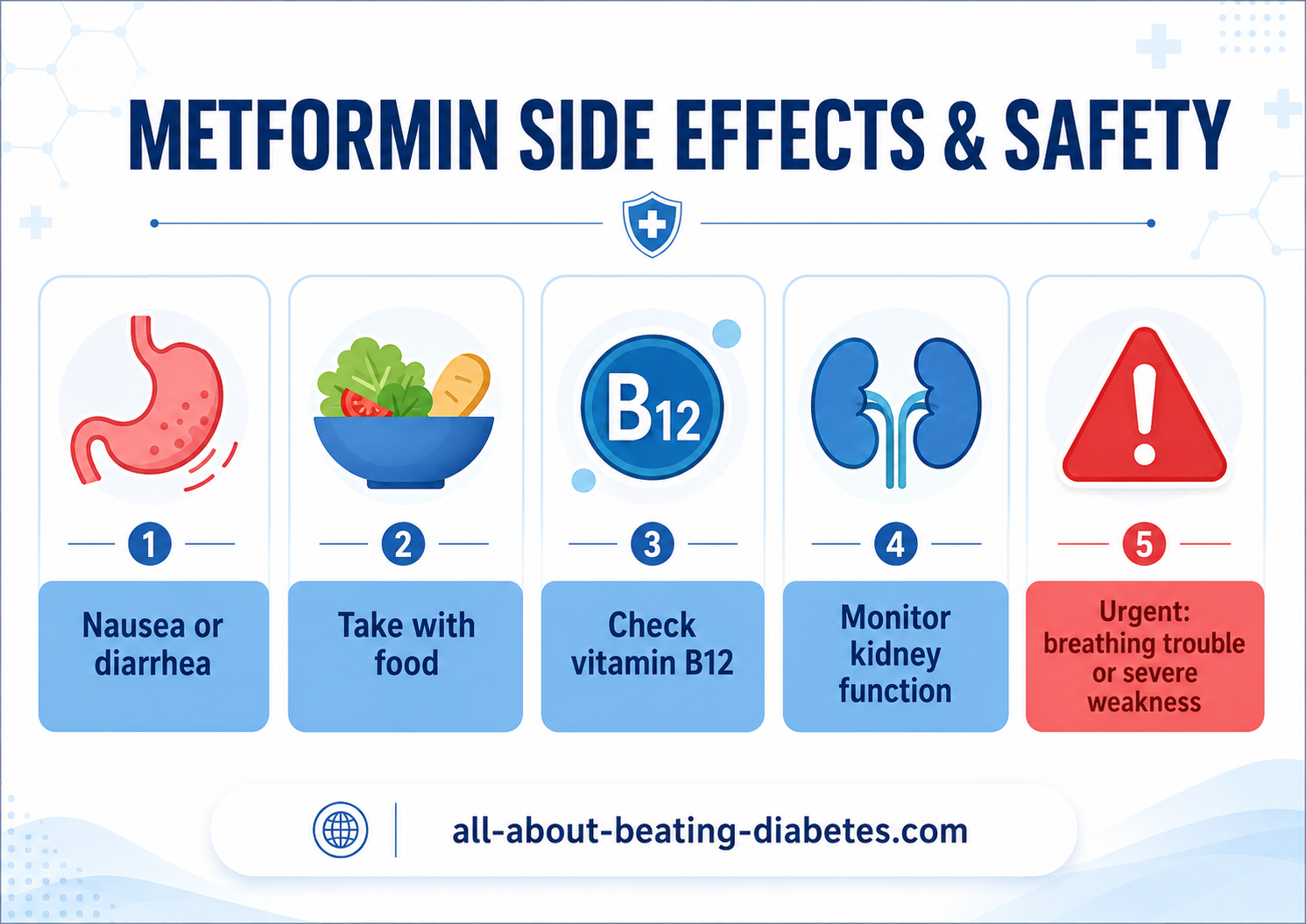
The most common metformin side effects are diarrhea, nausea, abdominal discomfort, bloating, gas, reduced appetite, and a metallic or altered taste. They are often most noticeable when treatment begins or the dose increases.
Long-term use can reduce vitamin B12 levels. Metformin-associated lactic acidosis is a very rare but serious emergency, with risk rising during severe kidney impairment, acute kidney injury, dehydration, sepsis, low-oxygen states, liver failure, excessive alcohol intake, or overdose.
What are biguanides, and how does metformin work?
Biguanides are glucose-lowering medicines. Metformin is the main drug in this class and is available as immediate-release and extended-release formulations, including many combination tablets.
Metformin lowers glucose mainly by reducing excess glucose production by the liver and improving insulin sensitivity. It usually does not cause weight gain and has a low risk of hypoglycemia when used alone. Low blood sugar can still occur when metformin is combined with insulin, sulfonylureas, or other glucose-lowering treatment, or when food intake is poor.
Common metformin side effects
| Side effect | What it may feel like | What to discuss |
|---|---|---|
| Diarrhea | Loose or frequent stools, urgency, cramping | Timing with meals, hydration, dose titration, and whether extended-release metformin may help |
| Nausea or reduced appetite | Queasiness, early fullness, less interest in food | Taking it with food and whether symptoms are improving |
| Abdominal discomfort | Cramping, bloating, gas, indigestion | Other causes, other medicines, food triggers, and formulation |
| Taste change | Metallic or unusual taste | Whether it is tolerable or persistent |
| Vitamin B12 reduction | May initially cause no symptoms; later fatigue, anemia, sore tongue, numbness, tingling, or balance problems | Blood testing and treatment if deficiency is confirmed |
Digestive symptoms often improve as the body adjusts, but persistent or severe diarrhea should not simply be ignored. It can cause dehydration and may make metformin less safe if kidney function temporarily worsens.

How can metformin stomach side effects be reduced?
- Take metformin with or immediately after food, following your prescription.
- Ask whether the dose can be increased gradually rather than started at a high dose.
- Ask whether an extended-release formulation would be more tolerable.
- Stay hydrated, especially if diarrhea occurs.
- Review other medicines, supplements, infections, and dietary causes of diarrhea.
- Do not crush or split extended-release tablets unless your pharmacist confirms that your specific product permits it.
Metformin and vitamin B12 deficiency
Metformin can reduce vitamin B12 absorption. The risk increases with higher doses, longer treatment duration, lower starting B12 levels, older age, vegan or vegetarian diets with limited B12, stomach or intestinal disorders, and other medicines that affect absorption.
Possible symptoms include fatigue, pale skin, a sore or red tongue, memory or mood changes, numbness, tingling, burning pain, weakness, and balance problems. These symptoms can resemble diabetic neuropathy, so testing is important rather than guessing.
Current guidance supports checking B12 when deficiency is suspected and considering periodic monitoring in people with risk factors. A confirmed deficiency can usually be treated without automatically stopping metformin.
The older claim that metformin routinely lowers folic acid and therefore directly removes heart protection is not supported well enough to present as a standard metformin side effect. Vitamin B12 is the established monitoring concern.
What is metformin-associated lactic acidosis?
Lactic acidosis is a dangerous buildup of lactate and acid in the blood. It is not simply the normal lactate produced by muscles during exercise. In metformin-associated cases, the medicine has often accumulated because the kidneys cannot clear it normally, or the person has another severe illness that increases lactate production or reduces its clearance.
This complication is very rare, but risk is higher with:
- Severe chronic kidney impairment or acute kidney injury
- Severe dehydration from vomiting, diarrhea, fever, or poor fluid intake
- Sepsis or serious infection
- Shock, severe heart failure, respiratory failure, or another low-oxygen state
- Severe liver impairment
- Excessive alcohol intake
- Metformin overdose
Seek emergency medical help for new severe weakness, unusual sleepiness, repeated vomiting, abdominal pain, muscle pain, feeling very cold, dizziness, slow or irregular heartbeat, or fast, deep, or difficult breathing—particularly during acute illness or kidney problems.
Do not try to diagnose or treat lactic acidosis at home.
Metformin kidney-function precautions
Metformin does not usually damage healthy kidneys. The concern is that impaired kidneys may not remove metformin adequately, allowing it to accumulate. Kidney decisions are based mainly on estimated glomerular filtration rate, or eGFR—not serum creatinine alone.
| eGFR | General FDA/ADA safety approach |
|---|---|
| 45 mL/min/1.73 m² or higher | Metformin is generally usable if otherwise appropriate, with kidney monitoring. |
| 30–44 mL/min/1.73 m² | Do not newly start metformin under FDA guidance. If already taking it, reassess benefits, risks, dose, and monitoring with the prescriber. |
| Below 30 mL/min/1.73 m² | Metformin is contraindicated and should not be used. |
Your healthcare professional may temporarily hold metformin during certain acute illnesses, major surgery, prolonged fasting, or iodinated-contrast procedures, depending on kidney function and clinical risk. Ask for specific instructions; do not create your own stopping schedule.
For iodinated contrast, FDA-related guidance calls for temporary discontinuation in certain patients, including those with eGFR 30–60 mL/min/1.73 m². Kidney function is generally reassessed before restarting when indicated.
Metformin, PCOS, fertility, and pregnancy
Metformin may improve ovulation in some people with polycystic ovary syndrome, so an unplanned pregnancy is possible if fertility returns. Discuss contraception or pregnancy planning with your clinician.
Do not stop metformin abruptly after discovering a pregnancy because uncontrolled high glucose also carries risks. Contact your diabetes and pregnancy-care team promptly. Current ADA guidance states that metformin crosses the placenta and should not be used as the first-line medication for diabetes in pregnancy. Insulin is generally preferred in the United States, although metformin may be considered in selected circumstances after an individualized discussion.
When metformin is used for PCOS to induce ovulation, ADA guidance recommends discontinuing it by the end of the first trimester. The plan should be made by the treating clinicians.
When should I contact my doctor?
Contact your prescriber promptly if you have:
- Persistent diarrhea, vomiting, or inability to stay hydrated
- New numbness, tingling, balance problems, unusual fatigue, or anemia
- A major change in kidney function
- Severe infection, fever, dehydration, heart or breathing problems
- An upcoming operation or iodinated-contrast scan
- Pregnancy, pregnancy planning, or breastfeeding questions
- Repeated low blood sugar while also using insulin or another medicine that can cause hypoglycemia
Frequently asked questions
Does metformin damage the kidneys?
Metformin is not generally considered a drug that damages healthy kidneys. The safety concern is accumulation when kidney filtration is severely reduced or suddenly worsens.
Does metformin cause low blood sugar?
Metformin alone has a low risk of hypoglycemia. Risk can increase with insulin, sulfonylureas, poor food intake, alcohol, or other treatment factors.
Should everyone taking metformin take vitamin B12?
No. Testing and supplementation should be individualized. Check B12 when symptoms suggest deficiency and consider periodic monitoring when risk factors are present.
Is extended-release metformin safer?
It has the same active medicine and major precautions, but some people experience fewer digestive side effects. Ask whether it is suitable for you.
Should I stop metformin when I am sick?
Some acute illnesses require temporary withholding, especially with vomiting, diarrhea, dehydration, reduced kidney function, or low oxygen. Follow the sick-day plan provided by your healthcare team and seek advice promptly.
Related questions from readers
Related resources
References
- American Diabetes Association. Pharmacologic Approaches to Glycemic Treatment: Standards of Care in Diabetes—2026.
- American Diabetes Association. Chronic Kidney Disease and Risk Management: Standards of Care in Diabetes—2026.
- American Diabetes Association. Management of Diabetes in Pregnancy: Standards of Care in Diabetes—2026.
- UK Medicines and Healthcare products Regulatory Agency. Metformin and reduced vitamin B12 levels: monitoring advice.
- MedlinePlus. Metformin Drug Information.
- National Health Service. Side effects of metformin.