- Home
- Diabetic Meal Plan With Sample Menu
- Easy Diabetic Cooking Recipes for Beginners
Easy Diabetes-Friendly Cooking: Recipes and Practical Tips
Cooking for diabetes does not require expensive “diabetic” products or complicated recipes. I encourage my patients to start with familiar foods, adjust the portions, and build meals that include vegetables, protein, and a measured source of carbohydrate.
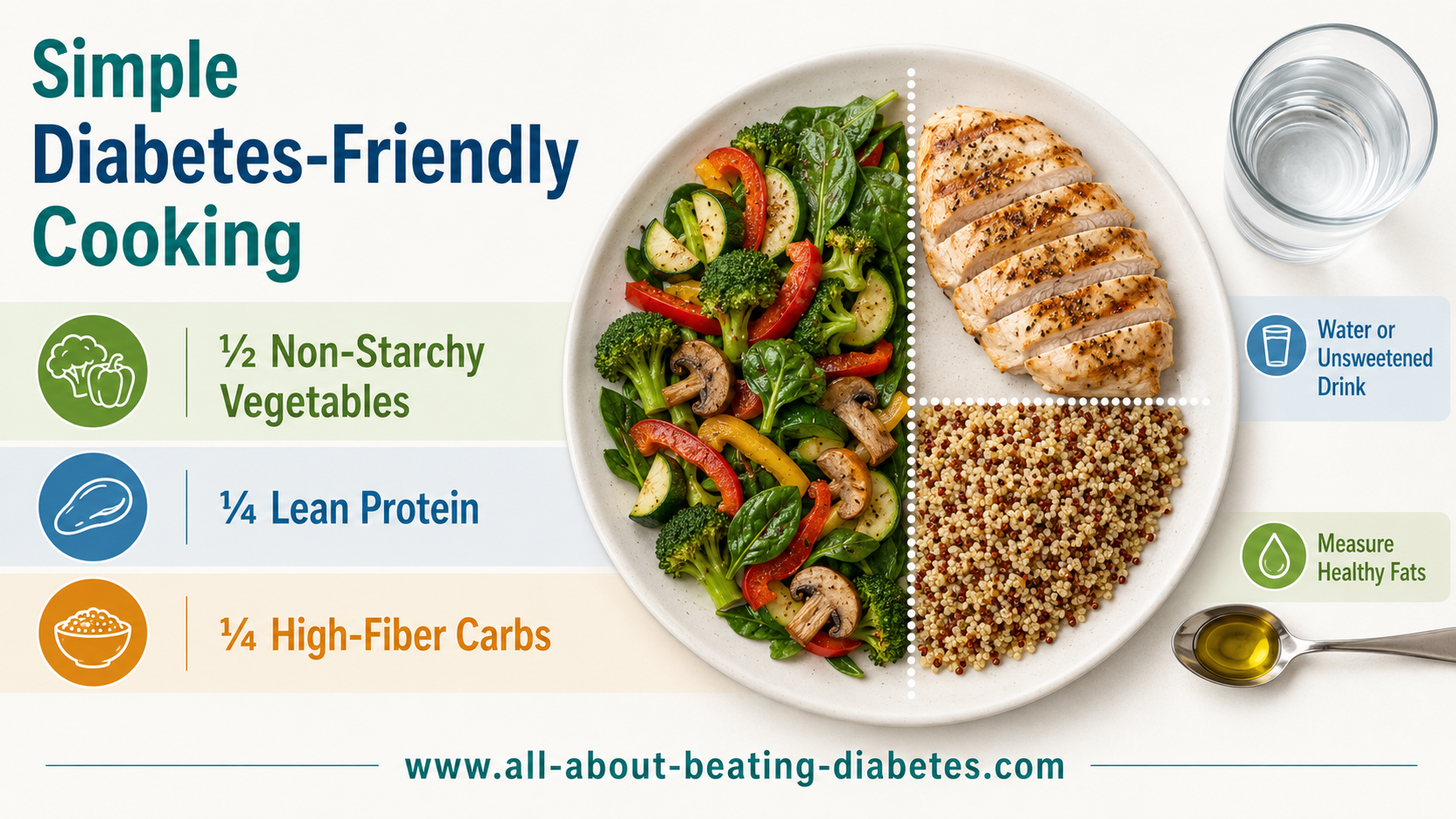
The simplest diabetes-friendly cooking method is to fill about half your plate with non-starchy vegetables, one-quarter with lean or plant protein, and one-quarter with a higher-fiber carbohydrate. Measure oils and sauces, choose water or an unsweetened drink, and adjust carbohydrate portions to your glucose pattern and treatment plan. There is no single food or herb that replaces diabetes medication or an individualized meal plan.

Six Simple Diabetes-Friendly Cooking Tips
How to Use the Plate Method
For many adults, a 9-inch plate offers a practical visual guide:
½ Non-starchy vegetables
Make these the largest part of the meal. They add fiber, volume, color, and nutrients with relatively little carbohydrate.
¼ Protein
Choose fish, poultry, eggs, tofu, beans, lentils, or a lean meat portion. Beans and lentils also contain carbohydrate, so include them in your total meal plan.
¼ Higher-fiber carbohydrate
Choose a measured serving of brown rice, oats, barley, whole-grain bread, beans, lentils, sweet potato, or another carbohydrate you enjoy.
Drink and added fat
Use water or an unsweetened drink. Add a measured amount of olive oil, nuts, seeds, or avocado if appropriate for your calorie needs.
The plate method is a starting point, not a prescription. People using mealtime insulin may need carbohydrate counting. Pregnancy, kidney disease, gastroparesis, food allergies, weight goals, culture, appetite, and physical activity may also change what belongs on your plate.
Three Easy Meal Templates for Beginners
Vegetable Egg Plate
Cook eggs with spinach, mushrooms, and tomatoes in a measured teaspoon of olive oil. Serve with one slice of whole-grain toast and a small portion of berries.
Mediterranean Bean Salad
Combine leafy greens, cucumber, tomato, peppers, rinsed beans, parsley, lemon, and a measured amount of olive oil. Add plain yogurt, tuna, egg, or tofu if you need more protein.
One-Pan Protein and Vegetables
Bake fish, chicken, or tofu with broccoli, peppers, zucchini, garlic, and herbs. Add a measured serving of brown rice, barley, potato, or whole-grain bread.
Yogurt and Nut Bowl
Use plain unsweetened yogurt with berries, a measured spoonful of nuts or seeds, and cinnamon for flavor. Check the yogurt label because carbohydrate varies by product.
Explore the Diabetes-Friendly Recipe Collection
Spinach Rice Recipe
Learn how to combine rice with spinach and use a measured rice portion alongside protein.
Cabbage and Carrot Salad
A crunchy vegetable-based salad that can be paired with protein to make a more complete meal.
1,600-Calorie Diabetes Meal Plan
See a structured sample day with portions and estimated carbohydrate amounts. A fixed calorie level is not appropriate for everyone.
How Foods Affect Blood Sugar
Understand why portion size, carbohydrate, fiber, protein, and the full meal matter more than labeling one food “good” or “bad.”
Cooking With Herbs and Preparing Unsweetened Tea
Herbs and spices can make meals enjoyable without adding sugar. Garlic, cinnamon, bitter melon, and green tea may be used as foods or drinks if they are safe for you, but none should be presented as a substitute for prescribed treatment.
- Garlic and diabetes: cooking, evidence, and safety
- Bitter melon and diabetes: preparation and safety
- Green tea and diabetes: brewed tea versus extracts
- Cinnamon and diabetes: benefits, risks, and evidence
Do People With Diabetes Need Special Vitamins?
Diabetes does not automatically mean that you lack vitamin C, vitamin E, or chromium. Most people should first aim for a varied diet. A supplement is appropriate only when there is a specific reason, such as a confirmed deficiency or a recommendation from your healthcare professional.
How to Personalize Your Cooking
Your blood sugar response can differ from someone else’s response to the same meal. If your doctor has asked you to monitor after meals, record:
- what you ate and the approximate portions;
- the amount and type of carbohydrate;
- when you took insulin or diabetes medicine;
- your blood sugar before the meal and 1–2 hours after starting it;
- physical activity, illness, stress, or anything else that may affect the result.
One reading is not a judgment on the meal. Look for repeated patterns and discuss them with your doctor or registered dietitian. Do not change insulin or medication based only on one recipe or one glucose value.
Related Questions From Readers
- What does blood sugar 190 mg/dL after eating mean?
- What should I do if my sugar is 196 mg/dL two hours after food?
- Can fasting blood sugar of 200 be controlled through diet?
Related Resources
- Diabetes Diet, Carbs, and Glycemic Index
- Glycemic Index of Foods
- Blood Sugar Levels by Time of Day
- Diet for Insulin Resistance
Frequently Asked Questions About Diabetes-Friendly Cooking
What is the healthiest way to cook food for diabetes?
There is no single best method. Baking, grilling, steaming, roasting, poaching, air-frying with little added oil, and sautéing with a measured amount of oil can all work. The ingredients, portions, sauces, and complete meal usually matter more than the cooking method alone.
Can people with diabetes eat rice, pasta, bread, or potatoes?
Yes, many people can include these foods in measured portions. Choose higher-fiber versions when practical, pair the carbohydrate with vegetables and protein, and use your glucose pattern to help personalize the amount.
How many carbohydrates should I eat at a meal?
There is no universal amount. Your needs depend on your diabetes type, medication or insulin plan, activity, body size, goals, pregnancy status, and other health conditions. A registered dietitian or diabetes care team can help set a safe starting range.
Do I need to buy foods labeled “diabetic”?
No. Ordinary vegetables, beans, lentils, whole grains, fruit, plain dairy, eggs, fish, poultry, tofu, nuts, seeds, and healthy oils can form a diabetes-friendly diet. “Sugar-free” does not mean carbohydrate-free or calorie-free, so read the full label.
Do frying and cooking destroy all nutrients?
No. Cooking changes some nutrients, but it can also improve digestibility and the availability of others. Deep-frying adds substantial fat and calories, while frequent charring should be avoided. Use a variety of raw and cooked foods rather than relying on one method.
Can herbs, cinnamon, bitter melon, or tea lower blood sugar?
Normal culinary amounts may add flavor, but evidence does not support using these ingredients as replacements for diabetes treatment. Concentrated products may cause side effects or medication interactions. Discuss supplements and herbal preparations with your doctor or pharmacist.
How can I tell whether a recipe works for my blood sugar?
Check the carbohydrate amount and portion first. If monitoring is part of your care plan, compare glucose at consistent times before and after the meal, and repeat on another day before drawing conclusions. Review repeated highs or lows with your healthcare team rather than changing medication independently.
References
- American Diabetes Association: Food and Nutrition
- Centers for Disease Control and Prevention: Healthy Eating With Diabetes
- National Institute of Diabetes and Digestive and Kidney Diseases: Healthy Living With Diabetes
- Diabetes UK: Healthy Recipes