- Home
- blood sugar levels
- printable diabetic chart
Printable Diabetic Blood Sugar Chart
Written by: Dr. Albana Greca Sejdini, MD, MMedSc
Medically reviewed by: Dr. Ruden Cakoni, MD, Endocrinologist
Last medically reviewed: July 2026
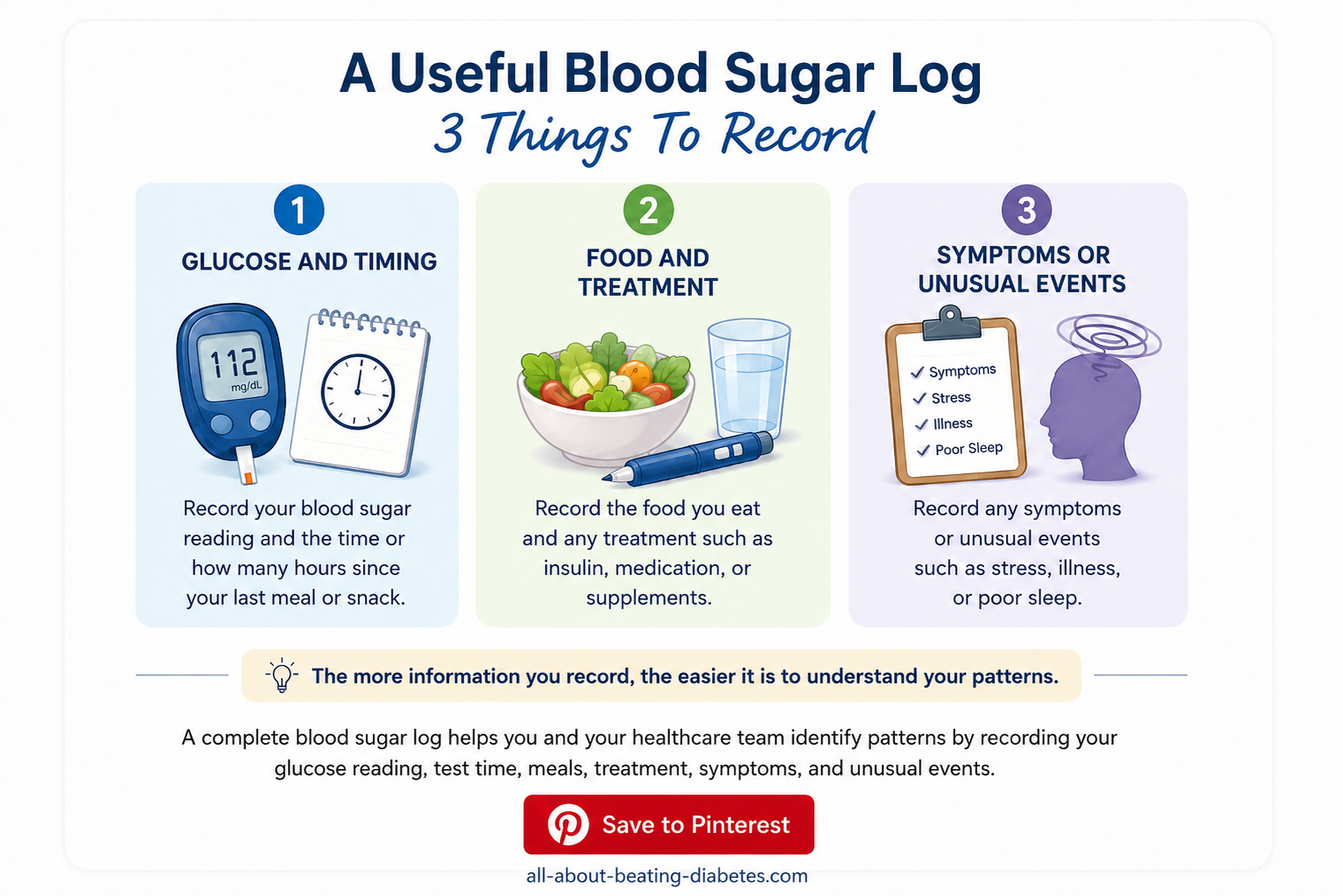
A blood sugar log helps you and your diabetes team see patterns that one isolated reading cannot show. The most useful record includes not only the glucose number, but also the time, relationship to food, medicine or insulin, activity, symptoms, and unusual circumstances such as illness or poor sleep.
Two pages with personal targets, daily readings, insulin or medication, meals, activity, symptoms, ketones, and weekly notes.
Download the PDFEditable log with dropdowns, automatic mg/dL-to-mmol/L conversion, low/high highlighting, summaries, and a glucose trend chart.
Download the Excel TrackerWhat to record · When to check · Common targets · Normal vs. target ranges · How to use the chart · How to identify patterns · Meter and CGM readings · Low blood sugar · High blood sugar and ketones · Preparing for appointments
What Should You Record in a Blood Sugar Log?
The glucose number is important, but its context often explains why it changed. A useful log may include:
- date and time;
- glucose value and unit—mg/dL or mmol/L;
- timing—fasting, before a meal, one or two hours after the first bite, bedtime, overnight, before exercise, or when symptoms occur;
- food and carbohydrate—especially unusual meals or portions;
- insulin or medication—name, dose, and timing when relevant;
- activity—type, duration, and intensity;
- symptoms—shaking, sweating, dizziness, thirst, frequent urination, nausea, or blurred vision;
- ketones during illness, persistent high glucose, or according to your sick-day plan;
- other factors—illness, infection, stress, alcohol, menstruation, poor sleep, steroid medicine, travel, or missed doses.

When Should Blood Sugar Be Checked?
The correct schedule depends on diabetes type, medicine, pregnancy, illness, hypoglycemia risk, and whether you use a continuous glucose monitor. Your healthcare professional should tell you when and how often to check.
Common times include:
- when you first wake up, before eating or drinking calories;
- before meals;
- one to two hours after the beginning of a meal;
- at bedtime;
- before driving when hypoglycemia is a concern;
- before, during, or after exercise when appropriate;
- when you have symptoms of high or low glucose;
- during illness or after a medication change;
- after treating low blood sugar, according to your plan.
People using multiple daily insulin injections, pumps, pregnancy glucose plans, or medicines that can cause hypoglycemia often need more frequent monitoring. Other people may use a short structured testing period to answer a specific question rather than testing at every possible time indefinitely.
Common Blood Sugar Targets for Many Adults
For many nonpregnant adults with diabetes, commonly used general treatment goals are:
| Timing | Common target in mg/dL | Common target in mmol/L |
|---|---|---|
| Before meals | 80–130 | 4.4–7.2 |
| 1–2 hours after beginning a meal | Below 180 | Below 10.0 |
| Common CGM target range | 70–180 | 3.9–10.0 |
| Low-glucose alert level | Below 70 | Below 3.9 |
| Clinically significant low | Below 54 | Below 3.0 |
These are general treatment goals, not universal requirements. Your targets may be different if you are pregnant, a child or teenager, an older adult, have limited life expectancy, kidney or heart disease, recurrent hypoglycemia, impaired awareness, or another safety concern.
Use the blood sugar levels by time of day guide for fuller interpretation.
Normal Ranges and Diabetes Targets Are Not the Same
The old version of this page referred to a general “normal range” of 70–120 mg/dL. That is too broad because the meaning depends on timing and whether the number is being used for diagnosis or treatment.
| Term | What it means |
|---|---|
| Diagnostic range | Laboratory thresholds used to identify normal glucose, prediabetes, or diabetes. |
| Treatment target | A personalized goal for someone already living with diabetes. |
| CGM target range | The sensor range used to calculate time in range, often 70–180 mg/dL for many adults. |
| Action threshold | A level at which your personal plan tells you to treat a low, check ketones, contact the team, or seek urgent care. |
Do not use a treatment target to diagnose diabetes, and do not use a diagnostic range as an insulin-dosing instruction.
How to Use the Printable Chart
- Write your personal targets first. Include pre-meal, after-meal, bedtime, and low-glucose thresholds.
- Use one unit consistently. Record mg/dL or mmol/L and label the unit clearly.
- Record the timing precisely. “After lunch” is less useful than “2 hours after first bite.”
- Add treatment information. Include insulin dose, medicine, missed dose, or timing changes.
- Add only useful meal detail. Note carbohydrate amount, unusually large portions, alcohol, or unfamiliar food.
- Record symptoms and treatment of lows. Include glucose used and the recheck result.
- Review at the end of the week. Circle repeated patterns rather than reacting to one isolated value.
- Bring the log to appointments. Do not change insulin or medicine from the chart alone unless you already have a written adjustment plan.
How to Find Useful Glucose Patterns
Look for the same problem at the same time on several days:
- High fasting readings: consider evening food, missed medicine, overnight glucose, dawn phenomenon, sleep, illness, or insufficient basal insulin.
- High after breakfast: review carbohydrate amount, morning insulin resistance, and medicine or insulin timing.
- Repeated lows before lunch: review breakfast insulin, morning activity, meal size, and timing.
- Late highs after a high-fat meal: fat and protein may delay absorption for several hours.
- Exercise-related lows: lows can occur during activity or later, including overnight.
- Unexpected changes during illness: infection, dehydration, appetite changes, and stress hormones can alter glucose.
Repeated patterns are more useful than isolated readings. Use the blood sugar log sheet guide for additional examples.
Finger-Stick Meter Readings vs. CGM Readings
A blood glucose meter measures glucose in a drop of capillary blood. A CGM estimates glucose in interstitial fluid and provides trends throughout the day and night.
They may differ when:
- glucose is changing rapidly;
- the sensor is newly inserted or under pressure;
- the meter strip is expired, damaged, or poorly stored;
- hands are not clean and dry;
- the device is outside its expected accuracy range.
Confirm with a meter when symptoms do not match the CGM, the device instructs you to check, or you suspect the sensor is inaccurate. Record whether a value came from a meter or CGM when that distinction matters.
What Should You Record During Low Blood Sugar?
For glucose below 70 mg/dL—or below your personal low threshold—record:
- the glucose value and symptoms;
- the likely cause, such as missed food, excess insulin, activity, or alcohol;
- the treatment used;
- the recheck value and time;
- whether help from another person or glucagon was required.
Repeated low readings require a treatment review. See Is My Blood Sugar Too High or Too Low?
High Blood Sugar, Ketones, and Sick Days
A high reading should be interpreted with timing, symptoms, treatment, illness, and whether the value is improving or rising.
Follow your sick-day plan regarding:
- how often to check glucose;
- when to check blood or urine ketones;
- which insulin must continue;
- fluids and carbohydrate when appetite is reduced;
- when to contact the diabetes team;
- when emergency care is required.
Read Dangerous Blood Sugar Levels for urgent warning signs.
How to Prepare the Log for a Medical Appointment
Before the visit:
- bring the meter or CGM receiver, not only handwritten values;
- bring insulin and medication names, doses, and timing;
- mark severe or repeated lows;
- note missed doses, steroid use, illness, travel, or major diet changes;
- write down the two or three patterns that concern you most;
- ask whether testing frequency and targets should change.
The goal is not to prove that every reading is “good.” Honest records help your team make safer decisions.
Most Asked Questions
Should I write down every CGM reading?
No. A CGM already stores frequent readings. Use the log for insulin, meals, exercise, symptoms, illness, ketones, sensor problems, and events that help explain the pattern.
Is 70–120 mg/dL the normal range all day?
No. Glucose interpretation depends on timing and purpose. Common treatment targets, diagnostic thresholds, and CGM ranges are different concepts.
Can I change insulin from the Excel chart?
Only when your diabetes team has provided a written self-adjustment plan. The chart identifies patterns but does not prescribe insulin.
How many days should I record?
One to two weeks often reveals useful patterns, but the appropriate period depends on the clinical question. Record longer when asked by your team.
Should I record blood pressure and weight too?
You may record them in the weekly notes if they are part of your care plan, but avoid making the glucose log so complicated that you stop using it.
Related Questions
- Why Did Glucose Rise From 91 at Bedtime to 145 in the Morning?
- What Does Blood Sugar of 196 mg/dL Two Hours After Food Mean?
- How Can I Manage High Post-Meal Blood Sugar?
- What Should I Do About Blood Sugar of 455 mg/dL?
Related Resources
- Blood Sugar Log Sheet Guide
- Normal Blood Sugar Level Chart
- Blood Sugar Levels by Time of Day
- Chart of Blood Sugar Levels
- Convert mmol/L and mg/dL
- Dangerous Blood Sugar Levels
Medical disclaimer: The downloadable files and this page provide general education. They do not prescribe testing frequency, targets, insulin doses, medication changes, or emergency treatment. Use the personal plan supplied by your healthcare professional.
References
- American Diabetes Association: Glycemic Goals, Hypoglycemia, and Hyperglycemic Crises—Standards of Care in Diabetes 2026
- Centers for Disease Control and Prevention: Monitoring Your Blood Sugar
- Centers for Disease Control and Prevention: Managing Blood Sugar
- Centers for Disease Control and Prevention: Low Blood Sugar
- National Institute of Diabetes and Digestive and Kidney Diseases: Managing Diabetes
- National Institute of Diabetes and Digestive and Kidney Diseases: Continuous Glucose Monitoring