If you live with diabetes, it is understandable to want a simple answer to the question, “What blood sugar should I aim for?”
For many adults, there are well-established treatment targets. However, I always remind my patients that these are general goals, not one-size-fits-all rules. Your safest target depends on your age, type and duration of diabetes, medicines, risk of hypoglycemia, pregnancy status, kidney or heart disease, and overall health.
The goal is not to keep glucose at one perfect number all day. It is to remain within a safe range as consistently as possible while avoiding prolonged high blood sugar and unnecessary low blood sugar.
Quick Answer: Common Blood Glucose Targets
For many nonpregnant adults with diabetes, commonly used treatment goals are:
Before meals: 80–130 mg/dL (4.4–7.2 mmol/L)
Peak after meals: below 180 mg/dL (below 10.0 mmol/L), measured 1–2 hours after the beginning of the meal
A1C: below 7% (below 53 mmol/mol), when this can be achieved safely
Measurement
Common target
What it means
Before meals
80–130 mg/dL (4.4–7.2 mmol/L)
A common premeal target for many nonpregnant adults
Peak after meals
Below 180 mg/dL (below 10.0 mmol/L)
Usually assessed 1–2 hours after the beginning of the meal
A1C
Below 7% (below 53 mmol/mol)
A common longer-term goal when it can be reached safely
Important: These are treatment targets for many adults who already have diabetes. They are different from the laboratory thresholds used to diagnose diabetes or prediabetes.
What Does “Acceptable Blood Glucose” Mean?
An acceptable blood glucose level is not necessarily the same as a “normal” glucose level in someone without diabetes.
When we set a diabetes target, we balance two priorities: keeping glucose low enough to reduce the risk of long-term complications while avoiding hypoglycemia and treatment that is too aggressive for the individual patient.
A single blood glucose reading does not provide a complete picture of diabetes control. In clinical practice, I consider the broader pattern, including fasting and premeal glucose levels, post-meal readings when appropriate, A1C, episodes of hypoglycemia, symptoms, current medications, and, when available, continuous glucose monitoring (CGM) data. These measures should also be interpreted in the context of established blood glucose and A1C ranges for normal glucose, prediabetes, and diabetes.
Acceptable Blood Glucose Before Meals
For many nonpregnant adults with diabetes, a common target before meals is 80–130 mg/dL (4.4–7.2 mmol/L).
This gives us useful information about your baseline glucose before food begins to raise it. If most of your premeal readings are within your agreed target, that is encouraging, but they should still be interpreted together with your post-meal pattern, A1C, low-glucose episodes and overall treatment plan.
A reading of 80 mg/dL is not hypoglycemia. It is near the lower end of the usual premeal target. Hypoglycemia is generally defined as glucose below 70 mg/dL.
If fasting or premeal readings are repeatedly above your personal target, possible contributors include overnight glucose production, meal or medication timing, illness, poor sleep, stress and changes in physical activity. A pattern over several days is more informative than one isolated morning reading.
For many adults with diabetes, a common target is a peak post-meal glucose below 180 mg/dL (10.0 mmol/L).
When post-meal glucose is being assessed, it is generally measured 1–2 hours after the beginning of the meal. The timing matters because this period is intended to capture glucose near its post-meal peak.
One reading slightly above 180 mg/dL does not necessarily mean your treatment is failing. A larger meal, more carbohydrate than usual, illness, stress, poor sleep or reduced activity can all affect the result. More important questions are whether higher readings occur frequently, remain elevated for a long time, or appear alongside an A1C or CGM pattern showing excessive glucose exposure.
Do not confuse a treatment target with a diagnostic test. The below-180 mg/dL target is used in diabetes management. The 140 and 200 mg/dL diagnostic thresholds apply to a standardized two-hour 75-g oral glucose tolerance test, not to an ordinary meal eaten at home.
Because blood glucose changes throughout the day, the timing of a measurement matters, particularly when interpreting blood sugar levels after eating.
How Does A1C Fit With Daily Blood Sugar Targets?
Daily readings show what your blood sugar is doing at a particular moment. A1C provides a broader view of glucose exposure over the previous two to three months, with more recent weeks contributing more to the result.
For many nonpregnant adults with diabetes, a common A1C goal is below 7% (53 mmol/mol) when it can be achieved safely. Some people may benefit from a lower goal. Others need a less stringent goal because hypoglycemia, frailty, serious comorbidities, cognitive or functional limitations, or treatment burden makes tighter control less safe.
I would not interpret A1C in isolation. Two people can have the same A1C while experiencing very different patterns of highs and lows.
A continuous glucose monitor, or CGM, helps us look beyond individual fingerstick readings. It shows how much time glucose spends within, above and below the target range.
CGM metric
Common goal for many adults
Time in range: 70–180 mg/dL
More than 70% of the time
Time below 70 mg/dL
Less than 4% of the time
Time below 54 mg/dL
Less than 1% of the time
Time above 180 mg/dL
Less than 25% of the time
CGM goals also need to be individualized. Some older adults with complex health problems, for example, may need more permissive goals to reduce the risk of hypoglycemia.
What About Bedtime Blood Sugar?
There is no single bedtime glucose target appropriate for every adult with diabetes. Bedtime goals depend on insulin use, risk of overnight hypoglycemia, age, other medical conditions, recent exercise, meal timing and the treatment plan you follow.
If you use insulin or medicines that can cause hypoglycemia, your clinician may give you a specific bedtime target. Follow that individualized plan rather than relying on a universal bedtime number from the internet.
What Is Considered Low Blood Sugar?
For people with diabetes, glucose below 70 mg/dL (3.9 mmol/L) is considered hypoglycemia and should be taken seriously. A level below 54 mg/dL (3.0 mmol/L) is more clinically significant.
Symptoms may include shakiness, sweating, hunger, palpitations, dizziness, weakness, irritability, confusion or difficulty concentrating. If you have a hypoglycemia treatment plan, follow it promptly. Frequent low readings require medical review because medication dose, meal timing or activity may need adjustment.
Get emergency help if the person becomes unconscious, has a seizure, cannot swallow safely, is severely confused, or needs another person to help them recover.
Why Your Personal Target May Be Different
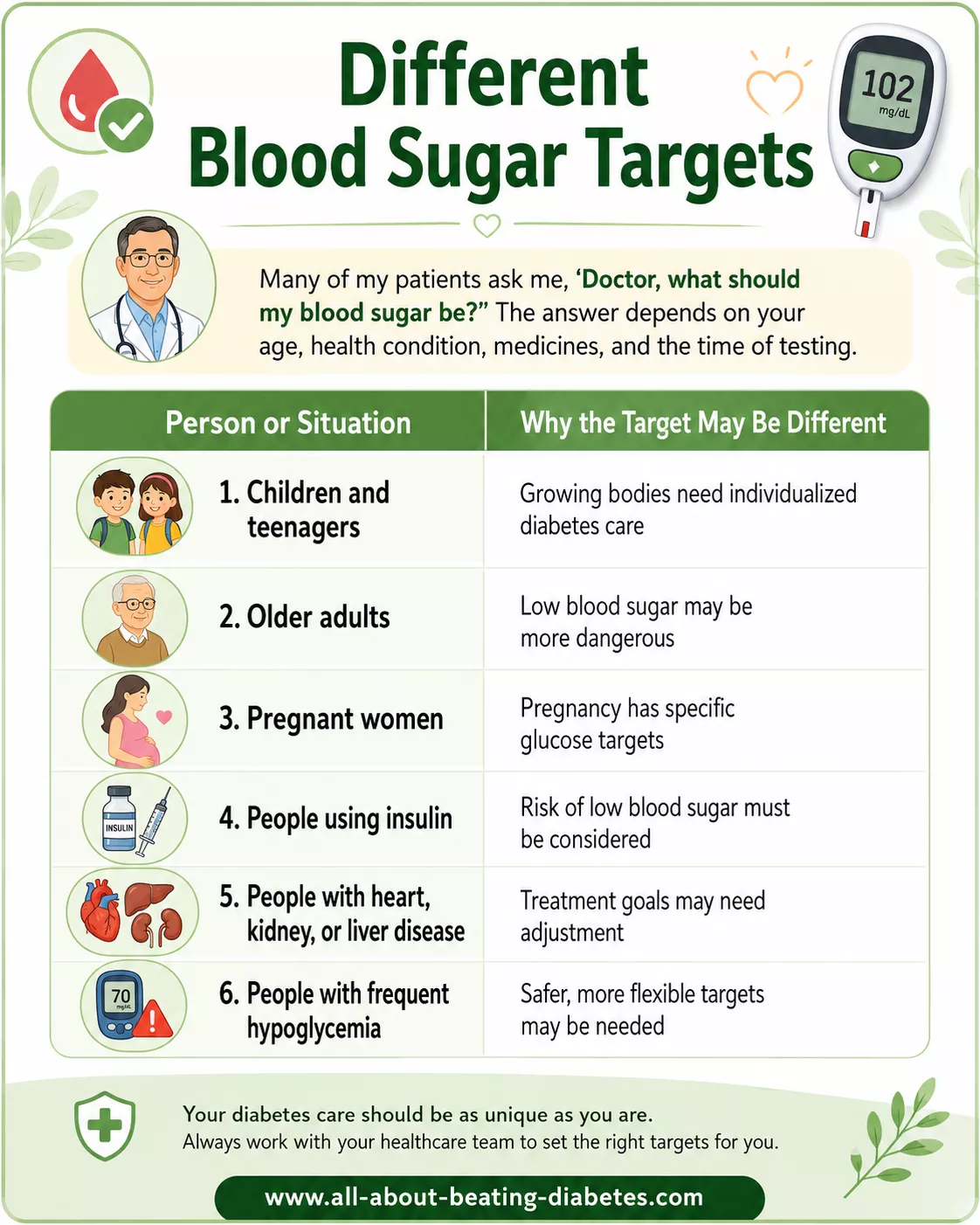
I would not give exactly the same glucose goal to every patient. Your targets may need to be individualized if you:
are pregnant or planning pregnancy;
are a child or adolescent;
are an older adult;
have frequent or severe hypoglycemia;
have impaired awareness of low blood sugar;
have significant kidney, heart, liver or other medical disease;
have cognitive or functional limitations;
have lived with diabetes for many years; or
use insulin or medicines that increase hypoglycemia risk.
An older adult who is otherwise healthy may still have relatively tight glucose goals. Someone with frailty, several serious illnesses or recurrent hypoglycemia may need more relaxed targets because preventing low blood sugar becomes the greater priority.
Blood sugar targets are individualized according to age, pregnancy, medications, hypoglycemia risk and overall health.
What Can Affect Your Blood Glucose Readings?
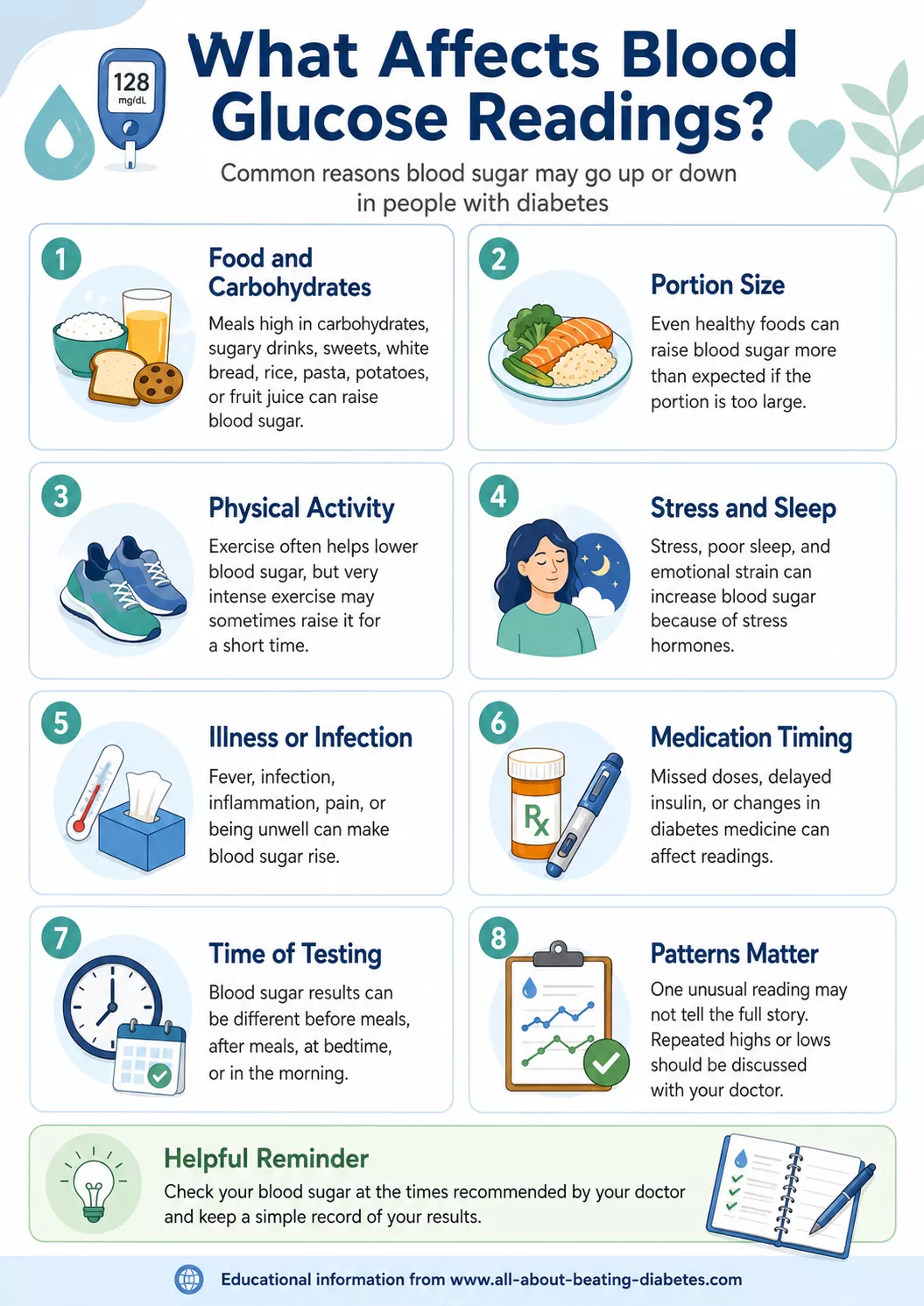
Even when your treatment plan has not changed, glucose can vary from day to day. Common influences include:
meal size and carbohydrate content;
physical activity;
stress and sleep;
infection, illness or pain;
dehydration or alcohol;
hormonal changes;
medication timing;
missed insulin or diabetes medicine; and
corticosteroids and some other medicines.
This is why I encourage patients to look for patterns rather than reacting strongly to one unusual result.
Meals, activity, sleep, stress, illness and medications can all change glucose readings.
How to Keep Blood Glucose Closer to Your Target
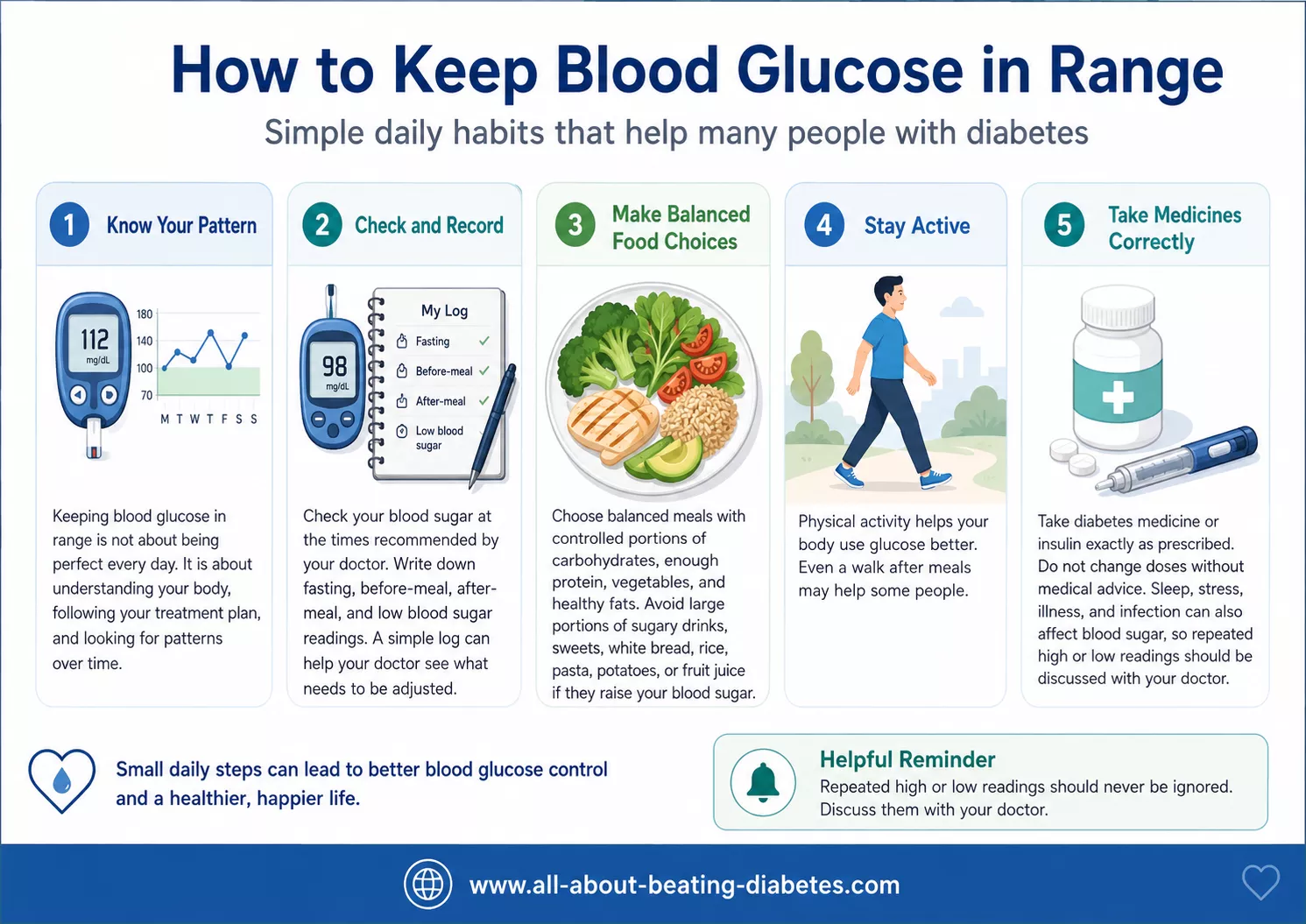
Keeping glucose in range does not require perfect numbers every day. The practical goal is to make the overall pattern safer and more consistent. Depending on your treatment plan, helpful steps may include:
taking insulin or diabetes medicine exactly as prescribed;
checking glucose at the times recommended by your healthcare team;
keeping carbohydrate portions reasonably consistent when this is part of your plan;
choosing meals with vegetables, protein, fiber and appropriate carbohydrate portions;
being physically active regularly;
reviewing repeated highs or lows instead of changing medication on your own;
paying attention to sleep, illness, stress and hydration; and
bringing your glucose log or CGM report to medical appointments.
Do not change insulin or medication doses because of one unusual result unless your healthcare professional has given you a specific adjustment plan.
Consistent medication use, balanced meals, activity and review of glucose patterns can support safer diabetes control.
Dr. Albana’s Perspective
When a patient asks whether a blood sugar number is “acceptable,” I first ask when it was measured and what target we agreed on for that person.
A premeal glucose of 125 mg/dL may be within the usual target for many adults with diabetes. The same number means something different if we are discussing a fasting laboratory test used to screen a person who has not been diagnosed with diabetes.
I also do not judge diabetes control from one good reading or one bad reading. I want to know whether most values are reasonably close to target, whether there are repeated highs, whether low glucose is occurring, and whether the A1C or CGM report tells the same story.
The best target is not the lowest number you can achieve. It is the range that offers meaningful long-term protection while remaining safe and realistic for your health and treatment.
When Should You Contact Your Doctor?
Contact your healthcare team if:
glucose is repeatedly above your agreed target;
you have repeated readings below 70 mg/dL;
you experience nighttime hypoglycemia;
your A1C is rising despite apparently reasonable daily readings;
your CGM shows frequent highs or lows;
you are ill and glucose becomes difficult to control;
you are unsure whether medication or insulin needs adjustment; or
your target may no longer be appropriate because of pregnancy, aging or a new medical condition.
Seek urgent medical care for severe hypoglycemia, loss of consciousness, seizures, repeated vomiting, severe dehydration, marked drowsiness, difficulty breathing, fruity-smelling breath, or symptoms suggesting diabetic ketoacidosis or another hyperglycemic crisis.
Related Questions
Is 130 mg/dL acceptable for someone with diabetes?
It depends on when it was measured. For many nonpregnant adults, 130 mg/dL is at the upper end of the common premeal target. After a meal, it may also be within an acceptable range, but your individual target may differ.
Is 180 mg/dL after eating acceptable?
For many adults with diabetes, the common goal is a peak post-meal glucose below 180 mg/dL, assessed 1–2 hours after the beginning of the meal. Frequent readings at or above this level should be reviewed as a pattern.
Is 70 mg/dL acceptable?
Seventy mg/dL is the threshold at which we become concerned about hypoglycemia. A reading below 70 mg/dL should be treated according to your diabetes plan, and repeated lows should be discussed with your healthcare team.
Should everyone with diabetes have the same glucose target?
No. Age, pregnancy, medications, hypoglycemia risk, kidney or heart disease, functional status and other health conditions can all affect the safest goal.
What should my blood sugar be at bedtime?
There is no universal bedtime target for every adult with diabetes. Your bedtime goal should reflect your treatment plan, especially if you use insulin or are at risk of overnight hypoglycemia.
Is A1C below 7% right for everyone?
No. Below 7% is a common goal for many nonpregnant adults, but some people may benefit from a lower goal and others need a less stringent one for safety.
For many nonpregnant adults with diabetes, common treatment goals are 80–130 mg/dL before meals, below 180 mg/dL at the peak after meals, and A1C below 7% when these goals can be achieved safely.
If you use CGM, spending more than 70% of the time between 70 and 180 mg/dL is a common goal for many adults, while time below 70 mg/dL should remain limited.
Most importantly, your target should fit you. A safe plan balances glucose control with your risk of hypoglycemia, medications, age, other medical conditions and daily life. I would rather see a patient follow a realistic, individualized target safely and consistently than chase a “perfect” number that creates unnecessary risk.
National Institute of Diabetes and Digestive and Kidney Diseases. Managing Diabetes. National Institutes of Health.
Medical disclaimer: This information is for general education and does not replace professional medical advice, diagnosis or treatment. Follow the glucose targets and treatment plan recommended by your healthcare professional. Do not change insulin or diabetes medication doses without appropriate medical guidance.
Famous People With Diabetes: Type 1 & Type 2 Stories
Living With Diabetes
Famous People With Diabetes: What Their Stories Can Teach Us
Diabetes affects people from every background—including actors, musicians, athletes, judges and public figures. Their stories can help reduce stigma and show that a diagnosis does not define what a person can achieve.
Quick answer: many well-known people have publicly discussed living with type 1 or type 2 diabetes. Their experiences can raise awareness, but they are not treatment templates. Diabetes management is individualized, and the correct approach depends on diabetes type, medications, age, health conditions, glucose patterns and personal goals.
How we chose the people on this page
We include only people whose diabetes has been publicly disclosed and supported by reliable sources such as diabetes organizations, medical publications, established news organizations or the person's own public foundation. We do not include rumors, infer someone's diagnosis from appearance, or speculate about why a particular person developed diabetes.
Famous People With Type 1 Diabetes
Type 1 diabetes is an autoimmune disease in which the pancreas makes little or no insulin. People with type 1 diabetes need insulin to live. It is not caused by eating sugar, being overweight or having an unhealthy lifestyle.
Type 1 diabetes
Nick Jonas
Musician and actor
Nick Jonas has publicly lived with type 1 diabetes since adolescence and has become one of the best-known public advocates for young people with the condition. Breakthrough T1D has repeatedly featured him in type 1 diabetes education and advocacy activities.
What his story illustrates: type 1 diabetes can be diagnosed in childhood or adolescence, and ongoing insulin treatment can coexist with a demanding professional life.
Type 1 diabetes
Sonia Sotomayor
U.S. Supreme Court Justice
Sonia Sotomayor has publicly discussed living with type 1 diabetes since childhood. Breakthrough T1D educational materials identify her as having been diagnosed at about age 7.
What her story illustrates: long-term type 1 diabetes management can extend across decades of education, work and public service.
Type 1 diabetes
Alexander Zverev
Professional tennis player
Alexander Zverev has said he was diagnosed with type 1 diabetes at age 4. His ATP biography also notes his lifelong diabetes, and he established the Alexander Zverev Foundation in 2022 to support children with diabetes and improve access to insulin and other essential treatment.
What his story illustrates: type 1 diabetes does not automatically prevent elite-level sport, although exercise requires careful planning around insulin, food and glucose monitoring.
Type 1 diabetes
Mary Tyler Moore
Actor and diabetes advocate, 1936–2017
Mary Tyler Moore was diagnosed with type 1 diabetes in 1970 at age 33. She later became an influential diabetes advocate and served as JDRF International Chairman beginning in 1984.
What her story illustrates: type 1 diabetes can begin in adulthood as well as childhood, and patient advocacy can have an important role in research, education and public awareness.
Famous People With Type 2 Diabetes
Type 2 diabetes develops through a combination of impaired insulin action and progressive loss of adequate insulin secretion. Genetics, age, body composition, activity, sleep, medications, social factors and other influences may all contribute. It is inaccurate to reduce type 2 diabetes to a simple question of willpower or food choices.
Type 2 diabetes
Tom Hanks
Actor and filmmaker
Tom Hanks publicly disclosed his type 2 diabetes diagnosis in 2013 after years of elevated blood glucose. His announcement brought substantial public attention to the condition.
What his story illustrates: type 2 diabetes may develop after a period of abnormal glucose and can occur even when someone does not fit a stereotypical picture of diabetes.
Type 2 diabetes
Randy Jackson
Musician, producer and television personality
Randy Jackson has publicly discussed living with type 2 diabetes and has worked with the American Diabetes Association on awareness campaigns, including the importance of eye health for people with diabetes.
What his story illustrates: diabetes care is broader than blood sugar alone; eye, heart, kidney and nerve health also matter.
Type 2 diabetes
Patti LaBelle
Singer and author
Patti LaBelle has publicly discussed being diagnosed with type 2 diabetes in 1994. She later became active in diabetes awareness and has spoken openly about changing how she approached food and health.
What her story illustrates: receiving a diagnosis can be emotionally difficult, and sustainable changes often take time rather than happening perfectly from the first day.
What Can We Actually Learn From Celebrity Diabetes Stories?
1. Diabetes is not one disease
Type 1 and type 2 diabetes have different underlying biology. Gestational, monogenic and other forms of diabetes also exist.
2. Diabetes does not determine your career
People with diabetes work in sport, entertainment, law, medicine, business and nearly every other field.
3. Treatment is individual
One public figure may use insulin, another oral medication, another injectable treatment, and another a combination. Their plan is not automatically appropriate for someone else.
4. Complication prevention matters
Glucose management is important, but so are blood pressure, cholesterol, kidney care, eye examinations, foot care, smoking status and other cardiovascular risks.
A famous person's diagnosis does not tell us why they developed diabetes. It is inappropriate to assume that wealth, stress, diet, body size, career or personality caused an individual's diabetes unless there is specific evidence.
A Historical Correction From the Old Version of This Page
George Minot was not the first person treated with insulin
An older version of this page incorrectly stated that Nobel laureate George Minot was the first person treated with insulin.
The first person with diabetes to receive an insulin injection was Leonard Thompson, a 14-year-old boy treated in Toronto in January 1922. George Minot later developed diabetes and benefited greatly from insulin, but he was not the first insulin-treated patient.
Dr. Albana's Perspective
Use these stories for perspective—not comparison
I think famous people can help reduce the fear and stigma around diabetes, especially when someone has just been diagnosed and wonders whether life will ever feel normal again.
But I would never want a patient to compare their HbA1c, weight, medicine, diet or complications with a celebrity. You rarely know the complete medical story behind a public interview.
What matters is your own diabetes type, your glucose pattern, your cardiovascular and kidney risk, the medicines you can safely use, and a treatment plan you can realistically follow.
Frequently Asked Questions
Can successful athletes have type 1 diabetes?
Yes. Type 1 diabetes requires insulin and careful glucose management, but many people participate successfully in recreational and elite sport.
Is type 2 diabetes caused only by eating badly?
No. Type 2 diabetes is multifactorial. Genetics, age, insulin resistance, pancreatic beta-cell function, body composition, medications, activity and many other factors can contribute.
Can adults develop type 1 diabetes?
Yes. Type 1 diabetes can begin at any age. Adult-onset type 1 diabetes may sometimes initially be mistaken for type 2 diabetes.
Should I copy a celebrity's diabetes diet or medication plan?
No. Public stories can be encouraging, but treatment decisions should be based on your own diagnosis, laboratory results, health conditions and medical advice.
Related Diabetes Resources
Understanding Diabetes
Start with the major types, tests and treatment concepts.