- Home
- Diabetes Complications
- Can Diabetes Cause Hair Loss and Will It Grow Back
Diabetes and Hair Loss: Causes, Tests, and Treatment
If you are living with diabetes and notice more hair in your brush, a widening part, or a bald patch, it is natural to wonder whether your blood sugar is responsible. I want to reassure you that hair loss often has a treatable or temporary cause—but the right treatment depends on identifying that cause first.
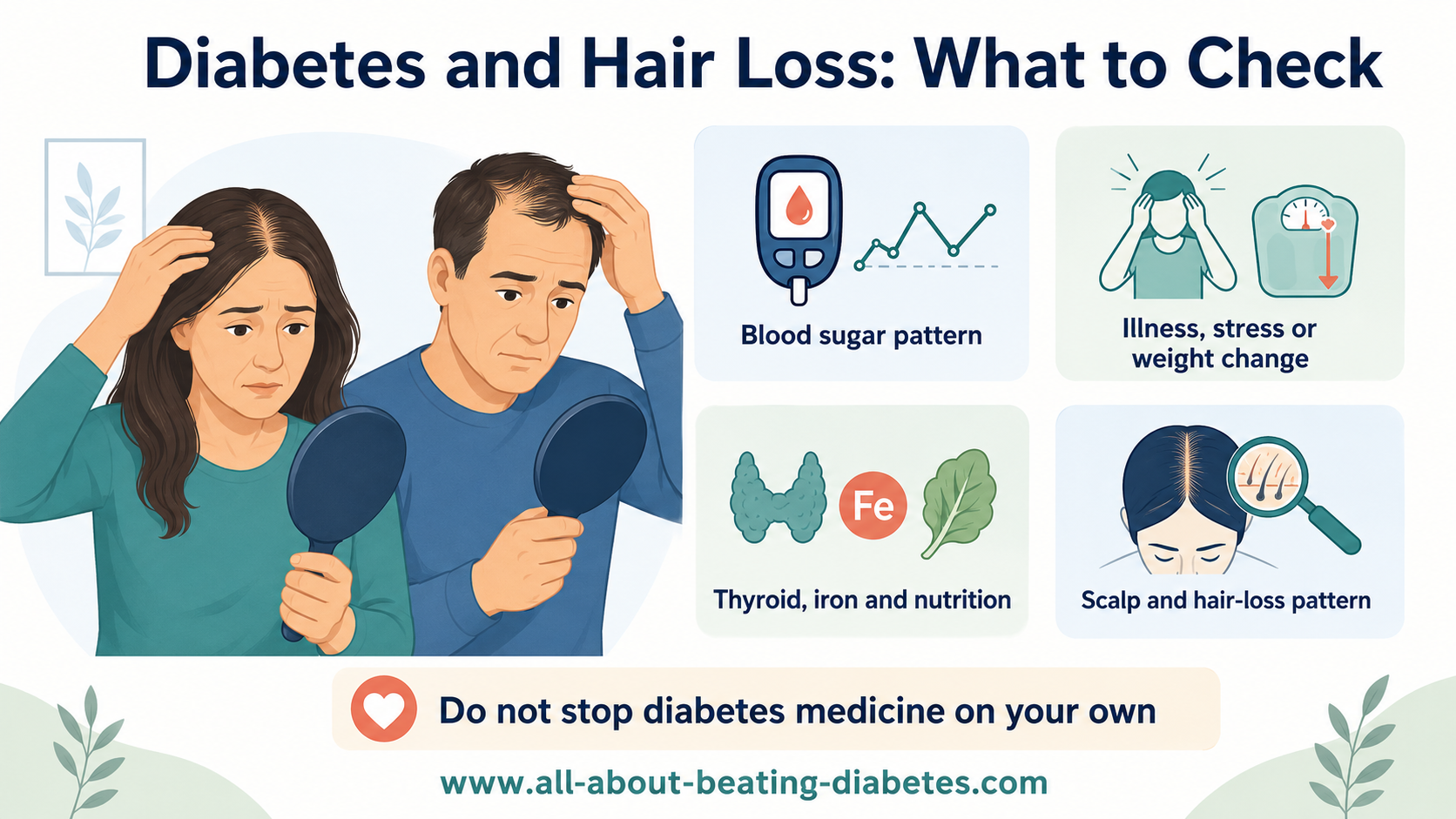
Diabetes may contribute to hair problems indirectly, especially when glucose remains high, a serious illness or infection has occurred, weight is lost rapidly, or another condition such as thyroid disease is present. However, diabetes is not the only possible cause, and hair loss is not automatically a diabetes complication. Do not stop insulin or diabetes medicine and do not replace treatment with herbs or supplements. Arrange an examination if hair loss is sudden, patchy, persistent, or accompanied by scalp pain, redness, scaling, sores, or pus.
Can Diabetes Cause Hair Loss?
There is no single condition called “diabetic hair loss.” Diabetes can affect blood vessels, healing, inflammation, and susceptibility to some infections, but these effects do not explain every case of scalp thinning or baldness. Common conditions such as hereditary pattern hair loss can develop whether or not you have diabetes.
Diabetes may be part of the picture in several ways:
- Prolonged high glucose: glucose above your individual target can affect general skin health and increase the risk of infection. Improving diabetes management supports overall health, but it does not guarantee that lost hair will regrow.
- Major illness or metabolic stress: fever, infection, surgery, diabetic ketoacidosis, or another severe illness can trigger temporary diffuse shedding called telogen effluvium, often noticed two or three months later.
- Rapid weight loss or undernutrition: a large calorie deficit, low protein intake, iron deficiency, or rapid weight change may trigger shedding.
- Associated conditions: thyroid disease, anemia, hormonal changes, alopecia areata, and other illnesses can cause hair loss and may coexist with diabetes.
- Scalp infection or inflammation: ringworm, folliculitis, psoriasis, and scarring inflammatory disorders require their own diagnosis and treatment.
What Does the Pattern of Hair Loss Suggest?
The appearance and timing offer important clues. This table can help you describe what you are seeing, but it cannot replace a scalp examination.
| Pattern | Possible explanation | Helpful next step |
|---|---|---|
| Diffuse shedding from the whole scalp | Telogen effluvium after illness, fever, surgery, emotional stress, childbirth, rapid weight loss, restrictive eating, or a medicine change | Review events from the previous two to four months and check for an ongoing trigger |
| Gradual thinning at the crown, part, or temples | Female- or male-pattern hair loss, which is commonly influenced by age, genes, and hormones | Seek an early diagnosis because treatment is generally more useful before advanced thinning |
| One or more smooth round patches | Alopecia areata, an autoimmune condition | Ask for a medical or dermatology examination; do not treat it as a circulation problem |
| Broken hairs where styles pull tightly | Traction or chemical and heat damage | Stop tight styles and reduce heat, bleaching, relaxing, or harsh treatments |
| Scaly, itchy, tender, crusted, or oozing patch | Fungal or bacterial infection, psoriasis, or another inflammatory scalp disease | Arrange prompt assessment; some infections need prescription treatment |
| Shiny or scarred scalp with loss of follicle openings | Possible scarring alopecia | See a dermatologist promptly because destroyed follicles may not regrow hair |
Normal shedding is often quoted as roughly 50 to 100 hairs a day, but counting individual hairs is usually not practical. More useful clues are a noticeably thinner ponytail, a widening part, visible scalp, new patches, or a sustained increase in hair on your pillow, clothing, or shower drain.
Type 1 Diabetes, Alopecia Areata, and Thyroid Disease
Type 1 diabetes is an autoimmune disease. People with one autoimmune condition are more likely than the general population to develop certain others, including autoimmune thyroid disease. An underactive thyroid may cause dry, thinning hair together with fatigue, constipation, feeling cold, dry skin, or weight change.
Alopecia areata is also autoimmune. It typically produces smooth, round or oval patches, although it can affect eyebrows, eyelashes, beard hair, or larger areas. Having type 1 diabetes does not mean that every bald patch is alopecia areata, and one condition should not be assumed to have directly caused the other.
If the pattern or symptoms suggest thyroid disease or alopecia areata, your clinician can decide whether thyroid testing, additional blood tests, or a dermatology referral is appropriate. Screening should be individualized rather than based on hair loss alone.
Do Diabetes Medicines Cause Hair Loss?
Hair loss is not a typical direct effect of most diabetes medicines. Still, timing matters. Tell your clinician if shedding began after any new prescription, dose change, illness, or major change in appetite or weight. Several non-diabetes medicines can also affect the hair cycle.
Some people lose weight quickly after starting an effective diabetes or weight-management treatment. The rapid weight change, reduced calorie or protein intake, illness, or nutritional deficiency may trigger telogen effluvium even when the medicine is not directly damaging the hair follicle. The shedding may begin months after the trigger, which can make the connection difficult to recognize.
Metformin can reduce vitamin B12 absorption in some people during long-term use. B12 deficiency does not explain most hair loss, so testing and supplementation should be based on clinical risk and results—not assumed from hair shedding alone. Learn more about diabetes medicines and side effects.

How Is the Cause Diagnosed?
Your family doctor or dermatologist may ask when the change began, whether the loss is shedding or breakage, and whether close relatives have similar thinning. Mention fever, infection, surgery, pregnancy, menopause, emotional stress, rapid weight loss, restrictive diets, menstrual changes, and every prescription, supplement, and hair product you use.
The examination may include your scalp, hair shafts, eyebrows, nails, and skin. A gentle pull test or dermatoscope can provide more information. Blood tests are selected according to your history and findings. They may include:
- HbA1c or other glucose review if diabetes monitoring is due;
- a complete blood count and iron studies when anemia or iron deficiency is possible;
- thyroid-stimulating hormone when symptoms or risk suggest thyroid disease; and
- other nutrient, hormone, autoimmune, or infection tests only when clinically indicated.
A fungal test, scalp culture, or biopsy may be needed when infection, inflammation, or scarring alopecia is suspected. No single “hair-loss blood panel” is right for every patient, and normal results do not rule out pattern hair loss.
Can Hair Grow Back?
Regrowth depends on the cause and whether follicles remain intact. Temporary shedding after illness, stress, or rapid weight loss often improves after the trigger resolves, but visible recovery is slow because hair grows in cycles. Many people need several months before density begins to look better.
Cause-specific treatment may include:
- correcting a confirmed iron, thyroid, protein, or other nutritional problem;
- treating a fungal or bacterial scalp infection;
- reducing traction, chemical processing, and heat damage;
- using topical minoxidil for appropriate pattern hair loss after discussing benefits, irritation, initial shedding, pregnancy considerations, and the need for continued use; or
- dermatology treatment for alopecia areata or an inflammatory or scarring disorder.
There is no universal hair-growth remedy. Minoxidil is not the right treatment for every type of hair loss, and oral minoxidil, finasteride, corticosteroids, or other prescription treatments require individualized medical decisions. Scarring hair loss needs early treatment because a destroyed follicle cannot regrow hair.
Managing glucose according to your agreed plan remains important for your overall health. Review your readings and HbA1c pattern with your diabetes team, but do not chase unusually low glucose values in the hope of accelerating hair growth.
What Can You Do at Home?
- Take monthly photographs in the same lighting and from the same angles so you can show progression or regrowth.
- Wash gently with a mild shampoo and use conditioner to reduce breakage. Avoid vigorous rubbing with a towel.
- Loosen hairstyles that pull on the hairline, braids, extensions, buns, or ponytails.
- Reduce heat and chemicals while the hair is fragile, including high-temperature straightening, bleaching, and frequent relaxing.
- Eat adequately rather than following a crash diet. Include appropriate protein and a varied diabetes-friendly eating pattern.
- Record recent changes in illness, stress, weight, menstrual cycle, medicines, supplements, and glucose control.
- Ask before taking supplements. Excess vitamin A, vitamin E, or selenium can worsen hair loss, and “hair vitamins” can interact with testing or medicines.
Biotin should not be taken automatically. Deficiency is uncommon, evidence for routine high-dose use is limited, and large doses can interfere with some laboratory tests. If you already take biotin, tell the clinician and laboratory before blood testing.
When Should You Contact a Doctor?
Arrange a medical appointment if hair loss is sudden, patchy, persistent, rapidly worsening, or affecting your wellbeing. Contact a clinician promptly when you notice:
- scalp pain, strong itching, burning, redness, swelling, crusts, sores, or pus;
- smooth bald patches or loss of eyebrows or eyelashes;
- shiny, scarred areas or loss of visible follicle openings;
- hair loss in a child;
- fatigue, pallor, feeling unusually cold, constipation, menstrual changes, or unexplained weight change;
- a new medicine followed by a rash, facial swelling, breathing difficulty, or other possible allergic reaction; or
- very high glucose, ketones, vomiting, dehydration, or symptoms of a diabetes emergency.
Hair loss itself is rarely an emergency. However, a painful or infected scalp, a severe medicine reaction, or diabetic ketoacidosis symptoms require urgent care. Review dangerous blood sugar levels and emergency warning signs.
Frequently Asked Questions
Does high blood sugar directly cause baldness?
Not usually as a single direct cause. Prolonged high glucose may affect skin health, healing, and infection risk, but hereditary pattern loss, telogen effluvium, alopecia areata, thyroid disease, nutritional deficiency, and scalp disorders can occur independently. The pattern and examination matter.
Will controlling diabetes make my hair grow back?
Better diabetes management supports overall health but does not guarantee regrowth. Hair may return when a temporary trigger resolves and follicles remain intact. Pattern or scarring hair loss may need specific treatment.
Can stress from diabetes cause hair shedding?
Major physical or emotional stress can trigger telogen effluvium. The shedding often becomes noticeable several months after the stressful event, so the connection may not be obvious.
Can rapid weight loss cause hair loss?
Yes. Rapid loss, too few calories, inadequate protein, or a nutritional deficiency may trigger temporary diffuse shedding. Discuss a sustainable nutrition plan if appetite or weight has changed significantly.
Does metformin cause hair loss?
Hair loss is not a typical direct metformin effect. Long-term metformin can contribute to low vitamin B12 in some people, while illness, weight change, thyroid disease, iron deficiency, pattern loss, and other factors may be more likely explanations. Do not stop metformin without speaking to the prescriber.
Do GLP-1 medicines cause hair loss?
Hair loss is listed in the prescribing information for some medicines used for diabetes or weight management, but the labels are not identical for every product. With Zepbound, trial reports of hair loss were associated with weight reduction. Rapid weight loss, reduced food intake, illness, or nutritional change may also trigger telogen effluvium. Review your exact medicine, timing, weight trend, diet, and other possible causes with the prescriber.
Should I take biotin, iron, or zinc?
Only take a supplement when a clinician identifies a need or recommends it for a specific reason. Unnecessary iron can be harmful, and excessive amounts of some nutrients can worsen hair loss. Biotin can interfere with certain blood tests.
How long does temporary hair shedding last?
After a trigger resolves, shedding often slows gradually and fullness may improve over six to nine months. Recovery can take longer when the trigger continues or another type of hair loss is present.
Is a bald patch a sign of poor circulation?
A smooth round bald patch is more suggestive of alopecia areata than poor circulation. A scaly, painful, or oozing patch may indicate infection or inflammation. Arrange an examination rather than assuming the cause.
Should I see my diabetes doctor or a dermatologist?
Your family or diabetes clinician can review glucose, medicines, weight change, nutrition, thyroid risk, and selected blood tests. A dermatologist is especially helpful for patchy loss, scalp symptoms, uncertain diagnosis, rapid progression, or possible scarring.
Related Questions
Related Resources
References
- American Academy of Dermatology. Hair Loss: Who Gets and Causes.
- American Academy of Dermatology. Hair Loss: Diagnosis and Treatment.
- American Academy of Dermatology. Do You Have Hair Loss or Hair Shedding?
- American Academy of Dermatology. Hair Loss: Tips for Managing.
- National Institute of Diabetes and Digestive and Kidney Diseases. Hashimoto’s Disease.
- American Diabetes Association. Diabetes and Skin Complications.
- U.S. Food and Drug Administration. Zepbound (tirzepatide) Prescribing Information.
- U.S. Food and Drug Administration. Wegovy (semaglutide) Prescribing Information.