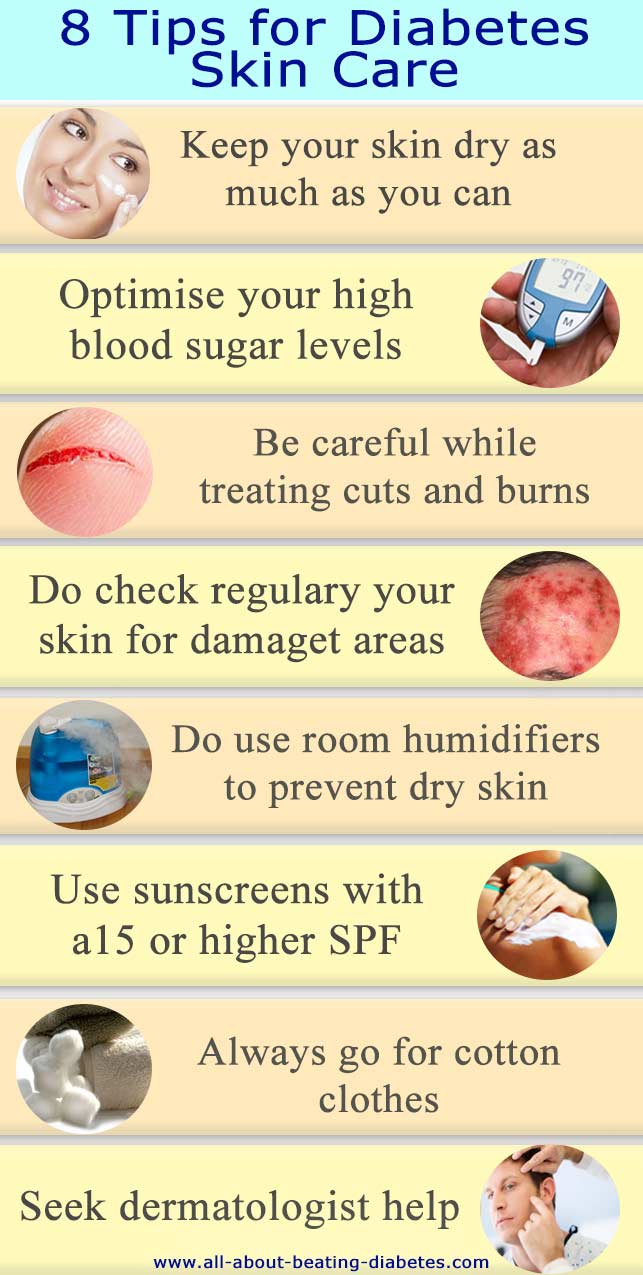
8 Diabetes Skin Care Tips for Dryness, Wounds and Infection

Written by Dr. Albana Greca Sejdini, MD, MMedSc, Family Physician
Medically reviewed by Dr. Ruden Cakoni, MD, Endocrinologist
Last reviewed: July 2026

Quick Answer

Good diabetes skin care means checking your skin and feet every day, washing gently with warm—not hot—water, applying fragrance-free moisturizer to dry areas, and keeping skin folds and the spaces between your toes dry. Clean and cover small injuries promptly, protect your skin from sun and temperature extremes, and seek help early for infection or any foot wound. Managing blood glucose within your personal target range can reduce—but not completely eliminate—skin complications.

Diabetes can affect the skin in several ways. High glucose over time may contribute to fluid loss, infection risk, changes in small blood vessels, and slower healing. Diabetes-related nerve damage may reduce sweating or prevent you from feeling a cut, blister, burn, or pressure injury. Reduced circulation can make some wounds—especially on the feet—harder to heal.

This does not mean that every dry patch or minor cut will become a severe infection or lead to amputation. That language creates unnecessary fear. The practical message is that damaged skin deserves early attention, and foot wounds need particular caution because neuropathy can hide pain.

Why Does Diabetes Affect the Skin?

The skin contains many small blood vessels and nerves, so it can reflect the effects of diabetes. Long-term high blood glucose may:

  • Pull fluid from body tissues and contribute to dry, itchy skin
  • Make bacterial and fungal infections more likely
  • Damage nerves that control sensation and sweating
  • Damage blood vessels and reduce circulation
  • Slow the immune response and wound repair

Dryness can cause itching, cracking, or bleeding. Broken skin gives germs a route into the body. Neuropathy adds another risk because an injury may not hurt. You can learn more about reduced sensation in our guide to diabetic peripheral neuropathy and foot problems.

Not every rash is caused by diabetes. Eczema, contact dermatitis, medication reactions, psoriasis, allergies, infections, circulation problems, and many other conditions can look similar. A new or persistent skin change should be diagnosed rather than treated by guesswork.

Get Medical Help Promptly

Contact a clinician promptly or seek same-day care for:

  • Any open sore, ulcer, worsening blister, or infected-looking wound on the foot
  • Spreading redness or discoloration, warmth, swelling, or increasing pain
  • Pus, cloudy drainage, a bad smell, honey-colored crusting, or red streaks
  • A cut, burn, or wound that is deep, dirty, large, or not healing
  • New black, blue, gray, or rapidly darkening skin
  • A hot, swollen foot, even when it does not hurt

Seek urgent or emergency care if these changes occur with fever, chills, confusion, rapid breathing, severe weakness, or rapidly spreading infection.

diabetes-skin-care-tips-infographic.png

1. Manage Blood Glucose and Other Health Risks

Keeping blood glucose within your personal target range can reduce the risk of infection and may support healing. It can also help protect nerves and blood vessels over time. However, glucose management does not guarantee that every skin problem will disappear, and skin care does not replace diabetes treatment.

Take medicines as prescribed and attend recommended HbA1c, blood-pressure, cholesterol, kidney, circulation, and foot checks. Smoking further reduces blood flow and slows healing, so ask for help to stop if you smoke. Our overview of diabetes complications and warning signs explains how these risks are connected.

2. Check Your Skin and Feet Every Day

Examine your skin during bathing or dressing. Pay particular attention to the feet, lower legs, hands, skin folds, injection or sensor sites, and areas rubbed by clothing, shoes, medical devices, or braces.

Look for:

  • Dryness, cracks, peeling, or bleeding
  • Cuts, scratches, burns, sores, or blisters
  • Red, purple, gray, brown, black, or otherwise changing skin color
  • Warmth, swelling, tenderness, pus, or odor
  • Itchy, moist, scaly, or ring-shaped rashes
  • New lumps, bumps, thickened skin, or nail changes

Infection-related redness may be less obvious on darker skin. Compare the suspicious area with nearby skin and look for warmth, swelling, tenderness, drainage, or a change in color or texture.

Check the tops, soles, heels, sides, nails, and spaces between your toes. Use a mirror or ask someone for help if you cannot see the bottoms of your feet. Reduced sensation means that the absence of pain does not prove the foot is safe.

3. Wash Gently—Without Overdrying

Use warm rather than hot water and a mild, fragrance-free cleanser. Long, hot baths and showers remove natural oils and can worsen dryness. For dry skin, a shower or bath of about 5–10 minutes is usually enough.

Pat rather than rub your skin with a soft, clean towel. Do not scrub dry areas with rough brushes, sponges, or abrasive products. Wash sweaty or moisture-prone areas after activity and change out of damp clothes.

For the feet, avoid prolonged soaking. Neuropathy can make it difficult to judge water temperature, so test the water with an elbow or a thermometer if sensation is reduced.

4. Moisturize Dry Skin Correctly

The old advice to keep all skin as dry as possible is incorrect. Dry, cracked skin needs moisture. Apply a fragrance-free cream or ointment shortly after bathing while the skin is still slightly damp. Creams and ointments generally retain moisture better than thin lotions.

Useful moisturizer ingredients may include glycerin, ceramides, dimethicone, hyaluronic acid, mineral oil, petrolatum, or shea butter. Choose a simple fragrance-free product if your skin is sensitive, and stop using any product that causes burning, rash, or irritation.

Moisturize dry hands after washing and apply a thin layer to the tops, bottoms, heels, and sides of dry feet. Do not apply cream between the toes unless your clinician specifically recommends it; trapped moisture can encourage fungal infection. Do not put ordinary moisturizer inside an open wound.

A clean humidifier may help when indoor air is very dry. Follow the manufacturer’s cleaning instructions so mold and bacteria do not build up.

5. Keep Toes and Skin Folds Clean and Dry

Warm, moist areas encourage yeast and fungal growth. Dry carefully between the toes and beneath skin folds, including under the breasts, abdomen, groin, and armpits. Do not rub aggressively.

Wear clean, comfortable clothing that does not trap excessive heat or rub the skin. Breathable or moisture-wicking socks and underwear may be useful. Cotton can be comfortable for some people, but no single fabric is required. Fit, moisture control, friction, temperature, and skin sensitivity matter more.

Persistent itching, scaling, odor, moisture, or rash in a fold may be fungal or bacterial and should be assessed. Do not repeatedly apply steroid, antibiotic, antifungal, or combination creams without knowing the diagnosis; the wrong product can worsen some infections or hide their appearance.

6. Clean and Cover Small Cuts Promptly

For a minor superficial cut or scrape:

  1. Wash your hands.
  2. Use gentle pressure with clean gauze if the area is bleeding.
  3. Rinse the wound with clean running water and clean the surrounding skin with mild soap.
  4. Pat the area dry and cover it with a clean sterile dressing or adhesive bandage.
  5. Change the covering daily, or sooner if it becomes wet or dirty.
  6. Check the wound every day for healing and infection.

Avoid pouring hydrogen peroxide, rubbing alcohol, or iodine into a wound because these products can irritate tissue. Use antibiotic ointment only if your clinician recommends it; some people develop allergic rashes, and antibiotics are not needed for every clean minor cut.

Do not cut corns, calluses, blisters, or dead skin yourself, and do not use acid-based corn removers on a high-risk diabetic foot. A podiatrist should manage thick calluses or recurrent pressure areas. Any foot ulcer requires professional assessment; see our guide to diabetic foot ulcers.

7. Protect Skin From Sun, Heat, Cold, and Friction

Apply a broad-spectrum, water-resistant sunscreen with SPF 30 or higher to uncovered skin when outdoors. Reapply according to the label and after swimming or heavy sweating. Add shade, a hat, sunglasses, and protective clothing.

If sensation is reduced, avoid heating pads, hot-water bottles, electric blankets directly against the skin, and walking barefoot. Test bath water carefully and protect skin from extreme cold.

Wear well-fitting shoes and clean socks or slippers—even indoors if you are at risk of foot injury. Check inside shoes for stones, rough seams, folded insoles, or other objects before putting them on. For a complete routine, read these diabetic foot-care tips.

8. Get Professional Help Early

Contact your primary-care clinician, dermatologist, wound-care team, or podiatrist when a problem is new, spreading, painful, recurrent, infected, slow to heal, or difficult to identify. Early diagnosis matters because eczema, fungal infection, cellulitis, medicine reactions, psoriasis, ulcers, and diabetes-related skin conditions require different treatments.

Ask for a foot examination at routine diabetes visits and at least annually, or more often if you have neuropathy, poor circulation, previous ulcers, deformity, kidney disease, or difficulty caring for your feet.

Common Skin Changes Associated With Diabetes

Skin Change What It May Look Like What to Do
Dry, itchy skin Rough, flaky, cracked, or itchy areas Gentle washing, fragrance-free moisturizer, and review if persistent
Bacterial infection Warmth, swelling, pain, pus, crusting, or spreading discoloration Prompt medical assessment
Fungal or yeast infection Itchy, moist, scaly rash, often in folds or between toes Keep area dry and obtain the correct diagnosis and treatment
Acanthosis nigricans Dark, thick, velvety skin, often on the neck, armpits, or groin Discuss insulin resistance and metabolic risk with your clinician
Diabetic dermopathy Round or oval brown or reddish-brown shin spots, usually painless Often harmless, but confirm the diagnosis if uncertain
Diabetic blisters Sudden, usually painless blisters on feet, legs, hands, or arms Do not pop them; protect the area and contact a clinician
Foot ulcer Open sore, drainage, callus with blood, or an area that will not heal Immediate professional assessment and pressure relief

Doctor’s Note

The skin-care rule I want patients to remember is simple: moisturize dry skin, but keep the spaces between the toes and moist skin folds dry. Check your feet daily, and do not wait for pain before showing a foot wound to a clinician—neuropathy may hide the warning signal.

Most Asked Questions

Should people with diabetes keep their skin dry?

Not everywhere. Dry skin should be moisturized to reduce cracking. Moisture-prone folds and spaces between the toes should be kept dry to reduce fungal and bacterial growth.

What moisturizer is best for diabetic dry skin?

A fragrance-free cream or ointment is a practical starting point. Products containing glycerin, ceramides, dimethicone, hyaluronic acid, mineral oil, or petrolatum may help. Avoid applying moisturizer between toes or into open wounds.

Can I use petroleum jelly?

A thin layer can help seal moisture into intact dry skin, including the tops, bottoms, sides, and heels of the feet. Do not put it between toes or into an open wound unless your wound-care clinician advises it.

Can diabetes cause itchy skin?

Yes. Dryness, poor circulation, fungal infection, kidney disease, allergy, eczema, and other conditions can cause itching. Persistent, widespread, or severe itching needs assessment rather than repeated self-treatment.

Should a small cut be left open to the air?

A clean dressing usually protects a minor cut from dirt and friction. Clean it gently, cover it, and change the dressing daily. A foot wound or a cut that worsens, drains, or fails to heal requires medical care.

Is SPF 15 enough?

Current dermatology guidance recommends broad-spectrum, water-resistant sunscreen with SPF 30 or higher, together with shade and protective clothing.

Related Questions

Related Resources

References

  1. Centers for Disease Control and Prevention. Diabetes and Your Skin.
  2. American Academy of Dermatology. Dermatologist-Recommended Skin Care for People With Diabetes.
  3. American Academy of Dermatology. Dermatologists’ Top Tips for Relieving Dry Skin.
  4. American Academy of Dermatology. Diabetes: Warning Signs That Can Appear on Your Skin.
  5. National Institute of Diabetes and Digestive and Kidney Diseases. Diabetes and Foot Problems.
  6. American Diabetes Association. Foot Complications.
Medical disclaimer: Educational only—not personal medical advice. New, worsening, infected, or slow-healing skin problems—especially on the feet—should be assessed by a qualified healthcare professional.