If your weight rose after you started insulin, you are not imagining it—and you have not failed. Insulin can contribute to weight gain, but the explanation is more complex than “insulin stores fat.” Some early gain is healthy recovery from uncontrolled diabetes, while other gain may relate to extra calories, repeated low-glucose treatment, another medicine, fluid retention, or a separate health condition.
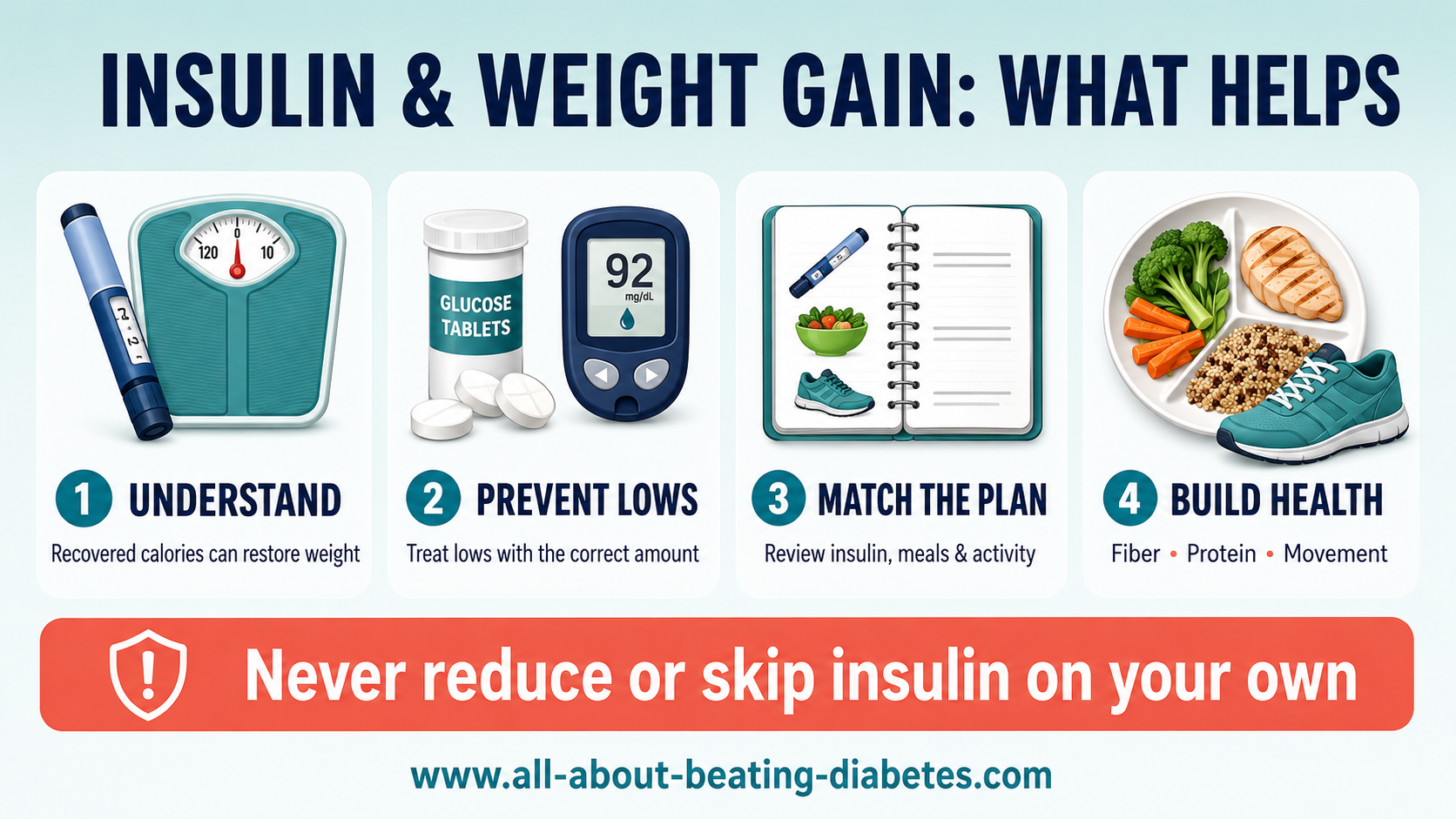

Does Insulin Cause Weight Gain?
Insulin is a hormone your body needs to use and store glucose. Without enough effective insulin, glucose remains in the blood instead of being used normally by cells. When blood glucose becomes high enough, glucose spills into the urine and carries calories and water out of the body.
Starting or intensifying insulin reverses that loss. Glucose can again be used for energy and stored for later, dehydration improves, and the body can rebuild tissue. If calorie intake stays higher than the body uses, some of that energy can be stored as body fat. This is why insulin can be associated with weight gain—but insulin is only one part of the energy balance.
Insulin does not make weight gain inevitable. The amount varies with glucose levels before treatment, insulin dose, eating pattern, physical activity, low-glucose frequency, other medicines, sleep, and individual biology.
Never Skip Insulin to Control Weight
Do not reduce, delay, or omit insulin for weight loss unless the clinician who manages your diabetes tells you exactly how to adjust it. In type 1 diabetes, too little insulin can quickly cause diabetic ketoacidosis (DKA), a life-threatening emergency. Insulin omission can also cause severe dehydration, loss of muscle, nerve and eye damage, hospitalization, and death.
If you are skipping insulin, tempted to skip it, or hiding doses because of weight or body-image concerns, tell a diabetes professional you trust. You deserve practical, nonjudgmental help.
Why Weight May Rise After Starting Insulin
1. Your body is no longer losing calories in urine
Before treatment, very high glucose may cause frequent urination, thirst, dehydration, and unintentional weight loss. Once insulin lowers glucose, those lost calories and fluids are retained. Early weight gain may therefore represent recovery toward your usual healthy weight—not a new problem created entirely by insulin.
2. Appetite may return
Uncontrolled diabetes can make some people feel ill and reduce food intake. When they feel better, normal appetite returns. Portions, snacks, sweet drinks, or calorie-dense “low-carb” products can add more energy than expected.
3. Low blood sugar is being overtreated
Insulin can cause hypoglycemia, especially when a meal is delayed, fewer carbohydrates are eaten than planned, activity increases, alcohol is involved, or the dose no longer matches current needs. Fear of a low can also lead to preventive snacking. Large portions of sweets, juice, or food used repeatedly to treat or prevent lows can meaningfully increase calorie intake.
4. The insulin plan needs refinement
A basal dose that is higher than needed, a meal dose that does not match carbohydrate intake, or a correction dose that repeatedly produces lows can create a cycle of insulin, low glucose, rescue calories, and rebound high glucose. This is a treatment-design problem—not a reason to blame yourself. A glucose log or continuous glucose monitor can help your clinician identify the pattern.
5. Your activity or daily routine changed
Illness, pain, work changes, fear of hypoglycemia, or recovery after diagnosis may reduce movement. The same food intake can then exceed current energy needs. In contrast, planned activity may improve insulin sensitivity and sometimes changes insulin needs, so it must be coordinated safely.
Insulin and Weight Gain in Type 1 Versus Type 2 Diabetes
| Situation | What weight gain may mean | Safest response |
|---|---|---|
| Newly diagnosed type 1 diabetes | Often includes rehydration and restoration of fat and muscle lost while the body lacked insulin. | Continue prescribed insulin. Review carbohydrate matching, low-glucose prevention, and the rate of change with the diabetes team. |
| Established type 1 diabetes | May reflect recurrent lows, extra snacks, changing activity, thyroid disease, life-stage changes, or a dose pattern that no longer fits. | Review continuous glucose monitor or meter data and insulin settings with a clinician; screen for other causes when appropriate. |
| Type 2 diabetes starting insulin | May include recovery from glucose loss plus the effect of insulin, food intake, insulin resistance, and other medicines. | Review the full treatment plan. In some people, a weight-beneficial non-insulin medicine can be added or prioritized. |
People with type 1 diabetes need insulin every day. Nutrition, exercise, pumps, continuous glucose monitors, and other technologies can help, but none replaces the insulin the body cannot make. People with type 2 diabetes have more medication options, although insulin remains the safest or most effective choice in some situations.
How Much Weight Gain Is Expected With Insulin?
There is no reliable number that applies to everyone. A person who lost substantial weight before diagnosis may regain more than someone whose glucose was only moderately elevated. Others gain little or no weight.
Look at the pattern rather than one scale reading:
- Did the change begin soon after glucose improved?
- Has weight stabilized, or is it continuing to rise?
- Are there frequent lows or “just in case” snacks?
- Did your insulin dose, food, activity, sleep, or another medicine change?
- Is the gain gradual, or did it appear quickly with swelling or breathlessness?
Your comfortable, health-supporting weight is individual. Body mass index can be one screening measure, but it does not describe glucose patterns, fitness, muscle mass, food quality, or your overall health.
Weight Gain in Diabetes Is Not Always From Insulin
Before assuming insulin is the only cause, your clinician may consider:
- Other diabetes medicines: sulfonylureas, meglitinides, and thiazolidinediones can promote weight gain; thiazolidinediones can also cause fluid retention.
- Other prescriptions: corticosteroids and some medicines for mood, psychosis, seizures, pain, or blood pressure can affect appetite, fluid, or weight.
- Hypothyroidism: especially when weight gain occurs with fatigue, constipation, feeling cold, or dry skin.
- Fluid retention: related to heart, kidney, liver, or medication problems rather than body fat.
- Sleep and breathing problems: poor sleep and obstructive sleep apnea can affect hunger, energy, and insulin resistance.
- Hormonal and life-stage changes: polycystic ovary syndrome, menopause, pregnancy, and some endocrine disorders may change weight or insulin needs.
- Stress, depression, pain, or reduced mobility: all can change appetite, activity, sleep, and diabetes self-care.
A simple timeline of weight, swelling, glucose, insulin, medicines, meals, and activity often reveals more than focusing on insulin alone.
Which Diabetes Medicines Can Affect Weight?
This table describes usual class effects, not a promise about an individual result. Never change medicines based only on the table.
| Medicine class | Usual weight effect | Important context |
|---|---|---|
| Insulin | May cause weight gain | Essential in type 1 diabetes and sometimes needed in type 2. Recovery weight and fewer calories lost in urine explain part of the change. |
| Sulfonylureas and meglitinides | May cause weight gain | They increase insulin release and can cause hypoglycemia, which may require extra carbohydrates. |
| Thiazolidinediones | May cause weight gain | Can cause fluid retention and may worsen heart failure in susceptible people. |
| DPP-4 inhibitors | Usually weight neutral | Low risk of hypoglycemia when used without insulin or a secretagogue; glucose-lowering effect is modest. |
| Metformin | Usually neutral or modest loss | A common type 2 diabetes medicine; kidney function, digestive effects, and vitamin B12 deserve attention. |
| SGLT2 inhibitors | Usually modest loss | Some have heart and kidney benefits in type 2 diabetes. They have important infection, dehydration, and ketoacidosis precautions. |
| GLP-1 receptor agonists and dual GIP/GLP-1 medicines | Often meaningful loss | Useful for selected people with type 2 diabetes and obesity. Gastrointestinal effects, contraindications, access, cost, and muscle preservation matter. |
How to Manage Weight Safely While Taking Insulin
- Record the pattern for one to two weeks. Note insulin doses and timing, meals, low-glucose treatments, activity, sleep, and weight trend. Include continuous glucose monitor or meter data. Do not wait to contact your clinician if severe lows, very high glucose, or ketones occur.
- Ask for an insulin and glucose-pattern review. Your clinician can look for overnight lows, meal-dose mismatch, repeated corrections, insulin stacking, exercise-related drops, or a basal dose that may be higher than current needs. A pump or smart pen may help some people, but technology still needs individualized settings.
- Build meals that satisfy you. A practical plate can include nonstarchy vegetables, a protein source, a measured high-fiber carbohydrate, and an unsaturated fat. Beans, lentils, intact whole grains, fruit, nuts, seeds, fish, yogurt, eggs, poultry, tofu, and vegetables can fit according to your preferences, culture, kidney health, and insulin plan.
- Match insulin to planned carbohydrates. Carb counting can improve flexibility, but portions and insulin-to-carbohydrate ratios need to be learned with your diabetes team. “Low-carb” does not always mean low-calorie; cheese, processed meats, butter, oils, nuts, and specialty snacks can be energy dense.
- Choose movement you can repeat. Many adults benefit from at least 150 minutes of moderate aerobic activity each week plus resistance exercise on two or three days, when medically safe. Start from your current ability, break up long sitting, and learn how activity affects your glucose before, during, and after exercise.
- Protect sleep and emotional health. Poor sleep, sleep apnea, stress, diabetes distress, depression, and eating concerns can make glucose and appetite harder to manage. These are treatable parts of diabetes care, not character flaws.
- Use qualified support. A registered dietitian nutritionist or diabetes care and education specialist can help you create a realistic calorie, carbohydrate, insulin, and activity plan without unsafe restriction.
My Clinical Note
When a patient tells me that insulin caused weight gain, I first ask what happened before treatment. Was there dehydration or unintentional loss? Are lows driving extra eating? Did another medicine change? Is the gain gradual, or is there swelling? Only then can we choose the right response. The goal is not the smallest insulin dose or the lowest number on the scale. It is enough insulin for safe glucose control, with a plan that supports strength, nutrition, cardiovascular health, and a weight that is realistic for that person.
Preventing Extra Calories From Hypoglycemia
A glucose level below 70 mg/dL (3.9 mmol/L) is considered low. For most conscious adults, the American Diabetes Association recommends taking about 15 grams of fast-acting glucose or carbohydrate and checking again after 15 minutes. Glucose is preferred because its effect is predictable. If glucose remains low, repeat treatment.
Examples that may provide about 15 grams include glucose tablets or gel according to the label, or a measured portion of regular juice or non-diet soda. Chocolate, pastries, and high-fat snacks work more slowly and make it easy to eat far more than needed.
A low is a safety event—not a dieting moment
Treat confirmed or strongly suspected hypoglycemia promptly. The aim is to measure the treatment, not to avoid it. If you are confused, unable to swallow, unconscious, or having a seizure, another person should use glucagon if available and call emergency services. Repeated lows require prompt review of insulin, food, activity, alcohol, and kidney function.
Learn more about recognizing and treating very low blood sugar and how to interpret glucose levels at different times of day.
Can a Different Medicine Help With Weight in Type 2 Diabetes?
Possibly. Current diabetes guidance recommends considering medicines that support weight goals when they are medically appropriate. GLP-1 receptor agonists and the dual GIP/GLP-1 medicine tirzepatide generally produce the greatest weight reduction among glucose-lowering medicines. SGLT2 inhibitors and metformin usually have smaller weight effects, while DPP-4 inhibitors are usually weight neutral.
For many adults with type 2 diabetes who do not have severe hyperglycemia or evidence of insulin deficiency, a GLP-1–based medicine may be considered before insulin. If insulin is already needed, a GLP-1–based medicine may sometimes be combined with it, followed by careful reassessment of insulin dosing to reduce hypoglycemia and treatment burden.
These medicines are not appropriate for everyone. Side effects, kidney and heart health, pregnancy plans, other conditions, cost, access, and personal preference all matter. SGLT2 inhibitors can cause ketoacidosis in specific circumstances and are generally not used as a substitute for insulin in type 1 diabetes. Weight-loss medicines never replace insulin in a person with type 1 diabetes.
See the broader comparison of type 2 diabetes treatments and how they work.
When Weight Gain Needs Prompt Medical Attention
Contact a healthcare professional promptly if weight rises quickly over a few days or occurs with:
- new swelling in the feet, ankles, legs, hands, or abdomen;
- shortness of breath, especially when lying down;
- chest pain, marked weakness, or reduced urination;
- repeated or severe hypoglycemia;
- persistent very high glucose, or a major change in insulin needs;
- pregnancy or suspected pregnancy, when insulin and nutrition needs may change quickly.
Seek emergency care for trouble breathing, severe chest pain, fainting, confusion, or severe hypoglycemia that cannot be treated safely.
Possible diabetic ketoacidosis
If glucose is high and you have ketones, nausea or vomiting, abdominal pain, deep or rapid breathing, fruity-smelling breath, unusual sleepiness, or confusion, follow your sick-day plan and seek urgent medical help. Do not exercise to lower glucose when ketones are present. DKA can progress quickly.
Questions to Ask Your Diabetes Clinician
- Does my weight pattern look like recovery, calorie surplus, fluid retention, or something else?
- Do my glucose records show lows or times when my insulin may not match food and activity?
- Could another medicine or a thyroid, kidney, heart, sleep, or hormonal condition be contributing?
- Would a dietitian or diabetes care and education specialist help me adjust meals without increasing lows?
- If I have type 2 diabetes, would a weight-neutral or weight-beneficial medicine be safe and useful for me?
- How should I adjust food, monitoring, and insulin around exercise?
- What ketone and sick-day plan should I follow?
Frequently Asked Questions
Does insulin always make you gain weight?
No. Insulin is associated with weight gain in some people, but the amount varies and some people gain little or none. Glucose levels before treatment, recovery from lost calories and fluid, food intake, lows, activity, other medicines, and individual biology all influence the result.
Why did I gain weight quickly after starting insulin?
If glucose was very high, early gain may include rehydration and restoration of calories and tissue lost before treatment. Rapid gain with swelling or breathlessness is different and needs prompt medical assessment for fluid retention or another health problem.
Can I lower my insulin dose to lose weight?
Not on your own. Too little insulin can cause severe hyperglycemia and DKA, particularly in type 1 diabetes. Your clinician may safely adjust insulin when glucose patterns, food, activity, weight, kidney function, or other medicines change.
Can people with type 1 diabetes lose weight safely?
Yes. The plan must preserve enough insulin, reduce hypoglycemia risk, and avoid severe calorie or carbohydrate restriction. A diabetes clinician and dietitian can coordinate insulin, food, activity, and glucose monitoring. Insulin omission is not a weight-loss method.
Does taking insulin mean my type 2 diabetes has failed?
No. Type 2 diabetes can progress as insulin production declines, and temporary insulin may also be needed during illness, surgery, pregnancy, or very high glucose. Using the treatment your body needs is not failure.
Which diabetes medicines are least likely to cause weight gain?
Metformin is usually weight neutral or causes modest loss; DPP-4 inhibitors are usually neutral; SGLT2 inhibitors often cause modest loss; and GLP-1–based medicines often produce more loss. The safest choice depends on diabetes type, heart and kidney health, side effects, contraindications, cost, and other goals.
Should I eat whenever I take insulin?
It depends on the insulin type, timing, dose, glucose, and meal plan. Rapid-acting meal insulin usually needs to match carbohydrate intake, while long-acting basal insulin works differently. Ask your clinician for exact instructions and do not add routine snacks unless your glucose pattern or plan requires them.
Can exercise reduce insulin-related weight gain?
Regular aerobic and resistance activity can support weight, fitness, insulin sensitivity, and heart health. Exercise may change insulin needs and can cause delayed lows, so monitor glucose and learn an individualized adjustment plan before increasing activity.
References
- American Diabetes Association Professional Practice Committee. Obesity and Weight Management for the Prevention and Treatment of Diabetes: Standards of Care in Diabetes—2026. Diabetes Care. 2026.
- American Diabetes Association Professional Practice Committee. Pharmacologic Approaches to Glycemic Treatment: Standards of Care in Diabetes—2026. Diabetes Care. 2026.
- American Diabetes Association Professional Practice Committee. Glycemic Goals, Hypoglycemia, and Hyperglycemic Crises: Standards of Care in Diabetes—2026. Diabetes Care. 2026.
- Mayo Clinic. Insulin and weight gain: Keep the pounds off. Updated 2026.
- Centers for Disease Control and Prevention. About Type 1 Diabetes.
- Centers for Disease Control and Prevention. Diabetic Ketoacidosis.
- Centers for Disease Control and Prevention. Treatment of Low Blood Sugar (Hypoglycemia).
- Centers for Disease Control and Prevention. Diabetes Meal Planning.
Medical disclaimer: This page is for general education and does not replace diagnosis or individualized care. Do not start, stop, or change insulin or any diabetes medicine without guidance from the clinician who manages your treatment. Emergency symptoms require urgent local medical care.