- Home
- Is Blood Sugar 125 Normal
- normal levels
What Is a Normal Blood Sugar Level? Fasting, After Eating, and A1C
Written by: Dr. Albana Greca Sejdini, MD, MMedSc
Medically reviewed by: Dr. Ruden Cakoni, MD, Endocrinologist
Last medically reviewed: July 2026
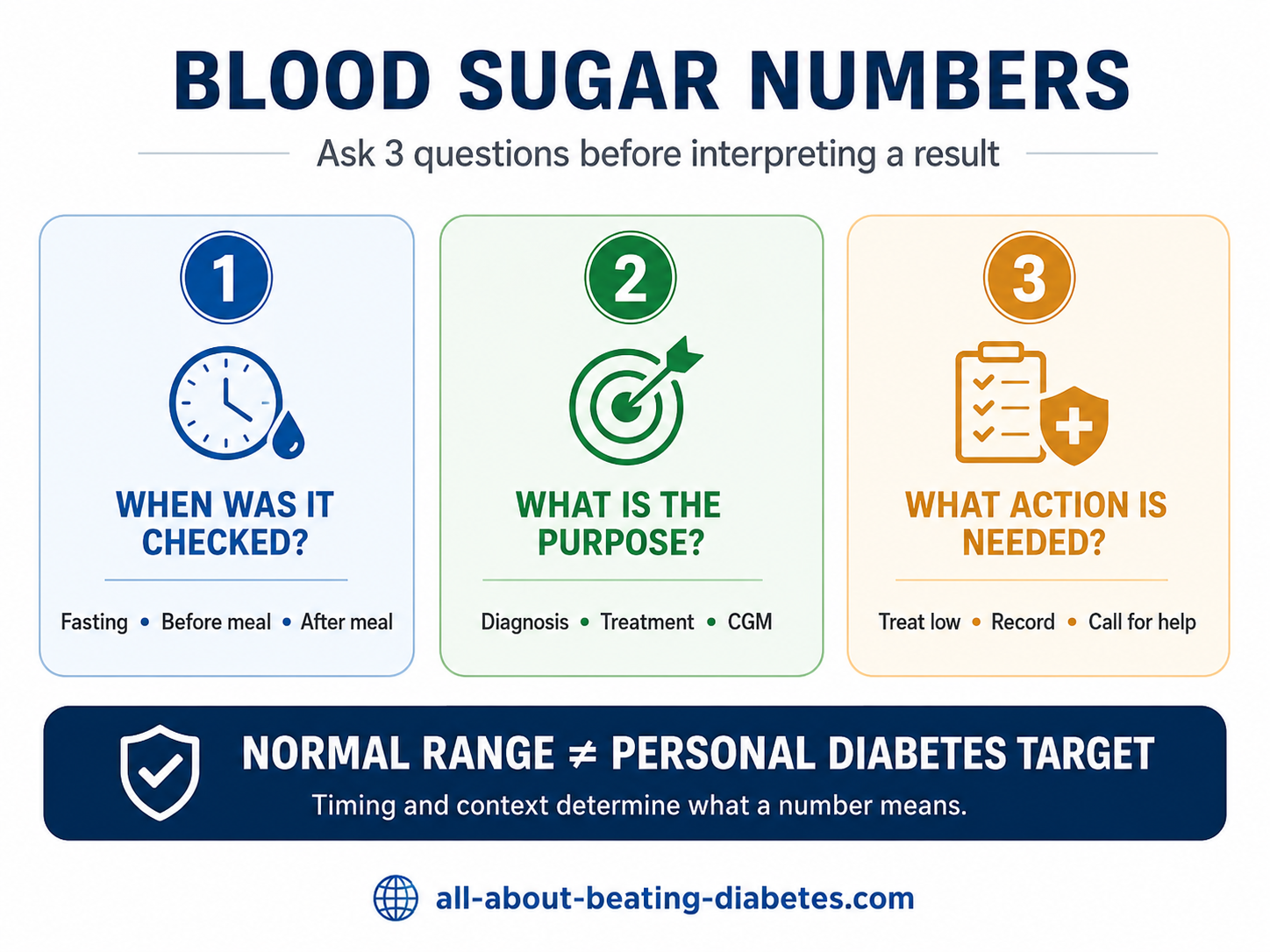
Blood sugar numbers mean different things depending on when they were measured, whether they came from a laboratory or home meter, and whether the purpose is to diagnose diabetes or manage diabetes that has already been diagnosed. There is no single “normal range” that applies to fasting, random, after-meal, A1C, oral glucose tolerance, and continuous glucose monitor readings.
“Normal,” “Prediabetes,” and “Target” Are Different Concepts
| Term | What it means | Example |
|---|---|---|
| Normal diagnostic result | A laboratory value below the threshold for prediabetes or diabetes. | Fasting plasma glucose of 92 mg/dL in a nonpregnant adult. |
| Prediabetes range | Glucose regulation is abnormal but does not yet meet diabetes criteria. | A1C of 6.0%. |
| Diabetes diagnostic threshold | A laboratory result that may establish diabetes when confirmation rules are met. | Fasting plasma glucose of 126 mg/dL or higher. |
| Personal treatment target | A goal used after diabetes is diagnosed to guide daily treatment safely. | Before-meal target of 80–130 mg/dL for many adults. |
| Action threshold | A level at which your plan tells you to treat a low, check ketones, contact the team, or seek urgent care. | Treating glucose below 70 mg/dL according to the low-glucose plan. |
People with diabetes are not expected to reproduce the diagnostic “normal” range at every moment. Trying to force glucose too low can cause hypoglycemia, especially with insulin or medicines that increase insulin release.

Normal, Prediabetes, and Diabetes Diagnostic Chart
The following values apply to laboratory testing in nonpregnant adults. Pregnancy uses different criteria.
| Test | Normal | Prediabetes | Diabetes |
|---|---|---|---|
| Fasting plasma glucose After at least 8 hours without calories |
Below 100 mg/dL Below 5.6 mmol/L |
100–125 mg/dL 5.6–6.9 mmol/L |
126 mg/dL or higher 7.0 mmol/L or higher |
| Two-hour 75-g OGTT | Below 140 mg/dL Below 7.8 mmol/L |
140–199 mg/dL 7.8–11.0 mmol/L |
200 mg/dL or higher 11.1 mmol/L or higher |
| A1C | Below 5.7% | 5.7%–6.4% | 6.5% or higher |
| Random plasma glucose | No formal normal cutoff used for diagnosis | Not used to diagnose prediabetes | 200 mg/dL or higher with classic symptoms or hyperglycemic crisis |
Without unequivocal hyperglycemia, a diabetes-range result generally requires confirmation with a repeat result or another diagnostic test. When two different tests disagree, the clinician investigates the result above the threshold and considers factors that may make one test unreliable.
A home meter or CGM can reveal an important pattern, but diagnosis should be based on appropriate laboratory testing. Read Blood Tests for Diabetes.
What Is a Normal Fasting Blood Sugar?
A fasting plasma glucose test is performed after at least eight hours without caloric intake. Water is usually allowed.
- Below 100 mg/dL: normal diagnostic range.
- 100–125 mg/dL: impaired fasting glucose, which is part of prediabetes.
- 126 mg/dL or higher: diabetes range when diagnostic confirmation requirements are met.
A fasting result is affected by sleep, illness, stress hormones, steroid medicine, alcohol, late meals, activity, dawn phenomenon, and laboratory variation.
A person can have normal fasting glucose but abnormal after-meal glucose or A1C. Conversely, a single mildly high fasting result does not prove diabetes.
See Normal Fasting Blood Sugar Levels and Why Is My Blood Sugar High in the Morning?
What Is a Normal Random Blood Sugar?
A random glucose test is taken without requiring a fasting period. Its interpretation depends strongly on the time and content of the last meal.
The old rule that random glucose should always be 80–100 mg/dL was incorrect. A result above 100 mg/dL after eating does not automatically mean prediabetes or diabetes, and a value below 80 mg/dL is not automatically hypoglycemia.
Random plasma glucose is used diagnostically when it is 200 mg/dL or higher together with classic symptoms such as excessive thirst, frequent urination, unexplained weight loss, or a hyperglycemic crisis.
A random value below 200 mg/dL does not rule out diabetes. Someone with fasting hyperglycemia or an elevated A1C may have a lower random reading at another time.
What Should Blood Sugar Be After Eating?
After-meal values must include the timing. “After lunch” is less precise than “two hours after the first bite.”
For people without diabetes
A two-hour glucose below 140 mg/dL is the normal threshold during a standardized 75-g OGTT. An ordinary meal is not standardized, so this value is a useful reference rather than a diagnostic rule for every home reading.
For many adults with diabetes
A common ADA treatment goal is below 180 mg/dL one to two hours after the beginning of the meal. This target may be lower or higher depending on pregnancy, age, hypoglycemia risk, medicines, health conditions, and the individual plan.
Post-meal readings are especially helpful when A1C remains above target despite acceptable before-meal values.
Read Blood Sugar Levels After Eating.
Oral Glucose Tolerance Test Results
The standard nonpregnancy OGTT uses 75 grams of glucose after an overnight fast. Plasma glucose is measured before the drink and two hours afterward.
- Below 140 mg/dL at two hours: normal glucose tolerance.
- 140–199 mg/dL: impaired glucose tolerance, which is prediabetes.
- 200 mg/dL or higher: diabetes range.
An ordinary breakfast or sweet drink is not interchangeable with the standardized OGTT. Pregnancy also uses different glucose loads, blood-draw times, and thresholds. See the Gestational Diabetes Test guide.
What Is a Normal A1C?
A1C estimates average glucose exposure over approximately the previous two to three months. Recent weeks contribute more to the result than the earliest part of that period.
- Below 5.7%: normal diagnostic range.
- 5.7%–6.4%: prediabetes.
- 6.5% or higher: diabetes range when confirmation requirements are met.
The old “normal A1C of 4%–6%” was too broad because 5.7%–6.0% is already within the prediabetes range. An A1C above 7% also does not automatically mean that a patient has managed diabetes badly. For many adults, below 7% is a common treatment goal, but a higher or lower target may be appropriate.
A1C and estimated average glucose
| A1C | Estimated average glucose | mmol/L equivalent |
|---|---|---|
| 5% | 97 mg/dL | 5.4 mmol/L |
| 6% | 126 mg/dL | 7.0 mmol/L |
| 6.5% | 140 mg/dL | 7.8 mmol/L |
| 7% | 154 mg/dL | 8.6 mmol/L |
| 8% | 183 mg/dL | 10.2 mmol/L |
| 9% | 212 mg/dL | 11.8 mmol/L |
| 10% | 240 mg/dL | 13.3 mmol/L |
Estimated average glucose is calculated from A1C and is not the same as the average of a few meter readings. A1C can also be misleading with altered red-blood-cell survival, anemia, recent blood loss or transfusion, pregnancy, kidney disease, hemoglobin variants, or some medicines.
Use the A1C to Average Glucose Calculator and read How A1C and eAG Are Calculated.
Common Blood Sugar Targets for Adults With Diabetes
For many nonpregnant adults, common ADA goals are:
| Measure | Common goal for many adults | Important note |
|---|---|---|
| A1C | Below 7% | May be lower or higher depending on benefit, hypoglycemia risk, health, and preferences. |
| Before meals | 80–130 mg/dL 4.4–7.2 mmol/L |
Not the same as the fasting threshold used to diagnose diabetes. |
| 1–2 hours after beginning a meal | Below 180 mg/dL Below 10.0 mmol/L |
May be targeted when A1C remains high despite acceptable pre-meal glucose. |
| Common CGM target range | 70–180 mg/dL 3.9–10.0 mmol/L |
Time in range matters, not only one sensor value. |
These are general goals, not prescriptions. Pregnancy, childhood, older age, kidney disease, cardiovascular disease, frailty, limited life expectancy, impaired hypoglycemia awareness, and treatment burden may require different goals.
See the Blood Sugar Levels by Time of Day guide.
What Is a Normal CGM Time in Range?
A CGM records interstitial glucose repeatedly throughout the day and night. It provides trend arrows, time in range, time below range, and time above range.
For many adults with type 1 or type 2 diabetes, the common target range is 70–180 mg/dL. A frequently used goal is at least 70% of readings in that range, with limited time below 70 and below 54 mg/dL.
CGM goals should be individualized. Older or high-risk patients may use less stringent time-in-range goals with a stronger priority on avoiding low glucose.
What Blood Sugar Is Too Low?
| Level | Glucose | Meaning |
|---|---|---|
| Level 1 low | Below 70 but at least 54 mg/dL Below 3.9 but at least 3.0 mmol/L |
Requires awareness and treatment according to the personal low-glucose plan. |
| Level 2 low | Below 54 mg/dL Below 3.0 mmol/L |
Clinically significant hypoglycemia requiring immediate action. |
| Level 3 severe low | No specific number required | Altered mental or physical functioning requiring help from another person. |
A glucose of 75 mg/dL is not automatically hypoglycemia, although symptoms, trend direction, recent insulin, exercise, driving, pregnancy, or a personal threshold may require action.
Read Is My Blood Sugar Too High or Too Low?
When Is High Blood Sugar Dangerous?
There is no single number that defines an emergency for every person. Urgency depends on diabetes type, pregnancy, symptoms, ketones, hydration, illness, medicines, and whether glucose is rising or improving.
Contact your diabetes team according to your plan when readings remain repeatedly above target, glucose does not improve after the prescribed correction, you are ill or cannot drink normally, ketones are present, or you use an SGLT2 inhibitor and feel unwell.
See Dangerous Blood Sugar Levels.
Why Might My Personal Targets Be Different?
Targets are individualized according to age, diabetes type and duration, pregnancy, cardiovascular or kidney disease, hypoglycemia risk, frailty, cognition, treatment burden, access to care, and personal preferences.
A tighter target may be appropriate when it can be reached safely. A less stringent target may be safer when severe hypoglycemia, frailty, multiple illnesses, or treatment burden outweighs the expected benefit.
Why Home Meter and Laboratory Results May Differ
A laboratory plasma glucose result and a home meter result are not identical measurements. Differences may result from normal device accuracy limits, unclean or wet hands, expired strips, too little blood, temperature, dehydration, rapidly changing glucose, or the delay between the two samples.
Wash and dry your hands, repeat an unexpected result, and compare the meter with a laboratory sample when your clinician recommends it. Meter and CGM readings are useful for management, but laboratory methods are used to diagnose diabetes.
mg/dL and mmol/L Conversion
mg/dL ÷ 18 = mmol/L
mmol/L × 18 = mg/dL
Use the mg/dL and mmol/L converter.
What Should You Do With an Unexpected Result?
- Confirm the timing and unit.
- Repeat a surprising home result after washing and drying your hands.
- Check symptoms and trend. Treat a low or follow urgent guidance before analyzing the number.
- Record food, insulin, medicine, activity, illness, stress, and ketones.
- Arrange laboratory testing when diagnosis is possible.
- Review repeated patterns with the healthcare team.
- Do not change insulin or medicine from one reading unless you already have a written adjustment plan.
Use the printable blood sugar chart and Excel tracker to record patterns accurately.
How to Keep Blood Sugar Near Your Target
Blood sugar management may include individualized nutrition and carbohydrate planning, physical activity, adequate sleep, weight management when appropriate, correct medicine or insulin use, and monitoring at useful times.
Lifestyle support and medication are not opposing choices. Type 1 diabetes requires insulin. Type 2 diabetes is often treated with lifestyle measures and medication together, selected according to glucose, heart, kidney, weight, and safety needs.
Herbs and supplements should not be used as a “natural alternative” before evidence-based medication. Some products interact with medicines, affect the liver or kidneys, or produce unpredictable glucose effects.
Most Asked Questions
Is 100 mg/dL a normal blood sugar?
It depends on timing. A fasting laboratory result of 100 mg/dL begins the prediabetes range. A value of 100 mg/dL after eating or before a meal in someone with diabetes may be within target.
Is blood sugar below 80 too low?
Not automatically. Hypoglycemia is generally below 70 mg/dL. A value between 70 and 79 may still require attention when glucose is falling rapidly, insulin is active, symptoms occur, or your personal plan uses a higher threshold.
Does random glucose above 100 mean prediabetes?
No. Random glucose varies after food and is not used to diagnose prediabetes. Prediabetes is identified with fasting plasma glucose, A1C, or the two-hour 75-g OGTT.
Is A1C above 7% always bad?
No. Below 7% is a common goal for many adults, but the appropriate target may be higher or lower. The result should guide a supportive treatment review, not blame.
Can I diagnose diabetes with a glucose meter?
No. A meter can reveal a concerning pattern, but diagnosis requires appropriate laboratory testing.
Why is my A1C high when my meter readings look normal?
You may be missing overnight or after-meal highs, testing at limited times, or experiencing an A1C-related condition. Compare meter or CGM data with laboratory results and review possible A1C interference.
Should blood sugar always stay between 70 and 120?
No. That range is not a universal diagnostic or treatment standard. Glucose normally changes with meals, activity, hormones, illness, and treatment.
Related Questions
- Why Is HbA1c 6.6% When Finger-Prick Readings Look Normal?
- Fasting Glucose 159 but Two-Hour Glucose 109: Am I Diabetic?
- Fasting Sugar 122 but Post-Meal Sugar 103: Is This Diabetes?
- Why Did Glucose Rise From 91 at Bedtime to 145 in the Morning?
Related Resources
- Normal Blood Sugar Level Chart
- Blood Sugar Levels by Time of Day
- Blood Tests for Diabetes
- Is My Blood Sugar Too High or Too Low?
- Dangerous Blood Sugar Levels
- Convert mg/dL and mmol/L
Medical disclaimer: This page provides general education and does not diagnose diabetes, prescribe a personal glucose target, or replace urgent medical care. Do not start, stop, or change insulin, medication, diet, or supplements based only on an online chart.
References
- American Diabetes Association: Diagnosis and Classification of Diabetes—Standards of Care in Diabetes 2026
- American Diabetes Association: Glycemic Goals, Hypoglycemia, and Hyperglycemic Crises—2026
- National Institute of Diabetes and Digestive and Kidney Diseases: Diabetes Tests and Diagnosis
- National Institute of Diabetes and Digestive and Kidney Diseases: The A1C Test and Diabetes
- Centers for Disease Control and Prevention: Diabetes Testing
- American Diabetes Association: Understanding A1C
- American Diabetes Association: A1C and Estimated Average Glucose Calculator