Quick answer
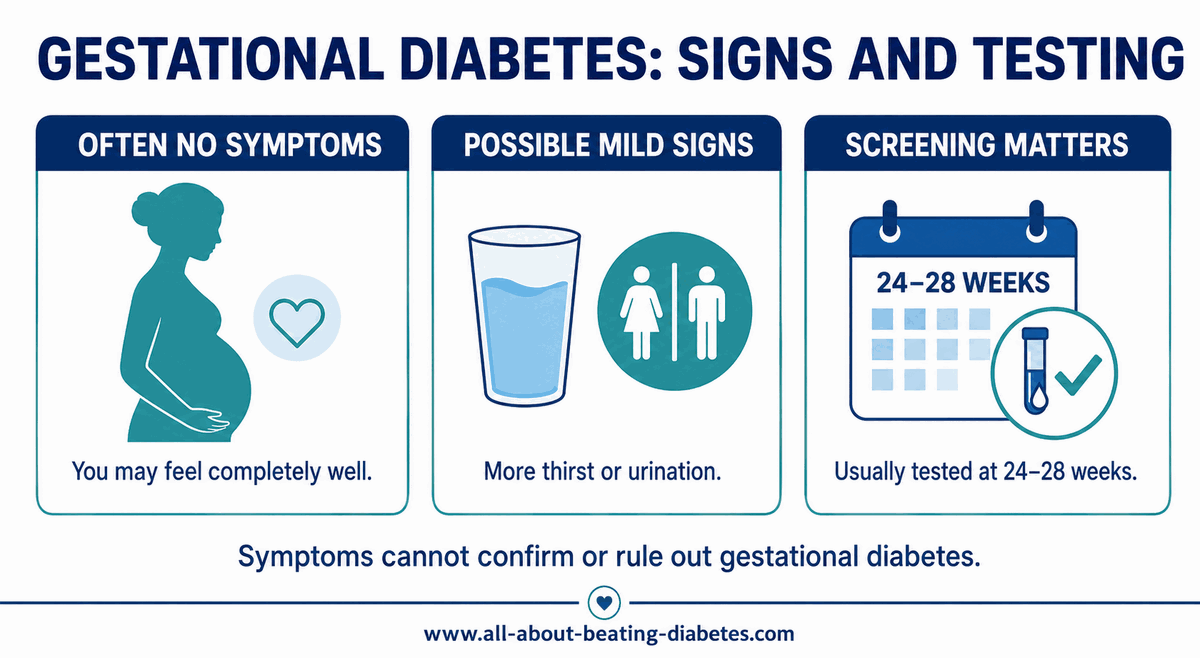
Gestational diabetes usually causes no noticeable symptoms. Some women may feel thirstier or urinate more often, but these symptoms can also occur in a normal pregnancy. You cannot confirm or rule out gestational diabetes from symptoms, weight gain, or urine glucose alone. Blood glucose screening—usually at 24–28 weeks, with earlier testing when appropriate—is the reliable way to find it.
If you are pregnant and worried about gestational diabetes, the most important fact I want you to remember is that feeling well does not rule it out. Many women are surprised by an abnormal screening result because they had no warning signs at all.
This is also why I do not want you to blame yourself. Pregnancy hormones naturally increase insulin resistance. Gestational diabetes develops when the pancreas cannot produce enough insulin to meet that increased need. It is a medical condition—not a failure of willpower.
What are the possible signs of gestational diabetes?
Most women have no symptoms. When symptoms do occur, they are usually mild and may include:
- Being thirstier than usual
- Urinating more often than expected
- Unusual tiredness
- Blurred vision
- Recurrent vaginal, bladder, or skin infections
These symptoms are not specific. Pregnancy itself can cause increased urination, tiredness, appetite changes, and changes in vision. Infection also has many possible causes. Symptoms should prompt a conversation with your prenatal clinician, but they cannot diagnose gestational diabetes.

Who has a higher chance of gestational diabetes?
Gestational diabetes can occur without an obvious risk factor. Your likelihood may be higher if you:
- Had gestational diabetes in a previous pregnancy
- Previously delivered a baby weighing more than 9 pounds (about 4.1 kg)
- Had prediabetes or previously elevated blood glucose
- Have overweight or obesity before pregnancy
- Have a parent or sibling with type 2 diabetes
- Have polycystic ovary syndrome (PCOS)
- Are older at pregnancy
- Belong to a population with a higher observed prevalence, including Asian, African American, Hispanic or Latino, American Indian, Alaska Native, Native Hawaiian, or Pacific Islander communities
Race and ethnicity do not cause gestational diabetes. These population differences reflect a mixture of genetics, environment, access to care, social conditions, and other factors. Risk factors help guide early testing; they should not be used to stereotype or decide that another pregnant woman is “safe” without screening.
When and how is gestational diabetes tested?
The ADA’s 2026 Standards recommend testing before 15 weeks for people with risk factors and considering early testing for all pregnant individuals who were not screened before conception. This early assessment looks for previously unrecognized diabetes or abnormal glucose metabolism.
If diabetes has not been found earlier, routine gestational diabetes screening is generally performed between 24 and 28 weeks. Depending on local practice, your clinician may use one of two approaches:
| Testing approach | What happens | What to remember |
|---|---|---|
| Two-step approach | A nonfasting glucose challenge test is performed first. If the result is above the local screening threshold, you return for a fasting oral glucose tolerance test. | The first test is a screen, not necessarily a diagnosis. |
| One-step approach | A fasting 75-gram oral glucose tolerance test measures glucose before and after the drink. | Pregnancy-specific diagnostic thresholds are used. |
Follow the preparation instructions exactly. Do not change your diet, fast longer than instructed, or use a home meter to diagnose yourself. Laboratories and maternity services may use different accepted protocols, so let your obstetric team interpret the result.
Can a urine glucose test diagnose gestational diabetes?
No. Glucose can appear in urine during pregnancy even when blood glucose is not in the gestational diabetes range, and urine testing can also miss abnormal blood glucose. Urine glucose may lead to further assessment, but diagnosis requires the appropriate blood test.
What happens if the test confirms gestational diabetes?
Please do not panic. With monitoring and treatment, many women with gestational diabetes have healthy pregnancies and healthy babies. Your care plan may include:
- Checking fasting and after-meal glucose at home
- An individualized pregnancy meal plan with adequate nutrition
- Physical activity considered safe by your obstetric clinician
- Appropriate pregnancy weight-gain guidance—not an unsupervised weight-loss diet
- Medication, often insulin, if lifestyle measures are not enough
- Monitoring your baby’s growth and your pregnancy health
Do not begin a restrictive diet, fasting plan, supplement, herb, or new exercise program during pregnancy without discussing it with your maternity and diabetes teams. Read more about controlling gestational diabetes safely.
Which symptoms need urgent pregnancy care?
The following are not ordinary “gestational diabetes symptoms,” but they should never be ignored during pregnancy:
If you already monitor glucose, contact your maternity or diabetes team for repeated readings outside your pregnancy targets, illness, ketones, or symptoms that do not match your meter. Do not take extra insulin unless it is part of your written treatment plan.
What happens after the baby is born?
Gestational diabetes often improves after delivery, but follow-up is still essential. The ADA recommends a 75-gram oral glucose tolerance test 4–12 weeks after delivery because fasting glucose or A1C alone may miss some cases.
If the postpartum result is normal, continue diabetes screening every 1–3 years. A history of gestational diabetes increases your future risk of type 2 diabetes and the chance of gestational diabetes in another pregnancy. Before a future pregnancy, ask for preconception glucose testing.
Frequently asked questions
Can I have gestational diabetes without symptoms?
Yes. Most women have no noticeable symptoms, which is why routine blood glucose screening is important even when you feel well.
Is frequent urination always a sign of gestational diabetes?
No. Frequent urination is common during pregnancy. When it is accompanied by unusual thirst or other concerns, tell your clinician, but only testing can determine whether gestational diabetes is present.
Is rapid weight gain a sign of gestational diabetes?
Not by itself. Pregnancy weight gain has many causes. Sudden gain with swelling, headache, vision changes, or upper abdominal pain needs prompt assessment for preeclampsia or another pregnancy complication.
Does glucose in urine mean I have gestational diabetes?
No. Pregnancy can change how the kidneys handle glucose. Urine glucose is neither sensitive nor specific enough to diagnose gestational diabetes; your clinician will use blood testing.
Can gestational diabetes be prevented?
Not always. Healthy eating, appropriate activity, and entering pregnancy at a healthier weight may lower risk for some people, but gestational diabetes can still develop. Complete the recommended testing rather than assuming prevention has worked.
Related questions from readers
- Is rapid weight gain a sign of gestational diabetes?
- Can I prevent gestational diabetes again in this pregnancy?
Related Beating Diabetes resources
- Gestational diabetes: symptoms, testing, diet, and control
- Controlling gestational diabetes
- Diabetes blood tests explained
- How to use a blood sugar log sheet
- Understanding blood sugar after eating
References
- American Diabetes Association. Diagnosis and Classification of Diabetes: Standards of Care in Diabetes—2026.
- American Diabetes Association. Management of Diabetes in Pregnancy: Standards of Care in Diabetes—2026.
- Centers for Disease Control and Prevention. Gestational Diabetes.
- National Institute of Diabetes and Digestive and Kidney Diseases. Tests and Diagnosis for Gestational Diabetes.