- Home
- Diabetes Complications
- How to Treat Fatty Liver Disease With Type 2 Diabetes
Diabetes and Fatty Liver Disease: MASLD, Fibrosis and Treatment
If you have type 2 diabetes, prediabetes, insulin resistance, or excess weight around your waist, your doctor may also think about the health of your liver. This is because diabetes and fatty liver disease often occur together—but having liver fat does not mean that permanent liver damage is inevitable.
Quick Answer
Type 2 diabetes is strongly linked with metabolic dysfunction-associated steatotic liver disease (MASLD), the newer name for what was previously called nonalcoholic fatty liver disease or NAFLD. MASLD often causes no symptoms. The main concern is not liver fat alone, but whether inflammation and scarring—called fibrosis—are developing.
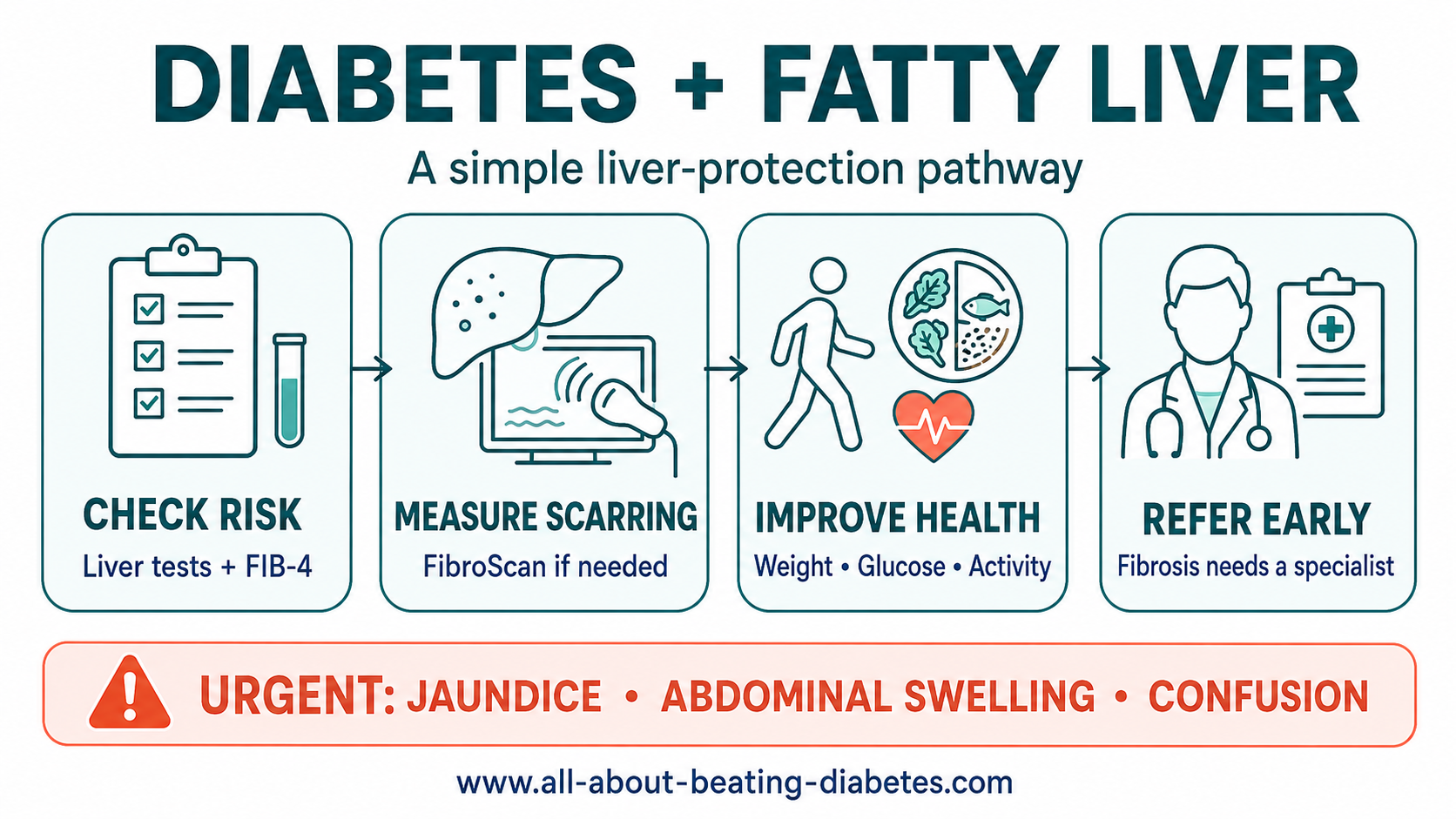
Current diabetes guidance recommends assessing fibrosis risk in adults with type 2 diabetes or prediabetes, especially when obesity or other cardiometabolic risk factors are present. A clinician can often begin with a FIB-4 score, calculated from age, AST, ALT, and platelet count. A raised or uncertain score may be followed by FibroScan, another elastography test, the ELF blood test, or specialist assessment. Normal liver enzymes do not completely rule out fibrosis.

Why Are Diabetes and Fatty Liver Connected?
Your liver helps regulate glucose, fats, and many other substances in the blood. It stores glucose after meals, releases it between meals, makes proteins, processes medicines, and helps manage cholesterol and triglycerides. However, fatty liver in diabetes is more complex than “sugar becoming trapped inside the liver.”
With insulin resistance, fat tissue releases more fatty acids into the bloodstream. The liver receives more of these fatty acids and may also make more fat from excess energy. At the same time, its ability to burn or export fat may not keep pace. Fat then accumulates inside liver cells.
This metabolic pattern is common in people with insulin resistance, type 2 diabetes, abdominal obesity, high triglycerides, and high blood pressure. It also helps explain why cholesterol and diabetes need to be managed together with liver health.
Most people with type 1 diabetes do not need automatic MASLD screening solely because they have type 1 diabetes. However, assessment may be appropriate when obesity, insulin resistance, abnormal liver tests, or other metabolic risks are also present.
MASLD, MASH, Fibrosis, and Cirrhosis
The names can feel confusing, so I explain them to my patients as a progression of findings—not a guarantee that everyone will move from one stage to the next.
| Term | What it means | Can it improve? |
|---|---|---|
| MASLD | Excess liver fat in a person with cardiometabolic risk, after other important causes are considered. | Liver fat often improves with gradual weight loss, physical activity, and better metabolic health. |
| MASH | MASLD with liver-cell injury and inflammation. This was previously called NASH. | Inflammation may improve, particularly when treatment starts before advanced scarring. |
| Fibrosis | Scar tissue has formed. Fibrosis is graded from mild to advanced. | Early fibrosis can sometimes regress. The priority is to stop or slow progression. |
| Cirrhosis | Advanced scarring has changed the structure and function of the liver. | It is often not fully reversible, but treatment and surveillance can prevent or delay serious complications. |
The amount of scarring is one of the strongest predictors of future liver complications. That is why current care focuses on finding people at risk of advanced fibrosis rather than relying only on an ultrasound report that says “fatty liver.”
Symptoms of Fatty Liver in Diabetes
MASLD is commonly silent. A person may feel well even when fibrosis is present. When symptoms occur, they may include fatigue, a vague discomfort under the right ribs, or a general feeling of being unwell. These symptoms are nonspecific and can have many other causes.
Abnormal ALT or AST levels may be the first clue, but normal results do not guarantee that the liver is free from significant scarring. For this reason, symptoms and liver-enzyme results should not be used alone to decide who needs fibrosis assessment.
Seek Urgent Medical Care
Contact urgent medical services if you develop any of the following, especially with known liver disease:
- Yellow skin or eyes (jaundice)
- New or rapidly increasing abdominal swelling
- Vomiting blood or passing black, tar-like stools
- New confusion, unusual sleepiness, or difficulty staying awake
- Severe right-upper abdominal pain with fever or repeated vomiting
- Fainting, severe weakness, breathing difficulty, or signs of shock
How Doctors Check the Liver and Fibrosis Risk
There is no single test that answers every liver question. Your clinician will usually start by reviewing your diabetes, weight, medicines, supplements, alcohol intake, family history, and any previous scans or laboratory results. Testing may also look for viral hepatitis, iron overload, autoimmune liver disease, medicine-related injury, and other causes when appropriate.
- Routine blood tests: These may include ALT, AST, alkaline phosphatase, GGT, bilirubin, albumin, platelets, and sometimes INR. The pattern matters more than one isolated value.
- FIB-4 risk calculation: FIB-4 uses age, AST, ALT, and platelet count. It helps sort people into lower, indeterminate, or higher risk for advanced fibrosis. It is a screening tool, not a final diagnosis, and age affects its interpretation.
- Elastography or ELF testing: If FIB-4 is not clearly low risk, a clinician may use vibration-controlled transient elastography—often known by the brand name FibroScan—another elastography method, or the ELF blood test.
- Specialist evaluation: A gastroenterologist or hepatologist should assess higher-risk or conflicting results, persistent liver-test abnormalities, or signs of advanced liver disease.
- Liver biopsy in selected cases: A biopsy is not needed for everyone. It may be recommended when the diagnosis is uncertain or when knowing the exact degree of inflammation and fibrosis would change treatment.
What an Ultrasound Can—and Cannot—Tell You
A standard abdominal ultrasound may show liver fat, gallstones, or structural changes. However, it does not reliably tell whether fat has caused inflammation, and it may miss or underestimate fibrosis. Elastography is designed to estimate liver stiffness and is more useful for fibrosis risk assessment.
Please do not calculate FIB-4 and diagnose yourself from one online result. The score may be less reliable in younger adults, can be affected by age and temporary illness, and needs clinical interpretation. The useful question for your appointment is: “Do I need a fibrosis risk assessment, and what should happen after my result?”
How Is Fatty Liver Treated When You Have Diabetes?
The treatment plan protects more than the liver. It should also lower the risk of heart disease, stroke, kidney disease, and diabetes complications. The right plan depends on your fibrosis stage, weight, glucose control, medicines, other medical conditions, and personal preferences.
1. Aim for Gradual, Sustainable Weight Loss if Needed
Weight loss is not required for every person, but it is one of the most effective treatments when overweight or obesity is present. Losing approximately 3% to 5% of body weight can reduce liver fat. A loss closer to 7% to 10% may be needed to improve inflammation and fibrosis in some people. These are treatment ranges, not a demand to reach a perfect number.
Rapid crash diets are not the answer. They are difficult to maintain, may cause nutritional problems, and can increase the risk of gallstones. Work with your doctor or registered dietitian if you have cirrhosis, kidney disease, use insulin, have repeated low blood sugar, or need a substantial weight change.
2. Choose a Liver- and Diabetes-Friendly Eating Pattern
A Mediterranean-style eating pattern is a practical option. Build meals around vegetables, beans, lentils, minimally processed whole grains, fish, lean proteins, nuts, seeds, and measured amounts of unsaturated oils. Reduce sugary drinks, excess fructose from sweetened products, refined carbohydrates, highly processed foods, and excess saturated fat.
There is no single “liver detox” food. A balanced diabetes eating plan that you can maintain is more useful than juice cleanses, extreme fasting, or unproven supplements.
3. Be Physically Active
Exercise can reduce liver fat and improve insulin sensitivity even before major weight loss occurs. If it is safe for you, work toward at least 150 minutes per week of moderate activity, such as brisk walking or cycling, with resistance exercise two or more days per week. Start gradually if you are inactive. Read these practical diabetes and exercise tips, and ask your doctor about restrictions if you have advanced liver disease, heart disease, foot problems, or severe retinopathy.
4. Treat the Whole Metabolic Picture
- Bring blood glucose and A1C toward your individualized target without frequent hypoglycemia.
- Treat high blood pressure and abnormal cholesterol or triglycerides.
- Ask about sleep apnea if you snore loudly, stop breathing during sleep, or feel very sleepy during the day.
- Do not smoke. Smoking adds cardiovascular and cancer risk.
- Avoid alcohol when fibrosis is significant or cirrhosis is present; otherwise ask your clinician whether any alcohol is safe for you.
- Keep vaccinations and routine diabetes complication screening up to date.
Medicines for Diabetes and MASH
No medication should be started or stopped only because an online article says it is “good for the liver.” Your diabetes and liver specialists should choose treatment together, particularly if fibrosis is present.
- GLP-1 receptor agonist treatment: Current diabetes guidance supports considering a GLP-1 medicine with demonstrated MASH benefit in appropriate adults with type 2 diabetes, MASLD, and overweight or obesity. Semaglutide has received U.S. FDA approval for adults with MASH and moderate-to-advanced fibrosis under specific prescribing criteria. Availability and approved indications differ by country.
- Pioglitazone: This may be considered for selected adults with type 2 diabetes and MASH. Possible weight gain, fluid retention, fracture risk, heart-failure concerns, and other individual factors must be reviewed.
- Resmetirom: This specialist-prescribed medicine is approved in the United States for certain adults with noncirrhotic MASH and moderate-to-advanced fibrosis. It is not a general treatment for everyone with fatty liver.
- Statins: Statins are used to reduce cardiovascular risk and are considered safe for most people with MASLD, including many with compensated cirrhosis. They do not treat MASH itself, but stopping a needed statin without medical advice can leave heart risk untreated.
- Metformin: Metformin remains an important glucose-lowering treatment for many people with type 2 diabetes, but it should not be presented as a specific medicine that reverses MASH liver tissue changes.
People with cirrhosis need specialist-directed diabetes treatment because liver function, nutrition, low-blood-sugar risk, and medication safety may change. Do not adjust insulin or diabetes tablets by yourself.
“Liver Protectors” and Supplements: Important Correction
Carsyl is a brand of silymarin or milk thistle. Current evidence does not show that silymarin reliably reverses MASH or fibrosis, and major liver guidance does not recommend it as a treatment for MASH. Transmetil, a brand of ademetionine or SAMe, is also not a guideline-standard treatment that has been proven to reverse MASLD fibrosis.
Herbal and dietary supplements can vary in strength and purity, may interact with medicines, and can themselves cause liver injury. Please show your doctor every supplement you take. Do not replace fibrosis assessment or proven treatment with a product advertised as a “detox” or “liver protector.”
Are Gallstones Part of Diabetic Fatty Liver?
Gallstones and MASLD are different conditions, although they share risk factors such as obesity, insulin resistance, and type 2 diabetes. Gallstones are not simply a second stage of fatty liver. Rapid weight loss can also raise gallstone risk.
Seek prompt medical review for persistent pain under the right ribs, especially after meals, or pain with fever, vomiting, jaundice, pale stools, or dark urine. An ultrasound may be used to look at the gallbladder and bile ducts.
What Happens if Cirrhosis Is Found?
Cirrhosis is serious, but there are still many useful steps. A liver specialist can look for the cause, prevent further injury, review medicines and nutrition, and arrange surveillance for complications. Depending on the situation, this may include screening for liver cancer, enlarged veins in the esophagus, fluid retention, bone disease, and changes in mental function.
People with compensated cirrhosis may have few symptoms and live for years with careful treatment. Decompensated cirrhosis—marked by ascites, bleeding, jaundice, or confusion—needs urgent specialist care and may require evaluation at a transplant center.
Doctor’s Note
When I speak with a patient who has diabetes and an ultrasound showing fatty liver, I do not want that person to panic—but I also do not want us to stop at the ultrasound. The next useful question is whether there is fibrosis. A simple blood-based risk calculation can often identify who needs more testing.
The encouraging message is that liver fat, inflammation, and even some early fibrosis can improve. Protecting your liver means improving the complete metabolic picture and choosing evidence-based follow-up—not blaming yourself and not relying on an unproven “liver protector.”
Frequently Asked Questions
Can fatty liver from diabetes be reversed?
Liver fat often decreases with gradual weight loss, physical activity, improved glucose control, and treatment of metabolic risks. Inflammation and some early fibrosis may also improve. Advanced cirrhosis is less likely to reverse fully, but treatment can still slow progression and prevent complications.
Can I have liver fibrosis with normal ALT and AST?
Yes. Normal liver enzymes do not completely exclude significant fibrosis, especially in people with type 2 diabetes. This is why current guidance uses fibrosis risk tools such as FIB-4 rather than relying only on ALT and AST being “normal.”
What is a FIB-4 test?
FIB-4 is a calculation using your age, AST, ALT, and platelet count. It estimates the chance of advanced fibrosis and helps decide whether elastography or specialist review is needed. It is not a direct measurement of liver fat and does not diagnose cirrhosis by itself.
What is the difference between MASLD and MASH?
MASLD describes excess liver fat associated with cardiometabolic risk after other important causes are considered. MASH is the more active form, with liver-cell injury and inflammation. Fibrosis may occur with MASH and is the feature doctors most want to identify early.
Does metformin cure fatty liver?
No. Metformin can be very useful for glucose management in type 2 diabetes, but it is not considered a specific treatment that reverses MASH tissue changes. Continue it if prescribed unless your clinician advises otherwise.
Are statins dangerous when I have fatty liver?
For most people with MASLD, statins are considered safe and are important for lowering cardiovascular risk when indicated. They are not a treatment for MASH itself. Do not stop a statin because of a fatty-liver report without discussing your laboratory results and overall risk with your clinician.
Should I take milk thistle, Carsyl, or another liver detox?
These products have not been proven to reverse MASH or fibrosis, and supplement quality can vary. Some supplements interact with medicines or cause liver injury. Ask your clinician or pharmacist to review any product before you use it.
How often should my liver be checked?
The interval depends on your FIB-4 result, age, diabetes status, liver tests, and other risks. Lower-risk patients may be reassessed periodically, while indeterminate or high-risk results need earlier elastography or specialist follow-up. Your clinician should set the schedule rather than repeating ultrasound automatically.
Related Questions and Resources
Medical References
- American Diabetes Association. Standards of Care in Diabetes—2026: Comprehensive Medical Evaluation and Assessment of Comorbidities.
- EASL–EASD–EASO Clinical Practice Guidelines on the Management of MASLD, 2024.
- National Institute of Diabetes and Digestive and Kidney Diseases. Diagnosis of NAFLD and NASH.
- National Institute of Diabetes and Digestive and Kidney Diseases. Treatment for NAFLD and NASH.
- AASLD Practice Guidance on the Clinical Assessment and Management of NAFLD.
- U.S. Food and Drug Administration. FDA approves resmetirom for certain patients with liver scarring due to fatty liver disease.
- U.S. Food and Drug Administration. FDA approves semaglutide treatment for adults with MASH under specific criteria.
- National Center for Complementary and Integrative Health. Milk Thistle: Usefulness and Safety.
- National Institute of Diabetes and Digestive and Kidney Diseases. Symptoms and Causes of Cirrhosis.
Medical disclaimer: This page is for general patient education only and does not replace personal medical advice, diagnosis, or treatment. Do not start, stop, or change diabetes medicine, liver medicine, insulin, herbs, or supplements without speaking with your healthcare professional. Seek urgent care for jaundice, abdominal swelling, vomiting blood, black stools, new confusion, severe illness, or other emergency symptoms.