- Home
- Natural Remedies for Diabetes
- Gymnema Sylvestre for Diabetes Benefits Dosage and Safety
Gymnema Sylvestre for Diabetes: Benefits, Evidence, Dosage, and Safety
Gymnema sylvestre is a traditional herbal supplement that may support blood sugar management, but the clinical evidence remains limited and it should not replace prescribed diabetes treatment. This guide reviews its potential benefits, research findings, typical dosages, possible side effects, and important safety considerations.
Written by Dr. Albana Greca, MD, MMedSc, Family Physician
Medically reviewed by Dr. Ruden Cakoni, MD, Endocrinologist
Last reviewed: July 2026
Quick Answer
Gymnema sylvestre is an herbal supplement traditionally used in Ayurvedic medicine. Small human studies and meta-analyses suggest that some Gymnema extracts may modestly improve fasting glucose, after-meal glucose, HbA1c, or blood lipids in people with type 2 diabetes or impaired glucose tolerance.
However, the evidence is limited by small studies, inconsistent products, different doses, high variation between results, and incomplete long-term safety data. Gymnema is not an approved diabetes treatment, has not been proven to regenerate pancreatic beta cells in people, and must never replace insulin in type 1 diabetes or prescribed medicine in type 2 diabetes.
Gymnema sylvestre is a climbing plant native to parts of Asia, Africa, and Australia. Its Hindi name, gurmar, is often translated as “sugar destroyer” because chewing the leaves can temporarily reduce the perception of sweetness.
Traditional use and laboratory research have made Gymnema popular in diabetes supplements. Yet traditional use does not establish clinical effectiveness, and a product sold as “natural” can still affect glucose, interact with medicines, vary in strength, or cause adverse effects.
What Current Research Shows · Gymnema and Type 1 Diabetes · How Gymnema May Work · Sweet Taste and Cravings · Weight and Cholesterol · Dosage · Side Effects and Safety · Product Quality
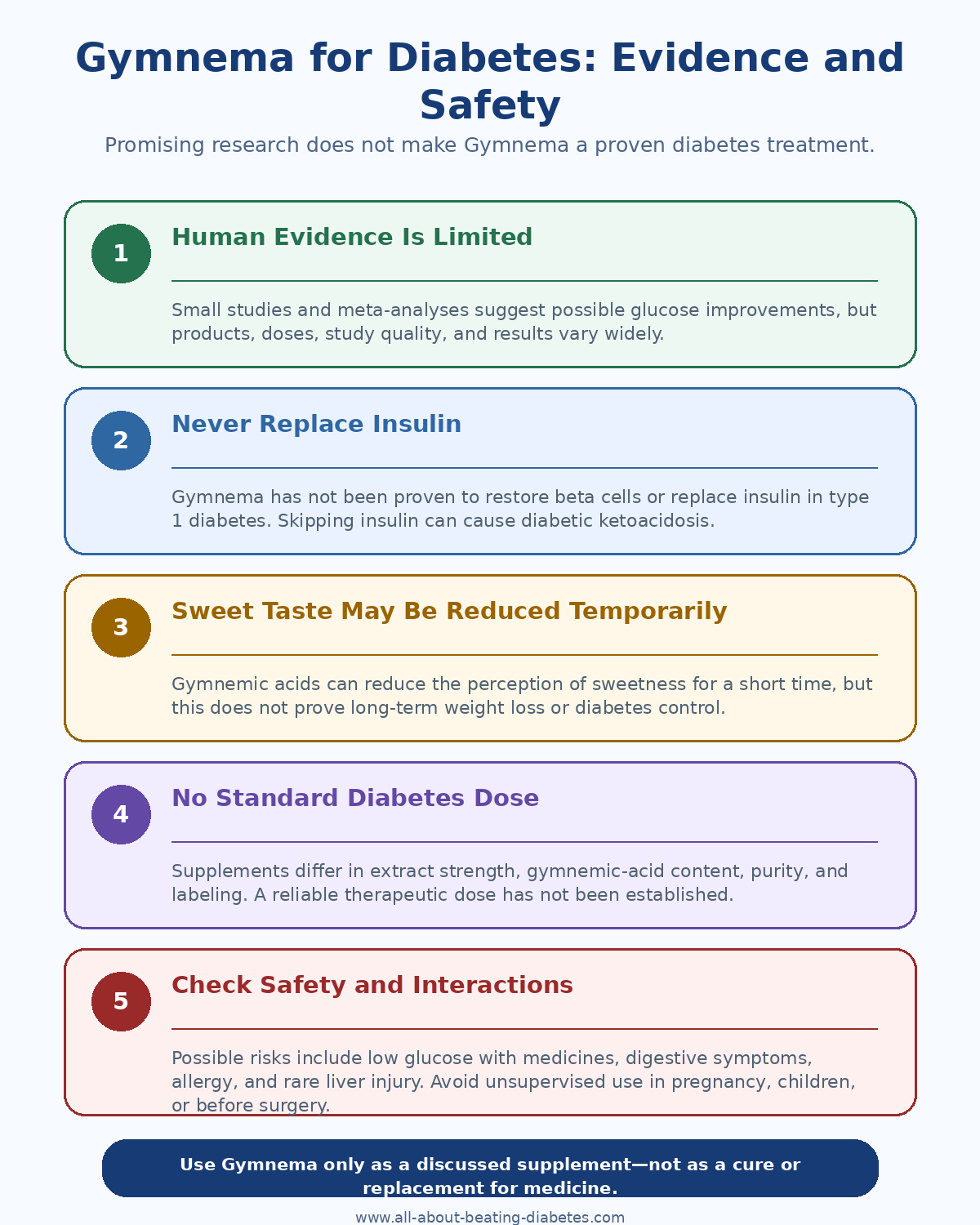

Does Gymnema Sylvestre Lower Blood Sugar?
It may lower glucose in some people, but the strength and reliability of the effect remain uncertain.
A 2021 systematic review and meta-analysis included 10 studies with 419 participants with type 2 diabetes. The pooled results suggested improvements in fasting glucose, after-meal glucose, HbA1c, triglycerides, and total cholesterol. However, the studies differed substantially in design, duration, preparation, baseline treatment, and outcome, and statistical heterogeneity was high.
A 2023 systematic review also reported improvements in several cardiometabolic measures, but again included different preparations and study designs. These findings support further research; they do not establish a standardized product, dose, or role in routine diabetes care.
One small randomized double-blind trial studied 30 people with impaired glucose tolerance. Half received 300 mg of a particular Gymnema preparation twice daily and half received placebo. Some glucose and metabolic measures improved. A study of 30 people is useful as preliminary evidence, but it is not enough to prescribe the same dose broadly or assume all commercial Gymnema products are equivalent.
How to interpret the evidence: Gymnema may have a glucose-lowering effect, but the expected benefit for an individual is unpredictable and long-term clinical outcomes—such as prevention of kidney disease, heart attack, stroke, vision loss, or amputation—have not been established.
For treatments with established benefits and risks, see our current guide to diabetes medications.
Can Gymnema Replace or Reduce Insulin in Type 1 Diabetes?
No. Gymnema sylvestre must never be used to replace insulin in type 1 diabetes.
Claims that Gymnema may regenerate pancreatic beta cells or reduce insulin requirements are based mainly on animal research and older, limited human studies. There is no reliable clinical evidence that it restores insulin-producing beta-cell function in people with autoimmune type 1 diabetes.
People with type 1 diabetes require insulin to survive. Reducing, delaying, or stopping insulin because of an herbal supplement can cause severe hyperglycemia, ketone accumulation, and potentially life-threatening diabetic ketoacidosis.
Gymnema may also increase the risk of hypoglycemia when taken with insulin or other glucose-lowering treatments. Any insulin adjustment should be based on documented glucose patterns and made only with guidance from the diabetes care team.
How Might Gymnema Work?
Gymnema leaves contain more than 50 identified constituents. The best-known are gymnemic acids, a group of triterpene saponins. Proposed effects include:
- Temporary blocking of sweet-taste receptors on the tongue
- Possible reduction in intestinal glucose absorption
- Possible effects on carbohydrate-digesting enzymes
- Possible stimulation of insulin secretion in laboratory systems
- Possible effects on glucose uptake and lipid metabolism
- Antioxidant or anti-inflammatory activity in laboratory and animal models
These mechanisms are biologically interesting, but laboratory and animal findings cannot be assumed to produce the same benefit in humans. Extract composition, concentration, absorption, metabolism, dose, and safety differ substantially.
Does Gymnema regenerate beta cells?
Animal studies have reported changes in beta-cell mass or insulin secretion with certain extracts. There is no high-quality clinical evidence that Gymnema regenerates beta cells or reverses autoimmune destruction in people with type 1 diabetes.
In type 2 diabetes, beta-cell function can sometimes improve when glucose toxicity, weight, or metabolic stress improves. That does not prove that an herb created new beta cells.
Does Gymnema Reduce Sugar Cravings?
Gymnemic acids can bind to sweet-taste receptors and temporarily reduce the sweetness of foods and drinks. Controlled studies of Gymnema-containing lozenges or interventions have found reduced pleasantness or intake of sweet foods in some participants.
The effect is temporary and does not remove carbohydrate, calories, or glucose from food. A sweet food may taste less sweet but still raise blood glucose.
This taste effect may help some people pause before eating sweets, but it has not been proven to create sustained weight loss or long-term diabetes control. Cravings are also influenced by hunger, sleep, stress, habits, medications, food environment, and restrictive dieting.
Can Gymnema Help With Weight or Cholesterol?
Some studies and pooled analyses report reductions in triglycerides, total cholesterol, LDL cholesterol, body weight, or waist measurements. Other analyses have found no clear benefit for several of these outcomes.
The available evidence does not justify combining Gymnema automatically with calcium, chromium, copper, magnesium, manganese, banaba, bitter melon, black cumin, green tea extract, or alpha-lipoic acid. Multi-ingredient products make it difficult to know which ingredient caused a benefit or adverse effect and can increase the risks of:
- Hypoglycemia
- Liver injury
- Kidney injury
- Medication interactions
- Excess intake of vitamins or minerals
- Contamination or undeclared ingredients
Weight management should rely on a sustainable nutrition, activity, sleep, behavioral, and medical plan. Our diet for insulin resistance provides a safer evidence-based framework.
What Is the Correct Gymnema Dosage?
There is no established therapeutic dose of Gymnema for diabetes.
Research has used different preparations, including:
- Leaf powder
- Water-soluble extracts
- Standardized extracts with different gymnemic-acid concentrations
- Capsules, tablets, teas, gums, and lozenges
- Single-ingredient and multi-ingredient products
Study doses have varied widely. A milligram amount from one product cannot be safely transferred to another because extracts may contain different concentrations and compounds. The old recommendation not to exceed 300 mg daily was not supported as a universal maximum, while some studies used more. Neither fact establishes a safe personal dose.
The NIDDK LiverTox review notes that commercial products vary greatly in purity and concentration and that long-term safety has not been adequately documented. Therefore, a label’s suggested dose is not proof that the product is effective or appropriate for diabetes.
Questions to review before considering Gymnema
- Which exact product and extract is being considered?
- Is the gymnemic-acid content stated?
- Has the product undergone independent quality testing?
- Do you use insulin, sulfonylureas, meglitinides, or other glucose-lowering medicines?
- Do you have liver, kidney, gallbladder, or gastrointestinal disease?
- Are you pregnant, breastfeeding, under 18, or preparing for surgery?
- How will glucose and adverse effects be monitored?
- What is the planned trial period, and when will it be stopped if there is no benefit?
Gymnema Side Effects and Interactions
Short studies have often reported few adverse effects, but this does not prove long-term safety. Possible effects include:
- Nausea
- Abdominal discomfort
- Diarrhea
- Headache
- Rash or allergic reaction
- Low blood glucose when combined with diabetes treatment
- Possible liver injury in rare cases
Hypoglycemia
Gymnema may add to the effects of insulin or medicines that stimulate insulin release, including sulfonylureas and meglitinides. Symptoms of hypoglycemia can include shaking, sweating, hunger, palpitations, dizziness, confusion, weakness, seizure, or unconsciousness.
Do not respond by reducing prescribed medicine independently. Discuss monitoring and dose safety before starting the supplement. Review our guide to high and low blood sugar.
Liver injury
Rare case reports have linked Gymnema-containing herbal products with clinically apparent liver injury. The evidence is limited, and contamination or other ingredients may sometimes contribute, but the possibility should not be ignored.
Stop the product and seek prompt medical assessment for:
- Yellow skin or eyes
- Dark urine
- Pale stools
- Persistent nausea or vomiting
- Severe itching
- Right-upper abdominal pain
- Marked fatigue or loss of appetite
Surgery and fasting
A supplement that changes glucose could complicate fasting, anesthesia, and postoperative glucose management. Tell the surgical and anesthesia teams about Gymnema and all other supplements. The clinician may advise stopping it before the procedure.
Pregnancy and breastfeeding
There is not enough reliable safety information to recommend Gymnema during pregnancy or breastfeeding. Pregnancy diabetes care requires treatments with established maternal and fetal safety.
Children and adolescents
Gymnema should not be used to treat childhood diabetes without a pediatric diabetes specialist. It cannot replace insulin in children with type 1 diabetes, and growth and nutrition make unsupervised supplements particularly inappropriate.
Important Safety Note
Do not use Gymnema to treat diabetic ketoacidosis, severe hyperglycemia, severe hypoglycemia, or an acute illness. Never skip insulin in type 1 diabetes.
Call emergency services for unconsciousness, seizure, severe breathing difficulty, facial or throat swelling, or severe hypoglycemia when the person cannot swallow.
How to Evaluate a Gymnema Supplement
Dietary supplements are not standardized like prescription medicines. Two bottles labeled “Gymnema sylvestre” may contain different extracts and concentrations.
Product-quality checklist
- Choose a single-ingredient product rather than a large proprietary blend when possible.
- Look for the full plant name and plant part used.
- Check whether the extract and gymnemic-acid standardization are stated.
- Avoid products promising a cure, insulin replacement, or guaranteed weight loss.
- Prefer independent quality certification from a recognized testing organization.
- Check the expiration date, lot number, manufacturer, and contact information.
- Avoid buying from sellers that make pharmaceutical claims without reliable evidence.
- Record the exact product so adverse effects or glucose changes can be evaluated.
Independent certification can improve confidence that the product contains what the label states, but it does not prove that Gymnema works for diabetes.
Is Gymnema Better Than Lifestyle or Medication?
No reliable evidence shows that Gymnema is better than medical nutrition therapy, regular physical activity, weight management, metformin, SGLT2 inhibitors, GLP-1–based therapy, insulin, or other established treatments.
Healthy behaviors and medicines have defined clinical roles and are selected according to glucose, cardiovascular disease, heart failure, kidney disease, weight, hypoglycemia risk, cost, and patient preferences. Gymnema does not have proven cardiovascular, kidney, or mortality benefits.
Review our broader diabetes supplements evidence and safety guide before using an herbal product.
Doctor’s Note
Gymnema is an example of a supplement with biologically plausible effects and some encouraging small studies, but insufficient evidence for routine treatment. I would never advise a person with type 1 diabetes to reduce insulin because of Gymnema. For type 2 diabetes, I first review the exact product, medicines, kidney and liver health, hypoglycemia risk, and what measurable outcome the patient expects.
Most Asked Questions
Can Gymnema cure diabetes?
No. Gymnema has not been shown to cure type 1 or type 2 diabetes. Type 2 diabetes may enter remission in some people, but that is not the same as an herbal cure.
Can Gymnema replace insulin?
No. Insulin is essential in type 1 diabetes. Gymnema has not been proven to regenerate enough human beta cells to replace insulin.
How much Gymnema should I take?
There is no established diabetes dose. Products differ in extract strength, standardization, purity, and recommended serving. A study dose cannot automatically be applied to a commercial product.
Does Gymnema reduce sugar cravings?
Gymnemic acids can temporarily reduce sweet taste, which may reduce the appeal or intake of a sweet food in the short term. Long-term control of cravings or weight has not been established.
Can Gymnema cause low blood sugar?
Possibly, particularly when combined with insulin, sulfonylureas, meglitinides, or several glucose-lowering supplements. Monitoring and clinician review are important.
Is Gymnema safe for the liver?
Most short studies have not identified major liver problems, but rare liver-injury reports exist and long-term safety is incomplete. Stop and seek care for jaundice, dark urine, severe nausea, or marked fatigue.
Can Gymnema be combined with bitter melon, cinnamon, or chromium?
Combining several glucose-lowering supplements can increase uncertainty, hypoglycemia risk, interactions, and product-quality problems. Do not combine them without professional review.
Educational safety note: This page does not recommend a Gymnema product or dose. Do not start Gymnema, reduce insulin, or change diabetes medicine without reviewing your glucose pattern, medicines, kidney and liver function, pregnancy status, and treatment goals with a healthcare professional.
Related Questions
- Can Herbs and Vitamins Control My Blood Sugar?
- Can Bitter Melon and Cinnamon Be Taken Together?
- Are Herbal Supplements Safe for Prediabetes?
Related Resources
- Diabetes and Supplements: Evidence and Safety
- Diabetes Herbs: Benefits, Limitations, and Risks
- Bitter Melon and Diabetes
- Cinnamon and Blood Sugar
- Fenugreek for Diabetes
- Garlic and Diabetes
- Vitamins and Minerals for Diabetes
References
- National Center for Complementary and Integrative Health. Diabetes and Dietary Supplements: What You Need to Know.
- Devangan S, et al. Gymnema sylvestre Supplementation and Glycemic Control in Type 2 Diabetes: Systematic Review and Meta-analysis. 2021.
- Zamani M, et al. Effects of Gymnema sylvestre on Lipids, Glycemic Control, Blood Pressure, and Anthropometric Measures: Systematic Review and Meta-analysis. 2023.
- Martínez LAG, et al. Gymnema sylvestre in Patients With Impaired Glucose Tolerance: Randomized Double-Blind Placebo-Controlled Trial. 2021.
- NIDDK LiverTox. Gymnema. Updated October 2024.
- Shiyovich A, et al. Toxic Hepatitis Induced by Gymnema sylvestre: Case Report. 2010.
- Turner S, et al. A 14-Day Gymnema-Based Intervention and Sweet-Food Intake. 2022.
- American Diabetes Association. Facilitating Positive Health Behaviors and Well-being: Standards of Care in Diabetes—2026.
- American Diabetes Association. Pharmacologic Approaches to Glycemic Treatment: Standards of Care in Diabetes—2026.