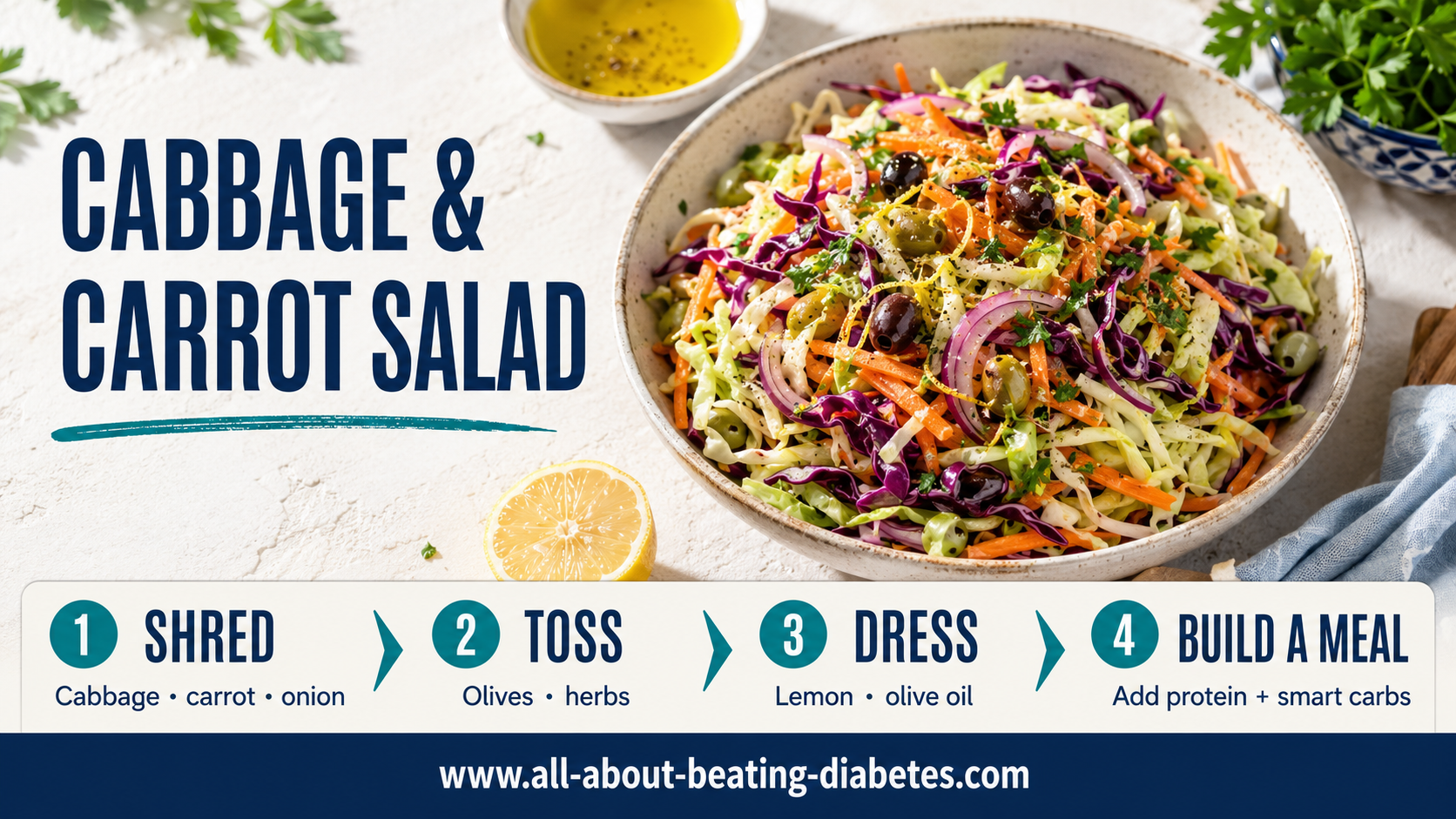
This crisp cabbage and carrot salad can be a useful nonstarchy-vegetable side for many people with diabetes. One serving of the recipe below has approximately 7 grams of total carbohydrate and 2 grams of fiber. Pair it with protein and, if desired, a measured portion of a higher-fiber carbohydrate to make a balanced meal.
The salad itself does not treat or cure diabetes. Portion size, the rest of the meal, medicines, activity, and your individual response all affect blood glucose.
I enjoy this salad because it is colorful, inexpensive, and easy to prepare without a sugary bottled dressing. I have standardized the original handfuls and fractions of large cabbages into cup measurements so you can repeat the recipe and estimate its carbohydrate content more consistently.
Why This Salad Can Fit a Diabetes Meal Plan
Cabbage, carrot, and onion provide volume and fiber for relatively few calories. The olive oil adds unsaturated fat, while lemon juice brings acidity and flavor without added sugar. Cabbage and carrots are commonly grouped with nonstarchy vegetables in practical diabetes meal planning.
That does not make the bowl “free” food. Carrots and onions contain carbohydrate, olive oil is calorie-dense, and olives may add considerable sodium. The practical approach is to use a measured serving and consider the entire meal. If you want more help with meal structure, see my guides to the plate method and a balanced diabetes diet and the glycemic index of foods.
Mixed Cabbage and Carrot Salad Recipe
Prep time15 minutes
Yield6 side servings
ServingAbout 1 cup
Ingredients
3 cups finely shredded green or white cabbage
2 cups finely shredded red cabbage
2 medium carrots, peeled if preferred and shredded
1/2 small red onion, thinly sliced or finely chopped
1/4 cup sliced olives, about 8–10 whole olives
2 tablespoons extra-virgin olive oil
2 tablespoons fresh lemon juice
Black pepper to taste
Optional: chopped parsley, dill, or mint
Optional: a small pinch of salt
Method
Prepare safely. Wash your hands. Rinse the whole vegetables under cool running water—do not use soap—and dry them before cutting. Remove any damaged outer cabbage leaves.
Shred the cabbage. Slice the green and red cabbage very finely with a sharp knife, mandoline, or food processor. Use the guard supplied with a mandoline.
Prepare the remaining vegetables. Shred the carrots, thinly slice or chop the onion, and slice the olives if they are whole.
Make the dressing. Whisk the olive oil, lemon juice, black pepper, and optional herbs in a small bowl.
Toss and rest. Combine everything in a large bowl. Toss well, then let the salad rest for 10 minutes so the cabbage softens slightly. Taste before adding any salt because olives are already salty.
Serve. Divide into six side portions of about 1 cup each. Add protein and an appropriate carbohydrate portion if serving as a meal.
How to Turn the Salad Into a Balanced Meal
This recipe is mainly the vegetable part of a meal. A simple plate can look like this:
Half the plateThis cabbage and carrot salad or other nonstarchy vegetables.
One quarterLean protein such as fish, chicken, eggs, tofu, beans, or lentils.
One quarterA measured high-fiber carbohydrate such as beans, lentils, brown rice, quinoa, or whole-grain bread.
Beans and lentils contribute both protein and carbohydrate, so their portion should be counted in the way your diabetes care team recommends. Water or an unsweetened drink is usually the simplest choice. The carbohydrate counter may help you estimate the rest of your meal, but personal targets vary.
Estimated Nutrition per Serving
Nutrient
Approximate amount per 1-cup serving
Calories
75
Total carbohydrate
7 g
Fiber
2 g
Protein
1 g
Total fat
5 g
Sodium
Varies substantially with the olives and added salt
Important: These are recipe estimates, not laboratory values. The size of the vegetables, olive brand, amount of dressing left in the bowl, and your actual serving can change the result. Check product labels and use your own measurements if you count carbohydrate precisely for insulin dosing.
Apple Cider Vinegar Cabbage Salad Variation
For a tangier dressing, replace the lemon juice with 2 tablespoons of apple cider vinegar. Whisk it with 1–2 tablespoons of olive oil, black pepper, herbs, and 1 teaspoon of Dijon mustard if desired. If the dressing is too sharp, you may add 1 teaspoon of honey to the whole six-serving bowl, rather than the 2 tablespoons in the older version of this recipe.
Small studies and reviews suggest vinegar may reduce the glucose rise after some meals, but the evidence is variable and does not make vinegar a diabetes treatment. Use it for flavor, not as a substitute for medication, glucose monitoring, or an individualized eating plan.
Vinegar safety: Keep vinegar diluted in food. Do not drink it straight because acidity can irritate the throat and damage tooth enamel. Ask your clinician before using vinegar routinely if you have gastroparesis, reflux, kidney disease, low potassium, swallowing problems, or medicines that may interact with it.
Useful Substitutions and Special Considerations
Lower sodium
Choose lower-sodium olives, rinse them, use fewer, or leave them out. Flavor the salad with lemon, pepper, parsley, dill, mint, or garlic instead of extra salt.
Sensitive stomach
Use less onion, massage the cabbage with the dressing, and allow it to soften. Raw cabbage may cause gas or bloating for some people.
Kidney concerns
Potassium and sodium needs depend on your kidney function and medicines. A renal dietitian can help adjust the vegetables, olives, salt, and serving size.
Food Safety and Storage
Rinse produce under running water; do not wash vegetables with soap or detergent.
Use a clean knife, cutting board, and bowl.
Refrigerate the prepared salad promptly and do not leave it at room temperature for more than 2 hours—or more than 1 hour when the temperature is above 90°F/32°C.
Store covered at 40°F/4°C or colder and use within 3–4 days. The cabbage stays crispest when the dressing is stored separately.
Discard the salad if it develops an unusual odor, mold, or a slimy texture.
Doctor’s Note
In my practice, I encourage patients to look beyond labels such as “diabetic food.” A dependable meal is built from sensible portions, plenty of vegetables, adequate protein, and carbohydrate that matches the person’s treatment plan. If you use mealtime insulin, do not guess your dose from the nutrition estimate on this page—use your prescribed insulin-to-carbohydrate plan.
Frequently Asked Questions
Can people with diabetes eat cabbage and carrots?
Yes. Both can fit a diabetes meal plan. Cabbage is a nonstarchy vegetable, and the amount of carrot in one serving of this recipe is modest. Count the total carbohydrate in the entire meal rather than judging one ingredient alone.
Is this a complete meal?
No. It is primarily a vegetable side. Add a source of protein and, if appropriate for your plan, a measured portion of high-fiber carbohydrate.
Does carrot contain too much sugar for diabetes?
Carrots contain natural carbohydrate, but they do not need to be automatically avoided. Portion size, preparation, and the rest of the meal matter. This recipe uses two carrots across six servings.
Can I leave out the olive oil?
Yes. You can reduce it or leave it out, although the salad will taste sharper and the nutrition estimate will change. Unsweetened yogurt or a smaller amount of tahini can also make a creamy dressing, but those ingredients add their own calories and carbohydrate.
Will apple cider vinegar lower my blood sugar?
Some trials report a smaller glucose response with vinegar, but results are not consistent enough to use it as treatment. Never replace diabetes medicine with vinegar, and do not drink it undiluted.
How can I see how this salad affects me?
If your clinician recommends home monitoring, compare glucose readings at consistent times before and after similar meals. Change one factor at a time and record the serving size, dressing, other foods, activity, and medicines. Discuss repeated high or low readings with your diabetes care team.
Medical disclaimer: This page is for education and general meal-planning support. It does not replace personalized medical or nutrition advice. Speak with your doctor or registered dietitian before making major dietary changes, especially if you use insulin or medicines that can cause low blood sugar, are pregnant, or have kidney disease, gastroparesis, food allergies, or another condition requiring a special diet.