- Home
- Vitamins and Supplements for Diabetes
- Best Herbs for Diabetes Blood Sugar Backed By Scientific Evidence
Diabetic Herbs: What May Help Blood Sugar and What to Use With Caution?
Many herbs are promoted as natural ways to lower blood sugar, but the scientific evidence varies widely. Some may have modest benefits in certain people, while others have little evidence or may interact with diabetes medications. This guide reviews commonly used diabetic herbs, what research shows, their safety, and when caution is needed.
Written by: Dr. Albana Greca, MD, MMedSc, Family Physician and Medical Author.
Medically reviewed by: Dr. Ruden Cakoni, MD, Endocrinologist.
Last reviewed: July 2026.
Quick Answer
No herb has been proven to cure diabetes or replace insulin or prescribed diabetes medicine. Fenugreek, cinnamon, bitter melon, Gymnema, garlic, and several other herbs have been studied, but the evidence is usually limited, mixed, or based on small and inconsistent trials.
The main safety concerns are low blood sugar when herbs are combined with insulin or medicines such as sulfonylureas, medication interactions, liver or kidney effects, bleeding risk, pregnancy risks, and uncertain product quality. Using an herb in ordinary food amounts is generally different from taking a concentrated capsule, extract, powder, or strong tea.
Many people with diabetes are interested in herbs because they want additional support for blood sugar, cholesterol, digestion, inflammation, or general health. This interest is understandable, and some traditional plants contain compounds worth studying.
However, the term “natural” does not guarantee that a product is effective, pure, or safe. Herbal supplements may contain a much higher dose than food, may vary between brands, and may interact with diabetes, blood-pressure, cholesterol, blood-thinning, thyroid, liver, or kidney medicines.
Can Herbs Treat Diabetes?
Herbs may have small effects on glucose in some people, but current evidence does not support using them as substitutes for proven diabetes care. The National Center for Complementary and Integrative Health notes that research on many supplements promoted for diabetes is limited in size, duration, and quality.
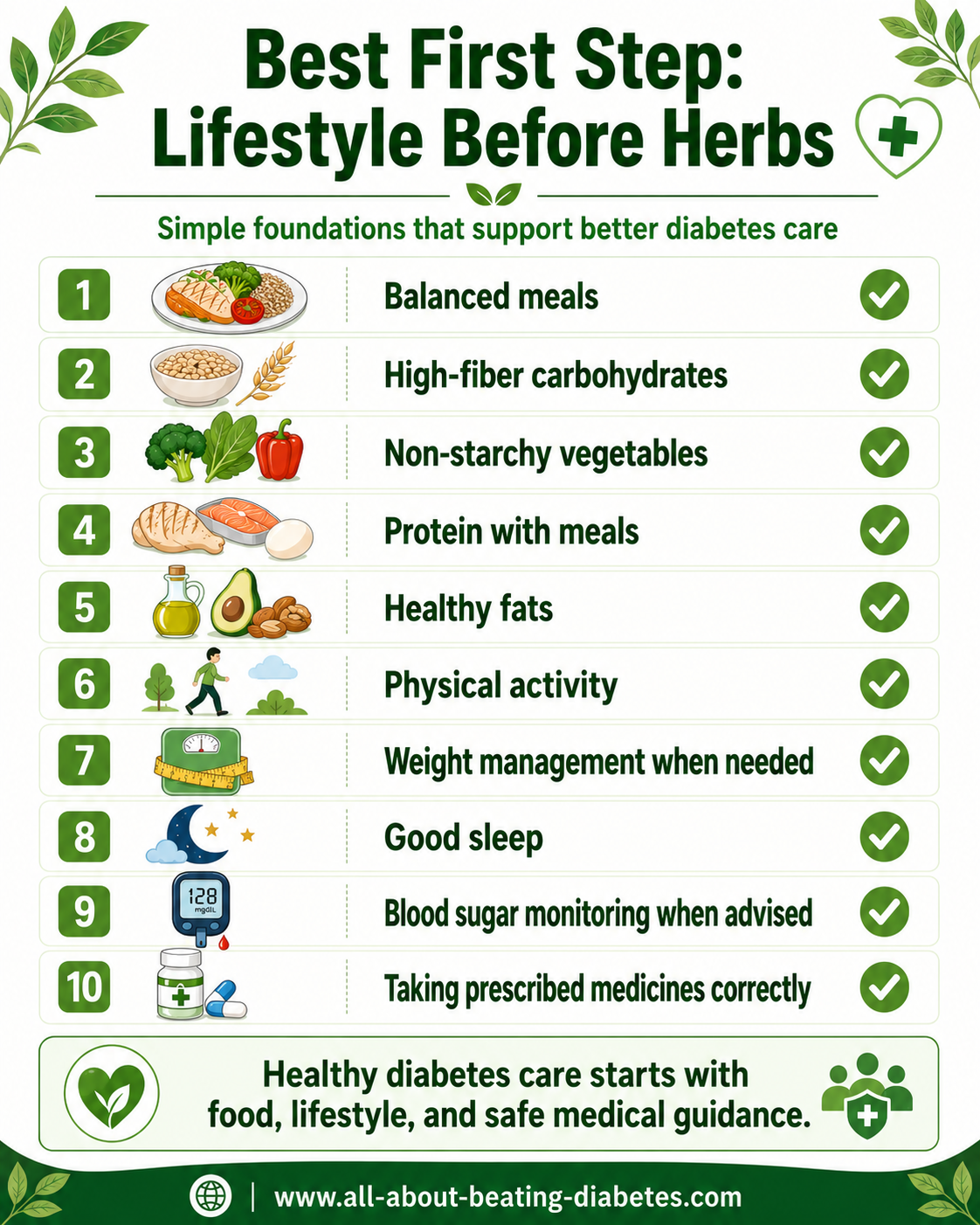
The foundation of diabetes care remains individualized nutrition, regular physical activity when safe, healthy weight management when appropriate, glucose monitoring, HbA1c testing, complication screening, and prescribed medication when needed. Our broader guide to diabetes supplements, benefits, and safety explains how supplements fit into this plan.
Diabetic Herbs: Evidence and Main Cautions
| Herb | What the evidence suggests | Important cautions |
|---|---|---|
| Fenugreek | Some studies suggest modest glucose effects, but evidence quality and products vary. | Digestive upset, allergy, low glucose at high doses, pregnancy caution, medication interactions. |
| Gymnema | Early studies are interesting, but there is not enough reliable human evidence to call it a treatment. | May add to glucose-lowering medicines; product strength and purity vary. |
| Bitter melon | May influence glucose, but trials are too inconsistent to replace standard care. | Low glucose, digestive effects, pregnancy concerns, possible risk with G6PD deficiency. |
| Cinnamon | Results for fasting glucose and HbA1c are mixed; benefit remains uncertain. | Cassia cinnamon contains coumarin; caution with liver disease, blood thinners, surgery, and concentrated supplements. |
| Bay leaf | Human evidence for diabetes treatment is limited. | Cooking amounts differ from strong tea or extract; concentrated products may interact with treatment. |
| Bilberry | Not proven to treat blood sugar or diabetic eye disease. | Supplement doses may affect bleeding risk or interact with medicines. |
| Garlic | May have modest cardiovascular or metabolic effects, but it is not a diabetes treatment. | Bleeding risk, stomach upset, surgery and anticoagulant cautions. |
| Yarrow | Mostly traditional and experimental evidence; not proven for diabetes. | Pregnancy, breastfeeding, ragweed-family allergy, blood thinners, and surgery. |
| Guggul | Studied more for lipids than glucose; clinical benefit remains uncertain. | Possible thyroid, liver, bleeding, hormone, and drug-interaction concerns. |
| Juniper berry | Insufficient evidence for blood-sugar control. | Kidney irritation concerns, pregnancy avoidance, and medication interactions. |
Fenugreek for Diabetes
Fenugreek seeds contain soluble fiber and plant compounds that may slow carbohydrate digestion. Some trials report modest improvements in glucose measures, but study methods, doses, and products differ considerably. NCCIH concludes that there is not enough high-quality evidence to determine whether fenugreek is useful for diabetes.
Food amounts are different from concentrated powders and capsules. Larger amounts may cause diarrhea, nausea, gas, allergic reactions, or a harmful fall in glucose. Fenugreek in amounts greater than those normally found in food should be avoided during pregnancy unless the obstetric clinician specifically approves it.
Read the full review of fenugreek for diabetes, evidence, and safety.
Gymnema Sylvestre for Diabetes
Gymnema is used in traditional medicine and is often promoted for sugar cravings and glucose control. Laboratory, animal, and small human studies have explored several possible mechanisms, but they do not prove that Gymnema regenerates pancreatic beta cells, reverses diabetes, or safely replaces medication in people.
Gymnema may add to the effects of insulin or glucose-lowering tablets. Product concentration may differ widely, making a universal safe dose impossible to recommend. Anyone considering it should first review the product and medication list with a clinician or pharmacist.
See our detailed discussion of Gymnema Sylvestre for diabetes.
Bitter Melon for Diabetes
Bitter melon is eaten as a vegetable in some cultures and is also sold as juice, powder, and capsules. Some studies suggest glucose-lowering activity, but the clinical evidence is not consistent or strong enough to recommend it as diabetes treatment.
Concentrated bitter melon may cause gastrointestinal symptoms and may increase the risk of low blood sugar when combined with insulin or diabetes tablets. Pregnancy and G6PD deficiency require particular caution. Eating a traditional food portion is not equivalent to taking a high-dose extract.
Learn more from our guide to bitter melon and diabetes safety.
Cinnamon and Blood Sugar
Cinnamon may be used freely as a flavoring in many balanced meals. Research on cinnamon capsules for diabetes has produced mixed results, and NCCIH states that it remains unclear whether supplementation is helpful for diabetes or weight loss.
Cassia cinnamon can contain substantial coumarin, which may be a concern for the liver when concentrated products are taken regularly. Extra caution is appropriate with liver disease, blood-thinning medicine, planned surgery, pregnancy, and multiple glucose-lowering products.
Compare the evidence in cinnamon and blood sugar and our broader cinnamon and diabetes safety guide.
Bay Leaf and Bilberry
Bay leaf is commonly used for flavoring. Evidence does not support strong bay-leaf tea or extract as a substitute for diabetes treatment. Whole bay leaves should normally be removed before eating because they remain stiff and can be difficult to swallow.
Bilberry contains anthocyanins, but supplements have not been proven to treat diabetic eye disease or reliably lower glucose. A person taking an anticoagulant or antiplatelet drug should discuss bilberry supplements with a pharmacist or clinician.
Read more about bay leaves for diabetes and bilberry and blood sugar.
Garlic, Yarrow, Guggul, and Juniper Berry
Garlic: Ordinary culinary garlic can be part of a healthy eating pattern. Concentrated garlic supplements may cause heartburn or stomach upset and may increase bleeding risk, particularly with anticoagulants or before surgery. See garlic and diabetes.
Yarrow: Yarrow should be considered a traditional herb rather than a proven glucose treatment. Avoid casual use during pregnancy or breastfeeding, with ragweed-family allergy, around surgery, or with blood-thinning medicine. See yarrow for diabetes and safety.
Guggul: Guggul has been promoted for cholesterol, but evidence does not establish it as reliable diabetes or cardiovascular treatment. It may affect thyroid function, liver tests, hormones, and several medicines. See guggul and diabetes.
Juniper berry: Juniper is not proven to lower blood sugar safely and may irritate the kidneys. It is particularly unsuitable for casual supplement use during pregnancy or with kidney disease. See juniper berry and diabetes precautions.
Food Herbs Versus Capsules, Extracts, and Strong Teas
Using cinnamon, garlic, fenugreek leaves, or bay leaf in ordinary cooking is not the same as taking a concentrated product every day. Supplements may provide many times the culinary amount and may contain several ingredients.
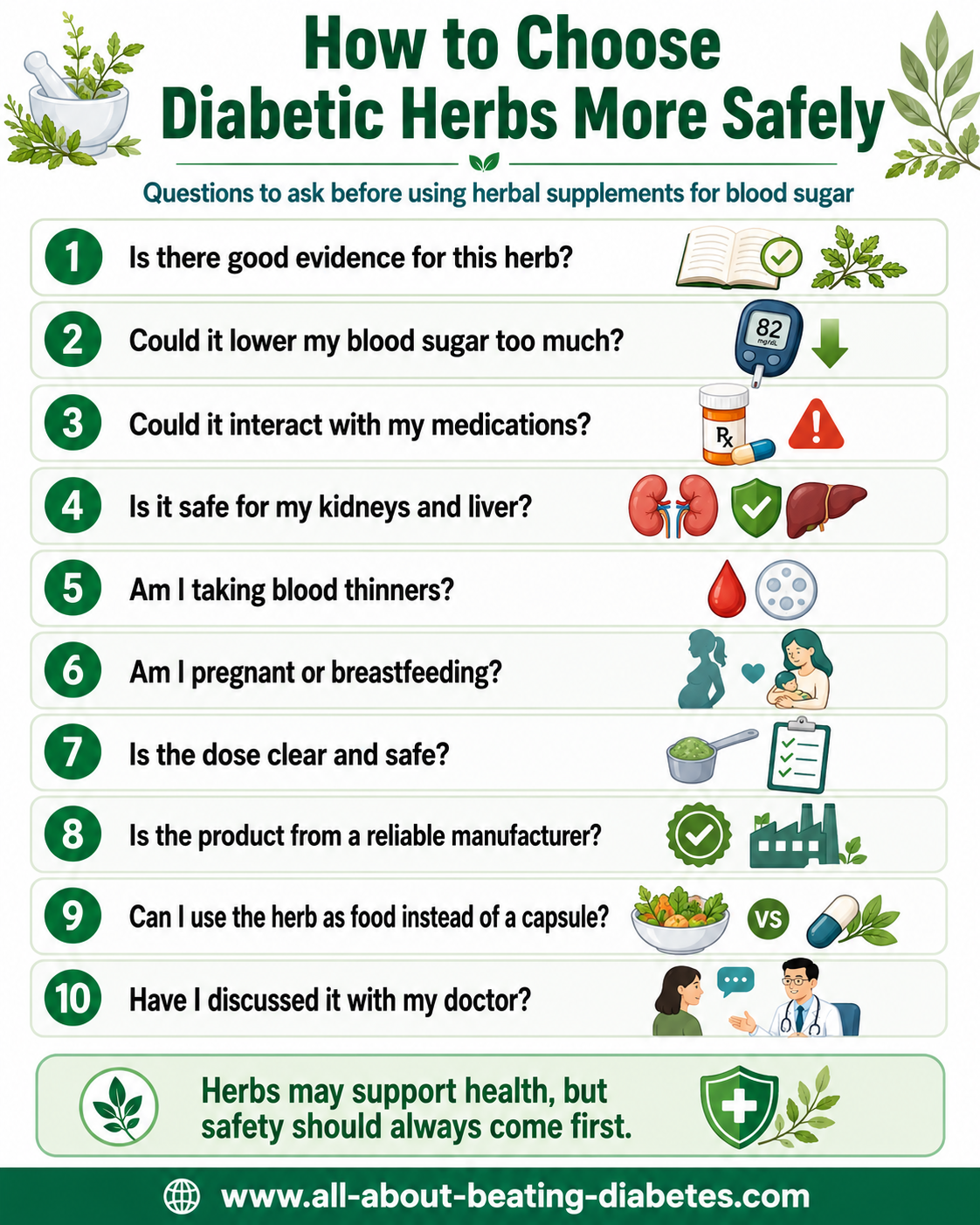
Before buying a product, check:
- The complete ingredient list and amount per serving
- Whether it contains a single herb or a multi-ingredient “glucose support” blend
- Whether an independent organization has tested identity and contamination
- Warnings for pregnancy, surgery, liver disease, kidney disease, and allergies
- Potential interactions with every prescription and over-the-counter medicine you take
- Whether the manufacturer promises to cure diabetes, replace insulin, or regenerate beta cells
A cure claim, “natural insulin” claim, or advice to stop medicine is a major warning sign.
Which Diabetes Medicines Need the Most Caution?
The risk of true hypoglycemia is greatest when a glucose-lowering herb is combined with insulin, sulfonylureas such as gliclazide, glipizide, or glyburide, or meglitinides. Metformin, GLP-1 receptor agonists, DPP-4 inhibitors, and SGLT2 inhibitors have a lower risk of causing hypoglycemia when used alone, but supplements may still complicate glucose patterns, dehydration, stomach symptoms, liver or kidney safety, and medication management.
Do not reduce medicine because a supplement appears to lower your readings. Medication changes should be based on a reviewed glucose pattern and made by the prescribing clinician.
Signs That Blood Sugar May Be Too Low
- Shaking, sweating, hunger, or fast heartbeat
- Dizziness, weakness, headache, or blurred vision
- Irritability, confusion, unusual behavior, or poor coordination
- Seizure, unconsciousness, or inability to swallow safely
For many people with diabetes, glucose below 70 mg/dL is low and should be treated promptly according to the personal hypoglycemia plan. A level below 54 mg/dL is clinically significant. Our guide to high and low blood sugar explains when urgent help is needed.
Important Safety Note
Do not start a concentrated herb or supplement without professional review if you use insulin or sulfonylureas, are pregnant or breastfeeding, are preparing for surgery, have kidney or liver disease, have frequent low glucose, take blood thinners, or use several medicines.
Seek emergency help for severe confusion, seizure, unconsciousness, inability to swallow, severe allergic symptoms, repeated low glucose that does not respond to treatment, persistent vomiting, jaundice, dark urine, severe abdominal pain, or another serious reaction.
Doctor’s Note
When a patient asks me about a diabetes herb, I first review the exact product, dose, reason for taking it, glucose pattern, kidney and liver function, pregnancy status, and full medication list. Using one product at a time is safer than starting several ingredients together, but even one supplement should not replace a proven treatment plan.
Most Asked Questions
Which herb is best for lowering blood sugar?
No herb can be named the “best” treatment because the evidence is inconsistent and safety depends on the individual. Some herbs show small effects in studies, but none should replace prescribed treatment.
Can herbs cure type 2 diabetes?
No. Type 2 diabetes may sometimes enter remission after substantial and sustained metabolic improvement, but an herbal product is not a proven cure.
Can herbs replace insulin in type 1 diabetes?
No. People with type 1 diabetes require insulin. Replacing insulin with herbs can cause diabetic ketoacidosis and death.
Is it safe to combine several blood-sugar herbs?
Combining products makes effects, side effects, and interactions harder to predict. Bitter melon, cinnamon, fenugreek, Gymnema, and other products should not be combined automatically.
How long should I try an herb before checking HbA1c?
HbA1c usually reflects approximately the previous two to three months. Do not delay medical treatment or wait several months with persistently high readings simply to test whether an herb works.
Educational safety note: This article is for general diabetes education only. It does not replace personal medical advice, diagnosis, treatment, or medication review. Do not start, stop, or change insulin, diabetes medicines, blood thinners, steroids, herbs, supplements, diet, or exercise without speaking with your healthcare professional.
Related Questions
- Can Bitter Melon and Cinnamon Capsules Be Taken Together?
- Is Berberine Safe and Effective for Type 2 Diabetes?
- When Does Low Blood Sugar Need Emergency Care?
- Is Blood Sugar of 196 mg/dL Two Hours After Eating High?
Related Resources
- Diabetes Supplements: Benefits, Limits, and Safety
- Herbs for Diabetes: Evidence and Safety
- Diabetes Drug Safety and Side Effects
- Diabetes Medications: Benefits and Risks
- Blood Sugar Log Sheet
References
- National Center for Complementary and Integrative Health. Diabetes and Dietary Supplements: What You Need To Know.
- National Center for Complementary and Integrative Health. Fenugreek: Usefulness and Safety.
- National Center for Complementary and Integrative Health. Cinnamon: Usefulness and Safety.
- NIH Office of Dietary Supplements. Dietary Supplements: What You Need to Know.
- Basch E, Gabardi S, Ulbricht C. Bitter Melon: A Review of Efficacy and Safety.
- Jirapure K, et al. Antidiabetics Interactions With Herbs: A Review.