- Home
- Best diabetes diet
- Best Diet for Diabetes and High Cholesterol With Meal Plan
Diabetes and High Cholesterol Diet: Foods, Meal Plan, and Heart-Healthy Tips
Written by: Dr. Albana Greca Sejdini, MD, MMedSc
Medically reviewed by: Dr. Ruden Cakoni, MD, Endocrinologist
Last medically reviewed: July 2026
A cholesterol-friendly diabetes diet must do more than remove fatty foods. It should help manage LDL and non-HDL cholesterol, triglycerides, blood glucose, blood pressure, weight, kidney health, and overall cardiovascular risk without becoming unnecessarily restrictive.
Why High Cholesterol Matters When You Have Diabetes
Diabetes increases cardiovascular risk through several pathways, including glucose-related blood-vessel injury, inflammation, high blood pressure, kidney disease, smoking, and abnormal lipoproteins. Many people with insulin resistance or type 2 diabetes have a pattern sometimes called diabetic dyslipidemia:
- high triglycerides;
- low HDL cholesterol;
- LDL particles that may be smaller and more atherogenic, even when the measured LDL concentration is not extremely high;
- elevated non-HDL cholesterol or apolipoprotein B.
High cholesterol is not limited to people with obesity or poorly controlled diabetes. Genetics, age, thyroid disease, kidney disease, liver disease, menopause, medicines, and inherited lipid disorders can also contribute.
Diet is one important part of treatment, but it cannot change every cause. A person with familial hypercholesterolemia or established cardiovascular disease may need intensive medication even with an excellent diet.

What Do LDL, HDL, Triglycerides, and Non-HDL Mean?
| Measurement | What it represents | Why it matters |
|---|---|---|
| LDL cholesterol | Cholesterol carried mainly in low-density lipoproteins | A major treatment target because LDL-containing particles contribute to plaque formation. |
| HDL cholesterol | Cholesterol carried in high-density lipoproteins | A low value may mark higher risk, but raising HDL with food or medicine does not automatically reduce events. |
| Triglycerides | A circulating form of fat influenced by energy balance, glucose, alcohol, genetics, and medicines | High values often accompany insulin resistance; very high values can increase pancreatitis risk. |
| Non-HDL cholesterol | Total cholesterol minus HDL | Includes cholesterol carried in multiple atherogenic particles and can be useful when triglycerides are elevated. |
| Apolipoprotein B | A marker of the number of atherogenic lipoprotein particles | May add information when LDL, triglycerides, metabolic syndrome, or treatment response is difficult to interpret. |
Your LDL goal is not determined by diet alone. It depends on age, established heart or vascular disease, kidney disease, smoking, blood pressure, diabetes duration, and overall cardiovascular risk. Some high-risk patients need LDL below 70 mg/dL, while people with established atherosclerotic cardiovascular disease may need an even lower goal.
Read LDL Cholesterol and Diabetes.
What Is the Best Diet Pattern for Diabetes and High Cholesterol?
There is no single menu that is best for everyone. The most useful patterns share several features:
- mostly minimally processed plant foods;
- plenty of nonstarchy vegetables;
- beans, lentils, chickpeas, or other legumes regularly;
- whole grains in portions matched to glucose needs;
- nuts and seeds in measured portions;
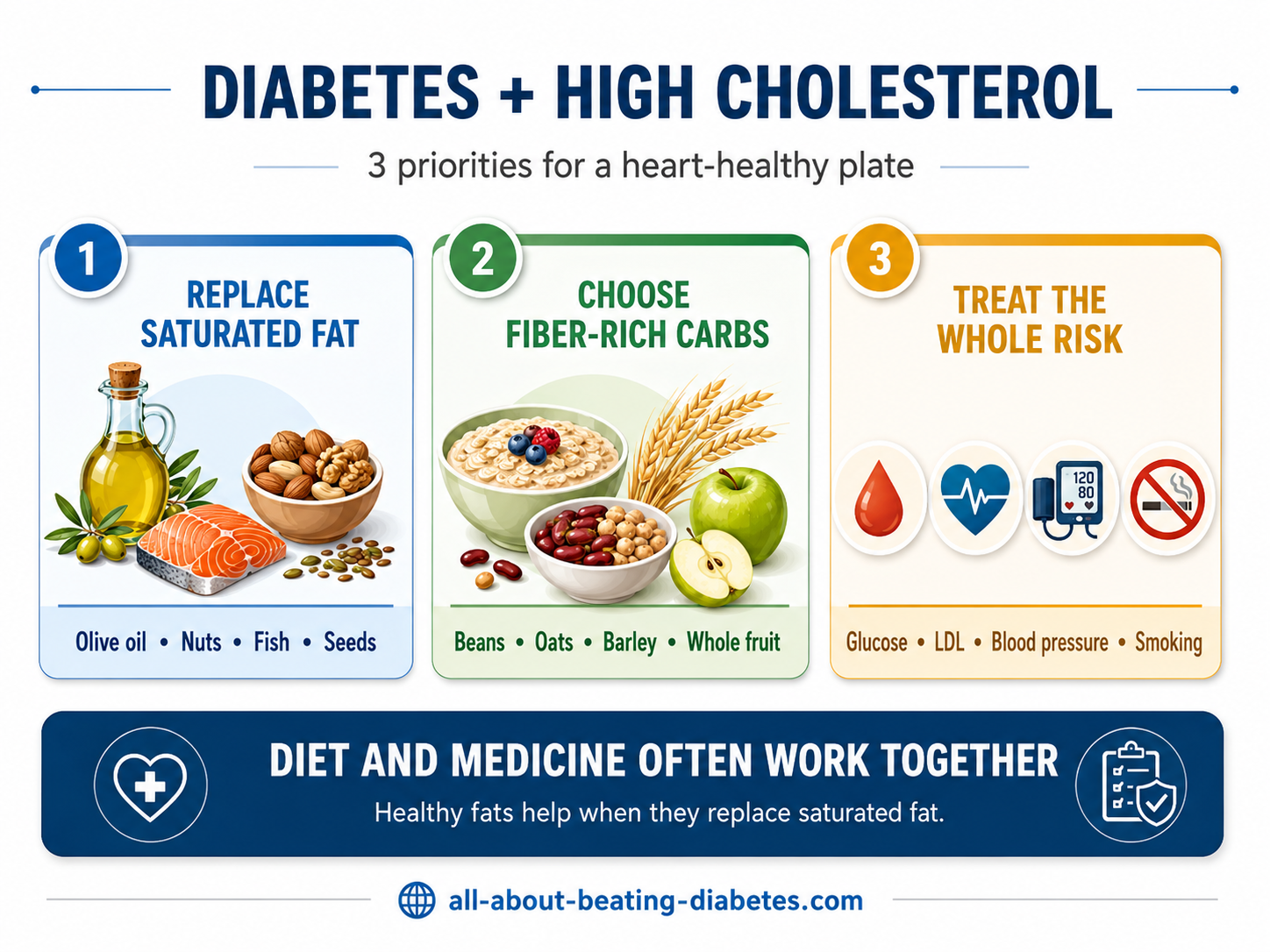
- olive, canola, or other unsaturated oils replacing solid fats;
- fish, especially oily fish, and other lean protein choices;
- less red and processed meat;
- less butter, cream, high-fat cheese, pastries, and fried food;
- less added sugar, refined starch, and sugar-sweetened beverages;
- limited sodium and alcohol.
A Mediterranean-style, DASH-style, Portfolio-style, plant-forward, or another individualized eating pattern may work. The label matters less than whether the plan improves food quality, replaces saturated fat, controls portions, and remains realistic.
Explore the Mediterranean Diet for Diabetes.
Use a Heart-Healthy Diabetes Plate
For lunch and dinner, begin with a plate approximately 9 inches or 23 centimeters across:
- Half the plate: nonstarchy vegetables such as leafy greens, broccoli, cauliflower, peppers, cabbage, eggplant, zucchini, mushrooms, tomatoes, cucumber, or green beans.
- One quarter: lean protein such as fish, skinless poultry, tofu, tempeh, eggs, low-fat dairy, or an appropriate portion of beans or lentils.
- One quarter: quality carbohydrate such as beans, lentils, oats, barley, brown rice, bulgur, whole-grain bread, sweet potato, fruit, or plain yogurt.
- Small amount of healthy fat: olive oil, nuts, seeds, or avocado.
- Drink: water, sparkling water, unsweetened tea, or coffee without added sugar.
Beans and lentils count as both carbohydrate and protein. Milk and yogurt also contain carbohydrate. The plate method is a visual starting point, not a precise insulin-dosing calculation.
Build meals with the Diabetic Meal Plan and Plate Method.
Choose Fats by Type—and Watch the Portion
All dietary fats provide approximately nine calories per gram. Monounsaturated and polyunsaturated fats do not contain fewer calories than saturated fat. Their advantage is their effect on lipoproteins and cardiovascular risk when they replace saturated or trans fat.
Limit saturated fat
Major sources include:
- butter, ghee, lard, and shortening;
- fatty cuts of beef, lamb, pork, and processed meats;
- sausage, salami, bacon, and many fast foods;
- full-fat cheese, cream, ice cream, and high-fat dairy desserts;
- coconut and palm oils;
- pastries, cookies, cakes, and products made with solid fats.
ADA guidance emphasizes replacing saturated fat with unsaturated fat rather than pursuing one universal percentage for every patient. The American Heart Association recommends limiting saturated fat to less than 6% of calories for people who need to lower LDL cholesterol. A registered dietitian can translate that into food portions.
Choose unsaturated fats
Useful replacements include:
- extra-virgin olive or canola oil;
- walnuts, almonds, pistachios, peanuts, and other unsalted nuts;
- chia, flax, sesame, pumpkin, and sunflower seeds;
- avocado;
- salmon, sardines, trout, herring, and other oily fish.
These foods remain calorie-dense. A tablespoon of oil, small handful of nuts, or modest avocado portion may be appropriate; unrestricted portions can make weight management harder.
Avoid industrial trans fat
Check labels for partially hydrogenated oils where they remain legally available. Fried and packaged foods may also contain unfavorable fat combinations even when the label lists zero trans fat per small serving.
Increase Soluble and Total Fiber
Fiber supports fullness, bowel health, glucose management, and lipid control. Soluble or viscous fiber can help lower LDL by reducing the reabsorption of bile acids and cholesterol in the digestive tract.
Useful sources include:
- oats and oat bran;
- barley;
- beans, lentils, chickpeas, and peas;
- apples, pears, oranges, berries, and other whole fruit;
- eggplant, okra, carrots, and Brussels sprouts;
- chia and ground flaxseed;
- psyllium when appropriate and taken with sufficient fluid.
Increase fiber gradually to reduce bloating and gas. Fluid advice must be individualized when heart failure, kidney disease, dialysis, or another condition requires restriction.
Fiber supplements can affect the absorption of medicines. Ask a pharmacist how far to separate psyllium or another supplement from prescription drugs.
Carbohydrates, Blood Sugar, and Triglycerides
Diabetes does not require eliminating all carbohydrate. The amount, quality, and distribution matter.
Choose more often
- beans and lentils;
- oats, barley, bulgur, and minimally processed whole grains;
- whole fruit;
- plain milk or yogurt in suitable portions;
- starchy vegetables measured within the meal plan.
Limit more often
- soda, sweetened tea, juice drinks, energy drinks, and sugary coffee beverages;
- candy, syrups, honey, and large dessert portions;
- white bread, refined cereal, pastries, crackers, and large portions of white rice or pasta;
- sweetened yogurt and flavored milk;
- large portions of chips and other refined snacks.
Excess refined carbohydrate and added sugar can raise glucose and triglycerides, particularly when total energy intake exceeds needs. Very-low-carbohydrate diets are not automatically heart healthy if they rely heavily on butter, processed meat, cheese, and coconut oil.
People using insulin may need carbohydrate counting. People taking fixed-dose insulin or sulfonylureas may need consistent meal timing to reduce low-glucose risk.
What If Triglycerides Are High?
High triglycerides require attention to more than fat intake. Review:
- glucose and A1C;
- added sugar and refined carbohydrate;
- alcohol;
- weight and waist trend;
- thyroid, kidney, and liver health;
- medicines that raise triglycerides;
- family history and genetic disorders.
Very high triglycerides can increase pancreatitis risk and may require urgent dietary and medication treatment. Do not attempt to manage a very high result with supplements alone.
Choose Heart-Healthy Protein Sources
Seafood is nutritious, but it is not calorie-free. The calorie, fat, and sodium content varies by species and preparation.
Choose more often
- fish and shellfish that are grilled, baked, poached, or steamed;
- beans, lentils, peas, and soy foods;
- skinless chicken or turkey;
- eggs in the context of the complete diet;
- plain low-fat or nonfat dairy when tolerated;
- nuts and seeds as measured protein-fat choices.
Limit more often
- processed meats such as bacon, sausage, salami, and hot dogs;
- fatty red meat;
- fried chicken or fish;
- breaded seafood;
- high-sodium smoked, cured, or canned meats;
- large portions of full-fat cheese.
Removing poultry skin reduces some saturated fat, but preparation still matters. Skinless chicken fried in shortening is not equivalent to grilled chicken with vegetables.
How often should you eat fish?
For many adults, eating fish—especially oily fish—approximately twice weekly can support a heart-healthy pattern. Pregnancy, mercury exposure, allergies, gout, kidney disease, and anticoagulant treatment may require individualized selection.
Fruit, Cholesterol, and Blood Sugar
Whole fruit is naturally cholesterol-free and can provide fiber, potassium, vitamins, and polyphenols. It can still raise blood glucose because it contains carbohydrate.
The old statement that fruits do not increase blood sugar was incorrect. Safer guidance is:
- choose whole fresh, frozen, or canned fruit without added sugar;
- measure the portion;
- count carbohydrate when required;
- choose juice less often and use a small measured portion;
- treat dried fruit as concentrated carbohydrate;
- look at the complete meal and personal glucose response.
Fruit does not need to be banned because of diabetes or cholesterol. A large smoothie, fruit juice, or several fruit portions eaten together may produce a very different response from one small whole fruit.
See Low-Glycemic-Index Fruits.
Does Water Flush Out Glucose or Cholesterol?
Water supports hydration and is an excellent replacement for sugary drinks. It does not wash LDL cholesterol out of the arteries or serve as a treatment for high glucose.
When blood glucose is very high, the kidneys may remove some glucose in urine, which increases urination and dehydration. Drinking water may help replace lost fluid, but it does not correct severe hyperglycemia, insulin deficiency, or ketoacidosis.
Fluid needs vary. People with heart failure, advanced kidney disease, low sodium, or dialysis may need a prescribed fluid limit.
Better drink choices
- water or sparkling water;
- unsweetened tea;
- coffee without sugar or high-saturated-fat creamers;
- plain low-fat milk or an unsweetened fortified plant beverage in a measured portion.
Limit sugar-sweetened beverages, large juice portions, sweetened coffee, and excess alcohol. Alcohol can raise triglycerides and affect glucose and medicine safety.
How to Read a Food Label for Both Glucose and Cholesterol
Check:
- Serving size: Compare it with the amount you actually eat.
- Total carbohydrate: More useful for glucose planning than “sugar” alone.
- Dietary fiber: Look for genuinely fiber-rich foods, not only marketing terms.
- Added sugars: Especially important in drinks, yogurt, cereal, sauces, and snacks.
- Saturated fat: Compare similar products and choose the lower option.
- Trans fat and ingredients: Check for partially hydrogenated oils.
- Sodium: Important because diabetes and high cholesterol often coexist with high blood pressure or kidney disease.
- Calories: Useful when weight management is part of the plan.
“Cholesterol-free” does not automatically mean heart healthy. Coconut oil is cholesterol-free because it is plant-based, yet it is high in saturated fat. A sugary drink is also cholesterol-free but can worsen glucose and triglycerides.
“No added sugar” does not mean carbohydrate-free, and “low fat” products may contain extra refined starch or sugar.
Simple Food Swaps
| Instead of | Try | Why |
|---|---|---|
| Butter on bread | A small amount of olive-oil spread, hummus, or avocado | Replaces saturated fat with unsaturated fat or fiber. |
| Sausage or bacon breakfast | Egg with vegetables, beans, or plain yogurt with oats and berries | Reduces processed meat and often sodium. |
| Large white-rice portion | Smaller brown-rice, bulgur, or bean portion plus extra vegetables | Adds fiber and controls carbohydrate quantity. |
| Fried meat or fish | Grilled, baked, poached, or air-cooked fish or poultry | Reduces added fat and often calories. |
| Creamy sauce | Tomato, herb, yogurt, lemon, or olive-oil-based sauce | May reduce saturated fat while keeping flavor. |
| Cookies or pastry snack | Small whole fruit with nuts or plain yogurt | Provides fiber and less refined starch or added sugar. |
| Sugary drink | Water, sparkling water, or unsweetened tea | Reduces glucose load and excess calories. |
Sample One-Day Cholesterol and Diabetes Meal Plan
This is an educational example, not a personal calorie, carbohydrate, potassium, or insulin prescription.
| Meal | Example | Why it helps |
|---|---|---|
| Breakfast | Plain Greek-style yogurt, berries, oats, chia seeds, and cinnamon | Combines soluble fiber, protein, and unsaturated fat without added sugar. |
| Lunch | Large vegetable salad with chickpeas or grilled chicken, olive oil and lemon, plus a small whole-grain portion | Uses the plate method and replaces saturated fat with olive oil. |
| Optional snack | Small apple or pear with a measured handful of unsalted nuts | Provides fiber and helps avoid refined snacks. |
| Dinner | Baked salmon or lentil patties, roasted nonstarchy vegetables, and a small barley, brown-rice, or potato portion | Provides unsaturated fat or plant protein with a measured carbohydrate. |
| Drink | Water, sparkling water, or unsweetened tea | Avoids added sugar and unnecessary calories. |
Portions should be adjusted for age, body size, activity, insulin, medication, kidney function, weight goals, pregnancy, appetite, culture, and glucose response.
Does Dietary Cholesterol Matter?
Dietary cholesterol is found mainly in animal foods, while saturated fat is found in both animal foods and tropical oils. For many people, saturated fat has a stronger effect on LDL than dietary cholesterol alone.
This does not mean dietary cholesterol is irrelevant. Eggs, shellfish, and other cholesterol-containing foods should be evaluated in the context of:
- the complete eating pattern;
- saturated fat content;
- LDL response;
- familial hypercholesterolemia;
- cardiovascular and kidney risk;
- the food that the item replaces.
An egg with vegetables and whole-grain toast is different from eggs served with bacon, sausage, butter, and refined bread.
Weight Loss, Exercise, Sleep, and Smoking
Food is only one part of cardiovascular risk management.
Weight management
When a person has overweight or obesity, modest sustained weight loss may improve triglycerides, insulin sensitivity, glucose, blood pressure, and liver fat. Extreme dieting is not required, and weight is not the sole cause of high cholesterol.
Physical activity
Aerobic and resistance activity can improve insulin sensitivity, triglycerides, blood pressure, fitness, and overall cardiovascular health. Start safely, particularly with heart disease, neuropathy, foot ulcers, insulin, or medicines that cause low glucose.
Sleep
Insufficient sleep and untreated sleep apnea can worsen appetite, glucose, blood pressure, and cardiometabolic risk.
Smoking
Smoking and nicotine exposure increase cardiovascular risk. Stopping is one of the most important actions for heart and blood-vessel protection.
Use the BMI and Waist-to-Height Calculator as a screening tool, not a judgment of health or effort.
Special Situations
Kidney disease
Beans, whole grains, fruit, vegetables, nuts, seeds, and dairy may need adjustment for potassium, phosphorus, protein, sodium, or fluid. A generic heart-healthy diet is not automatically a renal diet.
Very high triglycerides
Severe hypertriglyceridemia may require strict alcohol avoidance, urgent glucose control, a very specific fat plan, and medication to reduce pancreatitis risk.
Gastroparesis
Large high-fiber meals and high-fat foods can worsen delayed stomach emptying. Smaller, lower-fat, lower-fiber meals may be needed despite ordinary cholesterol advice.
Pregnancy
Pregnancy requires adequate energy and nutrients, pregnancy-specific glucose targets, and medicine review. Do not begin a restrictive cholesterol diet or weight-loss programme during pregnancy without obstetric guidance.
Statin intolerance or muscle symptoms
Do not assume every muscle symptom is caused by a statin or stop treatment permanently without review. The clinician may check timing, thyroid function, interactions, dose, statin type, and alternative therapies.
Why Diet May Not Be Enough
Many adults with diabetes need cholesterol-lowering medicine because their cardiovascular risk is high even when LDL is not dramatically elevated.
Statins:
- reduce LDL production in the liver;
- increase removal of LDL from the blood;
- stabilize arterial plaque;
- reduce heart attack and stroke risk.
Statins may cause a small increase in glucose in some patients, but the cardiovascular benefit usually outweighs that risk when treatment is indicated. Do not stop a statin because glucose changes slightly without discussing the overall risk and alternatives.
When LDL remains above the personal goal, treatment may include ezetimibe, a PCSK9-directed therapy, bempedoic acid, inclisiran, or another medicine selected by the clinician. High triglycerides may require separate therapy.
How to Know Whether the Plan Is Working
Monitor outcomes rather than judging the diet from one meal:
- fasting and after-meal glucose patterns when indicated;
- A1C;
- LDL and non-HDL cholesterol;
- triglycerides and HDL;
- blood pressure;
- weight and waist trend when relevant;
- kidney and liver tests;
- medication tolerance;
- energy, hunger, bowel function, and ability to maintain the plan.
After starting or changing cholesterol medicine, the clinician may repeat a lipid panel in several weeks to assess adherence, response, and side effects. Diet changes also require enough time and consistency to produce a measurable trend.
Use the Blood Sugar Log Sheet and record major meal changes alongside glucose readings.
Most Asked Questions
What is the best diet for diabetes and high LDL cholesterol?
A Mediterranean-style or similarly plant-forward pattern that replaces saturated fat with unsaturated fat, emphasizes soluble fiber, and uses measured high-quality carbohydrate portions is a strong starting point.
Do fruits raise blood sugar?
Yes. Whole fruit contains carbohydrate, although its water, fiber, and structure usually make it preferable to juice or sweetened fruit products. Portion size still matters.
Does drinking more water lower cholesterol?
No. Water supports hydration and can replace sugary drinks, but it does not flush LDL from the bloodstream or arteries.
Are all fats bad for cholesterol?
No. Saturated and trans fats are the main fats to limit. Unsaturated fats can support heart health when they replace saturated fat, but they contain the same calories per gram.
Is seafood calorie-free?
No. Seafood supplies protein and sometimes beneficial unsaturated fat, but it contains calories. Fried, breaded, creamy, or buttered seafood may contain substantial calories, saturated fat, and sodium.
Can a low-carbohydrate diet lower triglycerides?
Reducing added sugar and refined carbohydrate may lower triglycerides. A low-carbohydrate plan can still raise LDL if it relies heavily on butter, fatty meat, processed meat, cheese, coconut oil, or other saturated-fat sources.
Should I avoid eggs?
Not automatically. Egg intake should be considered within the total diet, LDL level, saturated-fat intake, and personal cardiovascular risk. Preparation and accompanying foods matter.
Can diet replace a statin?
Not reliably when a statin is indicated for cardiovascular risk reduction. Diet remains important, but it should complement rather than independently replace prescribed treatment.
How quickly can cholesterol improve?
Changes may be measurable within several weeks, but the response depends on baseline levels, genetics, diet consistency, weight, medicines, thyroid and kidney health, and other factors.
Related Questions
- How Should High and Low Blood Sugar Be Managed With High Blood Pressure?
- What Should I Do When Blood Sugar Is Often as High as 306 mg/dL?
- Is a Fasting Glucose of 126 mg/dL High?
Related Resources
- LDL Cholesterol and Diabetes
- Diabetic Meal Plan and Plate Method
- Mediterranean Diet for Diabetes
- Foods and Drinks That Affect Blood Sugar
- What Is Insulin Resistance?
- Diabetes Medications: Benefits and Side Effects
Medical disclaimer: This page provides general education and does not prescribe a cholesterol target, calorie level, carbohydrate amount, statin, supplement, or personal diet. Discuss major dietary or medication changes with your healthcare professional, especially when you use insulin, are pregnant, or have kidney disease, severe triglyceride elevation, heart disease, or another medical condition.
References
- American Diabetes Association: Facilitating Positive Health Behaviors and Well-being—Standards of Care in Diabetes 2026
- American Diabetes Association: Cardiovascular Disease and Risk Management—Standards of Care in Diabetes 2026
- National Institute of Diabetes and Digestive and Kidney Diseases: Healthy Living With Diabetes
- Centers for Disease Control and Prevention: Preventing High Cholesterol
- Centers for Disease Control and Prevention: Statins and Diabetes
- American Heart Association: Saturated Fats
- American Heart Association: Mediterranean Diet
- American Heart Association: Prevention and Treatment of High Cholesterol