- Home
- Diabetes Information for Patients Types Symptoms Tests and Treatment
- What Should LDL Cholesterol Be With Diabetes
Cholesterol and Diabetes: LDL Targets, Heart Risk and Treatment
Cholesterol and diabetes frequently occur together, but the relationship is more complex than simply having “too much fat in the blood.” Cholesterol itself is essential for cell membranes and hormone production. The problem arises when certain cholesterol-carrying particles increase the risk of plaque forming inside arteries.
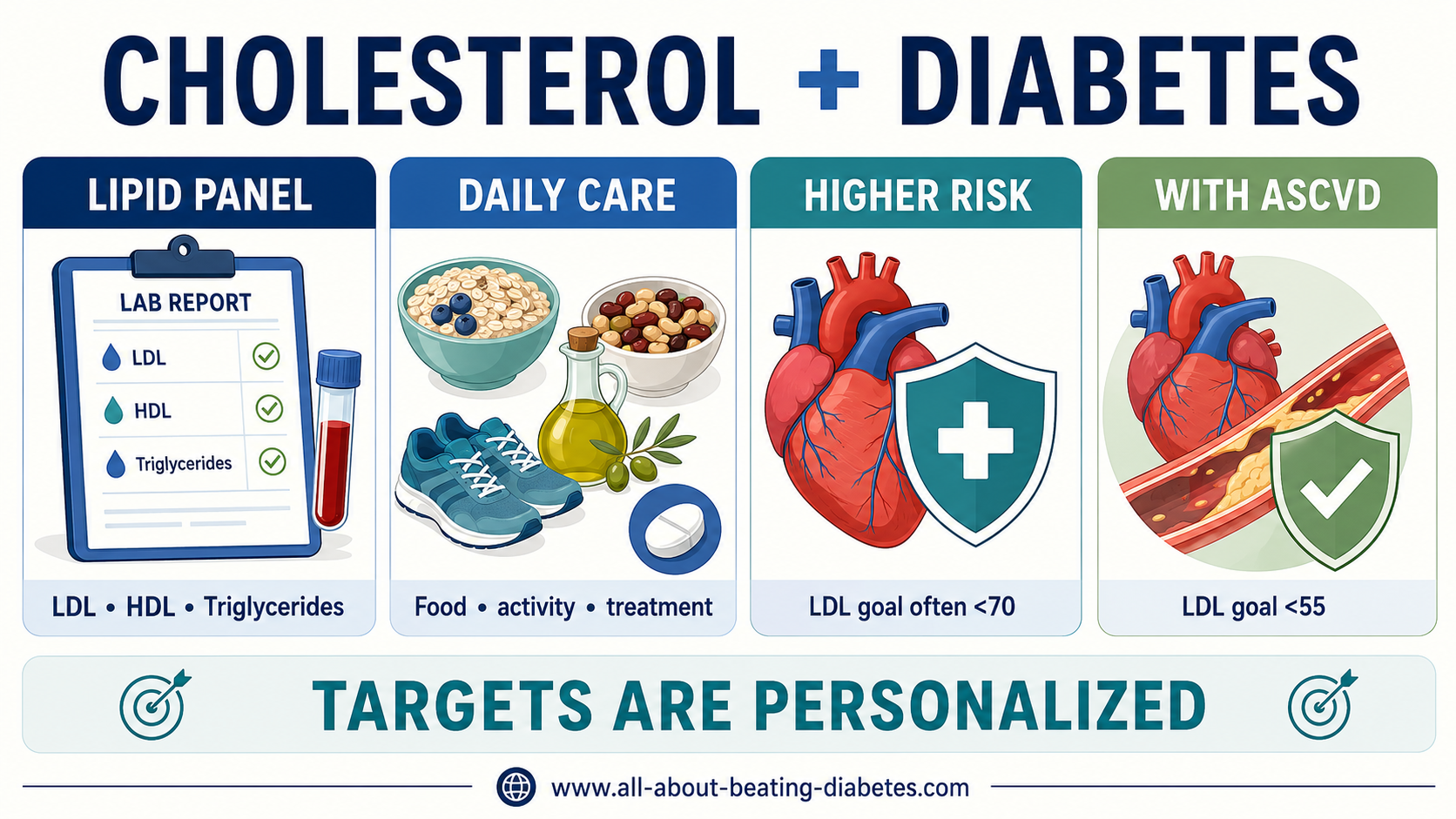
As I explain to my patients, we should not look at LDL, HDL, triglycerides, glucose, blood pressure, smoking, and kidney health as separate problems. They work together to influence the risk of heart attack, stroke, and poor circulation. The most effective plan addresses all of them rather than chasing one laboratory number.

What Are LDL, HDL, and Triglycerides?
Cholesterol and triglycerides cannot travel through blood alone, so they are carried inside particles called lipoproteins. A standard lipid panel usually reports total cholesterol, LDL cholesterol, HDL cholesterol, and triglycerides.
| Measurement | What it means | Why it matters in diabetes |
|---|---|---|
| LDL cholesterol | LDL particles carry cholesterol to tissues. Excess LDL contributes directly to plaque formation in artery walls. | Lowering LDL is the main lipid-treatment priority for preventing heart attack, stroke, and peripheral artery disease. |
| HDL cholesterol | HDL helps transport cholesterol away from tissues and is associated with cardiovascular risk. | Low HDL is common with insulin resistance, but medicines are not prescribed simply to force HDL higher. Treatment focuses on overall risk and LDL reduction. |
| Triglycerides | Triglycerides store and transport energy from food and the liver. | They often rise with poor glucose control, obesity, refined carbohydrates, alcohol, hypothyroidism, kidney disease, or certain medicines. Very high levels can cause pancreatitis. |
| Non-HDL cholesterol | Total cholesterol minus HDL cholesterol; it includes LDL and other atherogenic particles. | It can provide useful additional information, particularly when triglycerides are elevated. |
How Does Diabetes Affect Cholesterol?
Insulin resistance changes how the liver and fat tissue handle fatty acids and lipoproteins. The typical pattern in type 2 diabetes is called diabetic dyslipidemia: higher triglycerides and non-HDL cholesterol, lower HDL cholesterol, and more small dense LDL particles. The measured LDL number may not appear dramatically high even though the number and type of atherogenic particles remain concerning.
In well-controlled type 1 diabetes, the lipid profile may be similar to that of the general population. Poor glucose control in either type 1 or type 2 diabetes can raise triglycerides, lower HDL, and modestly increase LDL-related particles. Improving glucose control may substantially reduce very high triglycerides, but it does not remove the need to assess cardiovascular risk.
How Should I Understand My Cholesterol Results?
General laboratory categories are useful, but they are not the same as treatment goals for someone with diabetes. Total cholesterol below 200 mg/dL may traditionally be described as desirable, yet a person can still have an LDL level that is too high for their cardiovascular risk.
| Result | General interpretation | Important diabetes context |
|---|---|---|
| Total cholesterol | Below 200 mg/dL is often called desirable. | It combines several particles and cannot determine treatment by itself. |
| LDL cholesterol | Around 100 mg/dL is often considered optimal for the general population. | Many higher-risk adults with diabetes need LDL below 70 mg/dL; established ASCVD generally requires below 55 mg/dL. |
| HDL cholesterol | Below 40 mg/dL in men or 50 mg/dL in women is commonly considered low. | HDL helps describe risk, but it is not usually the main medication target. |
| Triglycerides | Below 150 mg/dL is generally normal; 150–499 mg/dL is elevated; 500 mg/dL or higher is severe. | At 500 mg/dL or above, clinicians evaluate urgently for secondary causes and pancreatitis prevention. |
What Should LDL Cholesterol Be With Diabetes?
There is no single LDL goal for every person with diabetes. ADA 2026 recommendations combine age, established cardiovascular disease, and additional risk factors such as high blood pressure, smoking, chronic kidney disease, obesity, and older age.
| Clinical situation | General ADA 2026 approach |
|---|---|
| Age 20–39 without ASCVD | Lifestyle treatment is essential. A statin may be reasonable when additional ASCVD risk factors are present. |
| Age 40–75 without ASCVD | At least moderate-intensity statin therapy is generally recommended in addition to lifestyle treatment. |
| Age 40–75 with higher cardiovascular risk | High-intensity statin therapy is recommended, aiming for at least a 50% LDL reduction and LDL below 70 mg/dL (1.8 mmol/L). |
| Diabetes with established ASCVD at any age | High-intensity statin therapy is recommended, aiming for at least a 50% LDL reduction and LDL below 55 mg/dL (1.4 mmol/L). Additional LDL-lowering medicine is recommended if needed. |
| Older than 75 | Continuing an existing statin is reasonable. Starting moderate-intensity treatment may be reasonable after discussing benefits, risks, frailty, interactions, and preferences. |
ASCVD includes previous heart attack, acute coronary syndrome, angina caused by atherosclerosis, coronary or other arterial revascularization, ischemic stroke, peripheral artery disease, and certain aortic disease. A risk calculator may support discussion, but it does not replace clinical judgment.
How Often Should Cholesterol Be Tested?
A lipid panel should generally be obtained when diabetes is diagnosed or at the initial medical evaluation. Testing frequency then depends on age, treatment, previous results, and cardiovascular risk. In adults under 40 who are not taking lipid-lowering medicine, ADA guidance allows intervals of up to five years when risk and results remain stable, with more frequent testing when indicated.
When a statin or another lipid-lowering medicine is started—or its dose changes—a lipid profile should be checked after 4–12 weeks. Once treatment is stable, testing is generally repeated annually to monitor response and support consistent use.
A nonfasting sample may be suitable for routine assessment. Your clinician may request a fasting test when triglycerides are elevated, when results are difficult to interpret, or when pancreatitis risk is being assessed.
How Can I Lower Cholesterol Safely With Diabetes?
Lifestyle treatment supports every medication plan, but it should not be presented as a guaranteed substitute for statins when cardiovascular risk is high.
- Replace saturated fat rather than simply removing all fat. Use olive oil, nuts, seeds, avocado, and fish in suitable portions instead of butter, fatty processed meats, coconut or palm fat, and deep-fried foods.
- Increase soluble or viscous fiber. Oats, barley, beans, lentils, vegetables, and whole fruit can support LDL reduction and glucose management.
- Choose minimally processed carbohydrates. Large amounts of sugary drinks, sweets, white bread, and refined starch can raise triglycerides and glucose.
- Be physically active. Regular aerobic and resistance activity can improve insulin sensitivity, triglycerides, fitness, blood pressure, and weight. Adapt exercise to heart, foot, eye, and kidney conditions.
- Address smoking, weight, sleep, and alcohol. Smoking damages arteries; excess alcohol can sharply increase triglycerides; sleep and weight affect insulin resistance and cardiovascular risk.
A Mediterranean-style eating pattern is a practical option because it emphasizes vegetables, legumes, whole grains, fish, nuts, and olive oil. Read my guides to a Mediterranean diabetes diet, the best diabetes diet and plate method, exercise with diabetes, and smoking and diabetes.
Why Are Statins Often Recommended for Diabetes?
Statins reduce cholesterol production in the liver, increase removal of LDL from the blood, stabilize artery plaque, and reduce cardiovascular events. Their benefit depends on the reduction in atherogenic cholesterol and the patient’s starting cardiovascular risk—not simply whether cholesterol has caused symptoms.
Moderate-intensity statin therapy generally lowers LDL by 30%–49%, while high-intensity therapy lowers it by at least 50%. The prescribing clinician chooses the medicine and dose after reviewing age, kidney and liver function, other drugs, side effects, pregnancy plans, and cardiovascular history.
Statins can slightly increase glucose and the risk of developing type 2 diabetes in people already predisposed to it. For people who need statin therapy, the cardiovascular benefit generally outweighs this risk. Current guidance does not recommend avoiding or stopping a statin solely because of this glucose effect.
What Other Cholesterol Medicines May Be Used?
| Medicine class | When it may be considered | Key safety point |
|---|---|---|
| Ezetimibe | Often added when the maximum tolerated statin does not achieve the LDL goal. | Medication interactions and liver history should be reviewed. |
| PCSK9 inhibitors | Powerful injectable LDL-lowering treatment for selected high-risk patients, particularly established ASCVD or certain inherited cholesterol disorders. | Cost, access, injection technique, and the exact product matter. |
| Bempedoic acid | An oral alternative for people with diabetes who cannot tolerate statin therapy; it may also be combined with other treatment. | Gout, uric acid, tendon symptoms, and interactions require review. |
| Icosapent ethyl | May reduce cardiovascular risk in selected patients on a statin with controlled LDL and triglycerides of 150–499 mg/dL. | It is a prescription purified EPA product, not interchangeable with ordinary fish-oil supplements. |
| Fibrates or prescription omega-3 products | May be used when triglycerides are severe, especially to reduce pancreatitis risk. | Kidney function, bleeding risk, and statin interactions must be considered. |
Combining a statin with a fibrate or niacin is not routinely recommended simply to prevent cardiovascular events. Severe triglycerides are a different clinical problem and may require individualized combination treatment. My guide to fish oil and diabetes explains why supplement products and prescription treatments should not be confused.
When Are Triglycerides Dangerous?
Fasting triglycerides of 500 mg/dL (5.7 mmol/L) or higher are considered severe, and levels above 1,000 mg/dL (11.3 mmol/L) create a particularly high risk of acute pancreatitis. This requires prompt clinical assessment rather than diet advice alone.
Your clinician may look for uncontrolled glucose, alcohol use, hypothyroidism, kidney or liver disease, pregnancy, genetic lipid disorders, and medicines that raise triglycerides. Treatment may include rapid improvement of glucose, a very-low-fat eating plan for a limited period, stopping alcohol, and prescription medication.
Seek urgent care for severe persistent upper-abdominal pain—especially if it travels to the back—or pain with vomiting, fever, rapid heartbeat, or severe illness. These may be signs of pancreatitis.
What If a Statin Causes Muscle Pain or Other Side Effects?
Muscle aches are reported by some patients, but not every pain that occurs while taking a statin is caused by the medicine. Thyroid disease, vitamin deficiencies, strenuous activity, infections, arthritis, and medication interactions may contribute.
Contact your clinician rather than abandoning treatment. The plan may include reviewing other medicines, checking selected laboratory tests, lowering the dose, trying another statin, changing the dosing schedule, or using a nonstatin medicine. Even a lower tolerated statin dose may provide benefit.
Pregnancy, Kidney Disease, and Other Special Situations
In most circumstances, lipid-lowering medicines should be stopped before conception and avoided during pregnancy. Current ADA guidance recognizes rare exceptions—such as severe inherited lipid disorders, previous ASCVD events, or pancreatitis risk—when specialists may decide that benefits outweigh risks. Do not stop or continue treatment without a preconception or pregnancy medication review.
Kidney disease, liver disease, frailty, advanced age, multiple medicines, and previous medication reactions also change the choice and dose. Diabetes care should protect the heart and kidneys together. Read more about diabetic kidney disease and diabetes complications.
Can You Feel High Cholesterol?
High LDL usually causes no symptoms. Waiting for chest pain or poor circulation means waiting for disease to become advanced. A lipid panel and cardiovascular-risk assessment are the reliable ways to identify the problem.
Call emergency services for pressure or pain in the chest, sudden shortness of breath, cold sweating, fainting, new weakness or numbness on one side, facial drooping, speech difficulty, or sudden loss of vision. These can be signs of a heart attack or stroke.
Doctor’s Note from Dr. Albana Greca
When I review cholesterol in a patient with diabetes, I do not ask only, “Is total cholesterol below 200?” I ask whether the patient has had a heart attack or stroke, whether kidney disease, smoking, high blood pressure, or obesity is present, what LDL reduction has been achieved, and whether treatment is tolerated. A person with LDL of 90 mg/dL may need more treatment, while another patient may need a different approach. The safest goal is a risk-based goal agreed with the patient—not a universal number copied from a laboratory form.
Frequently Asked Questions
1. What should LDL cholesterol be if I have diabetes?
The goal depends on cardiovascular risk. Higher-risk adults aged 40–75 commonly aim below 70 mg/dL with at least a 50% reduction. People with established ASCVD generally aim below 55 mg/dL. Lower-risk situations require individualized assessment.
2. Do I need a statin if my LDL is “normal”?
Possibly. In diabetes, statin decisions are based on age and cardiovascular risk as well as the LDL number. ADA guidance generally recommends at least moderate-intensity statin therapy for adults aged 40–75 even without known ASCVD.
3. Can statins raise blood sugar?
Statins may cause a small rise in glucose or diabetes risk in susceptible people. For patients who need them, their protection against heart attack and stroke generally outweighs this effect. Monitor glucose, but do not stop treatment without medical advice.
4. What should I do if a statin causes muscle pain?
Contact your clinician. The cause should be assessed before assuming the statin is responsible. A different statin, lower dose, alternative schedule, or nonstatin treatment may be possible. Severe weakness or dark urine needs prompt assessment.
5. Can diet and exercise replace cholesterol medicine?
They improve cardiovascular health and support every treatment plan, but they may not replace statins when age or cardiovascular risk indicates medication. Use lifestyle and prescribed treatment together unless your clinician advises otherwise.
6. Are triglycerides of 500 mg/dL dangerous?
Yes. Fasting triglycerides of 500 mg/dL or higher require prompt medical evaluation, and levels above 1,000 mg/dL carry particularly high pancreatitis risk. Do not rely only on supplements or home dietary changes.
7. Does ordinary fish oil replace a statin?
No. A general fish-oil supplement does not replace statin therapy. Prescription icosapent ethyl has cardiovascular evidence for selected patients, while other prescription omega-3 products may be used for severe triglycerides. Product and purpose matter.
8. Can I stop my statin after cholesterol improves?
Usually not without a medical review. The improvement commonly means the medicine is working. Stopping it may allow LDL to rise again. Discuss side effects, pregnancy plans, or preferences with your prescriber before changing treatment.
Related Questions
Related Resources
References
- American Diabetes Association. Cardiovascular Disease and Risk Management: Standards of Care in Diabetes—2026.
- American Heart Association. Cholesterol and Diabetes.
- Centers for Disease Control and Prevention. LDL and HDL Cholesterol and Triglycerides.
- Centers for Disease Control and Prevention. Statins and Diabetes: What You Should Know.
- Endotext. Dyslipidemia in Patients With Diabetes.
- National Heart, Lung, and Blood Institute. Blood Cholesterol Causes and Risk Factors.
Medically reviewed by: Dr. Ruden Cakoni, MD, Endocrinologist
Last medically reviewed: July 2026
Medical disclaimer: This page is for general education and does not replace individualized medical advice, diagnosis, or treatment. Do not start, stop, or change a statin, fibrate, prescription omega-3 product, ezetimibe, PCSK9 treatment, bempedoic acid, diabetes medicine, diet, or supplement without speaking with your healthcare professional.