- Home
- Diabetes Complications
- Diabetic Neuropathy Treatment Step-by-step Plan
Step plan of Diabetic Neuropathy Treatment
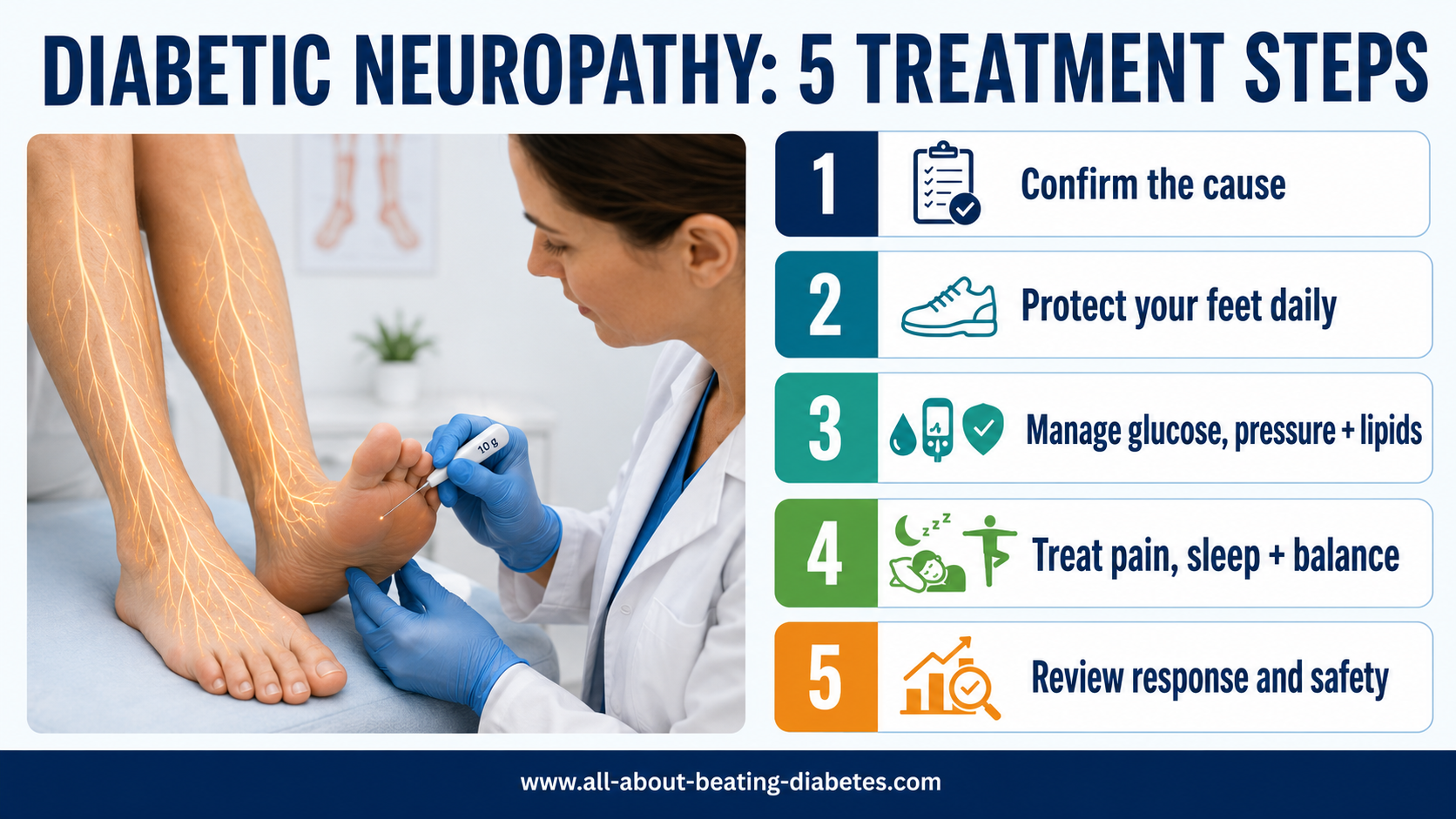
Diabetic neuropathy treatment is not one pill or one circulation remedy. I approach it as a structured plan: first confirm that diabetes is truly causing the nerve symptoms, then protect the feet, slow further nerve injury, treat pain and functional problems, and review whether treatment is helping without creating harmful side effects.
What Can Diabetic Neuropathy Treatment Achieve?
Neuropathy is a possible diabetes complication, not something every person with diabetes must expect. Better glucose management can prevent or delay neuropathy in type 1 diabetes and may modestly slow progression in type 2 diabetes. Managing blood pressure, cholesterol, weight, and smoking risk also matters.
Once nerve fibers have been lost, current treatment usually cannot rebuild them completely. That does not mean treatment is useless. A realistic treatment plan aims to:
- identify and correct another treatable cause of symptoms;
- slow additional nerve injury;
- reduce burning, tingling, electric-shock pain, or sensitivity;
- improve sleep, mood, walking, and balance;
- protect numb feet from burns, wounds, infection, and ulcers;
- treat autonomic symptoms involving blood pressure, digestion, bladder, sexual function, sweating, or awareness of low glucose.

1 Confirm the Cause and Type of Neuropathy
Diabetic peripheral neuropathy is a diagnosis of exclusion. Having diabetes does not prove that every leg pain, burning sensation, or numb toe comes from diabetes. In my clinic, patients sometimes describe “arthritis,” while a detailed history reveals burning, tingling, electric-shock pain, pain from light touch, or numbness in a stocking pattern. Others have true joint disease, poor circulation, sciatica, a trapped nerve, or more than one problem.
Typical distal symmetric diabetic neuropathy usually begins gradually in both toes or feet and moves upward. It may cause burning, pins and needles, electric shocks, numbness, reduced temperature sensation, painful sensitivity to a bedsheet, balance difficulty, or unnoticed injuries.
| Pattern | What it may suggest | Next step |
|---|---|---|
| Gradual burning, tingling, or numbness in both feet | Common distal symmetric diabetic peripheral neuropathy | Neurological and foot examination plus assessment for other causes |
| Pain mainly in a joint, with stiffness or swelling | Arthritis, injury, gout, or another musculoskeletal problem | Joint and movement examination; imaging or laboratory testing if indicated |
| Calf pain with walking that improves with rest, cold feet, or weak pulses | Peripheral artery disease | Vascular examination and tests such as an ankle-brachial index when appropriate |
| One-sided pain from the back into the leg | Sciatica, spinal disease, or nerve-root compression | Focused neurological and spine assessment |
| Sudden weakness, foot drop, rapid progression, or marked asymmetry | Atypical neuropathy or another neurological disorder | Prompt evaluation; neurology referral and EMG/nerve-conduction testing may be needed |
| Hot, red, swollen foot with surprisingly little pain | Possible acute Charcot foot, infection, or injury | Same-day assessment and avoidance of weight-bearing until evaluated |
What I Check First
I begin with the symptom pattern, home glucose record, recent dietary or medication changes, sleep, mood, alcohol use, falls, and a complete medicine list. The examination includes the skin, wounds, calluses, foot shape, pulses, temperature or pinprick, vibration with a 128-Hz tuning fork, reflexes, gait, balance, and a 10-g monofilament test for protective sensation.
Laboratory evaluation is individualized. Common tests may include A1C, blood count, kidney and liver function, thyroid testing, and vitamin B12—especially in someone using metformin or with anemia or dietary risk. Depending on the pattern, a clinician may add serum protein studies or other tests. In my own practice, I reserve CRP, D-dimer, imaging, or vascular testing for symptoms that suggest inflammation, infection, a blood clot, or poor circulation; they are not routine tests for ordinary symmetric neuropathy.
2 Protect Your Feet Every Day
Numbness removes the warning pain that normally alerts you to a blister, burn, pebble, or tight shoe. Foot protection is therefore part of neuropathy treatment—not an optional extra.
- Inspect the tops, soles, heels, sides, and spaces between the toes every day; use a mirror or ask for help.
- Wash with comfortably warm water, test the water with an unaffected area or thermometer, and dry carefully—especially between the toes.
- Moisturize dry skin, but do not leave heavy cream between the toes.
- Wear clean socks and well-fitting shoes; inspect inside each shoe before putting it on.
- Do not walk barefoot, even indoors.
- Do not cut corns or calluses or use chemical removers. Ask a trained foot-care professional.
- Avoid heating pads, hot-water bottles, very hot foot baths, and direct ice packs. Reduced temperature sensation can allow burns or cold injury.
- Arrange at least an annual comprehensive foot examination, and more often if sensation is reduced or you have previous ulceration.
For a complete daily routine, see my diabetic feet care checklist. Contact a clinician promptly for a blister, cut, crack, ingrown nail, color change, swelling, warmth, drainage, or ulcer. Do not wait for pain; an infected wound may be painless when sensation is lost.
3 Slow Further Nerve Damage
The foundation is comprehensive diabetes and cardiovascular-risk management, personalized to avoid severe hypoglycemia and other harms.
- Glucose: Work toward your individualized A1C and glucose targets. Glucose management is most effective for preventing neuropathy in type 1 diabetes and may slow progression in type 2 diabetes, but it usually does not reverse established nerve loss.
- Blood pressure and lipids: Treating hypertension and abnormal cholesterol helps protect the small and large blood vessels that support nerves and feet.
- Smoking: Stop smoking or vaping nicotine, which worsens vascular risk and healing.
- Weight and nutrition: Use a sustainable plan that supports glucose, blood pressure, and lipid goals without vitamin deficiency or crash dieting.
- Alcohol: Heavy use can cause or worsen neuropathy and destabilize glucose. Discuss a safe limit—or avoidance—with your clinician.
- Activity: Use foot-safe aerobic, strength, flexibility, and balance exercise. Ask for a modified or non-weight-bearing plan when wounds, severe numbness, deformity, or a hot swollen foot are present.
Diabetes medicines—including metformin, other tablets, injectable therapies, and insulin—are chosen to manage diabetes and related risks. They are not direct pain treatments. Insulin is normally given under the skin for routine diabetes care; intramuscular insulin is not a standard neuropathy treatment. Intravenous insulin is reserved for selected hospital situations, and inhaled insulin is an option for only some adults—not a treatment for nerve damage.
4 Treat Pain, Sleep, Mood, and Balance
Before choosing medicine, I ask what the patient wants to improve: sleeping through the night, wearing shoes comfortably, walking safely, returning to work, or reducing electric-shock pain. Complete pain elimination is uncommon. A meaningful improvement in pain, sleep, and daily function with tolerable side effects is a better goal.
Medicines Used for Painful Diabetic Neuropathy
Current guidelines recommend several medication classes as initial options. No single class is best for everyone, and similar average effectiveness means that kidney function, age, fall risk, blood pressure, heart rhythm, mood, sleep, swelling, cost, and medicine interactions should guide the choice.
| Option | Examples and potential role | Important cautions |
|---|---|---|
| SNRIs | Duloxetine and sometimes venlafaxine may reduce nerve pain; duloxetine may be helpful when depression or anxiety also needs treatment. | Nausea, sweating, blood-pressure effects, withdrawal if stopped suddenly, liver or kidney limitations, and drug interactions. Mood changes require prompt review. |
| Gabapentinoids | Pregabalin or gabapentin may help burning, shooting pain and sometimes sleep disturbance. | Drowsiness, dizziness, blurred vision, leg swelling, falls, and weight gain. Doses must be adjusted for kidney function and tapered rather than stopped abruptly. |
| Tricyclic antidepressants | Amitriptyline or nortriptyline may help nighttime pain and sleep in selected patients. | Dry mouth, constipation, urinary retention, blurred vision, sedation, falls, heart-rhythm effects, and overdose risk. Extra caution is needed in older adults and people with cardiac or autonomic problems. |
| Sodium-channel blockers | Selected medicines in this class may be considered when other effective classes are unsuitable or unsuccessful, often with specialist input. | Safety differs substantially among drugs; possible dizziness, interactions, cardiac effects, liver effects, or serious skin reactions require individualized selection and monitoring. |
| Topical treatment | Lidocaine products may help a small painful area in selected cases. A capsaicin 8% patch can be applied by a trained professional for painful neuropathy of the feet. | Local irritation, burning, skin injury, cost, and reduced ability to monitor pain. Do not apply to broken or infected skin; ordinary culinary cayenne is not a substitute. |
If the first medicine does not provide meaningful benefit at a tolerated therapeutic dose, guidelines support trying a different effective class rather than repeatedly increasing an ineffective drug. If there is partial benefit, carefully selected combination therapy may help at lower doses, but sedation, falls, swelling, and interactions can add together.
Opioids—including tramadol and tapentadol—should generally not be used for diabetic neuropathic pain because long-term benefit is uncertain and the risks include dependence, tolerance, sedation, falls, constipation, overdose, and interactions. Rare exceptional circumstances require specialist judgment.
Non-Drug Treatment
- Physical therapy: strength, gait, flexibility, and balance training can improve function and reduce fall risk.
- Occupational therapy: practical adaptations may make work, bathing, dressing, and home safety easier.
- Footwear and orthoses: properly fitted footwear can reduce pressure and protect areas with lost sensation.
- Sleep and mood treatment: insomnia, depression, anxiety, and diabetes distress can magnify pain and should be assessed rather than dismissed.
- Psychological pain strategies: cognitive behavioral therapy, pacing, relaxation, and coping skills may improve quality of life alongside medical treatment.
- Foot-safe movement: walking may be suitable when feet are intact and footwear is appropriate; cycling, swimming, or seated exercise may be safer with high foot risk.
Evidence for acupuncture, electrical stimulation devices, and many supplements is inconsistent. They should not delay foot evaluation or replace established treatment. If you want to try an adjunctive therapy, discuss cost, skin safety, interactions, and realistic goals first.
5 Review Response and Safety
Neuropathy treatment should not continue indefinitely without checking whether it is working. At baseline and follow-up, record pain intensity, sleep, walking, work, mood, falls, dizziness, swelling, and foot condition.
- Start with a cautious dose when appropriate and increase only as prescribed.
- Review benefit and side effects after dose titration, usually within several weeks rather than waiting many months.
- Continue a medicine only when benefit in pain or function justifies its risks and burden.
- Switch to a different effective class when the first is ineffective or poorly tolerated.
- Consider combination treatment only after reviewing sedation, fall risk, kidney function, swelling, and interactions.
- Reassess foot sensation and ulcer risk even if pain improves.
New numbness while pain decreases is not necessarily recovery. Sometimes painful fibers become less active as sensory loss worsens. Continue daily foot inspection and professional examinations.
Treatment for Autonomic Neuropathy
Nerves also control automatic body functions. Symptoms need targeted assessment because the treatment for dizziness is different from the treatment for gastroparesis, bladder dysfunction, or hypoglycemia unawareness.
| Possible symptom | Examples of evaluation and treatment |
|---|---|
| Dizziness or faintness when standing | Review blood pressure lying and standing, dehydration, anemia, heart problems, and medicines. Fluids, compression, movement strategies, salt, or medication must be individualized—especially with heart or kidney disease. |
| Early fullness, nausea, bloating, vomiting, or erratic glucose | Evaluate for gastroparesis and other digestive disease; adjust meal pattern, food texture, and diabetes-medication timing with clinical guidance. |
| Urinary retention, recurrent infections, or incontinence | Bladder evaluation, urine testing, medication review, and urology referral when indicated. |
| Erectile dysfunction, vaginal dryness, or sexual difficulty | Review vascular, hormonal, medication, and psychological factors; use individualized sexual-health treatment. |
| Reduced warning symptoms of low glucose | Review glucose targets and medicines, consider CGM alerts, and prescribe glucagon when appropriate. |
| Abnormal sweating or very dry cracked feet | Skin protection, temperature precautions, hydration review, and targeted treatment based on the pattern. |
Treatments That Are Not Standard Neuropathy Care
- Routine peripheral vasodilators: There is no established vasodilator regimen that reliably restores sensation in diabetic peripheral neuropathy. Poor circulation requires a separate vascular diagnosis and evidence-based treatment.
- Tea as a way to remove glucose: Increased urination from high glucose is a sign of poor control and can cause dehydration; it is not a treatment. Hot tea does not create lasting blood-vessel dilation that repairs nerves.
- Herbs and supplements as a cure: Products such as alpha-lipoic acid have mixed evidence and variable formulations. Supplements may affect glucose, thyroid function, bleeding, chemotherapy, or prescribed medicines. Correct a proven deficiency such as vitamin B12, but do not take large doses blindly.
- Heating pads and extreme cold: Both can injure numb skin. Earlier home habits such as heat pads, hot bottles, or direct cold packs may feel soothing but can cause burns or tissue damage when temperature sensation is reduced.
- Ordinary painkillers as the main answer: Acetaminophen and NSAIDs often provide limited relief for true nerve pain. NSAIDs may also worsen kidney, stomach, blood-pressure, or heart risks.
- Stopping diabetes medicine: Pain improvement is not a reason to stop insulin or diabetes tablets. Any change should be based on glucose results and clinician review.
When Specialist Care Helps
Neurologist or pain specialist
Consider referral for rapid progression, major weakness, asymmetry, unclear diagnosis, abnormal reflexes, treatment failure, or complex combination therapy.
Podiatrist or foot team
Refer for loss of protective sensation, deformity, callus, previous ulcer or amputation, wounds, poor footwear fit, or suspected Charcot foot.
Vascular specialist
Refer for weak pulses, nonhealing wounds, skin-color change, rest pain, or calf pain with walking that suggests peripheral artery disease.
Physical or occupational therapist
Use targeted help for falls, balance difficulty, weakness, gait changes, safe exercise, mobility aids, and home or workplace adaptations.
Frequently Asked Questions
Can diabetic neuropathy be reversed?
Established nerve loss usually cannot be fully reversed. Early glucose and risk-factor management can prevent or slow progression, and pain or tingling may improve. Treatable mimics such as vitamin B12 deficiency or nerve compression may improve when their cause is corrected.
What is usually the first medicine for diabetic nerve pain?
There is no universal first medicine. Duloxetine, pregabalin or gabapentin, a tricyclic antidepressant, or a selected sodium-channel blocker may be considered. Kidney function, age, sleep, mood, swelling, falls, heart history, interactions, and cost guide the choice.
Does better glucose control stop neuropathy pain immediately?
No. Better control helps protect nerves over time but does not work like a painkiller. Pain may take time to change and often needs separate treatment. Report severe new pain after a rapid A1C improvement.
Is numbness less serious than burning pain?
No. Numbness may feel less distressing but can be more dangerous because wounds, pressure, burns, and infections may go unnoticed. Daily foot checks and protective footwear are essential.
Should I take vitamin B12?
Take B12 when deficiency or a strong clinical reason is identified. Metformin can contribute to low B12 in some people, so testing may be appropriate. B12 does not treat every diabetic neuropathy, and very high-dose supplements should not replace diagnosis.
Can I soak or heat painful feet?
Avoid hot soaks, heating pads, hot-water bottles, and direct ice when sensation is reduced. Test bath water safely and use only comfortably warm water. Numb feet can burn or develop cold injury without warning pain.
Can walking help diabetic neuropathy?
Foot-safe activity can improve glucose management, strength, mood, and balance. Walking is not appropriate on an open wound, severely deformed foot, or unexplained hot swollen foot. Ask about non-weight-bearing exercise if foot risk is high.
Do pain medicines prevent foot ulcers?
No. They may reduce pain but do not restore protective sensation. Ulcer prevention depends on daily inspection, properly fitted footwear, professional foot exams, glucose and vascular risk management, and early treatment of every wound.
Related Questions
Related Resources
References
- American Diabetes Association: Retinopathy, Neuropathy, and Foot Care—Standards of Care in Diabetes 2026
- American Academy of Neurology: Oral and Topical Treatment of Painful Diabetic Polyneuropathy—Practice Guideline Update
- National Institute of Diabetes and Digestive and Kidney Diseases: Peripheral Neuropathy
- National Institute of Diabetes and Digestive and Kidney Diseases: Autonomic Neuropathy
- National Institute of Diabetes and Digestive and Kidney Diseases: Diabetes and Foot Problems