Diabetes and Feet: Warning Signs, Daily Care, and Ulcer Prevention
Written by: Dr. Albana Greca Sejdini, MD, MMedSc
Medically reviewed by: Dr. Ruden Cakoni, MD, Endocrinologist
Last medically reviewed: July 2026
Diabetes can affect the nerves, circulation, skin, joints, and ability of a foot wound to heal. A blister, cracked heel, ingrown nail, callus, or small cut may become serious when it is not felt, remains under pressure, becomes infected, or receives insufficient blood flow.
Why Does Diabetes Cause Foot Problems?
Most serious diabetes-related foot problems arise from a combination of:
- peripheral neuropathy, which reduces protective sensation;
- peripheral artery disease, which reduces blood flow;
- pressure and deformity, which repeatedly stress the same area;
- dry or cracked skin, which allows bacteria to enter;
- infection, which can spread quickly;
- delayed recognition, because the injury may not hurt;
- glucose, smoking, kidney disease, and other factors that impair healing.
High glucose contributes to nerve and blood-vessel injury over time, but a burning or numb foot does not prove that glucose has been poorly managed recently. Neuropathy reflects cumulative risk and can occur despite substantial effort or later improvement in glucose.

Diabetic Peripheral Neuropathy
Peripheral neuropathy may damage sensory, motor, and autonomic nerves.
Sensory nerve changes
Possible symptoms include:
- numbness or reduced sensation;
- burning, tingling, pins and needles, or electric pain;
- increased sensitivity to light touch;
- reduced ability to feel heat, cold, pressure, or injury;
- balance problems.
Neuropathy may be completely painless. ADA 2026 notes that up to half of diabetic peripheral neuropathy cases may be asymptomatic, which is why professional screening and daily inspection are important even when the feet feel normal.
Motor nerve changes
Weakness and altered muscle balance can change the shape of the toes and arch, producing hammer toes, prominent joints, or pressure points. These areas may develop calluses and ulcers.
Autonomic nerve changes
Reduced sweating can make the skin dry and prone to cracking. Moisture between the toes, however, can promote fungal or bacterial infection, which is why lotion should not be placed between the toes.
Burning feet can also come from vitamin B12 deficiency, thyroid disease, kidney disease, alcohol, medication toxicity, nerve compression, or another neurological condition. New symptoms deserve medical evaluation rather than being attributed automatically to diabetes.
Poor Circulation and Peripheral Artery Disease
Peripheral artery disease, or PAD, occurs when atherosclerosis narrows arteries supplying the legs and feet. Diabetes and smoking increase the risk.
Possible warning signs include:
- calf, thigh, or buttock pain during walking that improves with rest;
- foot or toe pain at rest, especially at night;
- a foot that is cooler than the other;
- pale, blue, purple, or dark discoloration;
- slow-healing cuts or ulcers;
- loss of hair on the feet or legs;
- shiny skin or thickened toenails;
- weak or absent pulses.
Some people with PAD have no leg pain because neuropathy reduces sensation. Warmth alone does not guarantee adequate circulation, and cold feet do not always mean PAD. Thyroid disease, anemia, temperature exposure, medicines, and normal variation can also cause cold feet.
Foot Ulcers and Infection
A diabetes-related foot ulcer is an open break in the skin below the ankle. It commonly develops where pressure, callus, deformity, or shoe rubbing damages tissue that the patient cannot feel.
Possible signs include:
- a blister, cut, crack, crater, or open sore;
- blood or drainage on a sock;
- redness, warmth, or swelling;
- bad odor;
- thick callus with dark discoloration underneath;
- pus or cloudy fluid;
- skin that turns black, blue, purple, pale, or gray;
- fever, chills, or feeling unwell.
Absence of pain does not indicate a mild wound. A painless ulcer can extend deeply and become infected.
Do not treat an ulcer at home with:
- hydrogen peroxide, bleach, alcohol, iodine, or harsh antiseptics unless prescribed;
- corn-removing acid or medicated pads;
- razors, scissors, knives, or callus shavers;
- unprescribed herbal products, oils, honey, or powders;
- tight bandages or adhesive directly on fragile skin;
- walking normally on the wound while waiting for it to heal.
Professional treatment may include cleaning and debridement, pressure relief or offloading, infection assessment, vascular testing, dressings, antibiotics when infection is present, glucose management, and surgery when necessary.
Antibiotics do not heal a noninfected ulcer and should not be used solely to prevent infection. Pressure relief and blood-flow assessment are often just as important.
Read the full Diabetic Foot Ulcers guide.
Charcot Foot: A Warm, Swollen Foot Emergency
Charcot neuro-osteoarthropathy occurs when neuropathy allows bones and joints to weaken, fracture, or dislocate with little pain. Early treatment can reduce permanent deformity and ulcer risk.
Warning signs include:
- new redness, warmth, and swelling of one foot or ankle;
- a temperature difference compared with the other foot;
- little pain despite considerable swelling;
- a change in foot shape or arch;
- symptoms after a minor injury or without a remembered injury.
How to Check Your Feet Every Day
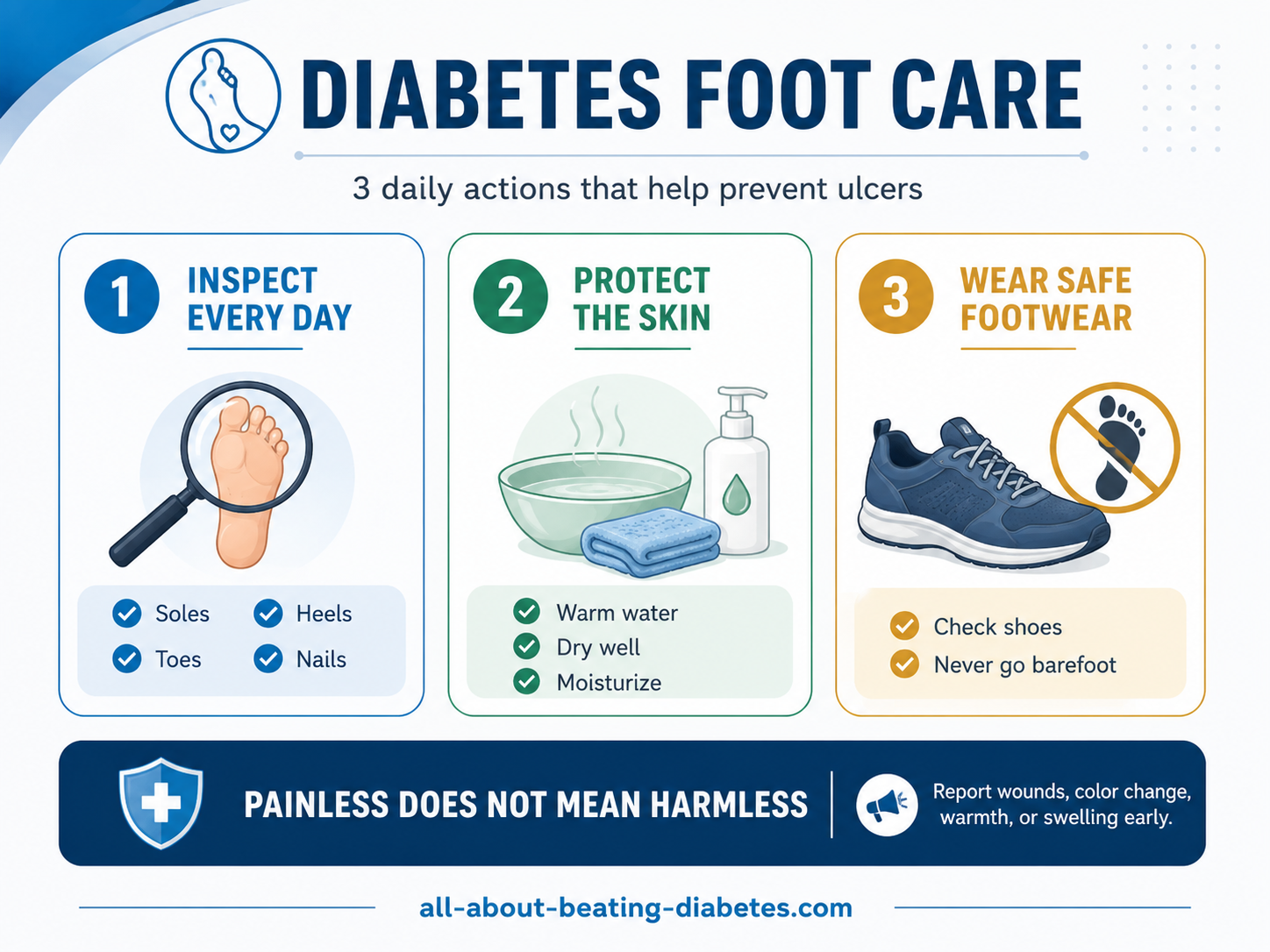
Inspect both feet once daily and after unusual walking, new shoes, travel, exercise, or an injury.
- Look at the tops, sides, heels, soles, nails, and between every toe.
- Use a mirror, phone camera, or another person when you cannot see the soles.
- Compare one foot with the other.
- Look for cuts, blisters, cracks, calluses, corns, redness, swelling, bruising, drainage, color change, or nail problems.
- Feel for unusual warmth or coolness with your hand if sensation permits.
- Check socks for blood, pus, or unusual moisture.
- Check inside shoes for stones, nails, torn lining, rough seams, or foreign objects before putting them on.
Daily inspection is important even when the feet feel completely normal.
Washing, Drying, and Moisturizing
- Wash feet daily with warm—not hot—water and mild soap.
- Test water temperature with an elbow, thermometer, or a person with normal sensation.
- Do not soak the feet for long periods because soaking can dry and soften the skin.
- Dry carefully, especially between the toes.
- Apply a thin layer of fragrance-free moisturizer to dry tops, soles, and heels.
- Do not put lotion, oil, or cream between the toes.
- Do not use strong disinfectants or home chemical peels.
Very dry, cracked, itchy, peeling, or moist skin may represent eczema, fungal infection, autonomic neuropathy, or another condition. Ask for treatment rather than repeatedly applying random products.
Toenails, Corns, and Calluses
Toenails
If you can see, reach, and feel your feet safely:
- trim nails straight across;
- do not cut deeply into the corners;
- smooth sharp edges gently with a nail file;
- do not cut cuticles;
- stop if bleeding or injury occurs.
Professional nail care is safer when you have poor vision, loss of sensation, poor circulation, thick or ingrown nails, tremor, limited mobility, or a previous ulcer or amputation.
Corns and calluses
Callus is not harmless in a high-risk foot. It can increase pressure and hide bleeding or an ulcer underneath.
Do not use:
- acid corn removers;
- medicated corn pads;
- razors, blades, scissors, or electric callus grinders;
- salon cutting or aggressive scraping.
The old page suggested using a pumice stone to keep calluses controlled. Current safer guidance is more cautious: people with neuropathy, PAD, previous ulcer, deformity, poor vision, or uncertain risk should have calluses treated professionally. NIDDK allows gentle smoothing for selected low-risk people after bathing, but this should occur only after the foot-care clinician confirms it is safe and explains how to avoid skin injury.
Choosing Shoes and Socks
Protective footwear reduces repeated trauma.
Shoes should:
- fit the length, width, depth, and shape of both feet;
- provide enough toe room without sliding;
- have a smooth interior without rough seams;
- hold the heel securely;
- protect the toes and sole;
- match the activity;
- be checked inside before every use.
Break in new shoes gradually. Wear them for short periods and inspect the feet afterward. Do not rely on “stretching out” a painfully tight shoe.
Socks should:
- fit without tight bands or folds;
- remain clean and dry;
- have minimal irritating seams;
- be changed when damp;
- match the weather and activity.
Never walk barefoot—not indoors, at the beach, around a swimming pool, or on hot pavement. Slippers should also provide a protective sole and secure fit.
Therapeutic or custom footwear is not required for every person with diabetes. It may be prescribed for neuropathy with deformity, previous ulcer or amputation, high plantar pressure, or another high-risk finding. It must fit correctly and be worn consistently to help.
Cold, Burning, Numb, or Painful Feet
Cold feet
Wear dry, warm socks and protect the feet from cold exposure. Do not use direct heat. Seek prompt assessment when one foot becomes suddenly colder, paler, bluer, more painful, or more numb than the other.
Burning or tingling
Neuropathic pain may feel burning, stabbing, electric, or worse at night. Better glucose management may slow progression, but pain does not always disappear immediately. Prescription treatments may reduce symptoms, although they do not restore lost sensation.
Numbness
Numbness requires more protection, not less concern. A person who cannot feel a blister or hot surface needs daily inspection and careful footwear.
Night pain or pain at rest
Burning pain may be neuropathic, while severe forefoot or toe pain at rest can also signal poor circulation. Pain relieved by hanging the foot over the side of the bed needs vascular assessment.
Exercise and Foot Safety
Physical activity improves glucose management, circulation, strength, balance, and cardiovascular health. The correct activity depends on current foot risk.
Before activity
- inspect the feet and shoes;
- wear activity-appropriate footwear and socks;
- begin new activity gradually;
- address blisters, calluses, or shoe rubbing before continuing;
- follow glucose and medication guidance.
After activity
- inspect both feet again;
- change wet socks;
- record any redness that does not fade promptly;
- report skin breakdown or persistent pain.
Walking is not always appropriate when an ulcer, active Charcot foot, severe ischemia, or an acute infection is present. The foot team may recommend non-weight-bearing or lower-pressure activities such as seated exercise, arm cycling, or swimming when the skin is intact and infection risk is controlled.
What Happens During a Professional Foot Examination?
A comprehensive examination may include:
- skin, nail, callus, and deformity inspection;
- history of ulcers, amputations, smoking, kidney disease, and symptoms;
- 10-g monofilament testing for protective sensation;
- vibration, pinprick, temperature, or ankle-reflex testing;
- foot pulses and vascular symptoms;
- shoe and gait assessment;
- evaluation of balance, joint mobility, and pressure points;
- risk classification and follow-up schedule.
ADA recommends a comprehensive foot evaluation at least annually for all people with diabetes. Feet should also be inspected at routine visits, especially when sensory loss, previous ulcer, or amputation is present.
A monofilament test alone does not identify every nerve or circulation problem. It should be combined with history and at least one additional neurological assessment.
How Often Should High-Risk Feet Be Checked?
| General risk pattern | Typical professional follow-up concept |
|---|---|
| No loss of protective sensation or PAD | Comprehensive examination at least yearly. |
| Neuropathy or PAD | More frequent review, commonly every 6–12 months depending on findings. |
| Neuropathy with deformity, PAD, or other added risk | Often every 3–6 months. |
| Previous ulcer, amputation, or end-stage kidney disease | High-risk follow-up, often every 1–3 months. |
| Active ulcer, infection, ischemia, or Charcot foot | Urgent specialist treatment—not a routine screening interval. |
Exact intervals should be assigned by the foot-care team using the patient’s complete risk classification.
Smoking, Glucose, Blood Pressure, and Kidney Health
Daily foot care cannot replace treatment of the conditions that affect healing.
- Smoking: damages blood vessels and increases cardiovascular and limb risk. Stopping is a priority.
- Glucose: individualized glucose management supports nerve and immune health and may reduce infection and healing complications.
- Blood pressure and cholesterol: treatment reduces cardiovascular and vascular risk.
- Kidney disease: greatly increases foot-ulcer and amputation risk and usually moves a person into a higher-risk category.
- Nutrition: adequate energy, protein, vitamins, and minerals support healing, but supplements do not replace wound treatment.
Alcohol can worsen neuropathy, balance, judgment, nutrition, and medicine safety when used excessively. The advice should be individualized rather than assuming every foot problem requires complete alcohol abstinence.
When Should You Contact a Healthcare Professional?
Contact the foot or diabetes team promptly for:
- a new blister, cut, crack, corn, callus, or ingrown nail;
- redness, swelling, warmth, bruising, or drainage;
- a fungal infection or skin peeling that is spreading;
- new burning, tingling, numbness, or balance problems;
- a wound that is not clearly improving;
- shoe rubbing or repeated callus in the same place;
- pain while walking or pain at rest;
- a change in foot shape;
- a toenail injury or bleeding after home care.
Seek same-day or emergency care for:
- spreading redness or rapidly increasing swelling;
- pus, foul odor, fever, chills, or feeling seriously unwell;
- black, blue, gray, or very pale skin;
- a suddenly cold foot or severe rest pain;
- a deep wound, exposed tendon or bone, or uncontrolled bleeding;
- a puncture wound through a shoe;
- a new warm, red, swollen foot with neuropathy;
- confusion, weakness, vomiting, or severe high glucose with infection.
Do not wait several days to see whether a high-risk wound becomes painful. Pain may be absent because of neuropathy.
Most Asked Questions
Should every person with diabetes check their feet daily?
Yes. Daily inspection is especially important with neuropathy, poor vision, PAD, deformity, kidney disease, or a previous ulcer, but everyone with diabetes benefits from noticing problems early.
Can I use a pumice stone on a diabetic foot?
Only when a clinician has confirmed that you are low risk and has shown you how to use it gently. Do not use one with neuropathy, poor circulation, a previous ulcer, cracked skin, bleeding, or uncertainty about foot risk.
Should I put lotion between my toes?
No. Moisturize dry tops, soles, and heels, but keep the spaces between toes dry to reduce infection risk.
Are orthopedic shoes necessary for everyone?
No. Many people need only properly fitted ordinary shoes. Therapeutic footwear is prescribed for specific high-risk findings such as deformity, neuropathy, previous ulcer, or amputation.
Why do my feet burn at night?
Diabetic neuropathy is one possibility, but vitamin B12 deficiency, thyroid disease, kidney disease, alcohol-related nerve damage, medication effects, and nerve compression should also be considered.
Can I soak my feet?
Long soaking is generally discouraged because it can dry, soften, or damage the skin. Wash briefly in warm water and dry carefully.
Can I walk for exercise with a foot ulcer?
Not unless the wound-care team has provided an offloading and activity plan. Continued pressure can prevent healing and deepen the ulcer.
What does a cold foot mean?
Both feet may feel cold for harmless reasons, but one foot that becomes newly cold, pale, blue, painful, or numb may indicate reduced blood flow and needs urgent assessment.
Does good glucose control reverse numbness?
It may slow progression and sometimes improve symptoms, but established loss of sensation may persist. Continue protective foot care even when glucose improves.
Related Questions
- Why Do My Feet Burn at Night?
- Which Foot Symptoms Suggest Diabetes Complications?
- How Should a Diabetic Foot Wound Be Treated?
Related Resources
- Diabetic Foot Ulcers
- Diabetic Neuropathy
- Diabetes Complications
- Diabetes and Kidney Health
- Blood Sugar Levels by Time of Day
- Dangerous Blood Sugar Levels
Medical disclaimer: This page provides general education and does not diagnose neuropathy, peripheral artery disease, infection, Charcot foot, or a diabetic foot ulcer. A foot wound, color change, new swelling, or suspected infection requires professional assessment. Do not cut calluses, use chemical corn removers, or walk on an active ulcer without a treatment plan.
References
- American Diabetes Association: Retinopathy, Neuropathy, and Foot Care—Standards of Care in Diabetes 2026
- National Institute of Diabetes and Digestive and Kidney Diseases: Diabetes and Foot Problems
- Centers for Disease Control and Prevention: Your Feet and Diabetes
- American Diabetes Association: Foot Care Tips
- International Working Group on the Diabetic Foot: 2023 Guidelines
- Bus and colleagues: IWGDF Guideline on Prevention of Foot Ulcers
- IWGDF/IDSA Guideline on Diabetes-Related Foot Infections