Erectile difficulties can be uncomfortable to discuss, but they are a medical issue—not a personal failure. If you have diabetes and notice a persistent change in your erections, I encourage you to speak openly with your doctor. The problem may involve blood vessels, nerves, hormones, medicines, emotional health, or several factors together, and effective treatment is available.
Quick Answer
Erectile dysfunction means regularly being unable to get or keep an erection firm enough for satisfying sexual activity. Diabetes increases the risk by damaging blood vessels and nerves, but age, cardiovascular disease, high blood pressure, smoking, obesity, low testosterone, depression, stress, sleep problems, and medicines may also contribute. Treatment starts by finding the cause and protecting cardiovascular health—not by buying an unverified “male enhancement” supplement.
What Is Erectile Dysfunction?
Erectile dysfunction, or ED, is a persistent difficulty getting or maintaining an erection that is firm enough for sexual activity. One occasional difficulty—especially during stress, fatigue, illness, or after alcohol—does not necessarily mean you have ED.
ED is common in men with diabetes. The ADA’s 2026 Standards of Care cites an estimated prevalence of about 52.5% among men with diabetes, but an individual man’s risk varies with age, duration of diabetes, glucose management, vascular disease, neuropathy, smoking, obesity, medications, and emotional health.
Why Can Diabetes Cause Erectile Dysfunction?
Blood-vessel damage
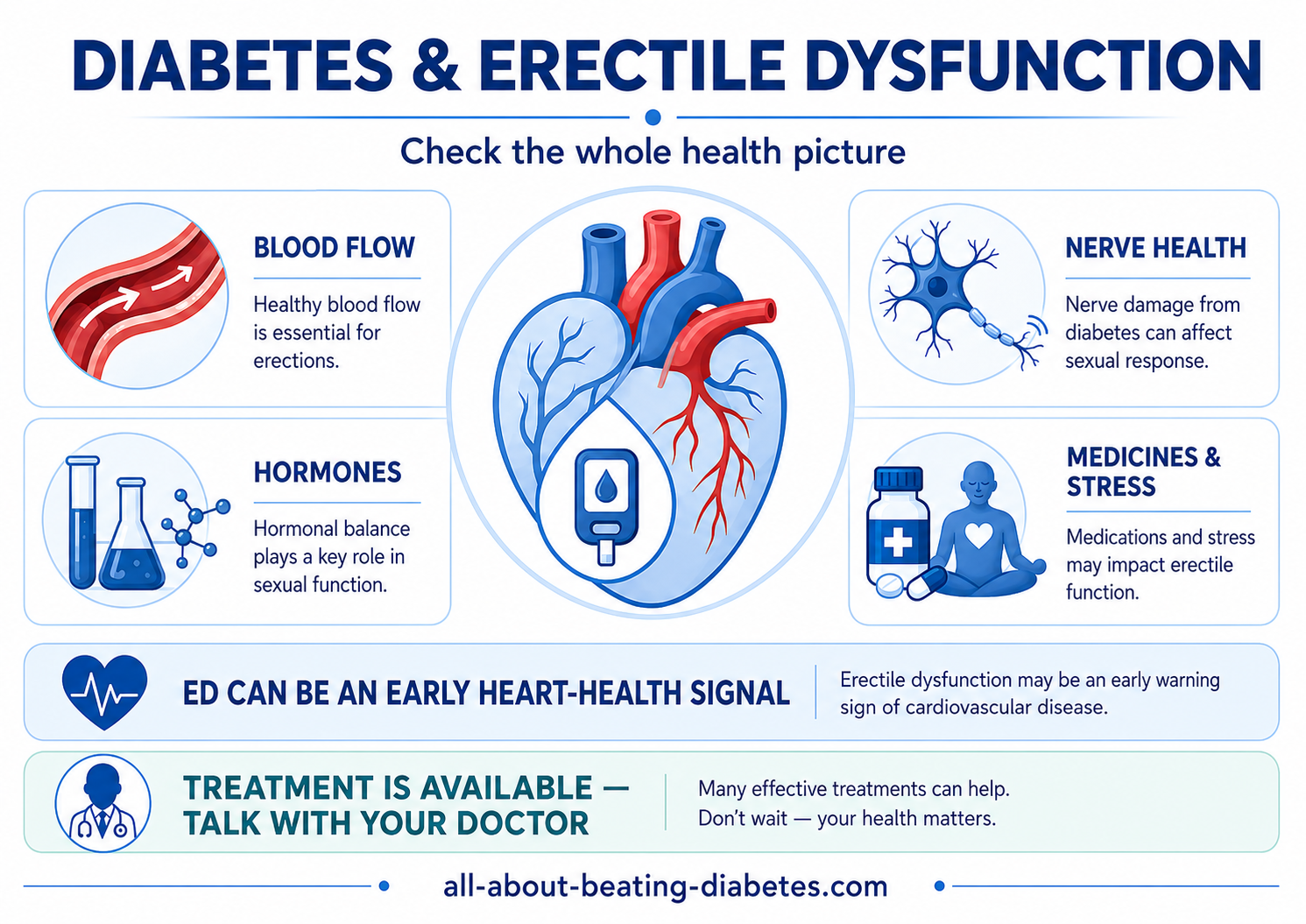
An erection needs healthy blood flow. Diabetes, high blood pressure, abnormal cholesterol, and smoking can impair the lining and narrowing of blood vessels, reducing blood flow to the penis.
Nerve damage
Diabetic neuropathy can disrupt the nerve signals that coordinate arousal and erection. Autonomic nerve damage may also affect sexual function.
Hormones and wellbeing
Low testosterone, depression, anxiety, relationship stress, sleep problems, alcohol, obesity, and certain medicines can reduce desire or make erections more difficult.
Sexual desire and erection are related but different. A man can have normal desire and still struggle with erections because of vascular or nerve damage. Another man may have reduced desire because of low testosterone, depression, stress, or medication effects. This distinction helps guide the evaluation.
What Symptoms Should You Discuss With Your Doctor?
- Difficulty getting an erection
- An erection that is not firm enough or does not last
- Fewer spontaneous or morning erections
- Reduced sexual desire
- A gradual or sudden change in sexual function
- Pain, curvature, a lump, or shortening of the penis
- Problems with ejaculation or orgasm
A sudden change, penile pain or curvature, testicular symptoms, or ED following pelvic injury or surgery needs specific medical assessment.

Why ED Can Be an Early Heart-Health Signal
The penile arteries are smaller than many coronary arteries. Vascular disease may therefore affect erections before obvious heart symptoms appear. Current cardiovascular guidance treats ED as a risk-enhancing marker that should prompt a review of blood pressure, cholesterol, smoking, kidney health, weight, physical activity, family history, and other cardiovascular risks.
How Will Your Doctor Evaluate Erectile Dysfunction?
Your doctor may ask when the problem began, whether it happens every time, whether morning erections remain, whether desire has changed, and whether there is pain or curvature. A medication and supplement review is important because some blood-pressure medicines, antidepressants, opioids, hormonal treatments, and other drugs can contribute.
The evaluation may include:
- Blood pressure, pulse, weight, cardiovascular and genital examination
- Glucose records and HbA1c
- Cholesterol, kidney function, and other cardiovascular-risk tests
- A morning total testosterone test when low libido or signs of hypogonadism are present
- Thyroid, prolactin, or other tests when indicated
- Assessment for neuropathy, depression, anxiety, relationship stress, and sleep apnea
- Specialist testing or urology referral when the diagnosis is unclear or initial treatment does not help
Evidence-Based Treatment Options
| Option | What it may involve |
|---|---|
| Risk-factor and lifestyle care | Safer glucose management, regular activity, weight management when appropriate, smoking cessation, limiting excess alcohol, adequate sleep, and treatment of blood pressure and cholesterol can support vascular health. Improvement may be gradual and is not guaranteed to reverse established nerve or vessel damage. |
| PDE5 inhibitor tablets | Sildenafil, tadalafil, vardenafil, or avanafil may improve blood flow when prescribed appropriately. They require sexual stimulation to work and do not automatically increase desire. |
| Psychological or relationship support | Counseling or sex therapy can help when anxiety, depression, stress, or relationship difficulties contribute, including alongside medical treatment. |
| Vacuum erection device | A non-drug device draws blood into the penis; a constriction ring helps maintain the erection. Correct sizing and instructions are important. |
| Alprostadil or injection therapy | Medicine may be placed in the urethra or injected into the penis under specialist instruction when tablets are unsuitable or ineffective. |
| Penile prosthesis | An implant may be considered after other treatments fail or are unsuitable. It requires surgery and discussion of infection, device, and recovery risks. |
Blood-vessel reconstruction is used only in carefully selected situations, such as certain focal arterial injuries. It is not a routine or reliably permanent treatment for the widespread vascular damage commonly associated with diabetes.
Important Safety Information About ED Medicines
- Discuss alpha-blockers, low blood pressure, severe heart disease, recent heart attack or stroke, kidney or liver disease, and all other medicines before treatment.
- Common effects can include headache, flushing, nasal congestion, indigestion, dizziness, and visual changes, depending on the medicine.
- Seek urgent care for an erection lasting four hours or longer, sudden vision loss, sudden hearing loss, chest pain, or fainting.
- Do not borrow another person’s medicine or buy unverified tablets or “natural Viagra” online.
The FDA has repeatedly found undeclared prescription-drug ingredients in some sexual-enhancement supplements. “Natural” does not guarantee safety, purity, or compatibility with heart medicines.
Can Better Diabetes Control Reverse ED?
Improving glucose management can protect blood vessels and nerves from further damage and may improve sexual function for some men, especially when combined with cardiovascular-risk treatment and healthier daily habits. However, established neuropathy or vascular disease may not reverse completely. A normal HbA1c also does not exclude other causes such as low testosterone, medication effects, depression, or heart disease.
Common Questions
Can a man with diabetes take Viagra?
Many men with diabetes can use prescribed sildenafil, but it is not safe for everyone. Nitrates are an absolute contraindication, and cardiovascular status, blood pressure, kidney or liver function, and other medicines must be reviewed first.
Do Viagra, Cialis, or Levitra contain testosterone?
No. Sildenafil, tadalafil, and vardenafil are PDE5 inhibitors, not testosterone. Testosterone is a separate hormone treatment used only when properly evaluated deficiency is present.
Does ED mean a man has lost sexual desire?
No. A man may have normal desire but impaired erection because of blood-vessel or nerve problems. Reduced desire can occur separately and may suggest hormonal, psychological, relationship, medication, or general-health factors.
Can herbal remedies cure diabetic ED?
No herbal product has been shown to cure diabetic ED. Supplements may interact with medicines or contain undeclared drug ingredients. Discuss any product with your doctor or pharmacist before taking it.
Related Questions
Have a private or general diabetes question? You can use our Ask a Diabetes Question page. Do not submit identifying personal or intimate information publicly.
Related Resources
References
- Comprehensive Medical Evaluation and Assessment of Comorbidities: Standards of Care in Diabetes—2026. American Diabetes Association.
- Erectile Dysfunction. National Institute of Diabetes and Digestive and Kidney Diseases.
- Princeton IV Consensus Guidelines: PDE5 Inhibitors and Cardiac Health. Journal of Sexual Medicine. 2024.
- Erectile Dysfunction as an ASCVD Risk-Enhancing Factor. American College of Cardiology.