- Home
- Diabetes Answers and Tools: Doctor-Reviewed Learning Center
- What Diabetes Testing Supplies Do I Need At Home
Diabetes Test Supplies: What You Need for Home Monitoring
When you check blood sugar at home, the meter is only one part of the system. You also need the exact strips made for that meter, a lancing device, single-use lancets, and a safe place for used sharps. I want you to choose supplies that are accurate, affordable to replace, easy for you to use, and appropriate for your personal diabetes plan.
A basic home blood sugar testing kit usually includes a glucose meter, the exact compatible test strips, a lancing device, new lancets, control solution, and a sharps container. Before buying a meter, compare the ongoing price and local availability of its strips—not only the meter price. Use new, unopened strips from a reliable source, store them exactly as directed, and follow your meter manual. Your healthcare team should tell you when to test and what action to take. A home meter helps monitor diabetes, but it cannot diagnose diabetes by itself.
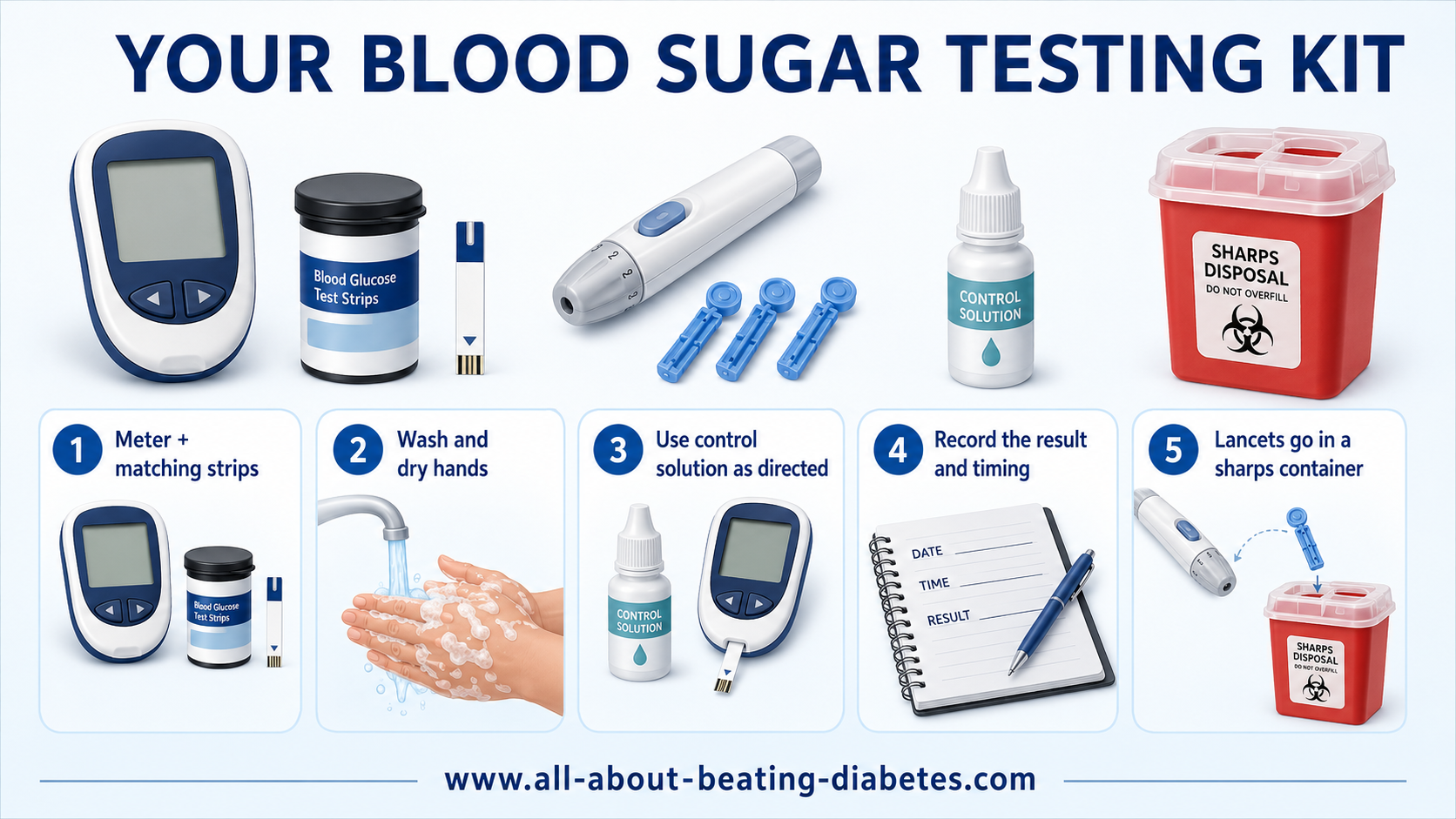

What Diabetes Testing Supplies Do You Need?
Your exact kit depends on whether you use finger-stick testing, a continuous glucose monitor (CGM), insulin, or a medicine that can cause low blood sugar. Not everyone needs every item below.
| Supply | What it does | Important point |
|---|---|---|
| Blood glucose meter | Measures glucose in a small drop of blood at that moment. | Choose a regulated meter you can use correctly and obtain support for locally. |
| Compatible glucose test strips | React with the blood sample so the meter can calculate a result. | Strips are meter-specific. Match the brand and model exactly. |
| Lancing device | Holds the lancet and controls puncture depth. | It is for one person only and should never be shared. |
| Single-use lancets | Prick the skin to obtain a blood drop. | Use a new lancet and place it immediately in an approved sharps container. |
| Control solution | Checks whether the meter and strips are working together within the expected control range. | Use the solution approved for your meter and follow the manual for when to check. |
| Sharps container | Reduces injuries from used lancets, pen needles, and syringes. | Keep it upright and away from children and pets; follow local disposal rules. |
| Results log or app | Records the number, time, meal, medicine, activity, symptoms, or illness. | Context makes a reading much more useful than a number alone. |
| Backup supplies | May include spare strips, lancets, meter batteries, charger, and a backup meter. | Especially important for insulin users, travel, power outages, and emergencies. |
| Ketone strips or blood ketone meter | Checks for ketones when your sick-day plan says to test. | Most important in type 1 diabetes and certain higher-risk situations; obtain personal instructions. |
| CGM supplies | May include sensors, applicators, transmitter, receiver, charger, patches, or skin-preparation products. | Keep access to a meter and strips when your CGM instructions or symptoms require confirmation. |
How to Choose a Blood Glucose Meter
There is no single best meter for every patient. I recommend choosing the system that you can use consistently and safely. Consider the following:
Accuracy and safety
- Choose a meter authorized or regulated in your country.
- Check official safety alerts or recalls for the model.
- Buy from a pharmacy, medical supplier, health plan, or other trustworthy seller.
- Make sure instructions and customer support are available in a language you understand.
Daily usability
- Display size, backlight, button size, and audio options.
- Blood-drop size and how quickly the result appears.
- Ease of inserting a strip and loading the lancing device.
- Memory, app connection, reports, and sharing with your healthcare team.
Also check whether the meter displays mg/dL or mmol/L. These units are not interchangeable. A result of 100 mg/dL is about 5.6 mmol/L. If you receive care or travel in a country that uses a different unit, label your records clearly and use a reliable mmol/L to mg/dL converter.
If you have arthritis, reduced vision, tremor, numb fingers, cognitive difficulty, or another disability, ask a diabetes educator or pharmacist to watch you use the meter before you commit to that system. A caregiver should also be trained if they may need to help you.
Why Matching and Storing Test Strips Matters
A glucose strip is not universal. Even strips from the same manufacturer may be designed for different meters. Using the wrong strip can produce an error or an unreliable result. Check the exact meter name and model on both the meter and strip package.
The U.S. Food and Drug Administration advises buying new, unopened strips and avoiding previously owned or secondhand strips. With pre-owned strips, you may not know whether they are expired, exposed to heat or moisture, contaminated, tampered with, or authorized for sale in your country.
- Check the expiration date before purchasing and before testing.
- Keep strips in their original vial or individual foil package.
- Close a vial immediately after removing one strip.
- Do not expose strips to humidity, direct sunlight, extreme heat, or freezing.
- Do not use a wet, bent, dirty, damaged, or discolored strip.
- Never apply blood before or after the step specified in your meter instructions.
- Do not move strips into another bottle, pill organizer, or plastic bag.
Some products have a shorter use period after the vial or control solution is first opened. Write the opening date on the container if the manufacturer tells you to do so. Follow the product label rather than assuming every brand lasts the same amount of time.
What Is Glucose Control Solution?
Control solution contains a known amount of glucose. You place it on a test strip instead of blood and compare the meter result with the control range printed for that strip lot. A control result within range suggests that the meter and strips are working together under the test conditions. It does not test the accuracy of your personal blood glucose.
Your manual may advise a control test when you open a new strip vial, when the meter is new or has been dropped, after unusual storage, when results do not match your symptoms, or at another specified interval. Use only the control solution made for your system, check its expiration and opened-use date, and do not swallow it or apply it to the skin.
How to Check Blood Sugar With a Meter
Always begin with your own meter instructions, because the order and sample application can differ. A typical finger-stick test follows these steps:
- Prepare the supplies. Check that the strip matches the meter and is not expired or damaged.
- Wash your hands with soap and water, then dry completely. Food or sugar on the fingers can falsely raise a result, while moisture can dilute the sample. If soap and water are unavailable, follow your device instructions for an alternative and allow the skin to dry fully.
- Insert the test strip as directed and wait for the meter's ready symbol.
- Load a new lancet. Use the shallowest depth that gives an adequate drop. Pricking the side of a fingertip may be more comfortable than the center.
- Obtain the blood drop. Warm hands and gently lowering the hand may help. Avoid forcefully squeezing the fingertip, which may affect the sample.
- Apply blood exactly as shown in the manual. Allow the strip to fill; do not add more blood unless the system specifically permits it.
- Read and record the result. Include the time and whether it was fasting, before a meal, after a meal, during symptoms, after activity, or during illness.
- Dispose of the lancet safely. Put it directly into a sharps container and store the other supplies clean and dry.
Alternate-site testing from the palm or forearm is not suitable in every situation. The FDA advises using a fingertip when glucose may be changing quickly, when you suspect low blood sugar, when you do not reliably feel lows, or when the result does not match how you feel.
How Often Should You Test Blood Sugar?
There is no correct schedule for everyone. Testing frequency depends on diabetes type, insulin regimen, other medicines, hypoglycemia risk, pregnancy, illness, activity, driving, work safety, glucose stability, and whether you use a CGM.
People using multiple daily insulin injections or an insulin pump may be asked to check at several decision points—for example before meals, at bedtime, around exercise, before driving, when low or high glucose is suspected, during illness, and after treating a low. A person with stable type 2 diabetes who does not use insulin or a medicine that commonly causes hypoglycemia may use fewer, targeted checks to answer specific questions. Checking repeatedly without a plan for interpreting and using the information may add cost and stress without improving care.
For help interpreting the timing, see my guide to blood sugar levels by time of day.
What to Do When a Meter Result Looks Wrong
Glucose meters are valuable, but no meter is perfectly exact. Technique, dirty or wet hands, strip damage, temperature, insufficient blood, dehydration, certain medicines or substances, and device problems can affect results. If the number is unexpected:
- Wash and dry your hands thoroughly.
- Repeat the test with a new, unexpired strip from the correct container.
- Check the meter display, strip expiration, storage conditions, battery, and error messages.
- Run control solution if the manual recommends it.
- If the result still does not match your symptoms or usual pattern, use a reliable backup method and contact your healthcare team or the meter manufacturer.
Do not make a large insulin or medication change from one suspicious result. If meter readings repeatedly disagree with laboratory glucose, A1C, or how you feel, bring the meter and strips to your appointment. Your clinician may watch your technique and compare your meter with a laboratory sample. Learn why results can differ in blood tests for diabetes.
Do CGM Users Still Need a Meter and Ketone Strips?
A CGM measures glucose in fluid under the skin, while a meter measures glucose in a drop of blood. CGM values may lag behind blood glucose when levels are changing quickly. Many modern systems are designed for treatment decisions, but the product instructions may still tell you to use a finger-stick result when symptoms do not match the sensor, the sensor is warming up, data are missing, glucose is changing rapidly, or accuracy is in doubt. Keep a compatible meter, unexpired strips, and lancets available as backup.
Ketone testing is different from glucose testing. Your clinician may advise urine ketone strips or a blood ketone meter during illness, vomiting, insulin interruption, persistent high glucose, or symptoms of diabetic ketoacidosis—especially with type 1 diabetes. People taking an SGLT2 inhibitor need a specific sick-day plan because ketoacidosis can sometimes occur without extremely high glucose. Do not guess when to test or how to interpret a ketone result; obtain personal instructions.
Seek urgent medical care for moderate or high ketones with vomiting, abdominal pain, deep or difficult breathing, fruity-smelling breath, severe weakness, confusion, or inability to keep fluids down. Read more about dangerous blood sugar levels and ketones.
How to Store Supplies and Prepare for Travel
- Follow the labeled temperature and humidity limits for the meter, strips, control solution, sensors, and insulin.
- Do not leave supplies in a hot or freezing car, direct sunlight, a humid bathroom, or next to a heater.
- Keep the meter and strips clean and dry in a protective case.
- Check expiration dates every few months and rotate emergency supplies before they expire.
- Carry supplies, medicines, fast-acting carbohydrate, and prescriptions in hand luggage rather than checked baggage.
- Pack more strips, lancets, sensors, batteries, and medicines than you expect to need.
- Keep a backup meter if uninterrupted monitoring is essential for safe insulin dosing.
- Carry a small travel sharps container and learn the disposal rules at your destination.
A disaster or travel kit may also include glucagon if prescribed, glucose tablets or another measured fast-acting carbohydrate, ketone supplies, insulin delivery supplies, chargers or power banks, and a written list of medicines and emergency contacts.
How to Dispose of Lancets Safely
Used lancets are sharps. The FDA recommends putting them into an FDA-cleared or locally approved sharps container immediately after use. The container should be puncture-resistant, leak-resistant, upright, stable, and fitted with a tight lid. Keep it away from children and pets, and do not overfill it.
Rules for disposing of a full container vary by country and community. Ask your pharmacy, clinic, waste authority, or public health department about drop-off sites, mail-back programs, or household disposal rules. Never place loose lancets in household trash or recycling, and never flush them down a toilet.
Common Testing-Supply Mistakes to Avoid
- Buying a meter before checking the price and availability of its strips.
- Using a strip made for a different meter model.
- Testing with unwashed, wet, or food-contaminated hands.
- Using expired, damaged, humid, frozen, overheated, or secondhand strips.
- Leaving a strip vial open or moving strips into another container.
- Ignoring an unexpected value that does not match symptoms.
- Changing insulin from one questionable reading without following a personal plan.
- Sharing a meter or lancing device without appropriate infection-control procedures.
- Throwing loose lancets into household trash.
- Assuming a normal home reading rules out diabetes.
Related Questions From Readers
- Why does my meter show very different readings minutes apart?
- Why do fasting readings vary from 97 to 107 mg/dL?
- Why is my A1C 6.6% when finger-stick readings look normal?
Related Resources
- Diabetes Home Testing Guide
- Blood Tests for Diabetes
- Blood Sugar Level Chart
- Understanding a Blood Glucose Reading
- Blood Sugar Levels by Time of Day
- Ask a Diabetes Question
Frequently Asked Questions About Diabetes Test Supplies
What supplies do I need to test blood sugar at home?
The basic kit includes a glucose meter, the exact test strips made for it, a lancing device, new lancets, control solution approved for the system, and a sharps container. You may also need a log or app, spare batteries, ketone supplies, CGM supplies, and emergency glucose treatment according to your care plan.
Do all glucose test strips work with every meter?
No. Test strips are designed for specific meter brands and models. Match the strip package to the exact meter model every time. A strip that fits physically is not necessarily compatible.
Can I use expired or secondhand diabetes test strips?
No. Expired or improperly stored strips can give unreliable results. The FDA also advises against previously owned strips because their storage, expiration, contamination, and authenticity may be uncertain. Buy new, unopened strips from a reliable source.
When should I use glucose control solution?
Follow your meter manual. It may recommend a control test with a new meter or strip vial, after the meter is dropped or stored improperly, or when a reading does not match your symptoms. Use only compatible, unexpired control solution.
Why do I get different glucose readings minutes apart?
Small differences are expected because meters and blood samples have natural variation. Large differences may result from dirty or wet hands, damaged strips, insufficient blood, temperature, storage problems, or a device issue. Wash and dry your hands, repeat with a new strip, and follow the troubleshooting guide. Contact your healthcare team if the mismatch persists or you have symptoms.
Can a home glucose meter diagnose diabetes?
No. A home meter can identify a concerning pattern and help you decide when to seek care, but diagnosis requires appropriate laboratory testing interpreted by a healthcare professional. Do not rule diabetes in or out from one finger-stick result.
Do I need a glucose meter if I use a CGM?
Usually, you should keep a meter and unexpired strips available. Your CGM instructions may require a finger-stick check when symptoms and sensor results disagree, during warm-up or signal loss, when glucose is changing rapidly, or when the sensor may be inaccurate.
How often should I change my lancet?
Use a new, sterile lancet for each finger-stick. Reuse can make the lancet dull, increase pain, and create infection and sharps-safety concerns. Never share a lancet or lancing device.
Where should I dispose of used lancets?
Place each used lancet immediately in an approved sharps container. When the container reaches its marked fill line, follow your local disposal program. Do not put loose lancets in trash or recycling and do not flush them.
When do I need ketone test strips?
Your clinician may recommend ketone testing during illness, vomiting, insulin interruption, persistent high glucose, or symptoms of ketoacidosis—especially in type 1 diabetes. People using SGLT2 inhibitors also need individualized sick-day instructions. Moderate or high ketones with vomiting, breathing difficulty, abdominal pain, severe weakness, or confusion need urgent medical assessment.
References
- American Diabetes Association Professional Practice Committee. Diabetes Technology: Standards of Care in Diabetes—2026.
- U.S. Food and Drug Administration. How to Safely Use Glucose Meters and Test Strips for Diabetes.
- U.S. Food and Drug Administration. Blood Glucose Monitoring Devices.
- National Institute of Diabetes and Digestive and Kidney Diseases. Managing Diabetes.
- National Institute of Diabetes and Digestive and Kidney Diseases. Diabetes Tests and Diagnosis.
- U.S. Food and Drug Administration. Safely Using Sharps at Home, at Work and on Travel.
- Centers for Disease Control and Prevention. Diabetes Care During Emergencies.