- Home
- Best diabetes diet
- How to Follow a Mediterranean Diet for Type 2 Diabetes
Mediterranean Diet for Diabetes: Benefits, Foods and Meal Plan
The Mediterranean diet is often recommended for people with diabetes because it combines high-fiber carbohydrates, vegetables, beans, fish, nuts and unsaturated fats in a pattern that is practical and heart-friendly. You do not need to live near the Mediterranean Sea to follow it—and you do not need to drink wine.
A Mediterranean diet can be a very good eating pattern for type 2 diabetes and prediabetes. Research suggests modest improvements in HbA1c, fasting glucose, weight and blood lipids, with strong cardiovascular benefits when the pattern is followed consistently. It does not cure diabetes, and portions still matter. Build meals around non-starchy vegetables, beans, whole grains in controlled portions, fish or other lean proteins, olive oil, nuts, seeds and whole fruit. Continue medication, insulin and glucose monitoring as prescribed.
On This Page

What Is a Mediterranean Diet for Diabetes?
The Mediterranean diet is not one fixed menu. It is an eating pattern inspired by traditional food habits in countries bordering the Mediterranean Sea. Albania, Greece, Italy, Spain, southern France, Türkiye and parts of North Africa have different cuisines, but they share several important features.
- Vegetables are eaten generously and frequently.
- Beans, lentils and chickpeas are regular protein and carbohydrate foods.
- Whole grains are used more often than refined grains.
- Whole fruit is chosen more often than juice or sweets.
- Olive oil is the main added fat.
- Nuts and seeds are included in moderate portions.
- Fish and seafood are eaten regularly.
- Poultry, eggs, yogurt and cheese may be included in suitable portions.
- Red and processed meats, sugary drinks, sweets and highly processed foods are limited.
This is not an “extraterrestrial” diet and it does not depend on imported foods. You can use local vegetables, local beans, affordable fish, whole grains and the unsaturated oils available where you live. The pattern matters more than copying a specific Italian or Greek recipe.
Does the Mediterranean Diet Really Help Diabetes?
Yes, it can help—but I want to describe the benefit realistically. Current American Diabetes Association guidance lists Mediterranean-style eating as one evidence-based option that can reduce cardiovascular risk and improve glucose metabolism. It is not the only acceptable pattern; DASH, vegetarian, lower-carbohydrate and other well-planned approaches can also work.
A 2025 meta-analysis of 11 randomized trials in adults with type 2 diabetes found that Mediterranean interventions produced modest average improvements compared with control diets. HbA1c fell by about 0.31 percentage points, fasting glucose by about 0.85 mmol/L, and BMI by about 0.83 kg/m². LDL cholesterol and diastolic blood pressure also improved modestly. Individual results varied, and medication changes, starting diet and adherence influenced the outcome.
| Possible benefit | What the evidence suggests | What it does not mean |
|---|---|---|
| HbA1c and fasting glucose | Average improvements are generally modest but can be clinically useful when the pattern replaces a highly processed diet. | It does not replace insulin or prescribed diabetes medicine. |
| Heart health | A Mediterranean pattern rich in olive oil, nuts and plant foods has strong cardiovascular evidence in higher-risk adults. | No single food prevents a heart attack, and cardiovascular medicines may still be necessary. |
| Weight management | High-fiber foods and minimally processed meals may improve fullness and support weight loss when total energy intake is appropriate. | Olive oil, nuts and cheese are nutritious but calorie-dense; unlimited portions can prevent weight loss. |
| Blood lipids | Replacing saturated fat and refined food with unsaturated fats, legumes, fish and whole grains may improve LDL and triglycerides. | The diet is not a substitute for statin treatment when a statin is indicated. |
| Diabetes prevention | Trials and cohort studies support a lower risk of developing type 2 diabetes, especially when the pattern is combined with activity and weight management. | Prevention is not guaranteed, and people with prediabetes still need follow-up testing. |
I recommend looking at the complete pattern rather than searching for one “magic” Mediterranean ingredient. Vegetables, beans, fish, whole grains, olive oil, nuts, appropriate portions, movement and medication work together. Olive oil alone cannot cancel a meal that is oversized or high in refined carbohydrates.
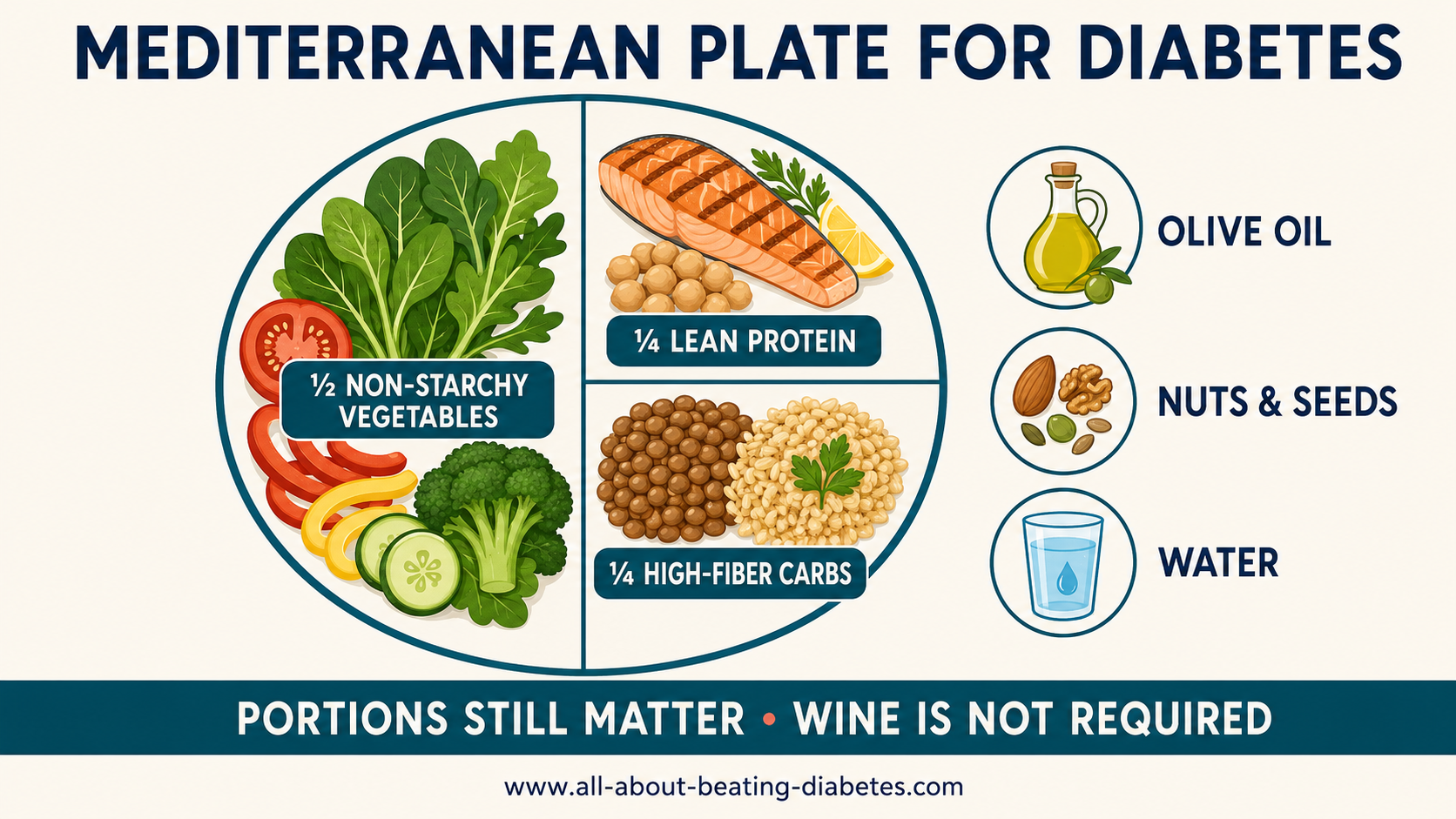
How to Build a Mediterranean Diabetes Plate
Add a small amount of olive oil, nuts, seeds or avocado if appropriate. Choose water or an unsweetened drink. Fruit can be included with the meal or as a snack, depending on your glucose plan.
The plate method is a visual starting point, not an exact prescription. People using mealtime insulin may count carbohydrate more precisely. Kidney disease, gastroparesis, celiac disease, food allergies, pregnancy and older age may require important changes.
Mediterranean Foods to Eat More Often—and What to Limit
| Choose more often | Choose in controlled portions | Limit |
|---|---|---|
| Leafy greens, tomatoes, peppers, broccoli, eggplant, zucchini, cabbage and other non-starchy vegetables | Whole fruit, whole grains, potatoes, corn, peas, beans, lentils and chickpeas | Sugary drinks, fruit juice, sweetened coffee and energy drinks |
| Fish, seafood, beans and lentils | Whole-grain bread, brown rice, bulgur, pasta and other starches | Large portions of white bread, white rice, refined pasta and pastries |
| Olive oil as the main added fat | Nuts, seeds, cheese, olives and avocado because calories and sodium can add up | Butter, lard, fatty processed meats and foods high in trans or saturated fat |
| Plain yogurt, herbs, spices, lemon, vinegar and garlic for flavor | Eggs, poultry and dairy according to your nutritional needs | Sweets, cookies, cakes, processed snacks and frequent fast food |
Frozen vegetables, low-sodium canned vegetables, canned beans rinsed under water and canned fish can all fit. Fresh does not automatically mean healthier than frozen, and an affordable meal can still follow the Mediterranean pattern.
For a broader food guide, see diabetes foods and blood sugar, how to build a diabetic meal plan and the glycemic index chart.
Carbohydrates Still Matter
A Mediterranean diet is not automatically low in carbohydrates. Bread, rice, pasta, fruit, milk, yogurt, potatoes and legumes all contain carbohydrate. Whole-grain bread can still raise glucose if the portion is large.
Fiber, protein and unsaturated fat may slow digestion and improve fullness, but they do not make carbohydrate disappear. If you use insulin, sulfonylureas or another medicine that can cause hypoglycemia, sudden large reductions in carbohydrate may require a treatment review.
Practical ways to control the glucose effect include:
- Measure the portion of bread, rice, pasta or potatoes rather than serving freely.
- Pair carbohydrate with vegetables and protein.
- Choose intact or minimally processed grains more often.
- Choose whole fruit instead of juice.
- Check your response one to two hours after selected meals if your clinician recommends it.
- Keep carbohydrate timing reasonably consistent when using fixed insulin doses.
Learn more from carbohydrates, glycemic index and diabetes and the carbohydrate counter.
Olive Oil, Nuts, Seeds and Omega-3 Fats
Olive oil
Olive oil is rich in monounsaturated fat and can replace butter, lard or creamy sauces. Extra-virgin olive oil also contains polyphenols. Its main benefit comes from substitution: using a suitable amount of olive oil instead of saturated fat inside a healthy pattern.
Olive oil does not directly “burn fat,” and pouring large amounts over every meal can add many calories. A practical serving may be one or two teaspoons in a meal, but the right amount depends on energy needs and the rest of the diet.
Nuts and seeds
Walnuts, almonds, hazelnuts, pistachios, sunflower seeds, chia and flaxseed provide unsaturated fats, fiber and minerals. A small handful—often around 28–30 grams—is a common portion. Choose unsalted versions when blood pressure or sodium is a concern.
People with allergies, swallowing problems, certain kidney restrictions or difficulty controlling portions need alternatives. Read more about walnuts and diabetes.
Fish and omega-3
Fatty fish such as sardines, salmon, trout, mackerel and herring supply EPA and DHA omega-3 fats. Fish can replace red or processed meat and supports cardiovascular nutrition. Plant foods such as walnuts, chia and flax provide ALA, a different omega-3 fat.
These foods are healthy, but it is too strong to claim that omega-3 foods automatically reverse insulin resistance. Omega-3 supplements are not routinely used to lower glucose. Discuss supplements with your clinician, especially if you take anticoagulants or have another medical condition.
Is Red Wine Required in the Mediterranean Diet?
No. Wine is not required, and current ADA guidance specifically advises people who do not drink alcohol not to start—even “in moderation.” The Mediterranean pattern remains complete without wine.
Alcohol can cause delayed hypoglycemia, especially in people using insulin or medicines that stimulate insulin release. It may also add calories, worsen triglycerides, affect blood pressure, interact with medication and contribute to liver disease or cancer risk.
If you already drink, ask your healthcare professional whether any amount is safe for you. Avoid alcohol during pregnancy and when it conflicts with liver, pancreatic, neurological or medication-related safety. Never omit food or insulin simply to “make room” for wine.
What About Antioxidants, Magnesium and Supplements?
Vegetables, fruit, legumes, nuts and olive oil naturally provide vitamins, minerals, fiber and plant compounds. That is a good reason to eat a varied pattern. It is not a reason to take high-dose antioxidant, beta-carotene, magnesium or herbal supplements for glucose control.
Current ADA guidance does not recommend routine magnesium, chromium, cinnamon, aloe vera or other supplement use for glycemic benefit. A confirmed deficiency should be evaluated and treated appropriately. More is not necessarily better, and supplements can interact with medicines or be unsafe with kidney or liver disease.
Three-Day Mediterranean Diabetes Meal Plan
This example shows the pattern, not a personal prescription. Portion sizes, carbohydrate amounts and meal timing should be adjusted for your energy needs, insulin plan, kidney health, allergies and glucose response.
| Day | Breakfast | Lunch | Dinner | Optional snack |
|---|---|---|---|---|
| 1 | Plain Greek yogurt with berries, one tablespoon of seeds and a small portion of oats | Lentil soup, tomato-cucumber salad with olive oil and one small slice of whole-grain bread | Grilled fish, roasted non-starchy vegetables and a measured portion of bulgur | Small apple with a few walnuts |
| 2 | Vegetable omelet with one small slice of whole-grain bread | Chickpea salad with leafy greens, peppers, cucumber, herbs, lemon and olive oil | Skinless chicken or tofu, sautéed greens and a small serving of brown rice | Plain yogurt or raw vegetables with hummus |
| 3 | Oatmeal with cinnamon, chopped almonds and a small portion of fruit | Bean stew with cabbage salad and plain yogurt if appropriate | Baked sardines or salmon, mixed salad and a small roasted potato | Pear or a small handful of unsalted nuts |
If snacks are not needed for your glucose or medication plan, you do not have to add them. If you use mealtime insulin, calculate carbohydrate according to the instructions from your diabetes team.
Seven Simple Ways to Start This Week
- Replace one sugary drink each day with water or unsweetened tea.
- Add one extra serving of non-starchy vegetables to lunch or dinner.
- Use beans or lentils as the main protein in one or two meals.
- Replace butter or lard with a measured amount of olive oil.
- Choose fish instead of processed meat at least once this week.
- Measure bread, rice, pasta and potatoes until you recognize your portion.
- Review fasting and after-meal glucose patterns with your healthcare team before changing medication.
You do not need to change every meal overnight. A pattern becomes useful when you can maintain it. Start with the substitutions that are easiest, then build from there.
As I explain to my patients, the Mediterranean diet is not a list of miracle foods. It is a flexible structure that can make vegetables, legumes, fish, whole grains and unsaturated fats the normal part of your meals. Keep carbohydrate portions visible, use olive oil and nuts in reasonable amounts, and watch your own glucose pattern. The diet should support your treatment—not replace it.
Frequently Asked Questions About the Mediterranean Diet and Diabetes
1. Is the Mediterranean diet good for type 2 diabetes?
Yes. It is an evidence-based option that may modestly improve HbA1c, fasting glucose, weight and blood lipids while supporting cardiovascular health. Results depend on portions, food quality, adherence and the full treatment plan.
2. Can people with type 1 diabetes follow a Mediterranean diet?
Yes, but carbohydrate counting and insulin matching remain essential. The diet cannot replace insulin. People using fixed insulin doses may need consistent carbohydrate amounts and timing.
3. Can I eat bread, rice or pasta?
Yes, in portions matched to your needs. Whole-grain choices are generally preferable, but they still contain carbohydrate. Pair them with vegetables and protein and monitor your response when advised.
4. Is fruit allowed?
Yes. Choose whole fruit rather than juice and control the portion. Berries, apples, pears, citrus fruit, peaches and other varieties can fit; there is no need to restrict yourself only to “Mediterranean” fruit.
5. How much olive oil should I use?
Use it as a replacement for saturated fat, not as an unlimited addition. The right amount depends on calorie needs, weight goals and the rest of your diet. Measuring it initially can prevent portions from becoming excessive.
6. Do I need to drink red wine?
No. Wine is not required, and people who do not drink should not start for health reasons. Alcohol can cause delayed hypoglycemia and other harms.
7. Will the Mediterranean diet help me lose weight?
It can support weight loss when total energy intake is lower than energy needs. Nuts, olive oil, cheese and avocado are nutritious but calorie-dense, so portions remain important.
8. Can I stop diabetes medication after starting this diet?
No medication should be stopped without medical supervision. Improved readings may eventually allow treatment adjustment for some people, but sudden changes can cause high or low blood sugar.
Related Questions
Related Resources
- Diabetes foods and blood sugar
- How to build a diabetic meal plan
- Planning a low-glycemic-load diet
- Walnuts and diabetes
- How to control diabetes safely
References
- American Diabetes Association. Facilitating Positive Health Behaviors and Well-being: Standards of Care in Diabetes—2026.
- Impact of the Mediterranean Diet on Glycemic Control, Body Mass Index, Lipid Profile, and Blood Pressure in Type 2 Diabetes: A Meta-Analysis of Randomized Controlled Trials.
- A network meta-analysis of dietary approaches for glycemic control and weight loss in type 2 diabetes with overweight or obesity.
- PREDIMED Study Investigators. Primary Prevention of Cardiovascular Disease with a Mediterranean Diet Supplemented with Extra-Virgin Olive Oil or Nuts.
- Reduction in the Incidence of Type 2 Diabetes With the Mediterranean Diet: PREDIMED-Reus Randomized Trial.
- National Institute of Diabetes and Digestive and Kidney Diseases. Healthy Living with Diabetes.