Walnuts and Diabetes: Benefits, Portions, and Blood Sugar Effects
Written by Dr. Albana Greca, MD, MMedSc, Family Physician
Medically reviewed by Dr. Ruden Cakoni, MD, Endocrinologist
Last medically reviewed: July 2026
Walnuts can be part of a nutritious eating pattern for people with diabetes. They provide unsaturated fats, plant protein, fiber, minerals, and alpha-linolenic acid, a plant-based omega-3 fatty acid. Because a typical portion contains relatively little digestible carbohydrate, walnuts usually have a modest immediate effect on blood glucose.
However, I do not want you to think of walnuts as a diabetes medicine. They have not been proven to prevent or cure diabetes on their own, and eating more than you need can add substantial calories.
Quick Answer
Walnuts are generally a diabetes-friendly food when eaten in an appropriate portion. They are low in digestible carbohydrate and rich in unsaturated fat, but they do not cure diabetes or reliably lower A1C. A practical serving is about 1 ounce or 28 grams—a small handful. Choose plain, unsalted walnuts and use them to replace a less nutritious snack or source of saturated fat rather than simply adding extra calories.
On this page:
What Nutrients Do Walnuts Provide?
Walnuts are nutrient-dense and provide healthy fats, plant protein, fiber, vitamins, minerals, and antioxidants in a relatively small serving.
Approximately 1 ounce or 28 grams of walnuts—about a small handful—provides roughly as shown below:
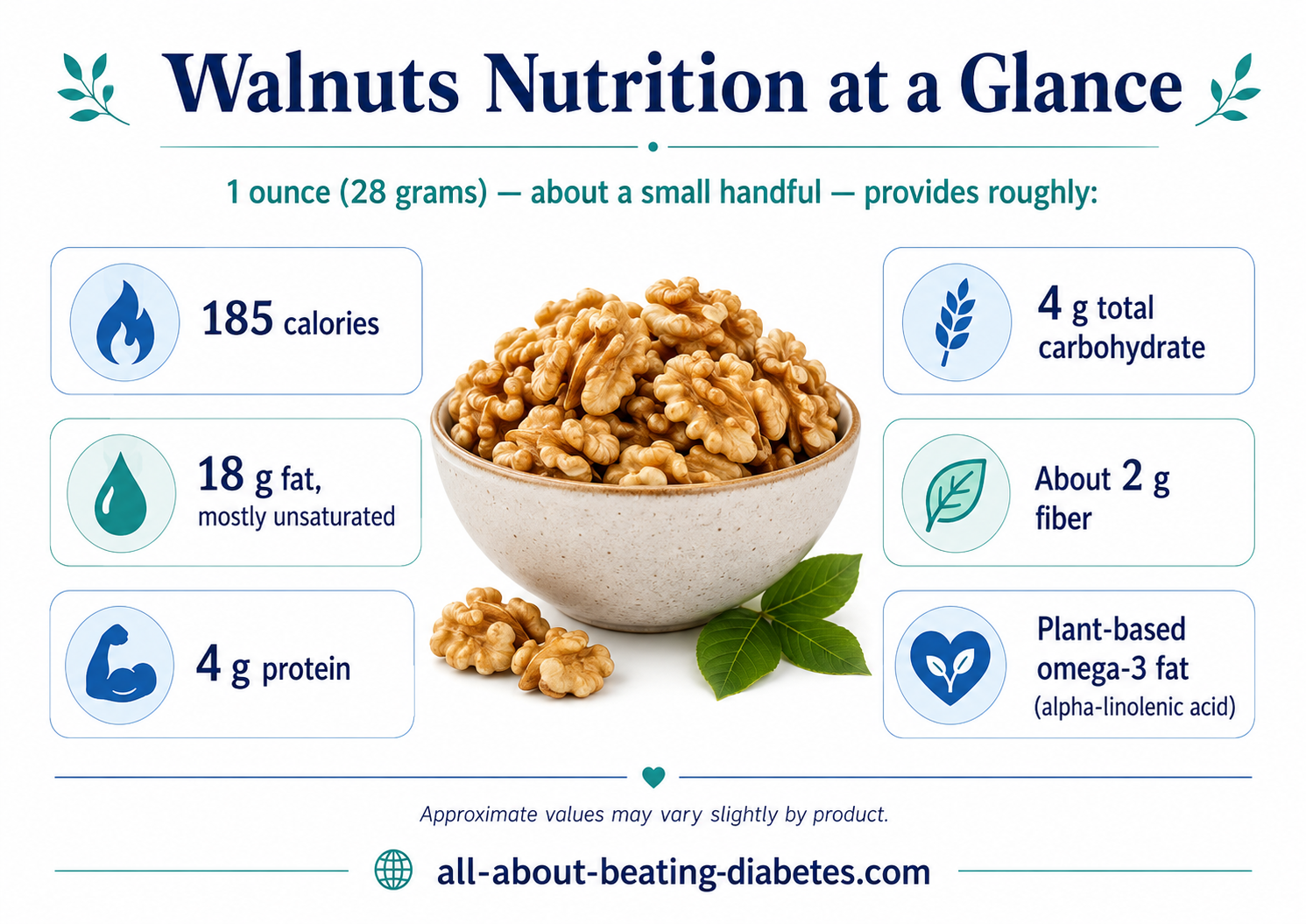

The precise amount varies according to the product and serving. Walnuts also provide magnesium, copper, manganese, and several plant compounds.
Most of their calories come from fat. This is mainly unsaturated fat, but the calorie content still matters when weight management is part of your diabetes plan.
Do Walnuts Raise Blood Sugar?
Plain walnuts usually have a small immediate effect on glucose because a normal serving contains relatively little digestible carbohydrate. They may be a useful alternative to crackers, cookies, chips, or other carbohydrate-rich snacks.
However, walnuts do not neutralize the carbohydrate in the rest of your meal. Adding walnuts to bread, rice, potatoes, or dessert does not remove those foods’ carbohydrate content.
Fat, protein, and fiber can slow digestion and may change the timing of the after-meal glucose response. This does not guarantee that your glucose will remain within target, especially when the meal contains a large carbohydrate portion.
Chocolate-covered, honey-roasted, candied, or sugar-coated walnuts may contain substantially more carbohydrate and added sugar than plain walnuts. Always check the Nutrition Facts label.
What do clinical trials show?
Research specifically examining walnuts and glucose control has produced mixed results.
A 2020 systematic review of randomized trials found that walnut consumption did not significantly improve fasting glucose, insulin, A1C, or measured insulin resistance. The researchers also identified concerns about the quality of some included studies.
A larger 2025 review of 32 randomized trials found a small improvement in one measure of insulin resistance but no significant change in fasting glucose, insulin, A1C, or body mass index.
I therefore consider walnuts a nutritious food—not a treatment for high blood sugar.
Can Walnuts Prevent Type 2 Diabetes?
One large prospective study followed women without diabetes and found that those who reported eating walnuts more often had a lower incidence of type 2 diabetes. Part of this association was related to differences in body weight.
This type of study cannot prove that walnuts directly prevented diabetes. People who regularly eat nuts may also exercise more, eat more nutritious foods, smoke less, or have other health behaviors that influence their risk.
Type 2 diabetes risk is shaped by many factors, including:
- Genetics and family history
- Age
- Body weight and fat distribution
- Physical activity
- Overall food and beverage choices
- Sleep and sleep apnea
- History of gestational diabetes
- Polycystic ovary syndrome
- Certain medicines and health conditions
Replacing a refined snack or food high in saturated fat with a suitable portion of walnuts may support a healthier dietary pattern. Walnuts alone cannot guarantee that diabetes will be prevented.
You can assess your wider risk profile with our type 2 diabetes risk calculator.
Can Walnuts Cure or Reverse Diabetes?
Walnuts cannot cure type 1 or type 2 diabetes. Although they can be included as part of a balanced, heart-healthy eating plan, no single food can replace appropriate diabetes treatment.
People with type 1 diabetes require insulin. Attempting to replace insulin with walnuts, another food, or a dietary supplement would be dangerous and could lead to diabetic ketoacidosis, a potentially life-threatening emergency.
Some people with type 2 diabetes may achieve remission following substantial and sustained weight loss, metabolic surgery, or another intensive, evidence-based intervention. However, remission is not produced by eating one particular food, and it does not mean that diabetes has been permanently cured.
Do not stop or reduce diabetes medication because you start eating walnuts. Medication changes should be based on your glucose patterns, overall health, and a plan agreed upon with your healthcare professional.
Walnuts, Diabetes, and Heart Health
People with diabetes have an increased risk of cardiovascular disease. Walnuts may support a heart-healthy eating pattern because they provide polyunsaturated fats, including alpha-linolenic acid.
The benefit depends partly on what the walnuts replace. Substituting walnuts for foods high in saturated fat or refined carbohydrate is more meaningful than adding them to an already calorie-rich diet.
A heart-supportive eating pattern also includes vegetables, legumes, whole fruit, high-fiber grains, fish, suitable protein sources, and other unsaturated fats. Blood pressure, cholesterol, smoking, activity, and prescribed medication remain important.
Do Walnuts Help With Weight Management?
Walnuts are energy-dense, but this does not mean they automatically cause weight gain. Their fat, protein, texture, and fiber may support fullness when eaten in a measured portion.
The 2025 meta-analysis found a very small average reduction in body weight with walnut consumption and no significant change in body mass index. This does not make walnuts a weight-loss treatment.
The practical issue is substitution:
- Helpful: Replacing cookies or chips with a small portion of walnuts
- Less helpful: Adding several handfuls of walnuts to your usual meals without reducing anything else
How Many Walnuts Can a Person With Diabetes Eat?
A practical starting portion is approximately 1 ounce or 28 grams—a small handful.
Depending on the size of the walnuts, this is approximately:
- About 14 walnut halves
- Approximately 7 whole walnut kernels
- About ¼ cup of shelled walnuts
You do not need to eat walnuts every day to obtain nutritional benefits. The appropriate frequency depends on your total calorie needs, weight goals, food preferences, allergies, kidney health, and the rest of your eating pattern.
If you find it easy to overeat nuts, measure one serving instead of eating directly from a large package.
Healthy Ways to Include Walnuts
You can use a small portion of plain walnuts to:
- Add crunch to oatmeal
- Top plain yogurt with berries
- Add to a vegetable salad
- Combine with a small portion of whole fruit
- Replace crackers, cookies, or chips as a snack
- Use in a homemade pesto or vegetable-based sauce
- Add to roasted vegetables
- Replace part of the processed meat or cheese in a meal
Choose raw or dry-roasted walnuts without added sugar. Unsalted varieties are preferable when you need to limit sodium.
Walnuts with fruit
Whole fruit and walnuts can form a satisfying snack. The walnuts do not remove the fruit’s carbohydrate, but the combination may be more filling than fruit juice or a sweetened snack.
Walnuts with oatmeal
Walnuts can add unsaturated fat and texture to oatmeal. Your glucose response will still depend on the type of oats, portion, milk, fruit, and added sweeteners.
For additional meal ideas, see my diabetic meal plan.
What About Walnut Oil?
Walnut oil provides unsaturated fats but little or none of the fiber and protein found in whole walnuts. It is calorie-dense, so use it in a measured amount.
Walnut oil can be used in salad dressings or added after cooking. It is not a blood sugar treatment and should not be taken by the spoonful to cure diabetes.
Are Walnut-Leaf Extracts Good for Diabetes?
Walnut-leaf extract is different from eating walnuts. A small number of clinical trials have studied extracts made from the leaves of Juglans regia, but the evidence is limited and inconsistent.
The available studies do not establish a standardized dose, long-term safety, medication interactions, or a clear benefit for A1C. I do not recommend walnut-leaf extract as a replacement for evidence-based diabetes treatment.
Tell your doctor and pharmacist before taking any herbal extract, particularly if you use insulin or another glucose-lowering medicine.
Walnut Safety and Precautions
Tree-nut allergy
A walnut allergy can cause a serious or life-threatening reaction. Do not eat walnuts or use walnut products if you have a known allergy. Seek emergency help for difficulty breathing, throat swelling, widespread hives, faintness, or another sign of anaphylaxis.
Calories and portion size
Walnuts are nutritious but calorie-dense. Frequent large portions can make weight-management goals more difficult.
Salt, sugar, and coatings
Flavored walnut products may contain added salt, sugar, honey, chocolate, or other ingredients. Check the label rather than assuming every walnut product is equally suitable.
Kidney disease
If you have advanced kidney disease or have been told to limit potassium, phosphorus, protein, or total calories, ask your renal dietitian whether walnuts fit your individual plan.
Difficulty chewing or swallowing
Whole nuts can be a choking hazard for young children and people with swallowing difficulties. Ground walnuts or a smooth nut butter may be more appropriate when advised.
My bottom line
Walnuts are a nutritious, low-carbohydrate food that can fit into a diabetes-friendly meal plan. Use a small portion to replace a less nutritious snack or source of saturated fat. Enjoy them as food—not as a cure, supplement, or substitute for diabetes treatment.
Frequently Asked Questions
What is the best time to eat walnuts for diabetes?
There is no clinically proven best time. You can include them with a meal or as a measured snack. Your total food intake, portion, glucose pattern, and medication schedule are more important than a specific time of day.
Can I eat walnuts in the morning?
Yes. A small portion can be added to oatmeal or plain yogurt. Remember to count the carbohydrate from the complete meal rather than looking only at the walnuts.
Can walnuts lower A1C?
Clinical trials have not shown a consistent, significant reduction in A1C from walnuts alone. They may support an overall nutritious diet, but they are not an A1C-lowering treatment.
Are walnuts better than almonds for diabetes?
Both can fit into a diabetes-friendly eating pattern. Walnuts provide more alpha-linolenic acid, while almonds provide a different nutrient profile. Portion size and what the nuts replace are usually more important than declaring one universally better.
Can walnuts treat low blood sugar?
No. Their fat and protein slow digestion, so walnuts do not act quickly enough to treat hypoglycemia. Use the fast-acting carbohydrate recommended in your hypoglycemia plan.
Related Questions
- Ask about foods and diabetes
- Ask about diabetes meal planning
- Ask about managing diabetes naturally
- Ask about supplements and diabetes
Related Resources
- Diabetic meal plan
- Low-glycemic diet
- Sugar-sweetened drinks and diabetes risk
- Type 2 diabetes information
- Diabetes and kidney health
References
- Impact of Walnut Consumption on Glycemic Control and Anthropometric Indices: A Systematic Review and Meta-Analysis
- Effect of Walnut Consumption on Markers of Blood Glucose Control: A Systematic Review and Meta-Analysis
- Walnut Consumption Is Associated With Lower Risk of Type 2 Diabetes in Women
- Effect of Tree Nuts on Glycemic Control in Diabetes: A Systematic Review and Meta-Analysis
- American Diabetes Association: Facilitating Positive Health Behaviors and Well-being—Standards of Care in Diabetes—2026
This information is for general education and does not replace individual medical or nutritional advice.