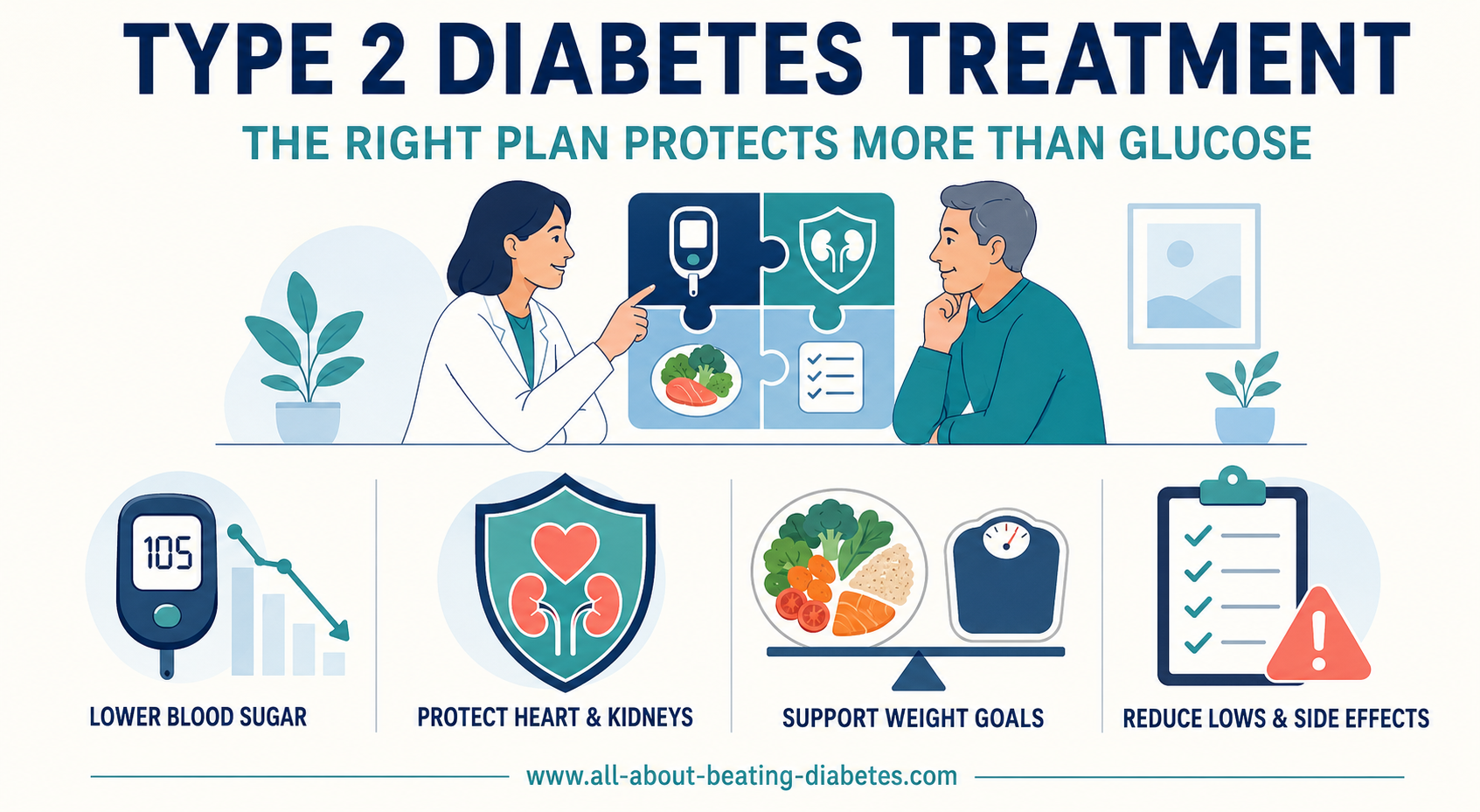
Type 2 diabetes treatment is not one fixed sequence of tablets. I choose treatment with my patient by looking at glucose, heart and kidney health, weight goals, low-blood-sugar risk, side effects, cost, and what the person can realistically use every day.

How Type 2 Diabetes Treatment Has Changed
Type 2 diabetes usually involves both insulin resistance and a gradual loss of adequate insulin production. Early in the condition, the pancreas may still make substantial insulin, but it may not meet the body’s needs. Over time, beta-cell function can decline.
Older treatment plans mainly asked, “Which drug lowers glucose?” Modern treatment asks several questions:
- Does this person have atherosclerotic cardiovascular disease or a high cardiovascular risk?
- Is heart failure present?
- Is there chronic kidney disease or albumin in the urine?
- How far is HbA1c above the individualized goal?
- Is weight loss or prevention of weight gain an important goal?
- Could the medicine cause hypoglycemia?
- What are the kidney and liver functions?
- Are cost, availability, injections, dosing frequency, or side effects likely to prevent regular use?
Some medicines now have proven heart or kidney benefits that are partly independent of their glucose effect. This is why metformin is no longer the only possible first priority.
The Foundation of Type 2 Diabetes Treatment
Medicines work best inside a complete care plan. Treatment may include:
- Diabetes self-management education and support: learning how food, medicines, illness, activity, and stress affect glucose.
- Individualized nutrition: suitable carbohydrate portions, high-fiber foods, nonstarchy vegetables, protein, healthy fats, and fewer sugar-sweetened drinks.
- Physical activity: aerobic movement, resistance exercise, and less prolonged sitting when medically safe.
- Weight management: when appropriate and desired, using lifestyle treatment, medication, or metabolic surgery according to eligibility and preference.
- Glucose monitoring: finger-stick testing or continuous glucose monitoring when it will guide decisions.
- Cardiovascular and kidney protection: blood-pressure treatment, cholesterol management, smoking cessation, and kidney screening.
- Sleep and emotional health: assessment of sleep apnea, depression, anxiety, and diabetes distress.
Lifestyle treatment is essential, but needing medicine does not mean you failed. Type 2 diabetes is a progressive biological condition for many people.
How Is the Best Type 2 Diabetes Medicine Chosen?
Common treatment priorities
- Heart failure: an SGLT2 inhibitor with proven benefit is generally prioritized when appropriate.
- Chronic kidney disease: an SGLT2 inhibitor is recommended for many people with type 2 diabetes and an eGFR of at least 20 mL/min/1.73 m² to slow kidney decline and reduce heart-failure risk; a GLP-1 receptor agonist with cardiovascular benefit may also be used.
- Established cardiovascular disease or high risk: a GLP-1 receptor agonist and/or SGLT2 inhibitor with proven cardiovascular benefit may be selected regardless of whether additional glucose lowering is needed.
- Strong weight-loss goal: GLP-1–based treatment, particularly higher-efficacy options, may be prioritized when safe and accessible.
- Need to minimize hypoglycemia: metformin, SGLT2 inhibitors, GLP-1–based medicines, DPP-4 inhibitors, and thiazolidinediones have a low risk when used alone.
- Cost is the main barrier: lower-cost medicines such as metformin, selected sulfonylureas, thiazolidinediones, or human insulin may be considered—but their safety tradeoffs still matter.
If HbA1c is substantially above goal—often about 1.5 percentage points or more above the individualized target—starting two complementary medicines may provide faster and more durable control than slowly adding one at a time.
Type 2 Diabetes Medication Comparison
| Class and examples | How it works | Weight and hypoglycemia | Important benefits and cautions |
|---|---|---|---|
| Metformin Immediate- or extended-release |
Reduces liver glucose production and improves insulin sensitivity. | Weight neutral or modest loss; low hypoglycemia risk alone. | Effective, familiar, and inexpensive. Gastrointestinal effects and vitamin B12 deficiency can occur; kidney function guides use. |
| GLP-1 receptor agonists Semaglutide, dulaglutide, liraglutide and others Dual GIP/GLP-1 Tirzepatide |
Increase glucose-dependent insulin release, reduce glucagon, slow stomach emptying, and reduce appetite. | Often meaningful weight loss; low hypoglycemia risk unless combined with insulin or an insulin secretagogue. | Strong glucose lowering; some GLP-1 medicines have cardiovascular and kidney benefits. Nausea and other gastrointestinal effects are common. |
| SGLT2 inhibitors Empagliflozin, dapagliflozin, canagliflozin and others |
Help the kidneys release more glucose into the urine. | Modest weight loss; low hypoglycemia risk alone. | Important heart-failure and kidney benefits. Genital yeast infection, dehydration, and rare ketoacidosis require precautions. |
| DPP-4 inhibitors Sitagliptin, linagliptin, saxagliptin, alogliptin |
Prolong incretin hormone activity, increasing glucose-dependent insulin and reducing glucagon. | Weight neutral; low hypoglycemia risk alone. | Oral and generally well tolerated, but glucose lowering is modest. Saxagliptin and alogliptin carry heart-failure warnings. |
| Sulfonylureas Glipizide, glimepiride, gliclazide; glyburide in some settings |
Stimulate pancreatic beta cells to release insulin, even when glucose is not high. | Weight gain and meaningful hypoglycemia risk. | Effective and inexpensive. Lows may be prolonged, especially with long-acting agents, kidney impairment, missed meals, or older age. |
| Meglitinides Repaglinide, nateglinide |
Produce a shorter meal-related increase in insulin secretion. | Possible weight gain and hypoglycemia. | Flexible around meals but require frequent dosing; skip according to the prescription when a meal is skipped. |
| Thiazolidinediones Pioglitazone, rosiglitazone |
Improve insulin sensitivity through PPAR-gamma activity. | Weight gain; low hypoglycemia risk alone. | Durable glucose effect but can cause fluid retention, worsen heart failure, and increase fracture risk. |
| Alpha-glucosidase inhibitors Acarbose, miglitol |
Slow carbohydrate digestion in the intestine and reduce post-meal glucose rises. | Weight neutral; low hypoglycemia risk alone. | Gas, bloating, and diarrhea are common. If a low occurs with another medicine, treat with glucose rather than ordinary table sugar. |
| Insulin Basal, mealtime, premixed, or combination regimens |
Replaces or supplements the body’s insulin and lowers liver glucose output. | Hypoglycemia and weight gain can occur. | Most powerful and flexible glucose-lowering option. Requires dose education, monitoring, injection technique, and hypoglycemia planning. |
This table summarizes class effects. Individual medicines within a class may have different approved uses, kidney limits, cardiovascular evidence, warnings, and costs.
Metformin: A Common Starting Medicine
Metformin is the main biguanide used for type 2 diabetes. It lowers glucose primarily by reducing glucose production by the liver and improving insulin sensitivity. It can be used across a wide range of body sizes; it is not only for people with obesity.
Advantages include:
- good glucose-lowering effectiveness;
- low cost and wide availability;
- little risk of hypoglycemia when used alone;
- weight neutrality or modest weight loss;
- long clinical experience.
Common side effects are diarrhea, nausea, abdominal discomfort, and a metallic taste. Starting with a lower dose, increasing gradually, taking it with food, or using extended-release metformin may improve tolerance.
Long-term use can reduce vitamin B12 absorption, so testing may be appropriate—especially with anemia, numbness, neuropathy symptoms, or prolonged treatment.
Kidney function must be reviewed. U.S. labeling contraindicates metformin when eGFR is below 30 mL/min/1.73 m² and does not recommend starting it when eGFR is 30–45. Temporary interruption may be needed during serious acute illness, dehydration, surgery, or selected contrast-imaging procedures according to the medical team.
Metformin-associated lactic acidosis is rare, but the risk rises with severe kidney failure, tissue hypoxia, severe liver disease, or another major acute illness.
GLP-1 Receptor Agonists and Dual GIP/GLP-1 Treatment
GLP-1 receptor agonists and the dual GIP/GLP-1 medicine tirzepatide are called GLP-1–based therapies. Most are injections, but oral semaglutide is available.
They work only partly by stimulating insulin. Their actions also include reducing inappropriate glucagon release, slowing stomach emptying, increasing fullness, and reducing appetite. This produces strong glucose lowering and often substantial weight loss.
Some GLP-1 receptor agonists have demonstrated cardiovascular benefit, and certain agents also have kidney benefits. In many adults who need an injectable medicine but do not have severe hyperglycemia or catabolic symptoms, GLP-1–based therapy is preferred before starting insulin.
Main cautions include:
- nausea, vomiting, diarrhea, constipation, abdominal discomfort, or reduced appetite;
- dehydration and kidney problems if vomiting or diarrhea is severe;
- gallbladder disease;
- pancreatitis warning and the need to evaluate severe persistent abdominal pain;
- caution with severe gastroparesis or major digestive-motility problems;
- product-specific thyroid C-cell tumor warnings and contraindications for a personal or family history of medullary thyroid carcinoma or MEN2.
Rapid improvement in glucose can temporarily worsen retinopathy in some people with existing diabetic eye disease, so the eye history matters when intensifying treatment. A GLP-1 receptor agonist should not be combined with a DPP-4 inhibitor because the combination adds cost without meaningful additional benefit.
SGLT2 Inhibitors: Glucose, Heart, and Kidney Treatment
SGLT2 inhibitors reduce glucose reabsorption in the kidneys, causing some glucose to leave through the urine. Their glucose-lowering effect becomes smaller at lower kidney function, but heart and kidney benefits may remain important.
These medicines are particularly valuable for many people with:
- heart failure;
- chronic kidney disease;
- albumin in the urine;
- established cardiovascular disease or high cardiovascular risk.
Important risks include genital yeast infections, increased urination, dehydration, dizziness, and a fall in blood pressure. Serious urinary infection and Fournier gangrene are rare but require urgent care.
SGLT2 inhibitors can rarely cause diabetic ketoacidosis even when glucose is not extremely high. Stop the medicine and seek urgent assessment for nausea, vomiting, abdominal pain, deep or difficult breathing, severe weakness, dehydration, or ketones.
Fasting, very-low-carbohydrate or ketogenic diets, acute illness, surgery, dehydration, heavy alcohol use, and substantial insulin reduction can increase ketoacidosis risk. These medicines are generally held before major surgery or prolonged fasting—commonly for at least three days, with product-specific instructions—then restarted only when the patient is stable and eating. Follow the prescriber’s exact plan.
DPP-4 Inhibitors
DPP-4 inhibitors are oral medicines that prolong the action of natural incretin hormones. They provide modest glucose lowering, are weight neutral, and have a low hypoglycemia risk when used alone.
They may be considered when a simple oral medicine with good tolerability is needed, particularly when stronger weight loss or cardiovascular benefits are not the primary goal.
Most require kidney-based dose adjustment, although linagliptin generally does not. Saxagliptin and alogliptin carry warnings about heart failure risk. Severe joint pain, allergic reactions, pancreatitis, and bullous pemphigoid are uncommon class concerns requiring medical review.
Read more about saxagliptin, alogliptin, and heart-failure precautions.
Sulfonylureas and Meglitinides
Sulfonylureas
Sulfonylureas stimulate beta cells to release insulin whether or not glucose is high. They can lower glucose effectively and are often inexpensive, but the tradeoffs are hypoglycemia and weight gain.
Chlorpropamide is an older, long-acting first-generation sulfonylurea and is generally not favored because prolonged hypoglycemia and other adverse effects are more likely. Modern choices may include glipizide, glimepiride, gliclazide in many countries, and glyburide in selected settings. Glyburide can also cause prolonged lows and is often avoided in older adults or kidney impairment.
Hypoglycemia risk rises with missed meals, fasting, alcohol, kidney or liver impairment, unplanned exercise, older age, and combination with insulin or other glucose-lowering products. See the complete guide to sulfonylurea side effects and safer alternatives.
Meglitinides
Repaglinide and nateglinide stimulate a shorter burst of insulin around meals. They may offer flexibility for people with variable meal times, but frequent dosing is inconvenient and hypoglycemia can still occur. Follow the prescription about skipping a dose when a meal is skipped.
Thiazolidinediones: Pioglitazone and Rosiglitazone
Thiazolidinediones, also called TZDs, improve insulin sensitivity through PPAR-gamma receptors. Their glucose-lowering effect develops gradually and can be durable.
The most important concerns are fluid retention, weight gain, worsening heart failure, and increased fracture risk. Macular edema can occur. Pioglitazone also carries a bladder-cancer warning and requires careful evaluation in anyone with active bladder cancer or unexplained blood in the urine.
Clinically significant liver injury is uncommon, so it is inaccurate to say that TZDs routinely cause “severe liver damage.” Liver tests are generally checked before treatment and repeated when symptoms or clinical concerns arise. Report jaundice, dark urine, severe fatigue, persistent nausea, or right-upper abdominal pain.
TZDs should not be used in symptomatic heart failure, and new swelling, rapid weight gain, or shortness of breath needs prompt assessment.
Alpha-Glucosidase Inhibitors
Acarbose and miglitol slow the breakdown of carbohydrate in the intestine. They mainly reduce the rise in glucose after meals.
They do not usually cause hypoglycemia by themselves, but gas, bloating, abdominal discomfort, and diarrhea are common. When hypoglycemia occurs because the medicine is combined with insulin or a secretagogue, it should be treated with glucose tablets or glucose gel—not table sugar—because carbohydrate digestion is delayed.
Less commonly used medicines
Other options include colesevelam, bromocriptine-QR, and pramlintide. They are used less often because their glucose effect, dosing complexity, side effects, or other limitations usually make more common options preferable. Availability differs by country.
When Is Insulin Needed for Type 2 Diabetes?
Insulin can overcome both insulin resistance and reduced pancreatic insulin production when dosed appropriately. Using insulin in type 2 diabetes is not contradictory and does not mean treatment failed.
Insulin may be started when:
- glucose is very high—for example around 300 mg/dL or higher—or HbA1c is above about 10%;
- there is unexplained weight loss, marked thirst and urination, ketosis, or another catabolic symptom;
- type 1 diabetes or another severe insulin-deficient form is possible;
- pregnancy, severe illness, surgery, steroid treatment, or hospitalization changes insulin needs;
- non-insulin medicines are contraindicated, not tolerated, unavailable, or insufficient.
These numbers are not automatic rules. A clinician assesses symptoms, ketones, hydration, diabetes type, illness, and the complete glucose pattern.
Basal insulin is often the first insulin added in type 2 diabetes. If fasting glucose reaches target but HbA1c or after-meal glucose remains high, the team may add or adjust GLP-1–based treatment, mealtime insulin, or another medicine rather than continuing to raise basal insulin.
Insulin requires education about injection technique, storage, timing, glucose monitoring, driving, physical activity, sick days, and hypoglycemia. Never stop or sharply reduce insulin for weight loss.
Read the related patient answer explaining why insulin can still work when type 2 diabetes involves insulin resistance.
Combination Treatment
Many people eventually need two or more medicines because the classes act on different parts of glucose regulation. Combining lower doses may sometimes provide better control with fewer side effects than pushing one medicine to its maximum.
Common combinations include metformin with an SGLT2 inhibitor, GLP-1–based medicine, DPP-4 inhibitor, sulfonylurea, or insulin. Fixed-dose combination tablets can reduce pill burden but may make dose adjustment less flexible.
Some combinations are generally avoided:
- a GLP-1 receptor agonist together with a DPP-4 inhibitor;
- two medicines from the same class;
- combinations that create unacceptable hypoglycemia, dehydration, fluid retention, or other overlapping risks.
When a new medicine is added, older medicines should be reviewed rather than automatically continued forever. Doses of insulin or sulfonylureas may need reduction to prevent hypoglycemia.
How Treatment Is Monitored and Adjusted
I review more than the HbA1c. Follow-up may include:
- fasting, before-meal, after-meal, overnight, or continuous glucose patterns;
- HbA1c approximately every three months while treatment is changing or above goal, and less often when stable;
- hypoglycemia, including episodes during sleep, exercise, work, or driving;
- weight, appetite, gastrointestinal symptoms, hydration, and blood pressure;
- kidney function and urine albumin;
- liver tests when clinically indicated;
- vitamin B12 during long-term metformin use when appropriate;
- heart failure symptoms, genital or urinary infections, and ketone risk;
- cost, access, missed doses, injection concerns, and treatment burden.
Treatment should be intensified when it is not protecting health, but it should also be simplified or reduced when low glucose, frailty, major weight loss, kidney decline, side effects, or an overly complicated regimen makes the current plan unsafe.
Use HbA1c together with daily glucose patterns rather than judging treatment from one reading.
When to Contact Your Doctor or Seek Urgent Care
Contact your diabetes team if you have repeated glucose above or below your target, frequent lows, medication side effects, vomiting or diarrhea, new swelling, rapid weight change, genital or urinary symptoms, inability to afford treatment, or uncertainty about how to take a medicine.
Seek urgent medical help for:
- confusion, seizure, unconsciousness, or inability to swallow safely;
- severe or repeated hypoglycemia that is not responding to treatment;
- very high glucose with vomiting, dehydration, abdominal pain, deep breathing, fruity-smelling breath, or ketones;
- possible ketoacidosis while taking an SGLT2 inhibitor, even if glucose is below 250 mg/dL;
- chest pain, stroke symptoms, severe breathing difficulty, or a serious allergic reaction.
Do not stop metformin, insulin, an SGLT2 inhibitor, a GLP-1 medicine, or another prescribed treatment solely because of something you read online. Ask for an individualized medication and sick-day plan.
Frequently Asked Questions
What is the best medication for type 2 diabetes?
There is no single best medicine for everyone. The safest choice depends on glucose, heart and kidney disease, weight goals, hypoglycemia risk, kidney and liver function, side effects, cost, access, and preference.
Is metformin always the first treatment?
No. Metformin remains a common and effective starting medicine, but a GLP-1 receptor agonist or SGLT2 inhibitor may be prioritized when cardiovascular disease, heart failure, kidney disease, or weight management is a major concern.
Can type 2 diabetes be treated without medicine?
Some people with mild early hyperglycemia may reach their target through intensive lifestyle and weight management, but many need medicine at diagnosis or later. Do not delay treatment when glucose is high or symptoms are present.
Does starting insulin mean type 2 diabetes has become type 1?
No. Diabetes type is defined by its cause, not by the treatment. A person with type 2 diabetes may need insulin because the pancreas no longer produces enough for the body’s needs.
Which diabetes medicines are most likely to cause low blood sugar?
Insulin, sulfonylureas, and meglitinides carry the greatest routine hypoglycemia risk. Other classes have a low risk when used alone but may contribute when combined with these treatments or when food intake changes.
Which medicines may help with weight loss?
GLP-1 receptor agonists and dual GIP/GLP-1 treatment generally have the strongest weight-loss effects among diabetes medicines. SGLT2 inhibitors and metformin may produce smaller losses. Sulfonylureas, TZDs, and insulin may cause weight gain.
Can diabetes medicines protect the heart and kidneys?
Yes. Certain SGLT2 inhibitors and GLP-1 receptor agonists have proven cardiovascular or kidney benefits. The evidence and approved indications differ among individual medicines.
Can I stop medicine when my HbA1c becomes normal?
Only after a clinician reviews why it improved and whether the medicine is also protecting your heart or kidneys. A good result often means the current plan is working. Stopping it may allow glucose to rise again.
References
- American Diabetes Association Professional Practice Committee. Pharmacologic Approaches to Glycemic Treatment: Standards of Care in Diabetes—2026.
- American Diabetes Association Professional Practice Committee. Cardiovascular Disease and Risk Management: Standards of Care in Diabetes—2026.
- American Diabetes Association Professional Practice Committee. Chronic Kidney Disease and Risk Management: Standards of Care in Diabetes—2026.
- American Diabetes Association Professional Practice Committee. Obesity and Weight Management for the Prevention and Treatment of Diabetes: Standards of Care in Diabetes—2026.
- American Diabetes Association Professional Practice Committee. Glycemic Goals, Hypoglycemia, and Hyperglycemic Crises: Standards of Care in Diabetes—2026.
- Endotext. Management of Type 2 Diabetes: Selecting Amongst Available Pharmacological Agents. Updated April 2026.
- Endotext. Oral and Injectable Non-Insulin Pharmacological Agents for the Treatment of Type 2 Diabetes.
- U.S. Food and Drug Administration. Metformin Use in Certain Patients With Reduced Kidney Function.
- U.S. Food and Drug Administration. SGLT2 Inhibitor Ketoacidosis and Serious Urinary Tract Infection Warnings.
- National Institute of Diabetes and Digestive and Kidney Diseases. Low Blood Glucose (Hypoglycemia).
Medical disclaimer: This page is for general education and does not select a medicine, dose, glucose target, or treatment sequence for an individual. Do not start, stop, or change diabetes medication or insulin without your prescribing clinician. Pregnancy, childhood, severe illness, surgery, kidney or liver disease, suspected type 1 diabetes, and recurrent hypoglycemia require individualized specialist guidance.