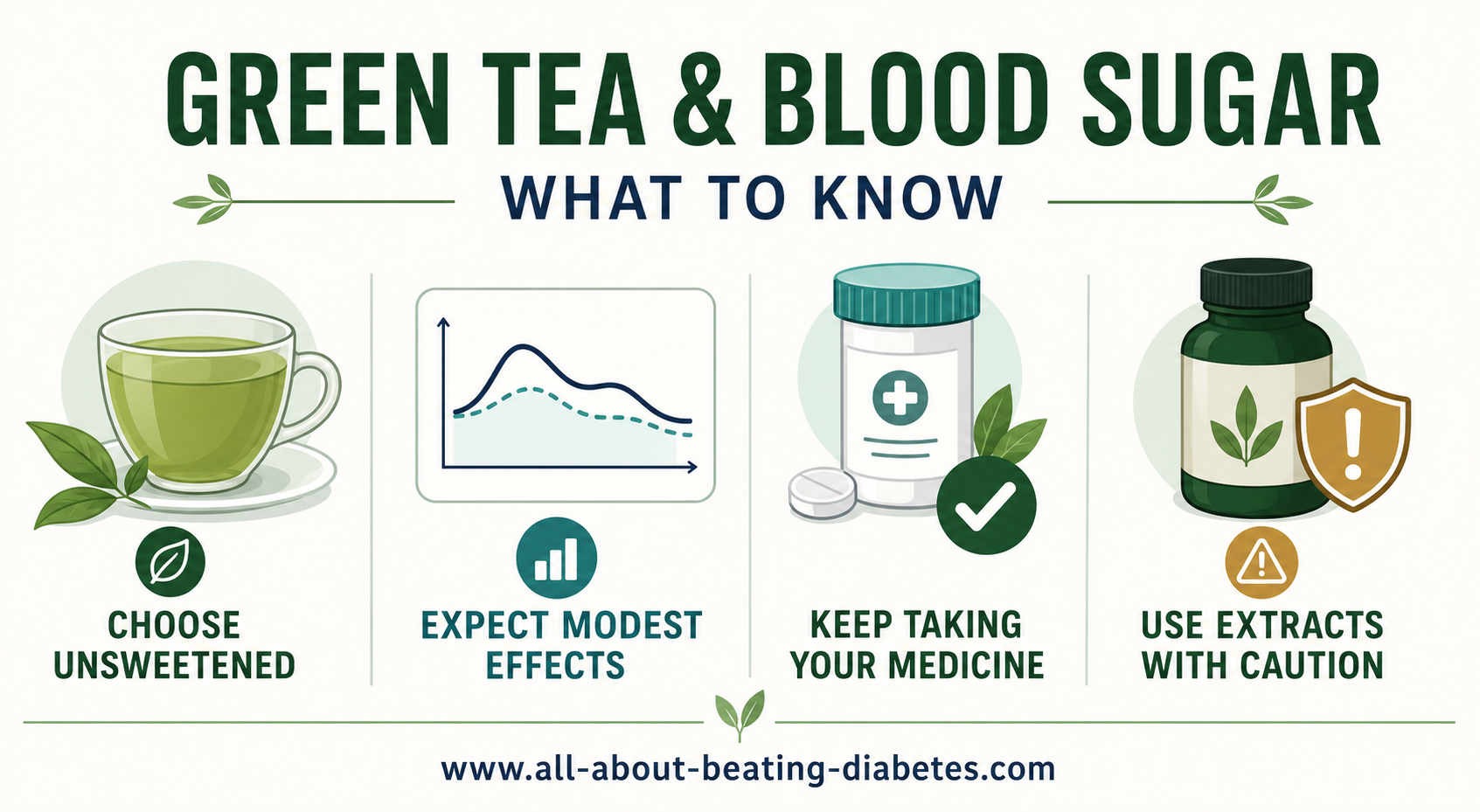
Green tea is a healthy unsweetened beverage for many people, but it is not a diabetes treatment. Here is how I explain the research, the practical benefits, and the important difference between brewed tea and concentrated extracts.

What Is Green Tea?
Green, black, and oolong tea come from the leaves of Camellia sinensis. Green-tea leaves are heated and dried with relatively little oxidation. Calling green tea simply “unfermented” is common, but “minimally oxidized” is usually the more accurate description.
Green tea contains:
- catechins, including epigallocatechin gallate (EGCG);
- caffeine, with the amount varying by product, serving size, water temperature, and steeping time;
- L-theanine and other naturally occurring plant compounds;
- little or no carbohydrate when it is brewed without sugar, honey, syrup, or sweetened milk.
Matcha is a powdered form in which the whole leaf is consumed. It may supply more caffeine and catechins per serving, but it has not been proven superior for blood sugar control.
Does Green Tea Lower Blood Sugar?
Possibly by a small amount in some people, but not reliably enough to use as treatment.
Clinical trials and meta-analyses do not all reach the same conclusion. Some pooled analyses report a small reduction in fasting glucose. Others find no significant improvement in fasting glucose, HbA1c, fasting insulin, or insulin resistance. A statistically detectable average change also may be too small to make an important difference to an individual patient.
This means one cup of green tea should not be expected to correct a high reading, and drinking more tea does not justify reducing your medication. If glucose is repeatedly above your target, review the pattern with your diabetes team.
What Do Human Studies Show?
The most honest conclusion is that the evidence remains mixed:
- A 2017 systematic review in people with prediabetes or type 2 diabetes found no convincing improvement in fasting glucose, HbA1c, fasting insulin, or HOMA-IR.
- A 2020 review of randomized trials reported a small reduction in fasting glucose but no significant improvement in HbA1c or fasting insulin.
- A 2021 meta-analysis limited to people with type 2 diabetes reported no significant overall improvement in fasting glucose, insulin, HbA1c, or HOMA-IR.
- A 2024 meta-analysis reported improvements in fasting glucose, HbA1c, and insulin-resistance measures, but the included studies and products varied considerably and several results showed substantial heterogeneity.
These studies used different brewed teas, powders, catechin preparations, or extracts; different caffeine and EGCG amounts; and different treatment durations. Participants also differed in their diabetes medicines, starting HbA1c, diet, activity, and other health factors.
How Might Green Tea Affect Glucose?
Laboratory and animal studies have explored whether catechins may influence insulin signaling, glucose transport, carbohydrate-digesting enzymes, intestinal glucose absorption, liver glucose production, inflammation, and oxidative stress.
These mechanisms are scientifically interesting, but they do not prove a dependable treatment effect in people. A compound acting on cells in a laboratory is not the same as a person drinking tea, absorbing a variable dose, and experiencing a clinically meaningful fall in glucose.
The statement that green tea “promotes insulin secretion and prevents sugar absorption” is therefore too certain. These remain proposed mechanisms, not established clinical effects at an ordinary beverage dose.
Can Green Tea Prevent or Slow Type 1 Diabetes?
No human evidence shows that green tea prevents type 1 diabetes, slows autoimmune destruction of pancreatic beta cells, restores insulin production, or delays disease progression.
Earlier claims were largely based on animal or laboratory research. They should not be translated into advice for people. A person with type 1 diabetes may drink unsweetened green tea if it fits their caffeine and health plan, but must continue prescribed insulin and glucose monitoring.
Learn more in the complete guide to diabetes types, including type 1 diabetes.
Green Tea, Type 2 Diabetes, and Prevention
For type 2 diabetes, I consider unsweetened green tea an optional beverage—not a treatment program. Its most dependable practical advantage may be what it replaces:
- sugar-sweetened tea;
- soda;
- juice drinks;
- sweetened coffee beverages;
- energy drinks;
- high-calorie café drinks.
Replacing a sugary drink reduces added sugar and carbohydrate even if the tea itself has no direct glucose-lowering effect. Check bottled green tea carefully because many commercial products contain added sugar.
Observational studies sometimes link habitual tea drinking with a lower risk of type 2 diabetes, but they cannot prove that tea caused the difference. Tea drinkers may also differ in diet, activity, smoking, weight, sleep, and healthcare. Randomized trials have not established green tea as a stand-alone diabetes-prevention method.
Evidence-based prevention focuses on a sustainable eating pattern, regular activity, weight management when appropriate, adequate sleep, less sedentary time, smoking cessation, and metformin for selected people at particularly high risk. Read more about a practical diet for insulin resistance and prediabetes.
What About Weight and Cholesterol?
Weight loss
Green-tea catechins and caffeine may slightly affect energy expenditure, but average weight loss is generally small and inconsistent. Green tea does not selectively burn abdominal fat and cannot compensate for excess calories.
Cholesterol
Research summarized by the National Center for Complementary and Integrative Health suggests that green-tea products may produce a small reduction in total and LDL cholesterol. Most studies assessed extracts rather than ordinary brewed tea. HDL cholesterol and triglycerides did not improve consistently.
Do not replace cholesterol or blood-pressure medication with tea.
How to Prepare Green Tea Without Raising Blood Sugar
- Use one tea bag or about one teaspoon of loose leaves per cup.
- Follow the package directions. Many green teas taste less bitter when the water is hot but not vigorously boiling.
- Steep for about two to three minutes, or according to the product instructions.
- Remove the bag or strain the leaves.
- Drink it unsweetened. You may add lemon, mint, or another sugar-free flavoring if tolerated.
A longer steep may increase bitterness and caffeine extraction, but it does not guarantee a greater glucose benefit. For iced tea, prepare it normally, cool it promptly, refrigerate it, and avoid sugar, honey, syrups, or sweetened mixes.
There is no medically established “best time” or number of cups for blood sugar control. Choose an amount and timing that fit your total caffeine intake, sleep, reflux, blood pressure, heart rhythm, kidney or heart condition, and personal fluid plan.
Brewed Green Tea Is Not the Same as Green-Tea Extract
| Feature | Brewed green tea | Green-tea extract |
|---|---|---|
| Form | Leaves or a tea bag steeped in water | Capsule, tablet, powder, concentrate, or multi-ingredient product |
| Concentration | Usually lower and diluted in water | May deliver high catechin, EGCG, or caffeine amounts quickly |
| Main role | An optional unsweetened beverage | A supplement promoted for glucose, cholesterol, or weight loss |
| Diabetes evidence | No established treatment dose or predictable glucose effect | Mixed trials; formulations and doses are not interchangeable |
| Safety | Generally considered safe for adults in beverage amounts, with caffeine precautions | Greater concern about nausea, abdominal symptoms, blood pressure, medicine interactions, and uncommon liver injury |
Green-tea extract has been linked to uncommon but potentially serious liver injury, mainly in tablet or capsule users. Stop an extract and seek prompt medical advice for yellow skin or eyes, dark urine, persistent nausea or vomiting, loss of appetite, unusual fatigue, itching, or pain in the upper-right abdomen.
Caffeine, Side Effects, and Special Situations
Green tea naturally contains caffeine, although the amount varies. The U.S. Food and Drug Administration cites 400 mg of caffeine per day as an amount not generally associated with negative effects for most healthy adults, but sensitivity varies and this is not a target to reach.
Caffeine may cause:
- restlessness, anxiety, or tremor;
- insomnia or poorer sleep;
- palpitations or a faster heartbeat;
- temporary blood-pressure elevation;
- headache, reflux, nausea, or bladder urgency;
- a temporary glucose change in some caffeine-sensitive people.
Decaffeinated tea may be a better option when caffeine is a concern, although it is not always completely caffeine-free.
Pregnancy, breastfeeding, childhood, heart rhythm problems, uncontrolled blood pressure, severe anxiety, insomnia, reflux, kidney disease, heart failure, and prescribed fluid restriction all require individualized advice. Tea can also reduce iron absorption, so people taking iron may need to separate tea from iron-rich meals or supplements according to their clinician’s directions.
Green Tea and Medicine Interactions
The National Center for Complementary and Integrative Health reports that high-dose green tea can reduce blood levels and effectiveness of nadolol, while green-tea extract may reduce atorvastatin levels. An interaction has also been reported with raloxifene, and other interactions are possible.
Ask your doctor or pharmacist before using an extract if you take:
- insulin, sulfonylureas, meglitinides, or several glucose-lowering products;
- blood-pressure, heart-rhythm, or cholesterol medicines;
- stimulants or high-caffeine products;
- medicines that can affect the liver;
- cancer, transplant, or osteoporosis treatment;
- several herbs, weight-loss supplements, or multi-ingredient products.
Brewed green tea alone is not a common cause of hypoglycemia. However, glucose may change when medicines, food, activity, weight, fasting, and supplements change together. Do not reduce medication because one reading improves after tea.
How to Check Whether Green Tea Affects Your Glucose
- Use plain brewed, unsweetened tea—not a sweetened café drink or supplement.
- Keep the meal and carbohydrate portion similar on comparison days.
- Record whether you drank the tea before, with, or after the meal.
- Use the glucose-testing schedule in your care plan.
- Repeat the comparison because one reading cannot establish an effect.
- Record caffeine symptoms and sleep quality.
- Show a repeated pattern to your clinician before changing treatment.
For more context, see how to interpret blood sugar after eating and what HbA1c shows over time.
Frequently Asked Questions
Can green tea cure type 2 diabetes?
No. Green tea has not been proven to cure type 2 diabetes or produce remission. It may be included as an unsweetened beverage within a complete diabetes plan.
Can green tea replace metformin or insulin?
No. Green tea has no standardized diabetes dose or predictable effect and cannot replace prescribed medication or insulin.
What is the best time to drink green tea for blood sugar?
No reliable evidence establishes a best time. Choose timing based on caffeine tolerance, sleep, reflux, meal planning, and your clinician’s advice.
Can I add honey to green tea?
Honey is added sugar and carbohydrate, so it may raise glucose. Count it within your carbohydrate plan or drink the tea without sweetener.
Is matcha better than brewed green tea for diabetes?
No. Matcha can be more concentrated, but it has not been proven more effective for diabetes and may contain more caffeine and catechins per serving.
Can green tea cause low blood sugar?
Ordinary brewed tea alone is not a common cause. The situation is less predictable when extracts are combined with insulin, sulfonylureas, fasting, alcohol, or major dietary changes.
How many cups should I drink each day?
There is no guideline-approved number of cups for lowering blood sugar. One or several cups may fit some adults’ beverage plans, but the amount should reflect total caffeine, pregnancy, sleep, medicines, blood pressure, heart rhythm, and any fluid restriction.
References
- American Diabetes Association Professional Practice Committee. Facilitating Positive Health Behaviors and Well-being—Standards of Care in Diabetes—2026.
- National Center for Complementary and Integrative Health. Green Tea: Usefulness and Safety.
- Yu J, et al. The Effectiveness of Green Tea or Green Tea Extract on Insulin Resistance and Glycemic Control in Type 2 Diabetes Mellitus: A Systematic Review and Meta-analysis.
- Xu R, et al. Effects of Green Tea Consumption on Glycemic Control: A Systematic Review and Meta-analysis of Randomized Controlled Trials.
- Asbaghi O, et al. Effect of Green Tea on Glycemic Control in Patients with Type 2 Diabetes Mellitus: A Systematic Review and Meta-analysis.
- Jia MJ, et al. The Effect of Green Tea on Patients with Type 2 Diabetes Mellitus: A Meta-analysis.
- National Institute of Diabetes and Digestive and Kidney Diseases LiverTox. Green Tea.
- U.S. Food and Drug Administration. Spilling the Beans: How Much Caffeine Is Too Much?
Medical disclaimer: This page provides general education and does not recommend a green-tea extract, therapeutic dose, or medication change. Do not replace insulin or diabetes medicine with tea, herbs, or supplements. Seek urgent care for severe hyperglycemia, ketones, vomiting, deep breathing, confusion, seizure, unconsciousness, or another emergency.