- Home
- Diabetes Information for Patients Types Symptoms Tests and Treatment
- Early Symptoms of Diabetes and Warning Signs
Early Symptoms of Diabetes: Type 1, Type 2, and When to Get Tested
Written by: Dr. Albana Greca Sejdini, MD, MMedSc
Medically reviewed by: Dr. Ruden Cakoni, MD, Endocrinologist
Last medically reviewed: July 2026
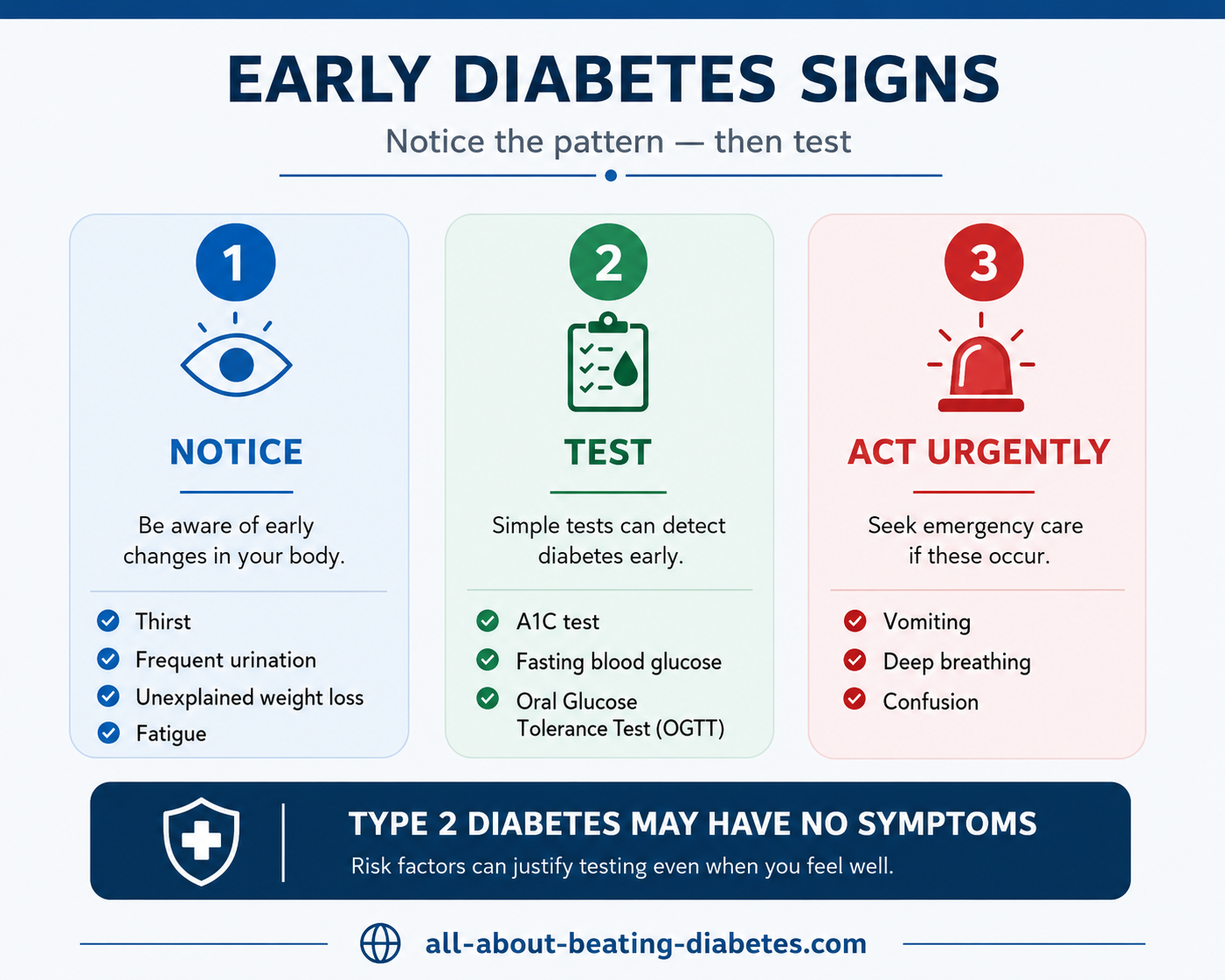
Early diabetes symptoms can be easy to miss. Type 1 diabetes may become noticeable over days or weeks, while type 2 diabetes may develop so gradually that a person feels well for years. Warning signs can tell us that testing is needed, but they cannot confirm or exclude diabetes by themselves.
What Are the Earliest Possible Symptoms of Diabetes?
The most common early clues are related to rising blood glucose and dehydration:
- urinating more often, including waking repeatedly during the night;
- feeling unusually thirsty or having a persistent dry mouth;
- feeling hungry soon after eating;
- unexplained weight loss;
- fatigue, weakness, or reduced concentration;
- temporary blurry vision;
- recurrent urinary, genital yeast, or skin infections;
- cuts or sores that heal slowly.
These symptoms are not unique to diabetes. Thirst may occur with dehydration or medicine use; fatigue may result from anemia, sleep problems, thyroid disease, infection, or stress; and frequent urination can have urinary, prostate, kidney, pregnancy, or medication-related causes.
The safest response is not to count symptoms. Arrange appropriate testing when symptoms are persistent, unexplained, or combined with diabetes risk factors.

Early Symptoms of Type 1 Diabetes
Type 1 diabetes is an autoimmune condition in which the immune system progressively destroys insulin-producing pancreatic beta cells. Early autoimmune stages may exist without symptoms. Once insulin production becomes insufficient, symptoms can appear quickly and become severe.
- rapidly increasing thirst and urination;
- new nighttime urination or bed-wetting;
- eating more while losing weight;
- marked fatigue or weakness;
- blurred vision;
- irritability or reduced concentration;
- nausea, vomiting, or abdominal pain when ketones are developing.
Type 1 diabetes can develop at any age. Adults may have a slower onset and can initially be diagnosed as having type 2 diabetes. Rapid weight loss, ketones, DKA, diabetes autoantibodies, or unexpectedly low insulin production may lead the clinician to reconsider the type.
Read the complete type 1 diabetes information guide.
Can type 1 diabetes be detected before symptoms?
Yes, in selected people. Type 1 diabetes now has recognized presymptomatic stages:
| Stage | Autoantibodies | Glucose | Symptoms |
|---|---|---|---|
| Stage 1 | Two or more confirmed | Normal | Absent |
| Stage 2 | Two or more confirmed | Abnormal | Absent |
| Stage 3 | Usually present | Diabetes-range hyperglycemia | Often present |
Autoantibody screening is particularly relevant for relatives of people with type 1 diabetes and other selected high-risk groups. Availability, coverage, and follow-up differ by country.
Early Symptoms of Type 2 Diabetes
Type 2 diabetes usually develops more gradually because insulin resistance and beta-cell dysfunction progress over time. Many people have no symptoms, or the symptoms are so mild that they are attributed to aging, work, stress, or poor sleep.
- increasing thirst or urination;
- fatigue or sleepiness;
- blurred vision that changes with glucose levels;
- recurrent urinary or genital yeast infections;
- slow-healing wounds;
- dark, thickened, velvety skin—called acanthosis nigricans—most often on the neck, armpits, or groin;
- tingling, burning, or numbness if neuropathy has already developed;
- sexual or bladder problems when vascular or nerve complications are present.
Some findings are not truly early. Numbness, persistent sexual dysfunction, vision loss, and foot wounds may indicate that diabetes or another condition has been present for some time.
Dark circles around the eyes or ordinary knuckle pigmentation should not be used to diagnose diabetes. Acanthosis nigricans may suggest insulin resistance but still requires clinical assessment and blood testing.
Explore type 2 diabetes symptoms, diagnosis, and treatment.
Early Diabetes Symptoms in Children and Teenagers
- new bed-wetting after previously staying dry;
- more frequent bathroom visits or unusually heavy diapers;
- constant thirst or repeatedly asking for drinks;
- weight loss despite eating normally or more than usual;
- fatigue, irritability, or reduced school performance;
- blurred vision or recurrent infections;
- dark velvety skin around the neck or armpits, which may suggest insulin resistance.
Do not assume that new bed-wetting is behavioral when it occurs with thirst, weight loss, fatigue, or vomiting. Type 1 diabetes and DKA can progress quickly in children.
Can Diabetes Develop Without Symptoms?
Yes. This is especially common in type 2 diabetes and gestational diabetes. Prediabetes also usually causes no specific symptoms.
Waiting for thirst or frequent urination may delay diagnosis until glucose is substantially elevated or complications have begun. Gestational diabetes is generally detected through pregnancy screening rather than symptoms.
Risk Factors Are Not Symptoms
A symptom is something you experience. A risk factor raises the probability of disease but does not prove that disease is present.
| Possible symptom | Type 2 diabetes risk factor |
|---|---|
| Frequent urination | Prediabetes |
| Unusual thirst | Parent or sibling with type 2 diabetes |
| Unexplained weight loss | Overweight, obesity, or increased waist size |
| Blurred vision | Physical inactivity |
| Recurrent infections | Previous gestational diabetes or a baby weighing 9 pounds or more |
| Slow-healing wounds | Smoking, high blood pressure, abnormal lipids, or PCOS |
Age is also a risk factor, but the current screening threshold is not simply “older than 45.” Routine adult testing generally begins by age 35, and earlier testing is appropriate for adults with overweight or obesity plus another risk factor.
Use the type 2 diabetes risk screener as an educational first step, then use blood testing for diagnosis.
Which Tests Confirm Diabetes?
| Test | Prediabetes range | Diabetes range |
|---|---|---|
| Fasting plasma glucose | 100–125 mg/dL | 126 mg/dL or higher |
| HbA1c | 5.7%–6.4% | 6.5% or higher |
| Two-hour 75-g OGTT | 140–199 mg/dL | 200 mg/dL or higher |
| Random plasma glucose | Not used to diagnose prediabetes | 200 mg/dL or higher with classic symptoms or hyperglycemic crisis |
Without unequivocal hyperglycemia, a diabetes-range result generally requires confirmation. A home meter or CGM can identify a concerning pattern but does not replace diagnostic laboratory testing.
Read the complete blood tests for diabetes guide.
How Quickly Should You Act?
| Situation | Recommended response |
|---|---|
| New thirst, urination, fatigue, blurry vision, or recurrent infection | Arrange medical testing promptly, particularly when several symptoms occur together. |
| Rapid weight loss, marked thirst, and frequent urination | Seek same-day assessment, especially in a child, teenager, or young adult. |
| No symptoms but important risk factors | Discuss routine fasting glucose, HbA1c, or another screening test. |
| Vomiting, deep breathing, confusion, severe dehydration, or ketones | Seek emergency medical care immediately. |
Do not delay testing while trying herbs, supplements, fasting, or a very restrictive diet. If type 1 diabetes or severe hyperglycemia is present, delay can be dangerous.
Emergency Warning Signs: Possible DKA or Severe Hyperglycemia
Do not wait for a fasting test or routine appointment when these symptoms are present. DKA requires urgent fluids, insulin, electrolyte assessment, and medical monitoring.
Use the dangerous blood sugar levels guide for further emergency information.
What to Do When You Notice Possible Early Symptoms
- Write down the pattern. Note when thirst, urination, weight change, fatigue, infections, or vision changes began.
- Arrange laboratory testing. Ask about fasting plasma glucose and HbA1c; an OGTT may be appropriate in selected cases.
- Review medicines and illness. Corticosteroids and several other medicines can raise glucose. Do not stop prescribed treatment independently.
- Check urgency. Rapid progression, ketones, vomiting, dehydration, or breathing changes require faster assessment.
- Do not self-diagnose the diabetes type. Age or body size alone cannot reliably distinguish type 1 from type 2 diabetes.
- Plan follow-up. If results are normal but risk remains high, ask when testing should be repeated.
Most Asked Questions
What is usually the first symptom of diabetes?
There is no single first symptom. Thirst and frequent urination are common, but type 2 diabetes may produce no noticeable warning signs.
Can diabetes start with fatigue only?
It can, but fatigue is nonspecific. Persistent fatigue should be evaluated rather than assumed to be diabetes.
Can early diabetes cause weight gain?
Weight gain is a type 2 diabetes risk factor, not a classic symptom of rising glucose. Unexplained weight loss is a more concerning symptom of insulin deficiency.
Are erectile dysfunction and neuropathy early symptoms?
They may reveal previously unrecognized diabetes, but they often represent vascular or nerve effects rather than the earliest stage. Other causes must also be considered.
Does dark skin around the neck mean diabetes?
No. Acanthosis nigricans can suggest insulin resistance, but it does not diagnose prediabetes or diabetes.
Can a normal home glucose reading rule out diabetes?
No. One home reading may miss fasting, after-meal, or longer-term abnormalities. Use appropriate laboratory testing.
Related Questions
- Fasting Glucose 159 but Two-Hour Glucose 109: Am I Diabetic?
- Fasting Sugar 122 but Post-Meal Sugar 103: Is This Diabetes?
- Why Is HbA1c High When Finger-Prick Readings Look Normal?
- Why Did Blood Sugar Rise Overnight?
Related Resources
- Symptoms of Diabetes: Complete Guide
- Warning Signs of Diabetes
- Blood Tests for Diabetes
- Type 1 Diabetes Information
- Type 2 Diabetes Information
- Prediabetes Symptoms, Testing, and Prevention
Medical disclaimer: This page provides general education and does not diagnose diabetes or determine its type. Seek urgent care for severe symptoms, and do not start, stop, or change insulin, medicine, diet, or supplements based only on an online symptom list.
References
- American Diabetes Association: Diagnosis and Classification of Diabetes—Standards of Care in Diabetes 2026
- National Institute of Diabetes and Digestive and Kidney Diseases: Symptoms and Causes of Diabetes
- National Institute of Diabetes and Digestive and Kidney Diseases: Diabetes Tests and Diagnosis
- Centers for Disease Control and Prevention: Symptoms of Diabetes
- Centers for Disease Control and Prevention: Screening for Type 1 Diabetes
- Centers for Disease Control and Prevention: Diabetic Ketoacidosis