Metformin and insulin resistance are closely connected, but metformin is not automatically needed whenever insulin resistance is suspected. I use the diagnosis, glucose results, pregnancy history, body-weight pattern, kidney function, other health conditions, and the person’s risk of developing type 2 diabetes to decide whether this medicine is appropriate.
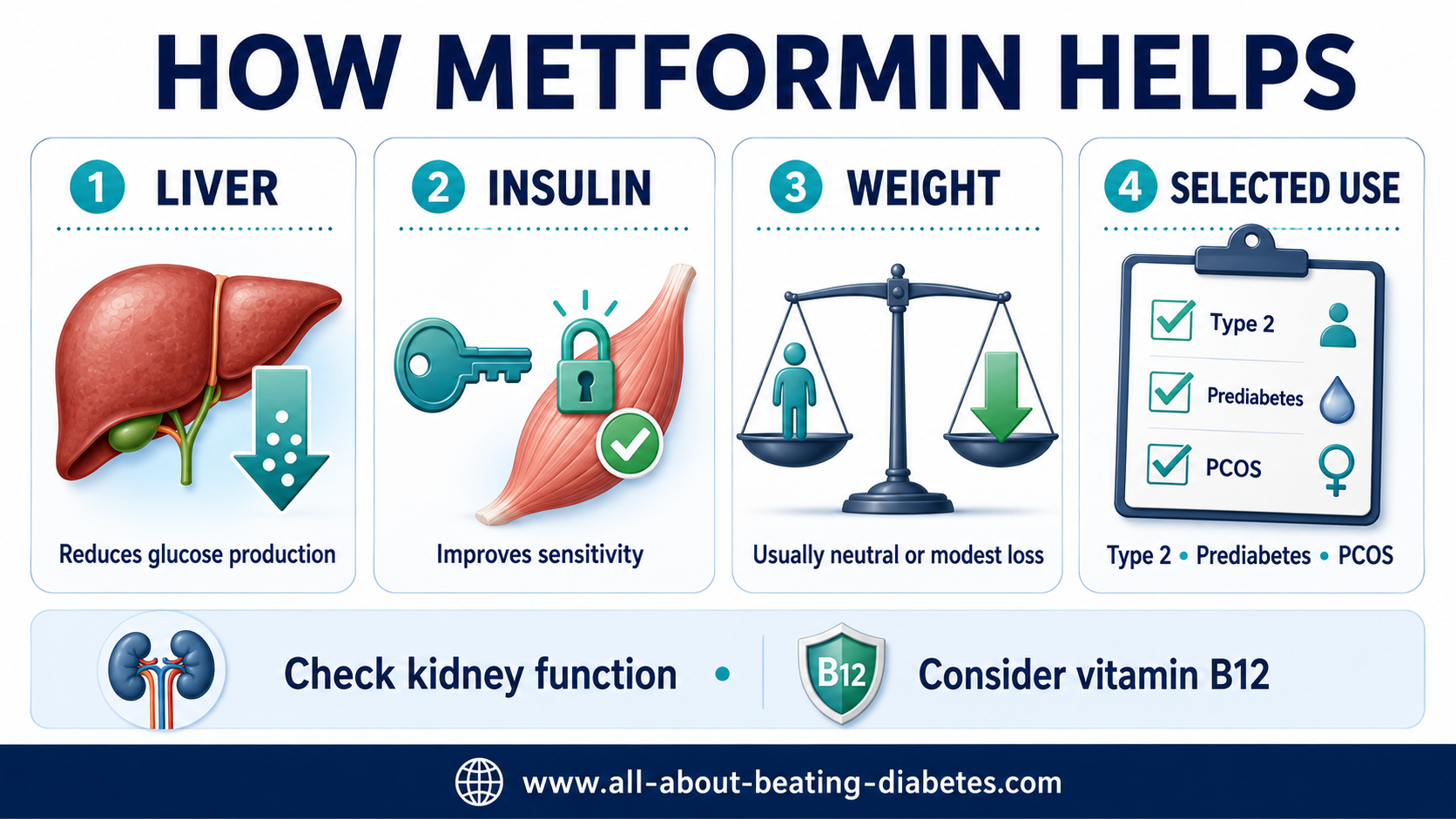

What Is the Connection Between Metformin and Insulin Resistance?
Insulin resistance means that the liver, muscles, and fat tissue do not respond to insulin as effectively as expected. The pancreas may compensate by producing more insulin. For some time, glucose can remain normal even while insulin levels are high. Eventually, glucose may rise into the prediabetes or type 2 diabetes range if insulin production can no longer keep up.
Metformin is an antihyperglycemic medicine in the biguanide class. It lowers glucose without directly stimulating the pancreas to produce more insulin. This makes it useful when excess liver glucose production and insulin resistance are contributing to high blood sugar.
However, “insulin resistance” is not one uniform diagnosis. It may occur with type 2 diabetes, prediabetes, PCOS, obesity, sleep apnea, fatty liver disease, steroid treatment, pregnancy-related metabolic changes, or other conditions. Treatment should address the cause and the person’s overall risk—not one insulin number alone.
How Does Metformin Work?
1. Reduces liver glucose production
The most important clinical action is reducing inappropriate hepatic glucose output, particularly glucose made through gluconeogenesis. This often improves fasting glucose.
2. Improves insulin sensitivity
Metformin can improve how the liver and peripheral tissues respond to insulin and can increase glucose uptake and use. The molecular effects are complex and involve both AMPK-dependent and AMPK-independent pathways.
3. Has important effects in the gut
Metformin also changes intestinal glucose handling, bile-acid signaling, incretin activity, and the gut microbiome. Its full mechanism is broader than simply blocking carbohydrate absorption.
The older explanation that metformin “activates insulin receptors” is too narrow. Research shows several interacting liver, gut, and tissue mechanisms. The practical result is lower glucose and improved insulin action without increasing insulin secretion.
Can metformin reverse insulin resistance?
Metformin may improve insulin sensitivity and glucose levels while you take it, but it does not permanently erase the biological factors that caused insulin resistance. Nutrition, physical activity, sleep, weight management when appropriate, treatment of sleep apnea, and review of contributing medicines remain important. Read more about a complete insulin-resistance treatment plan.
Who May Benefit From Metformin?
| Situation | Possible role of metformin | Important qualification |
|---|---|---|
| Type 2 diabetes | Common, effective, inexpensive glucose-lowering medicine with low hypoglycemia risk when used alone. | It is not automatically the best first medicine for every person. Heart disease, heart failure, kidney disease, weight goals, glucose severity, and access can make another medicine or combination a priority. |
| High-risk prediabetes | May be considered to delay progression to type 2 diabetes. | Benefit is strongest in selected high-risk groups; lifestyle intervention remains foundational. In the U.S., no medicine is FDA-approved specifically for diabetes prevention. |
| PCOS | May improve metabolic outcomes, including insulin resistance, glucose, lipids, and weight-related measures in selected adults. | Use is generally off-label and should match the person’s symptoms, BMI, metabolic risk, fertility goals, and preferences. |
| High fasting insulin with normal glucose | Not an automatic indication by itself. | Fasting insulin and HOMA-IR are not standardized enough to dictate treatment alone. Clinicians should assess glucose, A1C, waist and weight pattern, blood pressure, lipids, pregnancy history, medications, and other causes. |
Metformin for Prediabetes and Diabetes Prevention
The 2026 American Diabetes Association Standards say metformin should be considered for adults at high risk of developing type 2 diabetes, especially people similar to participants who benefited most in the Diabetes Prevention Program. Examples include:
- age approximately 25–59 years;
- BMI of 35 kg/m² or higher;
- higher fasting glucose, such as 110 mg/dL (6.0 mmol/L) or above;
- A1C of 6.0% or above;
- a previous history of gestational diabetes.
What the Diabetes Prevention Program found
After about three years, intensive lifestyle intervention reduced the development of type 2 diabetes by 58% compared with placebo. Metformin reduced it by 31%. These are relative risk reductions from a specific high-risk study population, not guarantees for an individual.
The lifestyle program aimed for approximately 7% weight loss and at least 150 minutes of physical activity each week. Metformin was particularly effective in some younger participants, those with higher BMI, and women with previous gestational diabetes.
The correct conclusion is not that everyone with prediabetes needs metformin. It is that selected high-risk people may benefit after an individualized discussion of expected benefit, side effects, treatment burden, cost, pregnancy plans, and how long treatment may be needed.
Metformin for Insulin Resistance in PCOS
Insulin resistance is common in PCOS, but PCOS treatment depends on the patient’s main goals. The 2023 International Evidence-based PCOS Guideline recommends considering metformin in adults with PCOS and BMI of at least 25 kg/m² for anthropometric and metabolic outcomes, including insulin resistance, glucose, and lipid profiles. It may also be considered at a lower BMI, although evidence is more limited.
Metformin is not automatically the best treatment for every PCOS symptom. A combined oral contraceptive may be preferred for some menstrual or androgen-related symptoms, while fertility treatment follows different recommendations. Shared decision-making should include metabolic risk, cycle pattern, pregnancy goals, side effects, and lifestyle treatment.
In many countries, metformin use for PCOS is off-label even though it is supported by evidence-based guidance. This means the prescription is for a use not specifically listed in the medicine’s regulatory approval, not that the use is experimental or improper.
Does Metformin Cause Weight Loss?
Metformin is usually weight neutral or may lead to modest weight loss. Some people notice less appetite or gradual weight change, while others do not lose weight. It should not be described as a rapid or guaranteed weight-loss medicine.
Weight response depends on food intake, activity, sleep, baseline insulin resistance, gastrointestinal effects, other medicines, and individual biology. Unexpected or excessive weight loss deserves review rather than being assumed to be a positive medicine effect.
If weight management is a major treatment goal in type 2 diabetes, current guidelines recommend comparing all appropriate options. GLP-1 receptor agonists and the dual GIP/GLP-1 medicine tirzepatide generally produce greater average weight loss than metformin, but they have different costs, side effects, contraindications, and benefits. Learn more about how modern type 2 diabetes treatments are selected.
How Long Does Metformin Take to Work?
Metformin starts affecting glucose within the first several days, but the full glucose-lowering effect of a stable dose may take one to two weeks or longer. Treatment is often started at a low dose and increased gradually, so the final response cannot be judged from the first few tablets.
Daily meter or CGM readings may improve before A1C changes are visible. A1C reflects average glucose over roughly two to three months, so clinicians usually evaluate the trend after sufficient time at a tolerated dose.
Do not increase the dose simply because glucose has not changed after a few days. The correct dose depends on the formulation, kidney function, age, other medicines, glucose goals, and tolerability.
Common Metformin Side Effects and How They Are Managed
The most common adverse effects are gastrointestinal:
- diarrhea or loose stools;
- nausea;
- abdominal discomfort or cramping;
- gas or bloating;
- reduced appetite or metallic taste.
These effects often occur when treatment begins or the dose increases. Taking metformin with food, starting at a lower dose, increasing gradually, or changing from immediate-release to extended-release may improve tolerability when prescribed by the clinician.
Persistent diarrhea, vomiting, poor intake, dehydration, or unexplained weight loss should be discussed with a healthcare professional. Do not simply continue a medicine that you cannot tolerate, but do not stop it without a safe plan either. For more detail, see Glucophage and metformin side effects.
Metformin Safety: Kidney Function, Vitamin B12, and Lactic Acidosis
Kidney function
Metformin is removed from the body through the kidneys. Kidney function should be assessed before treatment and monitored afterward. Current U.S. labeling says metformin should not be used when eGFR is below 30 mL/min/1.73 m², and starting it is not recommended when eGFR is between 30 and 45. If kidney function falls during treatment, the clinician reassesses the benefits, dose, monitoring, and whether treatment should continue.
Vitamin B12
Long-term metformin use can lower vitamin B12. Periodic testing should be considered, particularly if anemia, tiredness, a sore tongue, numbness, tingling, balance problems, cognitive symptoms, a vegan diet, previous stomach surgery, or another B12 risk factor is present. New neuropathy should not automatically be blamed on diabetes without considering B12 deficiency.
Lactic acidosis
Metformin-associated lactic acidosis is very rare but serious. Risk increases when metformin accumulates or when severe illness reduces oxygen delivery or kidney clearance. Important risk situations include advanced kidney failure, severe dehydration, sepsis, shock, severe hypoxia, significant liver disease, excessive alcohol intake, or overdose.
Seek urgent medical help
Get urgent care for severe weakness, unusual sleepiness, repeated vomiting, abdominal pain, difficulty breathing, feeling very cold, dizziness, or a slow or irregular heartbeat—especially during serious illness or kidney problems. These symptoms are not specific to lactic acidosis, but they require prompt assessment.
Contrast scans, surgery, and acute illness
Metformin may need to be paused around certain iodinated-contrast procedures, operations, hospitalizations, or illnesses that cause dehydration or acute kidney, liver, heart, or breathing problems. The correct instructions depend on kidney function and the procedure. Ask the clinician or radiology team when to stop and restart it rather than deciding alone.
Low blood sugar
Metformin alone rarely causes hypoglycemia because it does not stimulate insulin release. Low glucose can still occur when it is combined with insulin or a sulfonylurea, during prolonged poor intake, after substantial unplanned exercise, or with heavy alcohol use. The other medicine may need adjustment by the clinician.
What About Other Claims for Metformin?
| Claim | Balanced interpretation |
|---|---|
| Metformin treats hypothyroidism or Hashimoto’s disease | No. Some studies report changes in TSH in certain metformin users, but metformin does not replace thyroid hormone and is not a standard treatment for hypothyroidism. Thyroid results should be interpreted by the treating clinician. |
| Metformin is a general treatment for HIV lipodystrophy | It has been studied in selected people with HIV-associated insulin resistance or body-fat changes, but care is specialist-led and other approaches may be preferred. It is not a routine self-treatment. |
| Metformin prevents aging or cancer | Research is ongoing, but metformin should not be prescribed as an anti-aging supplement or cancer-prevention medicine outside appropriate clinical care or research. |
| Metformin proves that high insulin is dangerous | No. Metformin lowers glucose and may reduce insulin demand, but one insulin result does not diagnose a disease or determine treatment by itself. |
What Should Be Monitored While Taking Metformin?
- Kidney function: before treatment and periodically, more often when kidney function may decline.
- Glucose and A1C: according to the diabetes or prediabetes plan.
- Vitamin B12: periodically during long-term treatment, especially with anemia or neuropathy.
- Gastrointestinal tolerance and weight: particularly after starting or increasing the dose.
- Medication and alcohol review: including medicines that affect kidneys or raise lactic-acidosis risk.
- Pregnancy plans: because treatment goals and medication choices may change before or during pregnancy.
Routine fasting insulin measurements are not necessary for most people once the treatment decision is based on established diagnoses and metabolic risk. The most useful measures are those that will change care.
What If Metformin Is Not Suitable or Is Not Enough?
The answer depends on what is being treated.
- Insulin resistance without diabetes: focus on nutrition quality, regular activity, resistance training, sleep, weight management when appropriate, and treatment of contributing conditions.
- Prediabetes: a structured diabetes-prevention lifestyle program is the foundation. Medication is considered according to risk.
- Type 2 diabetes: SGLT2 inhibitors, GLP-1–based medicines, DPP-4 inhibitors, sulfonylureas, thiazolidinediones, insulin, and other options may be considered according to heart, kidney, weight, glucose, hypoglycemia, side-effect, access, and cost priorities.
- PCOS: treatment may include lifestyle care, combined oral contraceptives, fertility treatment, anti-androgen strategies, or metformin depending on symptoms and goals.
A medicine that lowers glucose is not automatically the best alternative for a person who has normal glucose. Likewise, lifestyle treatment is essential but should not be used to delay necessary medication when glucose is high.
For practical food guidance, see my diet for insulin resistance.
Frequently Asked Questions
Does metformin cure insulin resistance?
No. It can improve insulin sensitivity and lower excess glucose while it is being taken, but it does not permanently remove all causes of insulin resistance. Lifestyle, sleep, weight, other medicines, and associated conditions still matter.
Should everyone with insulin resistance take metformin?
No. The decision depends on whether type 2 diabetes, high-risk prediabetes, PCOS, or another condition is present; how high the metabolic risk is; and whether the expected benefit outweighs side effects and treatment burden.
Can I take metformin if my glucose is normal but insulin is high?
Not automatically. A single high fasting insulin result is not enough to decide treatment. Your clinician should assess how the test was performed, glucose and A1C, weight and waist pattern, lipids, blood pressure, PCOS or pregnancy history, medicines, and other possible causes.
Does metformin cause low blood sugar?
Metformin used alone has a low risk of hypoglycemia because it does not force the pancreas to release insulin. Risk can increase when it is combined with insulin or insulin-releasing medicines, during prolonged poor intake, or with heavy alcohol use.
Will metformin help me lose weight?
It is usually weight neutral or may cause modest loss, but results vary and are not guaranteed. It is not primarily a rapid weight-loss medicine.
How quickly does metformin lower glucose?
Some effect may appear within days, while the fuller effect of a stable dose can take one to two weeks or longer. Because doses are usually increased gradually, effectiveness should not be judged after only a few tablets.
Why does metformin cause diarrhea?
Metformin has important actions in the intestine and can alter glucose handling, bile acids, and the microbiome. Gastrointestinal symptoms are often dose related. Taking it with food, slower dose increases, or an extended-release formulation may help when approved by the prescriber.
Can I stop metformin when my glucose becomes normal?
Do not stop it on your own. Normal readings may show that the treatment plan is working. Your clinician can review A1C, weight, lifestyle changes, kidney function, diagnosis, and relapse risk before deciding whether the dose should change.
References
- American Diabetes Association Professional Practice Committee. Pharmacologic Approaches to Glycemic Treatment: Standards of Care in Diabetes—2026. Diabetes Care. 2026.
- American Diabetes Association Professional Practice Committee. Prevention or Delay of Diabetes and Associated Comorbidities: Standards of Care in Diabetes—2026. Diabetes Care. 2026.
- National Institute of Diabetes and Digestive and Kidney Diseases. Diabetes Prevention Program.
- U.S. National Library of Medicine. Metformin Hydrochloride Tablets: Prescribing Information. DailyMed.
- Rena G, Hardie DG, Pearson ER. The Mechanisms of Action of Metformin. Diabetologia. 2017;60:1577–1585.
- Teede HJ, et al. Recommendations From the 2023 International Evidence-based Guideline for the Assessment and Management of Polycystic Ovary Syndrome. Journal of Clinical Endocrinology & Metabolism. 2023.
Medical Review
Written by Dr. Albana Greca Sejdini, MD, MMedSc, Family Physician and Medical Author.
Medically reviewed by Dr. Ruden Cakoni, MD, Endocrinologist.
Last medically reviewed: July 2026
Medical disclaimer: This page provides general education and does not replace diagnosis or an individualized prescription. Do not start, stop, increase, reduce, or restart metformin or another diabetes medicine without guidance from the clinician managing your treatment.