If you have diabetes, you may be interested in the Atkins diet because it sharply limits carbohydrates. Reducing refined carbohydrates can lower after-meal glucose and support weight loss, but the strict early phase can also change your medication needs quickly. I want you to understand both sides before you try it.
Quick answer
The Atkins diet may help some adults with type 2 diabetes lose weight and improve blood sugar over the short term. However, it is not a diabetes cure, and the strict ketogenic phase is not appropriate for everyone.
Speak with your healthcare team before starting if you take insulin, a sulfonylurea, or an SGLT2 inhibitor; have kidney disease; are pregnant or breastfeeding; are younger than 18; or have a history of disordered eating. Never reduce or stop diabetes medicine on your own.
What is the Atkins diet?
Atkins is a low-carbohydrate eating plan that progresses through four phases. Its strictest starting phase generally limits “net carbohydrates”—total carbohydrate minus certain fiber—to about 20–25 grams daily, with most coming from non-starchy vegetables. Carbohydrate is then gradually increased as the person approaches and maintains a suitable weight.
| Phase | General purpose | Diabetes consideration |
|---|---|---|
| 1. Induction | Very low carbohydrate intake intended to produce nutritional ketosis | Glucose may fall quickly; medication and ketone risks must be reviewed first |
| 2. Balancing | Gradually adds carbohydrate-containing foods | Monitor how portions affect glucose and treatment needs |
| 3. Pre-maintenance | Finds an intake that supports continued weight control | Prioritize a sustainable pattern, adequate fiber, and good nutritional quality |
| 4. Maintenance | Long-term eating pattern | Follow A1C, glucose, weight, kidney function, and blood lipids over time |
Atkins is not simply “eat as much meat, cheese, and fat as you want.” Food quality, total energy intake, saturated fat, fiber, vitamins, kidney health, and cardiovascular risk still matter.
Can the Atkins diet help type 2 diabetes?
It may help some people. Carbohydrates have the most immediate effect on after-meal glucose, so reducing them can lower glucose excursions. A lower-carbohydrate plan may also reduce appetite for some people and support weight loss.
Clinical trials of low- and very-low-carbohydrate diets—not specifically every version of Atkins—have found improvements in A1C, body weight, triglycerides, and medication use over about six months. However, many benefits become smaller by 12 months, often because a highly restrictive diet is difficult to maintain.
A low-carbohydrate diet may contribute to type 2 diabetes remission when it produces enough sustained weight loss, but remission is not the same as a permanent cure. Glucose can return to the diabetes range, so medical follow-up must continue.

Possible risks and disadvantages
- Low blood sugar: insulin and medicines such as sulfonylureas may become too strong when carbohydrate intake falls suddenly.
- Ketoacidosis: a very-low-carbohydrate or ketogenic diet can increase risk in people taking SGLT2 inhibitors.
- Constipation: this may occur when vegetables, seeds, nuts, legumes, whole grains, or other fiber sources are reduced too far.
- Nutrient gaps: restrictive versions may provide too little fiber, thiamine, folate, vitamin C, magnesium, or potassium.
- Higher LDL cholesterol: this may occur when butter, fatty meat, processed meat, coconut oil, and high-fat cheese replace healthier unsaturated fats.
- Dehydration or electrolyte symptoms: early fluid loss may contribute to headache, dizziness, weakness, or cramps.
- Difficulty maintaining the plan: social meals, cost, limited food variety, cravings, and dietary restrictions can affect adherence.
Processed meat is not healthier simply because it contains little carbohydrate. Bacon, sausages, salami, and similar foods may be high in sodium and saturated fat. For long-term heart health, I would rather see fish, poultry, eggs, tofu, nuts, seeds, avocado, and olive oil used appropriately.
Nutritional ketosis is not the same as diabetic ketoacidosis
Nutritional ketosis is a controlled rise in ketones caused by severe carbohydrate restriction. Diabetic ketoacidosis (DKA) is a dangerous medical emergency caused by insufficient effective insulin and excessive ketone production. People with type 1 diabetes are at particular risk, but DKA can also occur in type 2 diabetes.
You do not need to chase a dark urine-ketone-strip result to prove that your diet is working. Urine strips are affected by hydration and reflect ketones produced earlier. If your care team asks you to monitor ketones for medical safety, follow their instructions about whether to use blood or urine testing and what result requires action.
Seek urgent medical help for nausea or vomiting, abdominal pain, deep or rapid breathing, fruity-smelling breath, severe weakness, dehydration, confusion, or positive ketones—especially if you use an SGLT2 inhibitor. DKA associated with an SGLT2 medicine can occur even when glucose is not extremely high.
Diabetes medicines that need special attention
| Medicine | Why the diet matters | What to do |
|---|---|---|
| Insulin | Suddenly eating much less carbohydrate can cause hypoglycemia if insulin is not reviewed | Agree on glucose monitoring and dose-adjustment instructions before starting |
| Sulfonylureas, such as gliclazide, glimepiride, glipizide, or glyburide | These medicines can cause hypoglycemia when food intake changes | Ask whether the dose needs adjustment; do not change it yourself |
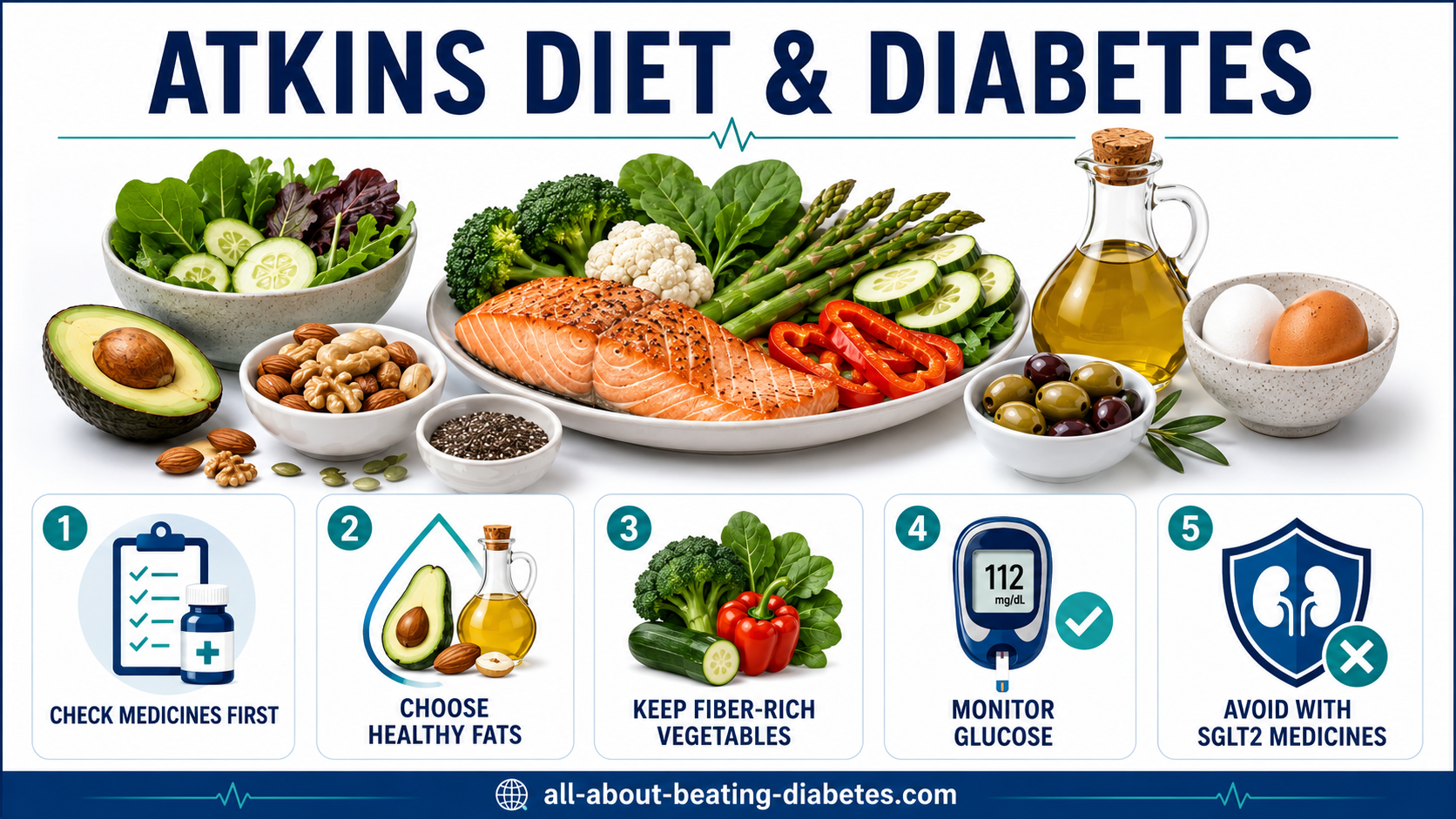
| SGLT2 inhibitors, such as dapagliflozin, empagliflozin, or canagliflozin | Combining them with a ketogenic or very-low-carbohydrate diet increases DKA risk | Avoid the strict ketogenic plan and discuss a safer eating pattern with your clinician |
| Other diabetes or weight-management medicines | Nausea, reduced appetite, dehydration, or reduced intake may affect safety and tolerability | Review the whole medication plan with your healthcare professional |
How to make a lower-carbohydrate plan safer
- Review your medicines and health conditions first. Discuss kidney function, pregnancy, eating-disorder history, cholesterol, blood pressure, and hypoglycemia risk.
- Choose a realistic carbohydrate level. You may not need the strict 20-gram induction phase to improve food quality or glucose.
- Base meals on non-starchy vegetables. Include leafy greens, broccoli, cauliflower, peppers, zucchini, mushrooms, cucumber, and similar foods.
- Prefer unsaturated fats. Choose olive oil, nuts, seeds, avocado, and oily fish more often than butter, processed meat, and large amounts of cheese.
- Use appropriate protein portions. More protein is not automatically better, particularly when kidney disease is present.
- Protect fiber intake. Depending on your carbohydrate allowance, use vegetables, chia, flaxseed, nuts, seeds, berries, legumes, or small portions of minimally processed whole grains.
- Monitor patterns. Track fasting and after-meal glucose, hypoglycemia, weight, bowel changes, blood pressure, and how sustainable the plan feels.
- Recheck laboratory results. Your clinician may monitor A1C, kidney function, electrolytes, and cholesterol after the change.
A more balanced lower-carbohydrate plate
- Half the plate: non-starchy vegetables
- One quarter: fish, chicken, eggs, tofu, or another suitable protein
- Remaining space: an individualized portion of a quality carbohydrate, when included
- A modest portion of healthy fat, such as olive oil, nuts, seeds, or avocado
You can use our carbohydrate counter to understand meal portions, but medication changes must still be made with your diabetes team.
Who should not start a strict Atkins or ketogenic diet without specialist care?
- People with type 1 diabetes
- Anyone taking an SGLT2 inhibitor
- Pregnant or breastfeeding people
- Children and adolescents
- People with kidney disease
- People with or at risk for an eating disorder
- Anyone with recurrent hypoglycemia, recent DKA, significant dehydration, or acute illness
Other medical conditions may also require modification. A registered dietitian familiar with diabetes can help preserve nutrition while reducing carbohydrates safely.
Frequently asked questions
Can the Atkins diet cure type 2 diabetes?
No. Some people may reach remission after significant, sustained weight loss, but remission is not a cure and requires continued monitoring.
Do I need snacks to keep my blood sugar stable?
Not everyone needs snacks. They may be useful for some treatment plans, but routine high-calorie snacks can interfere with weight goals. Base the decision on hunger, medication timing, glucose patterns, and your clinician’s advice.
Can I eat unlimited fat and protein?
No. Calories, saturated fat, protein needs, kidney health, and cardiovascular risk still matter. Food quality and portion size should remain part of the plan.
Should I use urine ketone strips every day?
Not routinely unless your healthcare team has given you a medical reason and clear instructions. Ketone testing for illness or DKA risk is different from trying to prove that a weight-loss diet is working.
Is a moderate low-carbohydrate diet safer than Atkins induction?
For many people it may be easier to balance and sustain. The best carbohydrate level is individual and should consider glucose response, medicine use, nutrition, preferences, and long-term adherence.
Related questions from readers
Related resources
References
- American Diabetes Association. Facilitating Positive Health Behaviors and Well-being: Standards of Care in Diabetes—2026.
- American Diabetes Association. Diabetes Nutrition and Wellness: Evidence-Based Eating Patterns.
- Goldenberg JZ, et al. Efficacy and safety of low and very low carbohydrate diets for type 2 diabetes remission: systematic review and meta-analysis. BMJ. 2021.
- Jayedi A, et al. Dose-dependent effect of carbohydrate restriction for type 2 diabetes management: systematic review and dose-response meta-analysis.
- Diabetes UK. Low-carb diet and meal plan.
- Atkins. Rules of Induction and carbohydrate limits.