- Home
- Diabetes Complications
- Balanitis in Uncircumcised Men With Diabetes
Balanitis in Uncircumcised Men With Diabetes: Treatment and Circumcision
Quick Answer
Balanitis is inflammation of the head of the penis. When the foreskin is also inflamed, the condition is called balanoposthitis. It is more common in uncircumcised men, and diabetes can increase the risk—especially when glucose is high or a genital yeast infection develops.
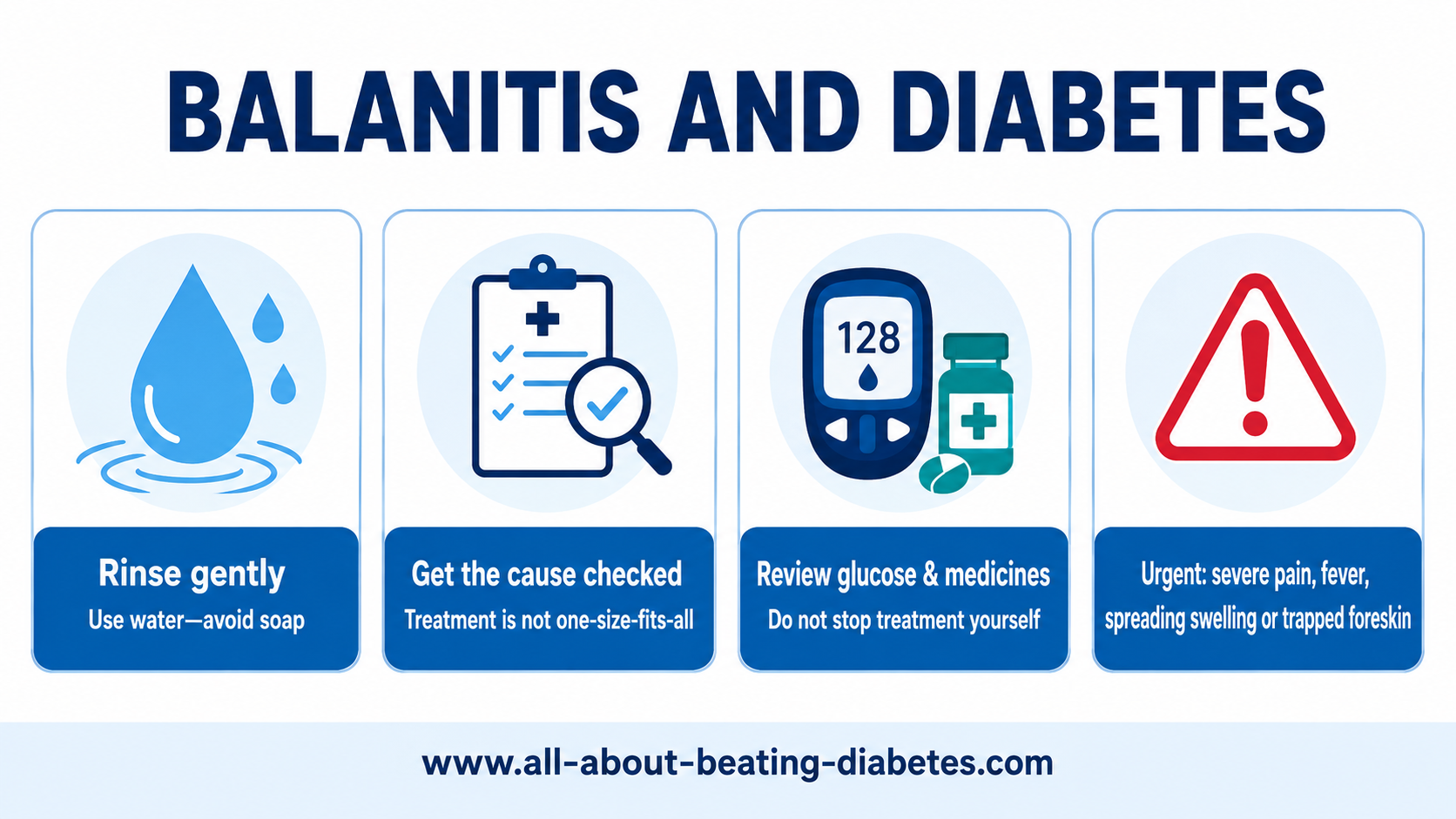
Treatment is not the same for everyone. Yeast, bacteria, irritation, an STI, or a skin disorder can look similar but require different care. Gently rinse with warm water, dry carefully, avoid soap and unprescribed creams, and arrange a medical examination. Circumcision may help when balanitis repeatedly returns, medication has not worked, the foreskin is scarred or tight, or a specific skin disease makes surgery appropriate.
A man with diabetes once asked me about chronic swelling, itching, and pain at the tip of his penis. He was also worried about circumcision and whether it could affect sexual function. These are understandable concerns. I want you to know that balanitis is treatable, but the first step is identifying its cause rather than trying several creams at home.
What Are Balanitis and Balanoposthitis?
Balanitis means inflammation of the glans, or head of the penis. Posthitis means inflammation of the foreskin. Because both areas are often affected together, clinicians may use the term balanoposthitis.
This is a description of inflammation—not a single diagnosis. Possible causes include Candida yeast, bacteria, irritation from soaps or chemicals, allergic contact dermatitis, sexually transmitted infections, psoriasis, lichen planus, lichen sclerosus, and other penile skin conditions. Persistent or unusual changes occasionally require a biopsy to exclude a precancerous condition.
Why Does Diabetes Increase the Risk?
When blood glucose is high, more glucose may pass into the urine. Moisture and glucose beneath the foreskin can encourage Candida growth. Persistently high glucose can also weaken parts of the immune response and make infection or irritated skin more difficult to heal.
Repeated or severe balanitis may be a reason to check for previously unrecognized diabetes or review current glucose management. Your clinician may consider blood glucose and HbA1c along with your symptoms. You can learn how these tests are interpreted in my guide to blood tests for diabetes.
There is also an important medication connection. SGLT2 inhibitors increase glucose in the urine and can raise the risk of genital yeast infections, including balanitis. These medicines can provide major heart and kidney benefits for suitable patients, so do not stop an SGLT2 inhibitor on your own. Tell the prescribing clinician about genital symptoms so the infection and the medication plan can be reviewed together. My diabetes medication guide explains this class in more detail.
Symptoms You May Notice
Common symptoms
- Redness, swelling, itching, soreness, or burning
- Pain when urinating or during sex
- Thick discharge or an unpleasant smell beneath the foreskin
- Small cracks, bleeding, or moist irritated skin
Foreskin changes
- Difficulty retracting the foreskin
- Painful tightness during an erection
- White patches, scarring, or a tightening ring
- A foreskin that retracts but becomes trapped behind the glans
Redness can be less obvious on brown or black skin, so swelling, tenderness, texture change, discharge, and difficulty moving the foreskin may be especially useful clues.
How a Clinician Finds the Cause
A clinician will usually ask when the symptoms began, whether they are recurrent, whether the foreskin retracts normally, which soaps or creams have been used, and whether there is discharge, an ulcer, a new sexual exposure, or pain with urination. Your glucose pattern and medicines—including SGLT2 inhibitors—also matter.
The examination looks at the glans, foreskin, urethral opening, and nearby skin. Depending on the findings, testing may include:
- A swab beneath the foreskin for yeast or bacteria
- STI testing when ulcers, urethral discharge, sexual history, or the appearance suggests it
- Blood glucose or HbA1c testing, especially with recurrent candidal infection
- Dermatology or urology review for scarring, phimosis, or an uncertain diagnosis
- Biopsy when a persistent lesion cannot be confidently identified or precancerous change must be excluded

Balanitis Treatment in Men With Diabetes
Treatment depends on the cause. The table below gives a practical overview, but symptoms alone cannot reliably identify the diagnosis.
| Possible cause | Possible clues | Usual clinical approach |
|---|---|---|
| Candida yeast | Itching, redness, soreness, moist rash, or discharge; diabetes and SGLT2 treatment may increase risk | An antifungal treatment may be prescribed or recommended, together with gentle hygiene and glucose review. |
| Irritant or allergic inflammation | Symptoms after soap, shower gel, wipes, antiseptics, fragrance, lubricant, or condoms | Stop the suspected irritant. A clinician may recommend an emollient or a short course of appropriate anti-inflammatory treatment after infection has been considered. |
| Bacterial infection | Marked tenderness, odor, discharge, or spreading inflammation | Antibiotics are used when bacterial infection is diagnosed or strongly suspected—not routinely for every case. |
| STI-related inflammation | Ulcer, blisters, urethral discharge, or relevant sexual exposure | STI testing and organism-specific treatment; partners may also need advice or evaluation. |
| Skin disease or scarring | Persistent white areas, plaques, recurrent cracking, tightness, or a lesion that does not heal | Dermatology or urology assessment; prescribed topical treatment, biopsy, or surgery may be appropriate depending on the diagnosis. |
Safe care while you arrange an assessment
- Rinse once daily with lukewarm water or use an emollient wash if your clinician recommends one.
- Retract the foreskin only as far as it moves comfortably. Never force it.
- Dry gently, then return the foreskin to its normal position over the glans.
- Avoid soap, shower gel, fragranced wipes, deodorants, antiseptics, essential oils, and harsh scrubbing.
- Wear clean, loose, breathable underwear and change it if it becomes damp.
- Avoid sex if it is painful, if the skin is cracked, or until a possible STI has been assessed. Some creams can weaken latex condoms, so ask a pharmacist or clinician.
Do not self-treat blindly
Do not routinely apply leftover antibiotics or combination antifungal-antibiotic-steroid creams. The wrong product can irritate the skin, hide the appearance of an important condition, or delay correct treatment. Steroid creams are useful for selected inflammatory diagnoses, but the strength and duration should match the condition.
When Is Circumcision Considered?
Circumcision removes the foreskin and leaves the glans exposed. It is not automatically required after one episode and it is not a universal cure for every penile skin condition. A urologist may consider it when:
- Balanitis keeps returning despite correct treatment and preventive care
- The foreskin is tight, scarred, or cannot retract because of phimosis
- Lichen sclerosus or another chronic foreskin disorder is present
- Symptoms persist because the foreskin cannot be cleaned or dried comfortably
- A suspicious or precancerous lesion requires surgical management
For most adults who need definitive surgery, complete circumcision is the standard procedure. A dorsal slit can relieve severe tightness but does not remove the foreskin. Preputioplasty widens a tight area while preserving the foreskin, but it has a limited role in adults and is generally unsuitable when there is significant scarring. Frenuloplasty treats a short frenulum rather than balanitis itself. Your urologist should explain which option fits the actual cause.
Preparing for surgery when you have diabetes
Before elective circumcision, the surgical team should review your diabetes control, current infection, medicines, bleeding risk, smoking, circulation, and anesthesia needs. There is no single HbA1c cutoff that is correct for every person or hospital. The aim is to reduce avoidable infection and healing problems without delaying necessary care. Do not alter insulin, diabetes tablets, SGLT2 inhibitors, aspirin, or anticoagulants unless the surgical or prescribing team gives you a plan.
Will circumcision affect sexual function?
The penis will look and feel different after circumcision. The exposed glans is often very sensitive for the first weeks and may later feel less sensitive or simply different. Erections still occur, and circumcision itself does not prevent ejaculation or fertility. Research has not shown a consistent overall adverse effect on erectile function, orgasm, or sexual satisfaction, but individual experience varies and informed consent should include possible sensation and cosmetic changes.
Swelling and bruising commonly last about 7–14 days, while the final appearance may take several weeks. BAUS advises avoiding intercourse and masturbation for four weeks or until the wound is fully healed; follow your own surgeon’s instructions if they differ. Bleeding, wound infection, altered sensation, cosmetic dissatisfaction, and anesthesia-related problems are among the risks that should be discussed before surgery.
Doctor’s Note
When a man with diabetes has chronic swelling, itching, and pain, I do not want him to feel embarrassed or assume that circumcision is the only immediate answer. First, the inflammation needs to be examined and the cause identified. Glucose control, medicines, infection, foreskin tightness, and skin disease all need attention. If episodes keep returning or scarring develops, a urologist can then discuss whether circumcision offers a meaningful long-term benefit.
When to Seek Urgent Medical Care
Get urgent same-day care for severe pain, rapidly increasing swelling, fever, pus, difficulty urinating, black or dusky skin, or symptoms that are worsening quickly.
Go to emergency care immediately if a retracted foreskin is stuck behind the glans and cannot be returned to its normal position. This is called paraphimosis and can restrict blood flow.
Severe genital or perineal pain—especially pain that seems greater than the visible skin change—together with fever, weakness, spreading redness or swelling, blisters, dark discoloration, or crackling under the skin can indicate the rare emergency called Fournier gangrene. Diabetes is a risk factor, and SGLT2 inhibitor labels include this warning. Do not wait for a routine appointment.
Frequently Asked Questions
Is balanitis always a yeast infection?
No. Candida is common, particularly in diabetes, but bacteria, irritation, allergy, STIs, and inflammatory skin diseases can produce similar symptoms. Treatment should match the cause.
Can high blood sugar cause recurrent balanitis?
High glucose can increase glucose in urine, encourage yeast growth, and make infection harder to clear. Recurrent balanitis should prompt a review of glucose and HbA1c, but glucose is only one possible factor.
Should I use soap under the foreskin?
Not while the area is inflamed. Rinse gently with warm water or use an emollient recommended by a clinician, dry carefully, and avoid fragranced or antiseptic products.
Should I stop my SGLT2 inhibitor if balanitis develops?
Do not stop it on your own. Contact the prescribing clinician. Many infections can be treated, but recurrent or severe symptoms may justify an individualized medication review.
Does my partner need treatment?
Not automatically. The answer depends on the diagnosis and whether your partner has symptoms. If an STI is found, partner notification and treatment may be necessary. Ask the treating clinician.
Does circumcision guarantee that balanitis will never return?
No. Circumcision substantially reduces foreskin-related inflammation and may be effective for recurrent disease or phimosis, but other skin conditions can still affect the glans. It should be chosen for a clear clinical reason.
Related Questions
Related Resources
- Diabetes Complications and Warning Signs
- New Diabetes Medications and Side Effects
- Diabetes Skin Care Tips
- Diabetes and Erectile Dysfunction
- Blood Tests for Diabetes
References
- 2022 European Guideline for the Management of Balanoposthitis. Journal of the European Academy of Dermatology and Venereology.
- NHS: Balanitis—Symptoms, Causes, Treatment, and Self-Care.
- British Association of Urological Surgeons: Complete Removal of the Foreskin.
- American Diabetes Association: Pharmacologic Approaches to Glycemic Treatment—Standards of Care in Diabetes 2026.
- U.S. FDA: Empagliflozin Prescribing Information—Genitourinary and Genital Mycotic Infection Warnings.
- Systematic Review: Does Male Circumcision Affect Sexual Function, Sensitivity, or Satisfaction?. Sexual Medicine.