- Home
- Diabetes Information for Patients Types Symptoms Tests and Treatment
- What Are the Early Signs and Symptoms of Prediabetes
Prediabetes Symptoms: Early Signs, Tests, and What to Do
If you are searching for the early signs and symptoms of prediabetes, the most important fact I want you to know is that prediabetes usually causes no clear symptoms. You can feel completely well while your blood sugar is already above the normal range.
This is why I do not diagnose prediabetes by symptoms. I look at your risk factors and confirm your glucose level with the right laboratory test.
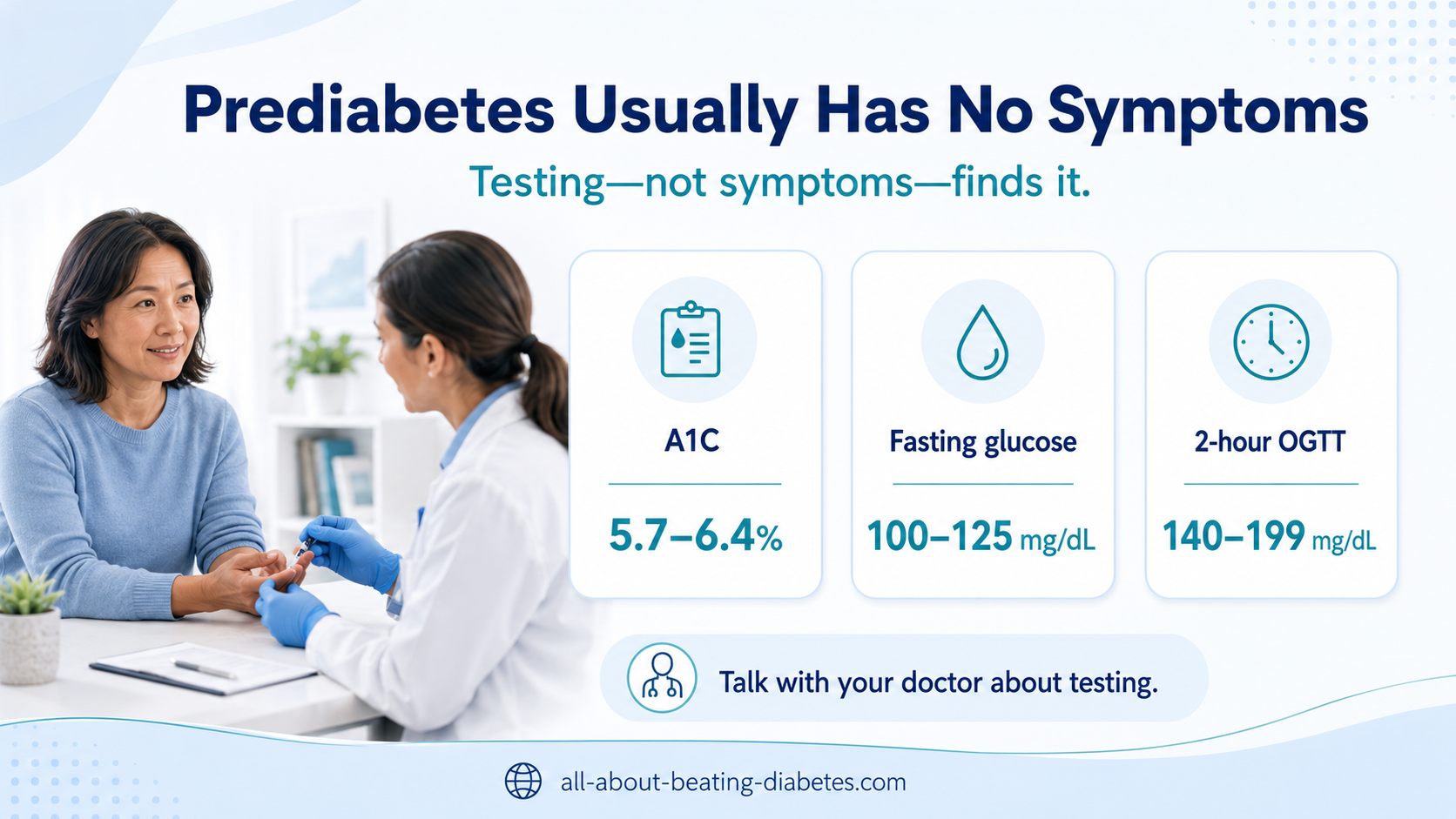
Most people with prediabetes have no noticeable symptoms. Increased thirst, frequent urination, blurry vision, unusual fatigue, and unexplained weight loss are more concerning for blood sugar that may have progressed into the diabetes range. Prediabetes is identified with an A1C, fasting plasma glucose, or 2-hour oral glucose tolerance test—not by symptoms alone.
Does Prediabetes Cause Symptoms?
Usually, no. Prediabetes develops when your body is not responding to insulin as effectively as it should and blood glucose begins to rise, but not yet to the level used to diagnose diabetes. This change can happen gradually and silently.
Not having symptoms does not mean that your glucose is normal. It also means that waiting until you feel unwell can delay diagnosis. If you have risk factors, testing is much more useful than trying to recognize a physical sign.
Usually silent
Most people cannot feel the difference between a normal glucose level and the prediabetes range. Energy, thirst, urination, and vision may all seem normal.
Found through testing
Prediabetes is commonly discovered during a routine checkup or after a doctor recommends testing because of age, family history, weight, pregnancy history, or another risk factor.
Are dark skin patches a symptom of prediabetes?
Dark, thick, velvety skin—often around the neck, armpits, or groin—is called acanthosis nigricans. It can be associated with insulin resistance, but it does not prove that you have prediabetes. Skin tags may also occur more often with insulin resistance, but they are common for many other reasons.
If you notice these changes, especially together with other risk factors, ask your doctor whether glucose testing is appropriate. You can also read my guide to the causes and risk factors for insulin resistance.
Symptoms That May Mean Blood Sugar Is Higher
Symptoms can appear when glucose rises further and may suggest diabetes rather than uncomplicated prediabetes. Contact your healthcare professional if you develop:
- unusual or persistent thirst
- urinating more often, especially at night
- blurred vision
- unusual fatigue or weakness
- increased hunger
- unexplained weight loss
- slow-healing sores or repeated infections
- numbness or tingling in the hands or feet
Who Should Be Tested for Prediabetes?
I recommend discussing screening with your doctor even when you feel well. Current diabetes guidance generally supports screening adults from age 35, and earlier testing when overweight or obesity occurs with another risk factor. Testing may also be appropriate for children and adolescents with overweight or obesity plus additional risks.
Your chance of prediabetes or type 2 diabetes may be higher if you:
- have overweight, obesity, or a larger waist circumference
- have a parent, brother, or sister with type 2 diabetes
- are physically inactive
- have high blood pressure, low HDL cholesterol, or high triglycerides
- have polycystic ovary syndrome (PCOS)
- had gestational diabetes or delivered a baby weighing 9 lb (about 4.1 kg) or more
- have cardiovascular disease, sleep apnea, or metabolic dysfunction-associated steatotic liver disease (MASLD)
- take a medicine that can raise glucose, such as a glucocorticoid, depending on dose and duration
- belong to a population with a higher statistical risk of type 2 diabetes
Which Tests Diagnose Prediabetes?
For nonpregnant people, doctors commonly use one of three laboratory tests. The numbers below follow current American Diabetes Association criteria.
| Laboratory test | Normal range | Prediabetes range | Diabetes range |
|---|---|---|---|
| A1C Approximate 2–3 month glucose exposure |
Below 5.7% | 5.7–6.4% | 6.5% or higher |
| Fasting plasma glucose After at least 8 hours without calories |
Below 100 mg/dL Below 5.6 mmol/L |
100–125 mg/dL 5.6–6.9 mmol/L |
126 mg/dL or higher 7.0 mmol/L or higher |
| 2-hour 75-g OGTT Two hours after a measured glucose drink |
Below 140 mg/dL Below 7.8 mmol/L |
140–199 mg/dL 7.8–11.0 mmol/L |
200 mg/dL or higher 11.1 mmol/L or higher |
These thresholds are diagnostic ranges, not personal treatment targets. Pregnancy uses different testing methods and cutoffs. If you are pregnant, follow your obstetric or diabetes care team’s instructions rather than this table.
For more detail, see the site guides to normal fasting blood sugar levels, A1C blood sugar levels, and blood sugar levels after eating.

When Test Results Need More Context
Can a home glucose meter diagnose prediabetes?
No. A finger-stick meter is useful for monitoring patterns, but it is not the correct tool for making a diagnosis. If a home reading is repeatedly high, record the time, meal timing, and symptoms, then ask for laboratory testing. One random blood glucose result does not have a recognized “prediabetes range.”
What if A1C and glucose results disagree?
A1C can be less reliable in some situations, including certain anemias, recent blood loss or transfusion, pregnancy, kidney disease, and hemoglobin variants. Fasting glucose can also change with illness, stress, sleep, medicines, and whether the fast was completed correctly. Your doctor may repeat the same test or use a different one.
When results sit near a diagnostic threshold and you do not have clear symptoms, confirmation is important. Do not label yourself from a single home measurement.
What Should You Do If a Result Is in the Prediabetes Range?
- Arrange medical follow-up. Ask whether the result should be repeated or compared with A1C, fasting glucose, or an OGTT.
- Review your full health picture. Blood pressure, cholesterol, weight trend, waist size, liver health, sleep, pregnancy history, medicines, and family history all matter.
- Ask when to retest. People with confirmed prediabetes are generally tested for diabetes at least yearly, but your timing may be different.
- Choose sustainable changes. Focus on balanced meals, fewer sugar-sweetened drinks and refined carbohydrates, regular movement, adequate sleep, and weight support when appropriate.
- Do not self-prescribe supplements or medicine. “Natural” glucose products can interact with treatment and are not a substitute for a structured prevention plan.
Can Prediabetes Progression Be Prevented?
Often, the risk can be reduced substantially. In the Diabetes Prevention Program, an intensive lifestyle approach included at least 150 minutes of moderate physical activity each week and a goal of about 7% weight loss for participants with overweight. These are evidence-based examples, not requirements for every individual.
You do not need to make every change at once. I usually ask patients to begin with one realistic step they can repeat: replace sugary drinks, walk after one meal, add vegetables to lunch and dinner, improve sleep timing, or plan portions before eating.
If you want a structured starting point, read the diet and sample meal plan for insulin resistance and the guide to improving insulin resistance.
Frequently Asked Questions About Prediabetes Symptoms
What are the first signs of prediabetes?
Most people have no first sign. Prediabetes is usually discovered by an A1C, fasting plasma glucose, or oral glucose tolerance test.
Can you have prediabetes and feel completely normal?
Yes. Feeling well does not rule it out. If your age, family history, pregnancy history, weight, blood pressure, cholesterol, PCOS, or another factor increases your risk, ask about testing.
Does prediabetes make you thirsty and urinate often?
Prediabetes usually does not cause clear thirst or frequent urination. These symptoms can occur when glucose is higher and may indicate diabetes or another condition, so they should be evaluated.
Can prediabetes cause fatigue or blurry vision?
Fatigue and blurry vision are nonspecific and have many possible causes. They are not reliable proof of prediabetes. Persistent symptoms deserve medical evaluation and glucose testing.
Is an A1C of 5.7% prediabetes?
For a nonpregnant person, an A1C from 5.7% through 6.4% is in the prediabetes range. Your doctor should interpret it in the context of conditions that may affect A1C accuracy.
Is fasting glucose 100 mg/dL prediabetes?
A laboratory fasting plasma glucose from 100 through 125 mg/dL is in the prediabetes range. One home-meter reading should not be used to diagnose it.
Can prediabetes go back to the normal range?
Yes, glucose results can return below the prediabetes threshold, particularly after sustainable improvements in activity, food choices, weight when appropriate, sleep, and treatment of related health problems. Continued follow-up remains important.
Related Questions From Readers
Related Resources
References
- American Diabetes Association. Diagnosis and Classification of Diabetes: Standards of Care in Diabetes—2026
- American Diabetes Association. Prevention or Delay of Diabetes and Associated Comorbidities: Standards of Care in Diabetes—2026
- National Institute of Diabetes and Digestive and Kidney Diseases. Insulin Resistance and Prediabetes
- National Institute of Diabetes and Digestive and Kidney Diseases. Diabetes Tests and Diagnosis
- Centers for Disease Control and Prevention. Prediabetes—Your Chance to Prevent Type 2 Diabetes