- Home
- New Diabetes Medications and Side Effects
- Thiazolidinedione Side Effects and Heart Failure Risk
Thiazolidinedione Side Effects: Pioglitazone, Heart Failure, Weight Gain, and Safety
Thiazolidinediones (TZDs), including pioglitazone, can improve insulin sensitivity and help lower blood sugar in people with type 2 diabetes. However, these medicines also have important safety considerations, including weight gain, fluid retention, heart failure risk, and possible effects on bones and the liver. This guide explains their benefits, side effects, and how they can be used safely.
Written by Dr. Albana Greca, MD, MMedSc, Family Physician
Medically reviewed by Dr. Ruden Cakoni, MD, Endocrinologist
Last reviewed: July 2026
Quick Answer
Thiazolidinediones, also called TZDs or glitazones, are oral medicines that improve insulin sensitivity in type 2 diabetes. The main examples are pioglitazone and rosiglitazone.
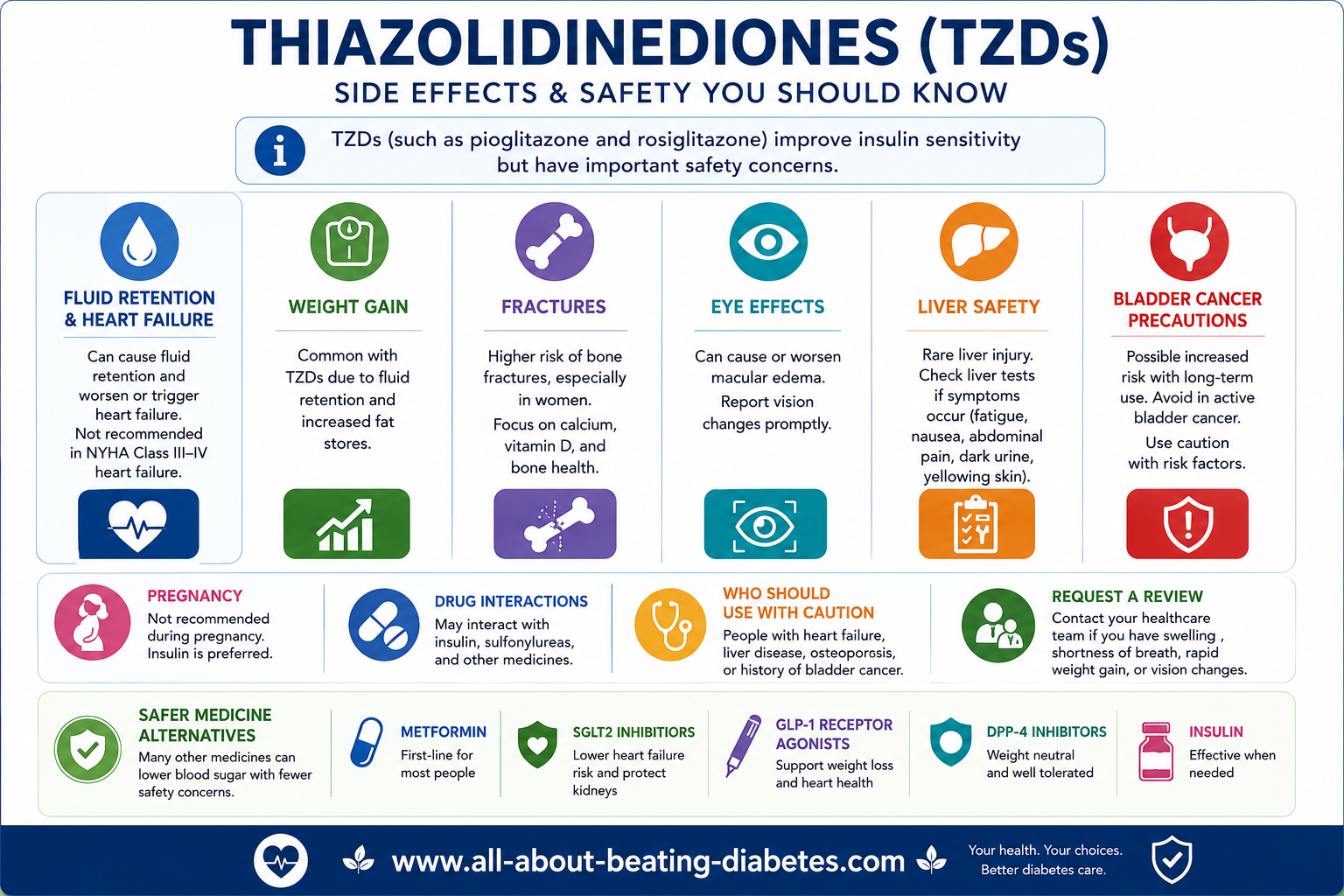
Their most important risks are fluid retention, swelling, weight gain, and worsening heart failure. Other concerns include fractures, macular edema, rare liver injury, and a possible bladder-cancer risk with pioglitazone. These medicines can still be useful for selected patients, but they require careful screening and follow-up.
I want to give you a balanced explanation of these medicines. Thiazolidinediones are not “bad drugs,” and their side effects are not always greater than their benefits. However, they are not suitable for everyone.
When I review a TZD with a patient, I look closely at heart failure risk, swelling, weight, bone health, liver health, bladder history, eye symptoms, pregnancy plans, and the other diabetes medicines being used.

What Are Thiazolidinediones?
Thiazolidinediones are oral medicines for type 2 diabetes. They are also called:
- TZDs
- Glitazones
- Insulin-sensitizing medicines
The two best-known medicines in this class are:
- Pioglitazone, sold under the brand name Actos and in combination products
- Rosiglitazone, sold under the brand name Avandia and in combination products
Pioglitazone is used more commonly than rosiglitazone in many settings. Availability and prescribing practices vary by country.
These medicines activate a receptor called PPAR-gamma. This changes gene activity in fat, muscle, and liver tissue and makes the body more responsive to insulin.
They do not force the pancreas to release insulin in the same way that sulfonylureas do. For this reason, the risk of low blood sugar is generally low when a TZD is used alone.
When Can a TZD Be Useful?
A TZD may be considered when a person with type 2 diabetes needs better glucose control and:
- Cost is an important concern
- Low hypoglycemia risk is preferred
- Insulin resistance is prominent
- Other medicines are unsuitable or unavailable
- A clinician believes the expected benefits outweigh the fluid, weight, bone, and heart risks
Pioglitazone can produce a durable improvement in insulin sensitivity and HbA1c. It may also be considered in selected patients with metabolic dysfunction-associated steatotic liver disease when specialist guidance supports its use.
However, it does not provide the same proven heart-failure and kidney-protection benefits as SGLT2 inhibitors, and it generally causes weight gain rather than weight loss.
Read my broader guide to diabetes medicines, benefits, and side effects for a class-by-class comparison.
Fluid Retention and Heart Failure
This is the most important safety concern.
Pioglitazone and rosiglitazone can cause the body to retain salt and water. Fluid retention is dose-related and is more common when a TZD is combined with insulin.
Possible warning signs include:
- New swelling in the ankles, feet, legs, hands, or abdomen
- Rapid weight gain over several days
- Shortness of breath
- Difficulty breathing when lying flat
- Waking at night short of breath
- Unusual fatigue
- Reduced exercise tolerance
Heart-Failure Warning
Contact your clinician promptly for new swelling, rapid weight gain, or increasing breathlessness.
Seek emergency care for severe breathing difficulty, chest pain, fainting, bluish lips, confusion, or sudden severe weakness.
TZDs should not be started in people with established NYHA class III or IV heart failure. They are generally avoided in symptomatic heart failure and used cautiously, if at all, in people with milder heart failure or a strong risk of developing it.
If heart-failure symptoms develop, the medicine may need to be stopped or reduced while the cause is evaluated. Do not make that decision alone unless your emergency plan tells you to hold the medicine and seek urgent care.
Our guide to diabetes and heart failure explains symptoms and treatment in more detail.
Weight Gain, Swelling, and Dilutional Anemia
Weight gain with a TZD can result from both:
- Fluid retention
- An increase in body fat, especially under the skin
A small gradual increase is different from a rapid increase caused by fluid. A gain of several pounds or kilograms over a few days should be reported.
These medicines can also lower hemoglobin slightly because retained fluid dilutes the blood. This is sometimes called dilutional anemia. True anemia from iron deficiency, bleeding, kidney disease, vitamin deficiency, or another cause still needs investigation.
Do not assume that all swelling or anemia is “just the medicine.” Heart, kidney, liver, vein, thyroid, and nutritional problems may also contribute.
Low Blood Sugar
Pioglitazone and rosiglitazone usually do not cause hypoglycemia when taken alone because they do not directly force the pancreas to release insulin.
The risk increases when they are combined with:
- Insulin
- Sulfonylureas
- Meglitinides
- Several other glucose-lowering treatments
If your glucose readings fall repeatedly after a TZD is added, the clinician may need to reduce the dose of insulin or the insulin-releasing medicine—not necessarily the TZD itself.
See how to recognize and treat low blood sugar.
Bone Loss and Fracture Risk
Pioglitazone and rosiglitazone can increase fracture risk, especially in women. Fractures have often involved the arms, hands, feet, and lower legs rather than only the hip or spine.
I pay particular attention when a patient has:
- Osteoporosis or osteopenia
- A previous fragility fracture
- Frequent falls
- Older age or frailty
- Early menopause
- Long-term corticosteroid use
- Low body weight
- Vitamin D or calcium deficiency
Depending on the patient, bone-risk review may include fall prevention, exercise, adequate protein, calcium and vitamin D assessment, and bone-density testing.
Macular Edema and Vision Changes
Macular edema has been reported in people taking pioglitazone and other TZDs. This is swelling in the central part of the retina that can affect reading, driving, and detailed vision.
Possible symptoms include:
- New blurred central vision
- Wavy or distorted lines
- Reduced visual sharpness
- Difficulty reading or recognizing faces
Some cases have occurred together with peripheral swelling. If you develop new vision changes, arrange a prompt eye examination rather than waiting for the next routine appointment.
Our diabetic eye problems guide explains macular edema and other urgent warning signs.
Liver Safety
Serious liver injury is uncommon, but postmarketing cases of liver failure have been reported.
Before starting pioglitazone, clinicians generally obtain liver tests. Routine liver testing at every visit is not required for every patient, but testing is repeated when symptoms or clinical concerns arise.
Stop the medicine and seek prompt medical advice for:
- Yellow skin or eyes
- Dark urine
- Pale stools
- Persistent nausea or vomiting
- Loss of appetite
- Right-upper abdominal pain
- Unusual severe fatigue
Do not restart the medicine until the cause of the abnormal liver findings has been clarified.
Pioglitazone and Bladder Cancer
The relationship between pioglitazone and bladder cancer remains uncertain. Some observational studies found an association, while others did not.
Current FDA labeling states that pioglitazone may be associated with an increased risk of bladder tumors. It should not be used in a patient with active bladder cancer. In someone with a previous history of bladder cancer, the possible benefit must be weighed against the uncertain risk of recurrence.
Contact your clinician promptly for:
- Blood or red-colored urine
- Pain or burning during urination
- A new or increasing need to urinate
- Unexplained pelvic or lower-abdominal pain
These symptoms have many possible causes and do not automatically mean cancer, but they should not be ignored.
Other Possible Side Effects
Other reported effects include:
- Headache
- Muscle pain
- Cold-like symptoms
- Sinus symptoms
- Dental problems
- Rare severe allergy
Seek emergency care for facial or throat swelling, breathing difficulty, widespread hives, or fainting.
Pregnancy, Fertility, and Breastfeeding
Pioglitazone is not a preferred medicine for diabetes during pregnancy because human safety data are limited and better-established treatment options are available.
If you become pregnant while taking it, do not stop treatment without a plan. Contact your obstetric and diabetes teams promptly so your glucose remains controlled while treatment is changed safely.
Return of ovulation
TZDs can restore ovulation in some premenopausal women who were not ovulating regularly, including some women with insulin resistance or polycystic ovary syndrome. This can lead to an unexpected pregnancy.
Discuss contraception if pregnancy is not desired.
Breastfeeding
There is not enough information to determine how much pioglitazone enters human milk or how it affects a breastfed infant. The decision should consider the mother’s treatment needs, the benefits of breastfeeding, and available alternatives.
Drug Interactions
Insulin
Combining a TZD with insulin increases the risk of edema, heart failure, weight gain, and hypoglycemia.
Gemfibrozil
Gemfibrozil can substantially increase pioglitazone exposure. The pioglitazone dose may need to be limited.
Rifampin
Rifampin can reduce pioglitazone exposure and make it less effective.
Other medicines
Always review diuretics, corticosteroids, insulin, sulfonylureas, blood-pressure medicines, cholesterol medicines, and supplements with your clinician or pharmacist.
Who Should Usually Avoid a TZD?
A TZD is usually unsuitable or requires specialist review when a patient has:
- Symptomatic heart failure
- NYHA class III or IV heart failure
- Major unexplained edema
- Active bladder cancer
- Significant active liver disease
- High fracture risk or severe osteoporosis
- New or worsening macular edema
- Pregnancy or active pregnancy planning
Older adults with frailty, falls, heart-failure risk, or osteoporosis need particular caution.
Alternatives to Thiazolidinediones
The best alternative depends on your heart, kidneys, weight, glucose level, hypoglycemia risk, cost, and access.
| Medicine Class | Possible Advantage | Important Limitation |
|---|---|---|
| Metformin | Low hypoglycemia risk, inexpensive, weight neutral | Digestive effects, B12 monitoring, kidney restrictions |
| SGLT2 inhibitor | Heart-failure and kidney benefits with selected medicines | Genital infections, dehydration, rare ketoacidosis, cost |
| GLP-1 medicine or tirzepatide | Strong glucose lowering, weight loss, cardiovascular benefit with selected medicines | Nausea, cost, injections for most products, contraindications |
| DPP-4 inhibitor | Low hypoglycemia risk, usually weight neutral | More modest glucose lowering; heart-failure caution with some agents |
| Sulfonylurea | Inexpensive and effective | Hypoglycemia and weight gain |
| Insulin | Strongest and most flexible glucose lowering | Hypoglycemia, weight gain, injections, monitoring |
Do not replace a prescribed TZD with an herb, vitamin, or “natural cure.” Supplements have not been shown to provide the same predictable glucose-lowering effect, and they can interact with diabetes medicines.
When Should I Ask for a Medicine Review?
Please arrange a review if you develop:
- New swelling
- Rapid weight gain
- Shortness of breath
- Repeated low blood sugar
- A fracture or major increase in fall risk
- New blurred vision
- Blood in the urine
- Yellow skin or dark urine
- Pregnancy or plans for pregnancy
- A major change in kidney, liver, or heart health
Doctor’s Note
I do not reject pioglitazone automatically, but I use it selectively. Before prescribing or continuing it, I ask about breathlessness, swelling, heart failure, fractures, bladder problems, vision changes, liver symptoms, pregnancy plans, and the use of insulin. A medicine can be effective and still be the wrong choice for a particular patient.
Most Asked Questions
What is the most serious TZD side effect?
Fluid retention and worsening heart failure are the most important risks.
Does pioglitazone cause weight gain?
Yes. Weight can increase from both fluid retention and increased body fat. Rapid weight gain requires prompt review.
Can pioglitazone cause low blood sugar?
The risk is low when it is used alone. The risk increases when it is combined with insulin, a sulfonylurea, or another insulin-releasing medicine.
Does pioglitazone cause bladder cancer?
The evidence is mixed. Current FDA labeling states that it may increase the risk of bladder tumors. It should not be used with active bladder cancer.
Can pioglitazone affect the eyes?
Macular edema has been reported. New blurred or distorted vision needs a prompt eye examination.
Do liver tests need to be checked every month?
No. Liver tests are usually checked before treatment and repeated if symptoms, abnormal results, or clinical concerns develop.
Are TZDs safer than newer medicines?
Not necessarily. They may be inexpensive and effective, but newer medicines may offer heart, kidney, or weight benefits that TZDs do not provide. The safest choice depends on the individual.
Educational safety note: This page does not prescribe pioglitazone, rosiglitazone, or an alternative. Do not stop, reduce, or replace a diabetes medicine without a plan based on your heart, kidneys, liver, bones, eyes, bladder history, pregnancy status, and glucose results.
Related Resources
- Actos and Pioglitazone Side Effects
- Avandia and Rosiglitazone Side Effects
- Diabetes Medicines: Benefits and Side Effects
- New Diabetes Medications
- Sulfonylurea Side Effects
- Insulin Side Effects
- Diabetes and Heart Failure
- Diabetic Eye Problems
References
- American Diabetes Association. Pharmacologic Approaches to Glycemic Treatment: Standards of Care in Diabetes—2026.
- American Diabetes Association. Cardiovascular Disease and Risk Management: Standards of Care in Diabetes—2026.
- American Diabetes Association. Older Adults: Standards of Care in Diabetes—2026.
- U.S. Food and Drug Administration. Actoplus Met Prescribing Information, revised June 2024.
- MedlinePlus. Pioglitazone Drug Information.
- MedlinePlus. Thiazolidinediones.