If you were recently diagnosed with diabetes or prediabetes, you may be searching for herbs or natural supplements that promise to lower blood sugar. I understand why these products are appealing. Many are familiar foods or traditional remedies, and the word natural can make them sound gentler than medicine. However, natural products can still cause side effects, interact with insulin or tablets, affect the liver or kidneys, and sometimes lower glucose too far.
In my consultations, patients often bring several teas, powders, capsules, and mixed “blood sugar formulas” that they started at the same time. When glucose changes or side effects develop, it becomes difficult to know which product is responsible. My safest approach is to review the exact label, the dose, the reason for using it, the patient’s medications, kidney and liver health, and the glucose pattern before deciding whether any supplement is appropriate.
Quick Answer
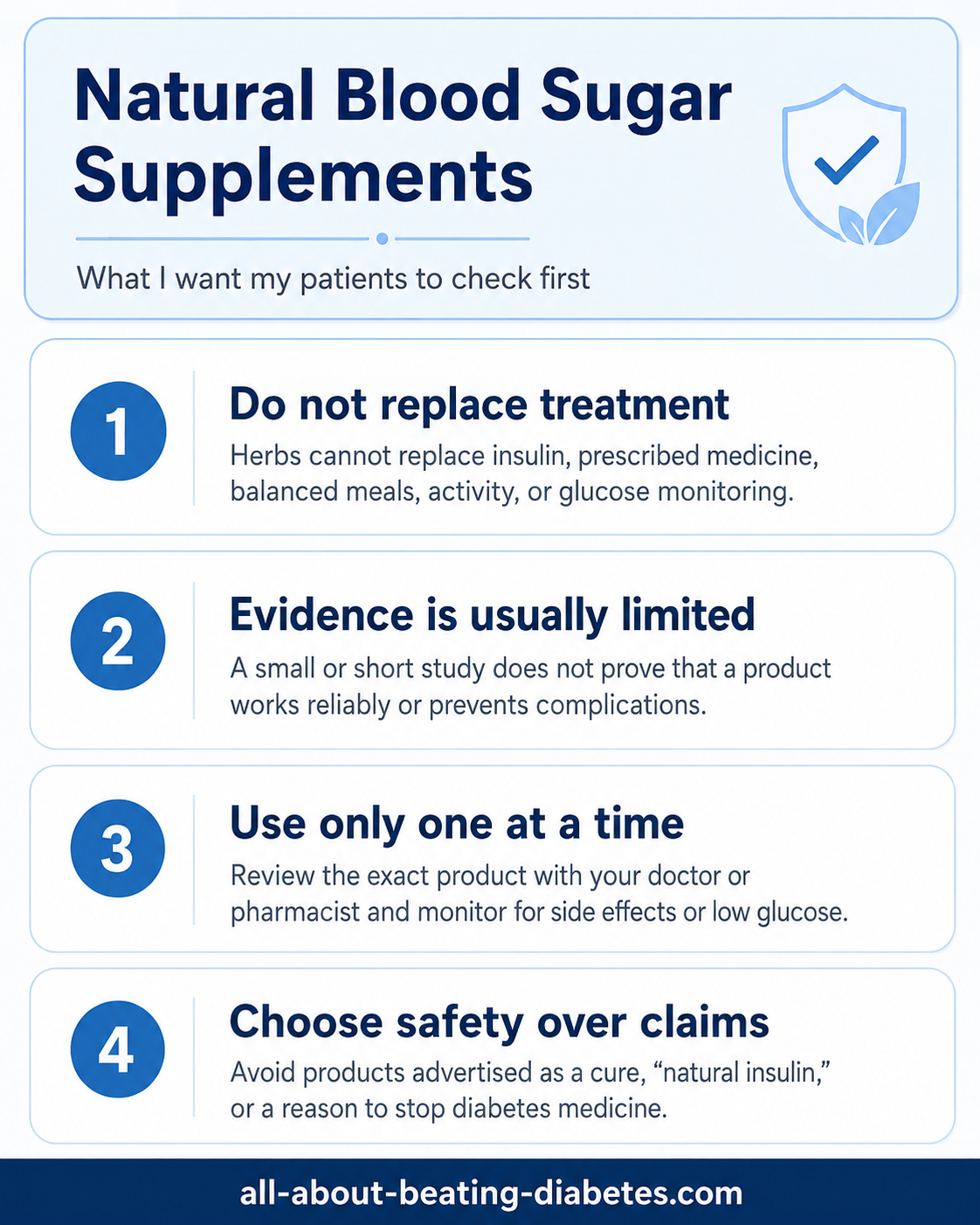
No, you do not need to use all 19 herbs or supplements. I do not recommend taking a blood sugar supplement every day unless your doctor or pharmacist has reviewed the exact product. No herb has been proven to replace insulin, metformin, another prescribed medicine, balanced meals, physical activity, sleep, or glucose monitoring. Evidence for most products is limited, inconsistent, or based on small short-term studies.
Do I Have to Use All 19 Natural Blood Sugar Supports?
No. Taking more products does not mean that blood sugar will improve more quickly or more safely. In fact, combining several glucose-lowering supplements can increase the risk of hypoglycemia, stomach problems, dehydration, bleeding, liver injury, kidney injury, and medication interactions.
The 19 products below are included because they are commonly promoted or traditionally used for diabetes—not because all 19 are effective. Some have preliminary human research. Others have mostly laboratory, animal, or traditional-use evidence. Product strengths, extracts, doses, and purity also vary, so results from one study cannot automatically be applied to every capsule or tea sold online.
Dr. Albana’s Clinical Note
When a patient wants to try a supplement, I prefer a careful, one-product-at-a-time discussion rather than a large combination. We first clarify the goal: Is the patient trying to improve fasting glucose, after-meal readings, constipation, cholesterol, or a diagnosed nutritional deficiency? A specific goal makes it easier to decide whether the product is reasonable and whether it is helping or causing harm.
Should I Take Blood Sugar Supplements Every Day?
Not without a professional review. There is no universal daily herbal formula or dose that has been proven safe and effective for everyone with diabetes. The amount of active ingredient can differ greatly between food, tea, powder, tincture, capsule, standardized extract, and multi-ingredient products.
Before daily use, your doctor or pharmacist should consider:
- Your type of diabetes and recent A1C or glucose pattern.
- Insulin, sulfonylureas, meglitinides, metformin, GLP-1 medicines, SGLT2 inhibitors, blood thinners, blood-pressure medicines, and all other drugs you use.
- Kidney function, liver function, pregnancy plans, breastfeeding, allergies, and upcoming surgery.
- The exact ingredients, dose, manufacturer, quality testing, and whether the product contains several glucose-lowering substances.
- How you will monitor benefits, side effects, and low blood sugar.
If your readings improve, medication changes should be made by the clinician managing your diabetes. Do not adjust insulin or tablets by yourself.
What Is the Best Herb to Lower Blood Sugar Naturally?
I cannot name one herb as the best natural blood sugar reducer because no herbal product has enough consistent evidence, standardized dosing, and long-term safety data to be considered routine diabetes treatment. The American Diabetes Association’s 2026 Standards of Care state that, without an underlying deficiency, herbal, vitamin, or mineral supplementation does not provide established benefit for people with diabetes.
Using a spice in normal cooking is different from taking a concentrated extract. Cinnamon on oatmeal, garlic in vegetables, ginger in a meal, or unsweetened green tea can fit into a healthy eating pattern. A capsule may deliver a much larger and less predictable amount, sometimes with additional ingredients.
The most dependable “natural” strategies remain a balanced eating pattern, suitable carbohydrate portions, physical activity, adequate sleep, weight management when appropriate, consistent medication use, and follow-up testing. For practical guidance, read my best diabetes diet guide and low-glycemic diet plan.
How I Describe the Evidence on This Page
The labels below are patient-friendly summaries, not formal guideline grades. “Limited” does not mean “proven,” and “some evidence” does not mean that the supplement is safe for every person.

19 Commonly Promoted Natural Blood Sugar Supports
1. Cinnamon
Mixed evidenceEvidence: Some reviews report small improvements in fasting glucose or insulin resistance, while others find little or no meaningful effect on A1C. Differences in cinnamon species, dose, product quality, and study design make the results difficult to compare. Cinnamon is not a substitute for diabetes treatment.
Safety: Culinary amounts are generally reasonable for most people. Concentrated cassia cinnamon may contain coumarin, which can worsen liver problems in susceptible people. Capsules may also cause digestive upset or allergy and may add to the effect of glucose-lowering or blood-thinning medicines.
2. Berberine-Containing Plants
Some evidence, major cautionsEvidence: Berberine is a plant compound found in barberry, goldenseal, Oregon grape, goldthread, and related plants. Meta-analyses suggest it may improve glucose and lipid measures as an adjunct in some adults with type 2 diabetes, but study quality, products, and dosing vary. It is not an approved replacement for metformin or insulin.
Safety: Nausea, diarrhea, constipation, and bloating are common. Berberine can affect drug-metabolizing enzymes and interact with many medicines. It should not be used during pregnancy or breastfeeding and should not be given to infants because bilirubin buildup can cause serious harm.
3. Bitter Melon
Limited evidenceEvidence: Bitter melon is eaten as a vegetable and is also sold as juice, powder, and extract. Laboratory findings are interesting, but human trials are small and inconsistent. Current evidence does not establish bitter melon as a reliable diabetes treatment.
Safety: It may cause abdominal pain, diarrhea, nausea, or an excessive fall in glucose when combined with diabetes medicine. Concentrated products should be avoided during pregnancy unless an obstetric clinician specifically approves them. The edible vegetable is not equivalent to a high-dose extract.
4. Fenugreek
Limited and variableEvidence: Fenugreek seeds contain fiber and other compounds that have been studied for glucose control. Some trials suggest modest improvements, but methods and products vary, and strong conclusions cannot be made.
Safety: Fenugreek can cause gas, diarrhea, nausea, and a maple-like odor. It may lower glucose, increase bleeding risk, and trigger allergy—especially in people with allergies to peanuts, chickpeas, or other legumes. Amounts greater than those normally used in food should be avoided during pregnancy unless specifically prescribed.
5. Gymnema Sylvestre
Preliminary evidenceEvidence: Small studies and reviews suggest that certain Gymnema extracts may affect fasting glucose, after-meal glucose, A1C, or the perception of sweetness. However, the trials are generally small, products are not standardized, and long-term outcomes are unknown.
Safety: Gymnema may add to the effect of insulin or diabetes tablets and increase hypoglycemia risk. Stop and seek medical advice for jaundice, dark urine, persistent vomiting, or severe abdominal symptoms. Product purity is particularly important with concentrated Ayurvedic supplements.
6. Aloe Vera by Mouth
Important cautionEvidence: Small studies of specific oral aloe preparations have reported changes in fasting glucose or insulin resistance, but evidence is not strong enough to recommend aloe as diabetes treatment.
Safety: Topical aloe gel is different from swallowing aloe products. Oral whole-leaf aloe or aloe latex can cause severe diarrhea, dehydration, low potassium, kidney problems, and drug interactions. Oral aloe supplements have also been linked to abnormal liver tests. Avoid during pregnancy unless specifically approved.
7. Ginseng (American or Asian)
Mixed evidenceEvidence: Reviews of American and Asian ginseng suggest possible small effects on fasting or after-meal glucose in some people, but results vary by species, extract, dose, and treatment duration. This does not establish a dependable diabetes dose.
Safety: Ginseng may cause insomnia, headache, digestive symptoms, or changes in blood pressure. It may interact with warfarin, diabetes medicines, immune-suppressing drugs, stimulants, and other medicines. People with diabetes should use it only after a medication review.
8. Banaba Leaf
Preliminary evidenceEvidence: Banaba contains corosolic acid and is promoted for glucose control. Human research is limited, often small, and not sufficient to prove meaningful long-term benefit or prevention of diabetes complications.
Safety: Banaba may add to the glucose-lowering effect of medicines. Reliable long-term safety, pregnancy safety, and standardized dosing are not established. Multi-ingredient products may contain additional substances that change the risk.
9. Neem
Human evidence lackingEvidence: Neem, also called Azadirachta indica or Indian lilac, has traditional uses and laboratory or animal research related to glucose. Strong human evidence showing that neem leaves or extracts safely control diabetes is lacking.
Safety: Neem preparations are not standardized. Neem oil should never be swallowed; serious poisoning has been reported. Avoid neem supplements during pregnancy, while trying to conceive, while breastfeeding, and in children unless an appropriately qualified clinician specifically prescribes a product.
10. Garlic
Useful food; supplement evidence mixedEvidence: Garlic can be a flavorful part of a heart-healthy eating pattern. Some studies report small changes in glucose, blood pressure, or lipids, but garlic supplements are not an established diabetes treatment.
Safety: Food amounts are usually well tolerated. High-dose supplements can cause heartburn, stomach upset, odor, and increased bleeding risk. Extra caution is needed with anticoagulants, antiplatelet medicines, bleeding disorders, and planned surgery.
11. Ginger
Limited and mixedEvidence: Some small trials suggest possible effects on fasting glucose or insulin resistance, but the evidence is not consistent enough to recommend ginger capsules for diabetes. Ginger used in food or unsweetened tea may fit into a healthy diet.
Safety: Concentrated ginger can cause heartburn, abdominal discomfort, or diarrhea and may affect bleeding or blood pressure. Discuss supplements if you use blood thinners, have gallbladder disease, take several medicines, or are preparing for surgery.
12. Turmeric or Curcumin
Preliminary and inconsistentEvidence: Curcumin has been studied for inflammation, insulin resistance, fatty liver, and diabetes risk. Some trials are encouraging, but formulations and absorption-enhancing ingredients vary, and evidence does not support using curcumin as a replacement for diabetes treatment.
Safety: Supplements may cause stomach symptoms and interact with blood thinners or medicines. Highly bioavailable products have been linked to liver injury in some cases. People with gallbladder disease, liver disease, pregnancy, or planned surgery should seek medical advice before concentrated use.
13. Green Tea
Beverage differs from extractEvidence: Unsweetened green tea can replace sugary drinks and provide polyphenols, but it has not been proven to control diabetes by itself. Research on glucose and weight outcomes is mixed.
Safety: Brewed tea contains caffeine unless decaffeinated and may temporarily affect glucose, sleep, heart rate, or anxiety in sensitive people. Concentrated green tea extracts are different from the beverage and have been linked to liver injury, including rare severe cases.
14. Black Seed (Nigella sativa)
Limited evidenceEvidence: Small studies and meta-analyses report possible improvements in glucose measures, but differences in seed, oil, extract, dose, and trial quality prevent reliable treatment recommendations.
Safety: Black seed may cause digestive upset or allergy and may add to blood sugar- or blood pressure-lowering medicines. Pregnancy and long-term high-dose safety are not well established. The culinary spice is not equivalent to concentrated oil or capsules.
15. Milk Thistle
Insufficient high-quality evidenceEvidence: A small number of studies suggest that milk thistle extracts might affect glucose in type 2 diabetes, but high-quality evidence is insufficient and products vary.
Safety: Digestive symptoms and allergic reactions can occur, especially in people sensitive to ragweed-family plants. Milk thistle may interact with medicines metabolized by the liver. It should not be used to self-treat liver disease or replace diabetes care.
16. White Mulberry Leaf
Preliminary evidenceEvidence: White mulberry leaf may slow carbohydrate digestion in small short-term studies, but clinical research remains limited. Evidence is not strong enough to recommend it as standard treatment.
Safety: It may cause gas, bloating, constipation, diarrhea, or low glucose when combined with diabetes medicines. Product quality and long-term safety are uncertain, and pregnancy or breastfeeding safety has not been established.
17. Psyllium Husk
Fiber may be usefulEvidence: Psyllium is a soluble fiber rather than a glucose-lowering herb. When used appropriately, it may support bowel regularity, fullness, cholesterol, and modestly improve after-meal or overall glucose patterns as part of a suitable eating plan.
Safety: Psyllium must be taken with enough fluid unless your clinician has restricted fluids. It can cause choking or intestinal blockage in people with swallowing problems or obstruction. It may change medicine absorption, so your pharmacist may recommend separating it from certain drugs.
18. Prickly Pear Cactus (Nopal)
Food studies are limitedEvidence: Nopal is a traditional food rich in fiber. Small studies suggest that certain meals containing cactus pads may reduce the after-meal glucose rise, but this does not prove that cactus capsules treat diabetes.
Safety: Food portions may cause gas, diarrhea, fullness, or nausea. Concentrated products may add to diabetes medicines and increase low-glucose risk. Check labels carefully because cactus supplements may be combined with other active ingredients.
19. Olive Leaf Extract
Insufficient clinical evidenceEvidence: Olive leaf compounds have laboratory and small human studies related to insulin sensitivity, blood pressure, and lipids. Evidence does not establish olive leaf extract as a reliable treatment for diabetes.
Safety: Olive leaf may add to glucose-lowering or blood-pressure medicines. Digestive symptoms, dizziness, or allergy may occur. Long-term, pregnancy, and breastfeeding safety are not well established.
What About Coffee, Cayenne, Vitamin C, Vanadium, and Huckleberry?
These items appeared in older lists of “natural blood sugar reducers,” but they should not all be described as herbs or diabetes remedies.
| Item | What the evidence means | Main caution |
|---|---|---|
| Coffee | Observational studies link habitual coffee intake with a lower risk of developing type 2 diabetes, but this does not prove that coffee treats existing diabetes. Caffeine can temporarily raise glucose in some people. | Avoid adding sugar-heavy syrups or creamers. Consider caffeine effects on sleep, heart rhythm, anxiety, pregnancy, and personal glucose response. |
| Cayenne or capsaicin | Laboratory and small metabolic studies do not establish cayenne as a diabetes treatment. | Concentrated products can irritate the stomach, worsen reflux, and interact with medicines. Normal food seasoning is different from capsules. |
| Vitamin C | Vitamin C is an essential nutrient, not an herb. Routine high-dose supplementation has not been proven to replace diabetes treatment. Supplementation may be appropriate for a diagnosed deficiency or another clinical reason. | High doses can cause diarrhea, raise kidney-stone risk in susceptible people, and interfere with some laboratory or glucose-monitoring methods. |
| Vanadium | Vanadium shows insulin-like activity in laboratory research, but rigorous human evidence is insufficient and there is no established diabetes-treatment dose. | Experimental doses caused frequent digestive effects, and long-term kidney, liver, reproductive, and overall safety are uncertain. I do not recommend self-treatment. |
| Huckleberry or bilberry | The fruit can fit into a balanced diet in an appropriate portion, but leaf extracts and supplements are not proven treatments for glucose control or diabetic eye disease. | Concentrated products may affect glucose or bleeding and can interact with medicines. Fruit portions still contain carbohydrate. |
For more detail on the mineral safety concerns, read Vanadium for Diabetes: Does It Lower Blood Sugar and Is It Safe?
Are Neem Leaves Good for Diabetes?
Neem is widely used in traditional medicine, and laboratory or animal studies have raised interest in possible glucose effects. However, strong clinical evidence in people is lacking. I therefore do not recommend neem leaves, tea, powder, or extract as a substitute for diabetes treatment.
Traditional use does not guarantee that a retail extract is safe. Species identification, harvesting, concentration, contamination, and manufacturing quality can change the product. Neem oil is particularly dangerous when swallowed and has been associated with serious poisoning.
If neem is used as a traditional culinary ingredient, tell your doctor how it is prepared and how much you use. Avoid concentrated neem products during pregnancy, breastfeeding, while trying to conceive, and in children unless a qualified clinician specifically directs their use.
Blood Sugar Supplement Safety Checklist
- Tell your doctor and pharmacist about every herb, capsule, tea, powder, vitamin, mineral, and traditional remedy you use.
- Bring the bottle or a clear photograph of the front label, Supplement Facts panel, ingredients, dose, and manufacturer.
- Do not combine several glucose-lowering supplements without professional guidance.
- Do not replace insulin or prescribed medicine with a supplement.
- Avoid products advertised as a diabetes “cure,” “natural insulin,” or a guaranteed way to stop medication.
- Prefer single-ingredient products when a clinician agrees that a trial is reasonable.
- Look for independent quality testing, but understand that quality certification does not prove that the product treats diabetes.
- Monitor glucose as directed, especially when starting or stopping a product.
- Stop the product and seek advice for low glucose, vomiting, persistent diarrhea, rash, swelling, jaundice, dark urine, severe abdominal pain, confusion, or another unexpected reaction.
Questions to Ask Before Taking a Supplement
- What specific problem am I trying to improve?
- Is there reliable human evidence for this exact ingredient and product?
- Could it interact with my diabetes medicine, blood thinner, blood-pressure medicine, or another drug?
- Is it safe with my kidney and liver function?
- Is it safe during pregnancy, breastfeeding, or before surgery?
- How will we measure whether it is helping?
- What symptoms or glucose readings mean I should stop it?
Frequently Asked Questions
Can herbs cure type 2 diabetes?
No herb has been proven to cure type 2 diabetes. Some people with type 2 diabetes may achieve remission after substantial and sustained metabolic improvement, but a supplement is not a proven cure and should not replace medical follow-up.
Can a supplement replace metformin?
No. Do not replace metformin or another prescribed medicine with an herb. A clinician may change treatment when there is a medical reason, but that decision should be based on your full health history, A1C, glucose pattern, kidney function, side effects, and treatment goals.
Are culinary herbs safer than capsules?
Normal food amounts are usually less concentrated than extracts and often have a lower risk. However, allergy, medication interactions, pregnancy, kidney disease, liver disease, and individual sensitivity still matter. “Food” and “supplement” doses should not be treated as equivalent.
Can herbs cause low blood sugar?
Yes. A supplement that has a glucose-lowering effect may add to insulin or medicines such as sulfonylureas and meglitinides. Sweating, shaking, hunger, weakness, dizziness, confusion, or a glucose reading below your treatment threshold requires prompt action according to your hypoglycemia plan.
How should I test a supplement safely?
There is no universal safe trial. Discuss the exact product first, use only one new product at a time, keep medicines unchanged unless your prescriber adjusts them, record glucose and symptoms, and agree in advance on when to stop. Avoid unsupervised trials during pregnancy, acute illness, unstable glucose, kidney or liver disease, or when you use insulin and have frequent lows.
Related Questions
Related Resources
References
- American Diabetes Association. Facilitating Positive Health Behaviors and Well-being—Standards of Care in Diabetes—2026.
- American Diabetes Association. Diagnosis and Classification of Diabetes—Standards of Care in Diabetes—2026.
- National Center for Complementary and Integrative Health. Diabetes and Dietary Supplements: What You Need To Know.
- U.S. Food and Drug Administration. Questions and Answers on Dietary Supplements.
- U.S. Food and Drug Administration. Illegally Sold Diabetes Treatments.
- NCCIH. Asian Ginseng: Usefulness and Safety.
- NCCIH. Fenugreek: Usefulness and Safety.
- NCCIH. Turmeric: Usefulness and Safety.
- NCCIH. White Mulberry Leaf: Usefulness and Safety.
- NCCIH. Milk Thistle: Usefulness and Safety.
- Memorial Sloan Kettering Cancer Center. Bitter Melon.
- Memorial Sloan Kettering Cancer Center. Neem.
- Memorial Sloan Kettering Cancer Center. Aloe Vera.
- MedlinePlus. Psyllium Drug Information.
- NIH LiverTox. Green Tea.
- Cross LV, et al. Safety and Efficacy of Dietary Supplements for Diabetes.
This page is for general education and does not provide personal medical advice, diagnosis, or treatment. Supplement safety depends on your diagnosis, medications, pregnancy status, kidney and liver function, allergies, and other health conditions. Always speak with your doctor, pharmacist, or qualified healthcare professional before starting, stopping, or changing a supplement or diabetes treatment.
Page prepared for Beating Diabetes / all-about-beating-diabetes.com. Content reviewed for patient safety, evidence limitations, medication interactions, and publication clarity.