- Home
- New Diabetes Medications and Side Effects
- Sulfonylurea Side Effects Low Blood Sugar and Weight Gain
Sulfonylurea Side Effects: Low Blood Sugar, Weight Gain, Safety, and Alternatives
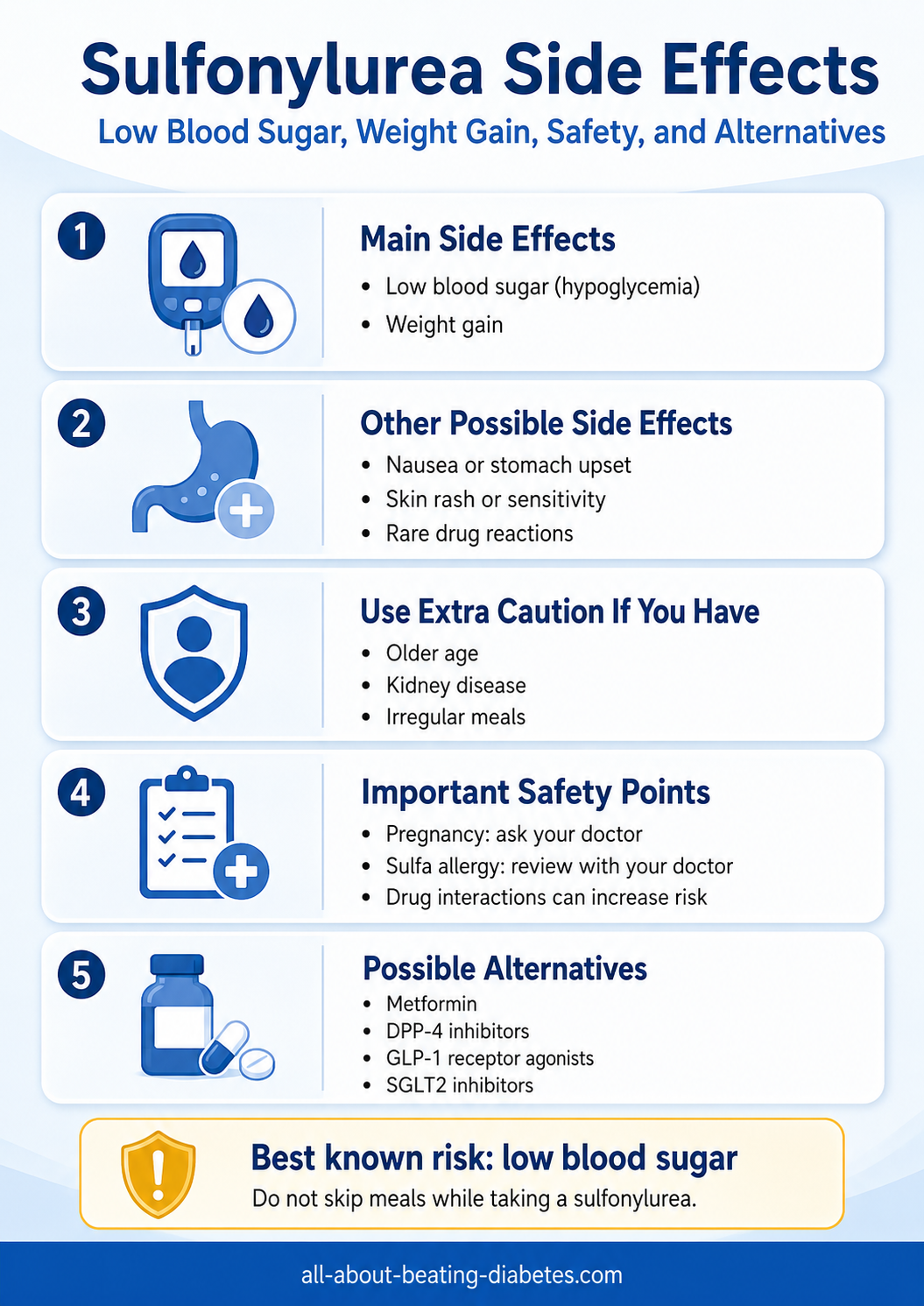
Sulfonylureas can lower blood sugar effectively, but they may also cause side effects such as hypoglycemia and weight gain. Understanding how these medicines work, who may be at greater risk, and what alternatives are available can help you use them more safely and discuss the best treatment plan with your doctor.
Written by Dr. Albana Greca, MD, MMedSc, Family Physician
Medically reviewed by Dr. Ruden Cakoni, MD, Endocrinologist
Last reviewed: July 2026
Quick Answer
Sulfonylureas are oral medicines that lower blood sugar by helping the pancreas release more insulin. Their main side effects are low blood sugar and weight gain. The risk is higher in older adults, people with kidney or liver disease, those who skip meals, drink alcohol without food, or take other glucose-lowering medicines.
These medicines can still be useful, especially when cost matters, but they do not provide the same proven heart, kidney, or weight benefits as some newer diabetes medicines. Do not stop or reduce a sulfonylurea on your own. Ask your diabetes team to adjust it safely if you have repeated lows, weight gain, kidney changes, pregnancy, or a new diabetes medicine.
I want you to understand both the benefits and the limitations of sulfonylureas. These medicines can lower blood sugar effectively, but they require careful meal timing, dose selection, and monitoring because they continue stimulating insulin release even when you have eaten less than usual.

What Are Sulfonylureas?
Sulfonylureas are tablets used mainly for type 2 diabetes. They bind to receptors on pancreatic beta cells and stimulate insulin release. They work only when the pancreas can still produce insulin.
Common modern examples include:
- Glipizide
- Glimepiride
- Glyburide, also called glibenclamide in many countries
- Gliclazide, used in many countries outside the United States
Older first-generation medicines such as chlorpropamide and tolbutamide are used much less often because newer options are generally easier to manage.
Sulfonylureas may be used alone or with metformin, insulin, or another diabetes medicine. Combination therapy is not automatically unsafe, but adding another glucose-lowering medicine can increase the risk of low blood sugar and may require a lower sulfonylurea dose.
Low Blood Sugar: The Main Sulfonylurea Side Effect
Low blood sugar, or hypoglycemia, is the most important risk. For many people with diabetes, a reading below 70 mg/dL, or 3.9 mmol/L, is considered low.
Symptoms may include:
- Shaking or trembling
- Sweating
- Hunger
- Dizziness
- Headache
- Fast or irregular heartbeat
- Weakness
- Irritability or anxiety
- Blurred vision
- Confusion or slurred speech
Severe hypoglycemia can cause seizure, unconsciousness, injury, coma, or death.
Who is more likely to have a low?
- Older adults
- People with kidney or liver disease
- People who skip meals or eat very little
- People who fast
- People with poor appetite, vomiting, or acute illness
- People who drink alcohol without enough food
- People who exercise more than usual
- People taking insulin or several glucose-lowering medicines
- People with previous severe lows or hypoglycemia unawareness
Glyburide can cause prolonged hypoglycemia, particularly in older adults and people with reduced kidney function. Glimepiride and glipizide can also cause serious lows, but glyburide is usually the least suitable choice for a frail older adult.
How should I treat a low?
If you are awake and able to swallow safely:
- Take 15–20 grams of fast-acting carbohydrate.
- Wait 15 minutes.
- Recheck your blood sugar.
- Repeat if it is still low.
Examples include glucose tablets, glucose gel, one-half cup of juice or regular soda, or one tablespoon of sugar or honey.
Severe or Recurrent Low Blood Sugar
Use glucagon if the person cannot swallow safely, is having a seizure, is unconscious, or cannot treat the low independently. Call emergency services.
Sulfonylurea-related hypoglycemia can return after glucose initially improves. Severe or repeated lows may require hospital monitoring. Do not give food or drink to an unconscious person.
Our guide to high and low blood sugar explains the warning signs and treatment steps in more detail.
Weight Gain
Sulfonylureas can cause weight gain because higher insulin levels encourage the body to store energy, and glucose is no longer being lost through the urine. Treating frequent lows with extra calories can add further weight.
Weight gain is not usually caused by water retention from the sulfonylurea itself. If you develop new ankle swelling, breathlessness, or rapid weight gain, another cause should be considered—especially heart failure, kidney disease, liver disease, or a medicine such as pioglitazone.
Do not stop the medicine because the scale has increased. Ask for a review of:
- Repeated low blood sugar
- Meal portions and sugary drinks
- Physical activity
- Current dose
- Other diabetes medicines
- Heart, kidney, liver, or thyroid health
Other Possible Side Effects
Digestive symptoms
Some people experience nausea, stomach discomfort, diarrhea, constipation, or a feeling of fullness. These symptoms are usually mild, but persistent symptoms deserve review.
Skin reactions
Rash, itching, hives, or increased sensitivity to sunlight can occur. Stop the medicine and seek urgent help for facial swelling, breathing difficulty, widespread blistering, or a severe rash.
Liver problems
Rarely, sulfonylureas can cause liver injury or cholestatic jaundice. Contact your clinician promptly for yellow skin or eyes, dark urine, pale stools, severe itching, persistent nausea, or right-upper abdominal pain.
Blood-cell problems
Very rarely, these medicines can affect red cells, white cells, or platelets. People with glucose-6-phosphate dehydrogenase deficiency, called G6PD deficiency, may have a higher risk of hemolytic anemia with some sulfonylureas.
Low sodium
Low blood sodium is mainly associated with older first-generation sulfonylureas such as chlorpropamide and is not a typical effect of the commonly used newer medicines.
Older Adults, Kidney Disease, and Liver Disease
I am particularly careful with sulfonylureas in older patients because low blood sugar can lead to falls, fractures, confusion, driving accidents, hospitalization, and loss of independence.
Kidney or liver impairment can make a sulfonylurea last longer and cause prolonged hypoglycemia. This does not mean every person with kidney disease must stop the medicine, but the drug choice and dose need review.
In older adults, shorter-acting options are generally preferred if a sulfonylurea is needed. Glyburide should usually be avoided because its active metabolites can accumulate and cause prolonged lows.
Ask for a medication review if you have:
- New kidney or liver impairment
- Repeated falls or confusion
- Unintentional weight loss
- Poor appetite
- Dementia or difficulty managing medicines
- HbA1c well below your individualized target
- Any severe low blood sugar episode
Sulfonylureas During Pregnancy and Breastfeeding
Sulfonylureas are not automatically “strictly teratogenic,” and they should not be described as causing monstrous birth defects. The main concern is that some sulfonylureas cross the placenta and can cause neonatal hypoglycemia, particularly when used near delivery.
Insulin is the preferred treatment for type 1 diabetes during pregnancy and is also preferred when medication is needed for type 2 diabetes or gestational diabetes. Glyburide is not a first-line pregnancy medicine.
If you become pregnant while taking a sulfonylurea, do not stop it without a plan. Contact your obstetric and diabetes teams promptly so they can select the safest treatment and avoid uncontrolled hyperglycemia.
During breastfeeding, decisions are individualized. Glipizide has been undetectable in a small milk study, but the available evidence is limited. When a sulfonylurea is used, the infant may need monitoring for poor feeding, excessive sleepiness, jitteriness, low temperature, bluish color, or seizure.
Can I Take a Sulfonylurea if I Have a “Sulfa” Antibiotic Allergy?
A previous allergy to a sulfonamide antibiotic—such as sulfamethoxazole—does not automatically mean you will react to a sulfonylurea. The chemical structures differ, and clinically important immune cross-reaction is considered unlikely.
You should still tell your clinician exactly what happened:
- Which medicine caused the reaction?
- Was it nausea or a true allergic reaction?
- Was there hives, facial swelling, breathing difficulty, blistering, or organ injury?
- Have you taken a non-antibiotic sulfonamide since then?
A true allergy to the specific sulfonylurea or one of its ingredients remains a reason not to use that product.
Medicine and Alcohol Interactions
Sulfonylureas interact with many medicines. The effect may be stronger or weaker, and the interaction can change when another medicine is started, stopped, or adjusted.
May increase low-blood-sugar risk
- Insulin or another insulin-releasing medicine
- Alcohol, especially without food
- Fluconazole and some other antifungal medicines
- Some antibiotics
- Certain cholesterol or blood-pressure medicines
- Major calorie reduction or rapid weight loss
May raise blood sugar or reduce the effect
- Corticosteroids
- Some diuretics
- Certain antipsychotics
- Excess thyroid hormone
- Some hormonal treatments
- Acute illness, infection, or severe stress
May hide symptoms
Beta-blockers can reduce warning signs such as tremor and a fast heartbeat. Sweating, confusion, or weakness may still occur.
Always give your doctor and pharmacist a complete list of prescriptions, nonprescription medicines, vitamins, herbal products, and alcohol use.
Do Sulfonylureas Cause Heart Disease?
Older studies raised concerns about cardiovascular safety, but it is not accurate to say that sulfonylureas routinely cause heart disorders.
The more practical limitation is that sulfonylureas have not shown the same proven heart-failure, kidney, or atherosclerotic cardiovascular benefits as SGLT2 inhibitors and selected GLP-1 receptor agonists.
If you have heart disease, heart failure, chronic kidney disease, or a high cardiovascular risk, your clinician may prioritize a medicine with proven cardiorenal benefit even if your HbA1c is close to target.
Alternatives to Sulfonylureas
The best alternative depends on your heart, kidneys, weight, glucose level, hypoglycemia risk, cost, access, and preferences. There is no one replacement that is best for everyone.
| Medicine Class | Possible Advantage | Important Limitation |
|---|---|---|
| Metformin | Low hypoglycemia risk, inexpensive, weight neutral | Digestive effects, B12 monitoring, kidney limits |
| SGLT2 inhibitor | Heart-failure and kidney benefits with selected agents | Genital infection, dehydration, rare ketoacidosis, cost |
| GLP-1 medicine or tirzepatide | Strong glucose lowering, weight loss, cardiovascular benefit with selected agents | Nausea, cost, injection for most products, contraindications |
| DPP-4 inhibitor | Low hypoglycemia risk and generally weight neutral | More modest glucose lowering; heart-failure caution with some agents |
| Pioglitazone | Low hypoglycemia risk when used alone, inexpensive | Weight gain, edema, heart-failure and fracture concerns |
| Insulin | Strongest and most flexible glucose lowering | Hypoglycemia, weight gain, injections, monitoring |
Sulfonylureas remain useful for some patients because they are effective, familiar, and inexpensive. The goal is not to replace them automatically—it is to use them only when their benefits outweigh the risks.
Read our broader diabetes medication comparison before discussing alternatives with your clinician.
When Should I Ask for a Medicine Review?
Please ask for a review if you:
- Have any severe or repeated low blood sugar
- Frequently skip meals or fast
- Are losing weight or eating much less
- Have declining kidney or liver function
- Are older, frail, or experiencing falls
- Become pregnant or plan a pregnancy
- Start insulin, a GLP-1 medicine, tirzepatide, or another strong glucose-lowering treatment
- Begin a weight-loss medicine or major calorie-reduction program
- Have an HbA1c below your individualized target
- Develop a severe rash, jaundice, or another serious reaction
Doctor’s Note
When I prescribe or review a sulfonylurea, I ask about meal timing, kidney function, previous lows, alcohol use, falls, weight changes, and every other diabetes medicine. These tablets can work well, but the dose that was safe last year may become too strong after weight loss, kidney decline, reduced appetite, or the addition of another treatment.
Most Asked Questions
What is the most common sulfonylurea side effect?
Low blood sugar is the most important side effect. Weight gain is also common.
Which sulfonylurea has the greatest hypoglycemia risk?
Glyburide is particularly concerning in older adults and kidney disease because its active metabolites can cause prolonged low blood sugar.
Should I stop glimepiride if I have a low?
Treat the low immediately and contact your diabetes team. Do not make a permanent dose change on your own unless your emergency plan specifically instructs you to hold a dose.
Can sulfonylureas cause swelling?
They commonly cause weight gain, but significant fluid retention is more typical of thiazolidinediones such as pioglitazone. New swelling needs assessment for heart, kidney, liver, vein, or medicine-related causes.
Can I take a sulfonylurea with a sulfa antibiotic allergy?
Often yes. Clinically important immune cross-reaction between sulfonamide antibiotics and non-antibiotic sulfonylureas is considered unlikely. Your exact reaction still needs review.
Are sulfonylureas safe in pregnancy?
Insulin is preferred during pregnancy. Some sulfonylureas cross the placenta and may cause neonatal hypoglycemia, especially near delivery.
Are newer diabetes medicines always better?
No. Newer medicines may offer heart, kidney, or weight benefits, but cost, side effects, access, and individual health needs matter. Sulfonylureas remain appropriate for some patients.
Educational safety note: This page does not prescribe a sulfonylurea or a replacement medicine. Do not stop, reduce, or switch your diabetes treatment without a plan based on your glucose readings, kidney and liver function, pregnancy status, other medicines, and personal goals.
Related Resources
- Diabetes Medicines: Benefits and Side Effects
- New Diabetes Medications
- Metformin and Glucophage Side Effects
- Thiazolidinedione Side Effects
- Insulin Side Effects
- Is My Blood Sugar Too High or Too Low?
- Diabetic Meal Plan and Plate Method
References
- American Diabetes Association. Pharmacologic Approaches to Glycemic Treatment: Standards of Care in Diabetes—2026.
- American Diabetes Association. Older Adults: Standards of Care in Diabetes—2026.
- American Diabetes Association. Management of Diabetes in Pregnancy: Standards of Care in Diabetes—2026.
- NIDDK. Low Blood Glucose (Hypoglycemia).
- U.S. Food and Drug Administration. Glucotrol XL (Glipizide) Prescribing Information.
- American Academy of Allergy, Asthma & Immunology. Drug Allergy: A 2022 Practice Parameter Update.